Loading...
Done
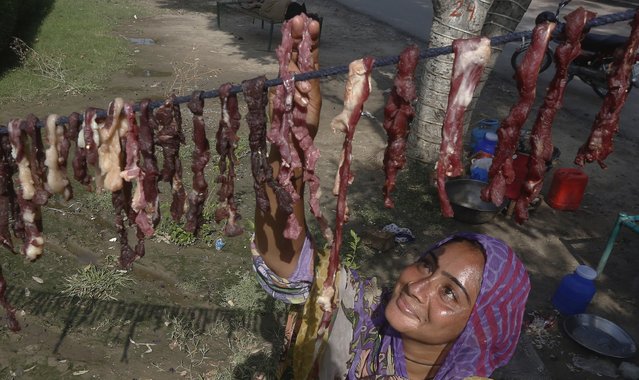
A woman hangs strips of salted meat she collected from different places during the Muslim's Eid al-Adha or Festival of Sacrifice, in Lahore, Pakistan, Sunday, August 2, 2020. Pakistanis are celebrating the Eid al-Adha, or the Feast of the Sacrifice, to mark the willingness of the Prophet Ibrahim – Abraham to Christians and Jews – to sacrifice his son. During the holiday Muslims slaughter sheep and cattle, distribute part of the meat to the poor. (Photo by K.M. Chaudary/AP Photo)

A woman hangs strips of salted meat she collected from different places during the Muslim's Eid al-Adha or Festival of Sacrifice, in Lahore, Pakistan, Sunday, August 2, 2020. Pakistanis are celebrating the Eid al-Adha, or the Feast of the Sacrifice, to mark the willingness of the Prophet Ibrahim – Abraham to Christians and Jews – to sacrifice his son. During the holiday Muslims slaughter sheep and cattle, distribute part of the meat to the poor. (Photo by K.M. Chaudary/AP Photo)
Details
28 Aug 2020 00:05:00
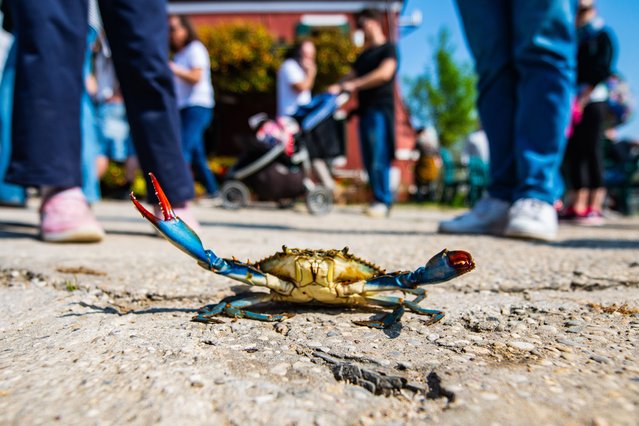
A blue crab, a highly invasive alien species, is seen at Lio Piccolo during the reforestation day on April 05, 2025 in Venice, Italy. The island of Lio Piccolo in the northern lagoon of Venice is being replanted with 16,000 new trees that will protect the salt marsh ecosystem that is fundamental to the natural health of Venice and the lagoon by WOWnature project, an Etifor initiative. (Photo by Simone Padovani/Getty Images)

A blue crab, a highly invasive alien species, is seen at Lio Piccolo during the reforestation day on April 05, 2025 in Venice, Italy. The island of Lio Piccolo in the northern lagoon of Venice is being replanted with 16,000 new trees that will protect the salt marsh ecosystem that is fundamental to the natural health of Venice and the lagoon by WOWnature project, an Etifor initiative. (Photo by Simone Padovani/Getty Images)
Details
20 Apr 2025 02:43:00


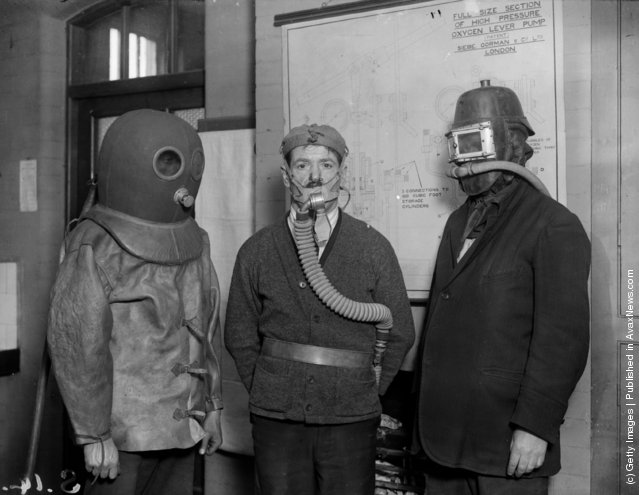
Three workers demonstrating the different types of gas masks used in mine rescue work. (Photo by Fox Photos/Getty Images). December 1925
Details
20 Apr 2011 09:17:00
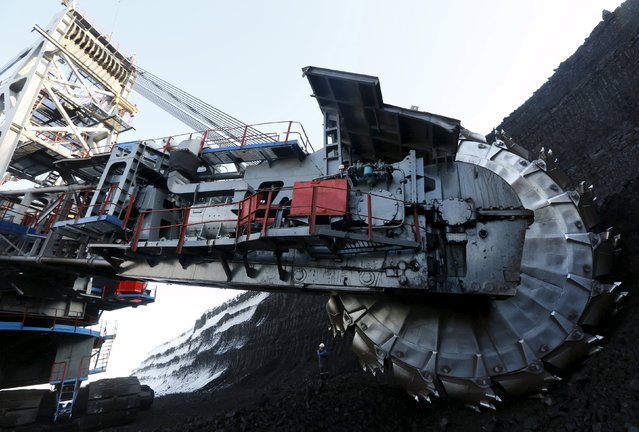
Master Sergey Suprun uses a portable radio set as he stands near a rotary dredge which works on the coal face of the Borodinsky opencast colliery, near the Siberian town of Borodino, east of Krasnoyarsk, Russia October 27, 2015. The Borodinsky colliery, 9 km (5.6 miles) long and more than 100 meters (328 feet) deep, annually produces more than 20 million tons of coal and is considered to be the biggest opencast coal mine in Russia, according to official representatives. (Photo by Ilya Naymushin/Reuters)

Master Sergey Suprun uses a portable radio set as he stands near a rotary dredge which works on the coal face of the Borodinsky opencast colliery, near the Siberian town of Borodino, east of Krasnoyarsk, Russia October 27, 2015. The Borodinsky colliery, 9 km (5.6 miles) long and more than 100 meters (328 feet) deep, annually produces more than 20 million tons of coal and is considered to be the biggest opencast coal mine in Russia, according to official representatives. (Photo by Ilya Naymushin/Reuters)
Details
31 Oct 2015 08:01:00
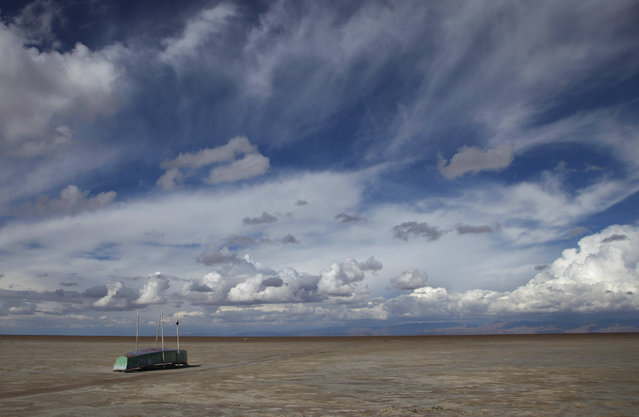
In this January 12, 2016 photo, an abandoned boat lies on the dried up lake bed of Lake Poopo, on the outskirts of Untavi, Bolivia. Drought caused by the recurrent El Nino meteorological phenomenon is considered the main driver of the lake's demise. Along with glacial melting, authorities say another factor is the diversion of water from Poopo's tributaries, mostly for mining but also for agriculture. (Photo by Juan Karita/AP Photo)

In this January 12, 2016 photo, an abandoned boat lies on the dried up lake bed of Lake Poopo, on the outskirts of Untavi, Bolivia. Drought caused by the recurrent El Nino meteorological phenomenon is considered the main driver of the lake's demise. Along with glacial melting, authorities say another factor is the diversion of water from Poopo's tributaries, mostly for mining but also for agriculture. (Photo by Juan Karita/AP Photo)
Details
21 Jan 2016 12:33:00
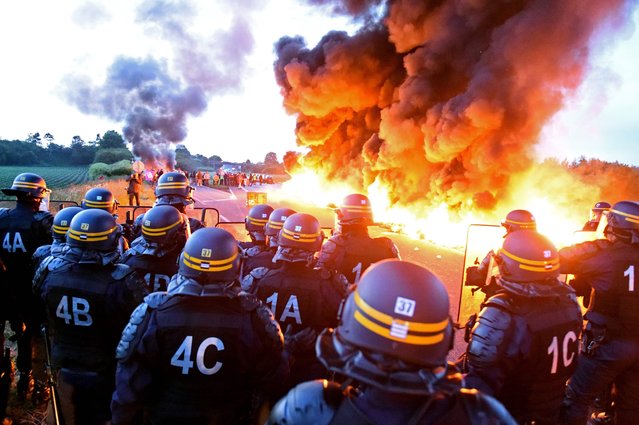
Riot police stand guard behind a fire as refinery workers hold a blockade of the oil depot of Douchy-Les-Mines to protest against the government's proposed labour reforms, on May 25, 2016. Refinery workers stepped up strikes that threaten to paralyse France weeks ahead of the Euro 2016 tournament as the government moved to break their blockades, escalating a three-month tug-of-war over labour reforms. (Photo by François L.O./AFP Photo)

Riot police stand guard behind a fire as refinery workers hold a blockade of the oil depot of Douchy-Les-Mines to protest against the government's proposed labour reforms, on May 25, 2016. Refinery workers stepped up strikes that threaten to paralyse France weeks ahead of the Euro 2016 tournament as the government moved to break their blockades, escalating a three-month tug-of-war over labour reforms. (Photo by François L.O./AFP Photo)
Details
26 May 2016 13:02:00
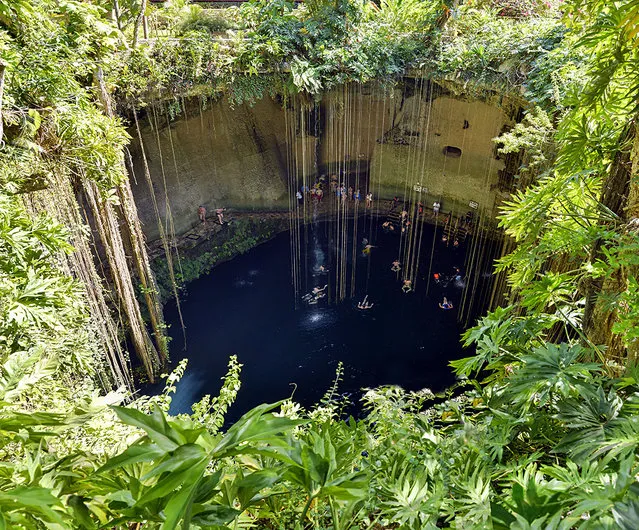
Cenote In Mexico

A cenote is a natural phenomenon, a sinkhole in the Earth’s surface. The Yucatan Peninsula in Mexico has an estimated 7,000 cenotes because it is primarily made up of porous limestone. For millions of years, rainfall slowly ate away at the limestone and a huge system of underground caves and caverns was formed. Many filled with water from rain or from the underground water table. When the roof of a water filled cave collapses, a cenote is born. The water found in a cenote may be fresh water, salt water, or both. Structurally it may be completely open, like a lake, almost completely closed with just a small opening at the top, or somewhere in between.
Details
06 Oct 2013 09:45:00
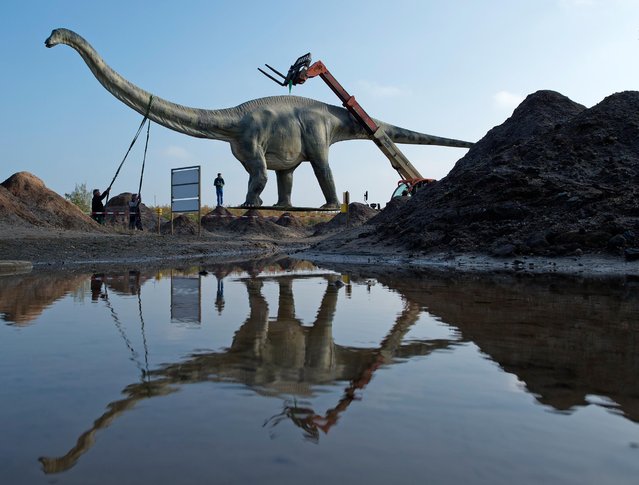
Workers transport a model of a dinosaur  at the exhibition “World of Dinosaurs” at a former lignite surface mining area  in Grosspoesna near Leipzig, central Germany, Wednesday, October 29, 2014. A 100-foot long statue of a dinosaur had to be moved Wednesday because German authorities had deemed it a safety risk. (Photo by Jens Meyer/AP Photo)

Workers transport a model of a dinosaur at the exhibition “World of Dinosaurs” at a former lignite surface mining area in Grosspoesna near Leipzig, central Germany, Wednesday, October 29, 2014. A 100-foot long statue of a dinosaur had to be moved Wednesday because German authorities had deemed it a safety risk. Officials feared the sculpture could cause traffic accidents by distracting drivers on a nearby highway. The reptile, one of 50 species on show in the World of Dinosaurs exhibit near Leipzig, was moved to a less conspicuous position further from the road. (Photo by Jens Meyer/AP Photo)
Details
31 Oct 2014 12:08:00