Loading...
Done
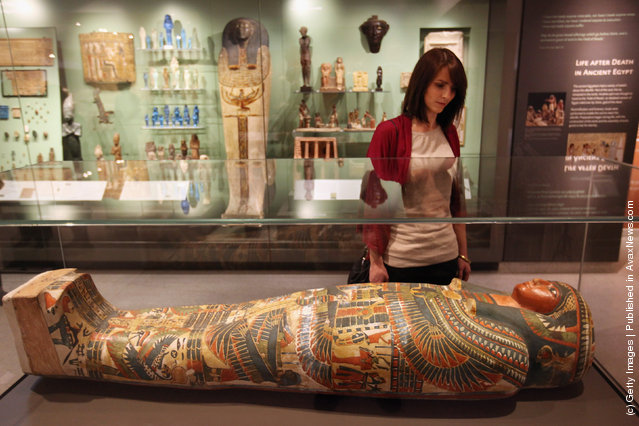
A woman views the Mummy of Meresamun

A woman views the Mummy of Meresamun in the Ashmolean Museum's new exhibition of artifacts from ancient Egypt and Nubia on November 23, 2011 in Oxford, England. The new gallery is displaying for the first time in decades some of the finest Egyptian and Nubian artifacts in the UK. The Egyptian collection opens to the public from November 26, 2011. (Photo by Oli Scarff/Getty Images)
Details
24 Nov 2011 15:37:00
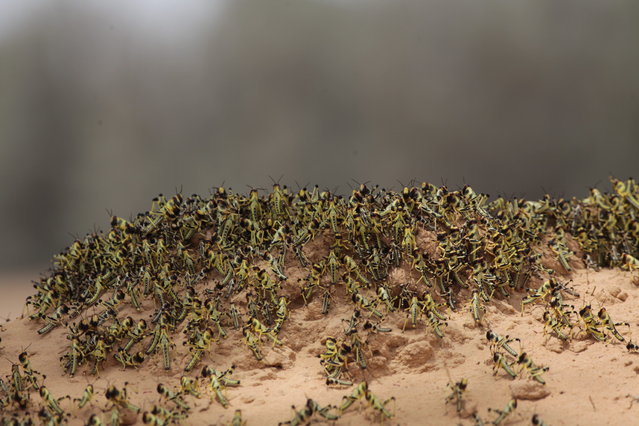
Billions of newly hatched locusts are spreading throughout Israel's South. (Photo by Eliahu Hershkovitz/Haaretz)

Billions of newly hatched locusts are spreading throughout Israel's South. The young locusts identified in the Negev Desert area are the offspring of locust swarms that entered Israel from Egypt in March. (Photo by Eliahu Hershkovitz/Haaretz)
Details
09 May 2013 07:57:00
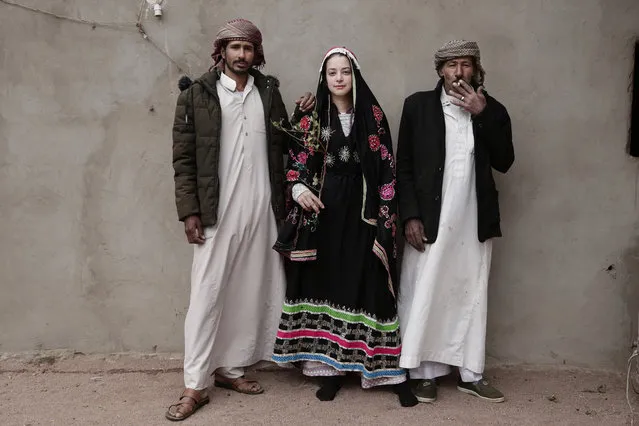
In this March 31, 2019 photo, an Egyptian student borrows a Bedouin wedding dress to pose for a photograph with Bedouin men from the Hamada tribe, in Wadi Sahw, Abu Zenima, in South Sinai, Egypt. Four Bedouin women are for the first time leading tours in Egypt’s Sinai Peninsula, breaking new ground in their deeply conservative community, where women almost never work outside the home or interact with outsiders.  The tourists can only be women, and the tours can’t go overnight. Each day before the sun sets, the group returns to the Hamada’s home village in Wadi Sahu, a narrow desert valley. (Photo by Nariman El-Mofty/AP Photo)

In this March 31, 2019 photo, an Egyptian student borrows a Bedouin wedding dress to pose for a photograph with Bedouin men from the Hamada tribe, in Wadi Sahw, Abu Zenima, in South Sinai, Egypt. Four Bedouin women are for the first time leading tours in Egypt’s Sinai Peninsula, breaking new ground in their deeply conservative community, where women almost never work outside the home or interact with outsiders. The tourists can only be women, and the tours can’t go overnight. Each day before the sun sets, the group returns to the Hamada’s home village in Wadi Sahu, a narrow desert valley. (Photo by Nariman El-Mofty/AP Photo)
Details
11 Apr 2019 00:01:00
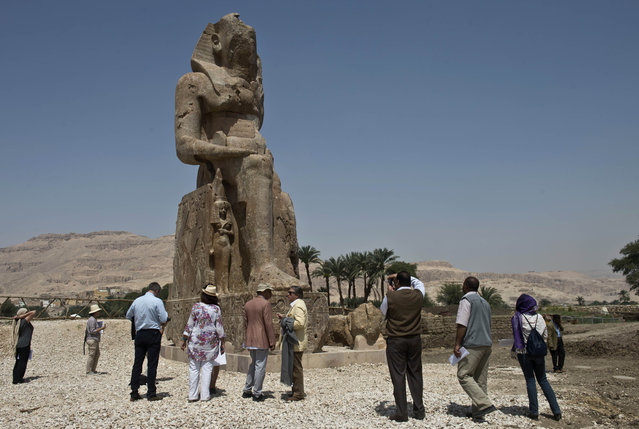
Tourists and journalists stand next to a newly displayed statue of pharaoh Amenhotep III and his wife Tiye (Down) in Egypt's temple city of Luxor on March 23, 2014. Two colossal statues of pharaoh Amenhotep III were unveiled by archaeologists today in their original sites in the funerary temple of the king, on the west bank of the Nile in Luxor, adding to the existing two famous ancient Memnon colossi. (Photo by Khaled Desouki/AFP Photo)

Tourists and journalists stand next to a newly displayed statue of pharaoh Amenhotep III and his wife Tiye (Down) in Egypt's temple city of Luxor on March 23, 2014. Two colossal statues of pharaoh Amenhotep III were unveiled by archaeologists today in their original sites in the funerary temple of the king, on the west bank of the Nile in Luxor, adding to the existing two famous ancient Memnon colossi. (Photo by Khaled Desouki/AFP Photo)
Details
25 Mar 2014 09:02:00
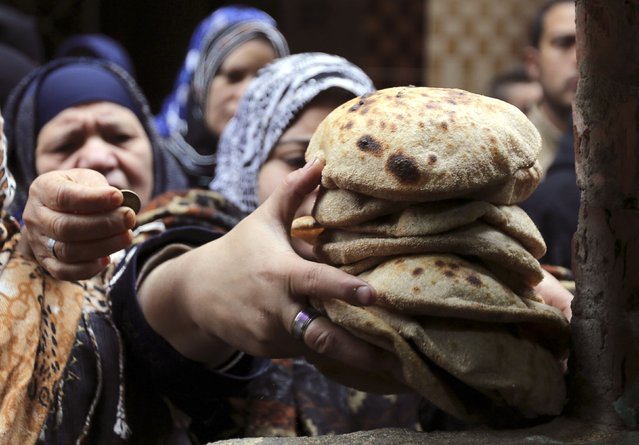
A woman buys bread at a bakery in Cairo, January 8, 2015. The successful roll-out so far of a new “smart card” system to distribute subsidised bread has been a major achievement for Egypt's government, saving money while earning praise from families who no longer have to wake early to fight for loaves. (Photo by Mohamed Abd El Ghany/Reuters)

A woman buys bread at a bakery in Cairo, January 8, 2015. The successful roll-out so far of a new “smart card” system to distribute subsidised bread has been a major achievement for Egypt's government, saving money while earning praise from families who no longer have to wake early to fight for loaves. (Photo by Mohamed Abd El Ghany/Reuters)
Details
13 Jan 2015 14:35:00
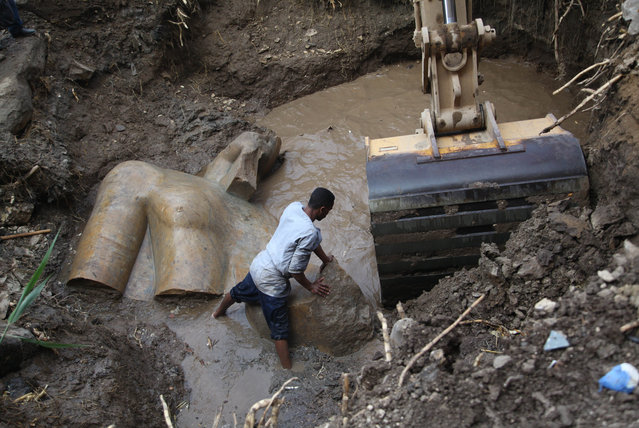
An Egyptian worker prepares to lift parts of a statue at the site of a new archeological discovery at Souq Al-Khamis district in Al-Matareya area, Cairo, Egypt on March 9 2017. According to the Ministry of Antiquities, two 19th dynasty royal statues were found in parts in the vicinity of King Ramses II temple in ancient Heliopolis (Oun) Sun Temples by a German-Egyptian archeological mission. (Photo by Xinhua News Agency/Rex Features/Shutterstock)

An Egyptian worker prepares to lift parts of a statue at the site of a new archeological discovery at Souq Al-Khamis district in Al-Matareya area, Cairo, Egypt on March 9 2017. According to the Ministry of Antiquities, two 19th dynasty royal statues were found in parts in the vicinity of King Ramses II temple in ancient Heliopolis (Oun) Sun Temples by a German-Egyptian archeological mission. (Photo by Xinhua News Agency/Rex Features/Shutterstock)
Details
15 Mar 2017 00:06:00
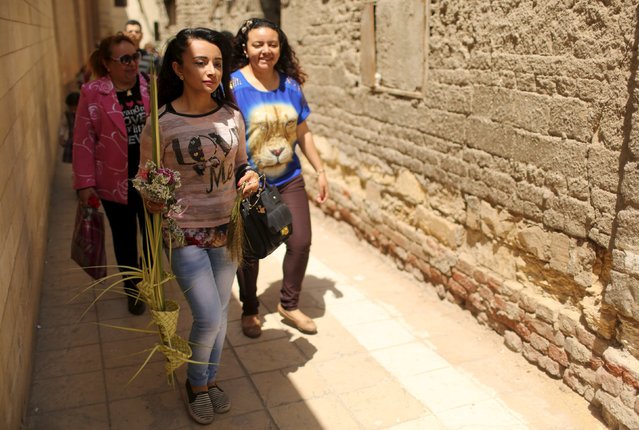
An Egyptian Coptic Christian girl carries palm decoration during Palm Sunday inside a church in Old Cairo, April 5, 2015. (Photo by Asmaa Waguih/Reuters)

An Egyptian Coptic Christian girl carries palm decoration during Palm Sunday inside a church in Old Cairo, Egypt, April 5, 2015. For Christians worldwide, Palm Sunday marks Jesus Christ's entrance into Jerusalem, when his followers laid palm branches in his path, prior to his crucifixion. Western Christian churches and most Orthodox Christian churches follow different calendars and observe Easter on different dates. (Photo by Asmaa Waguih/Reuters)
Details
06 Apr 2015 09:20:00
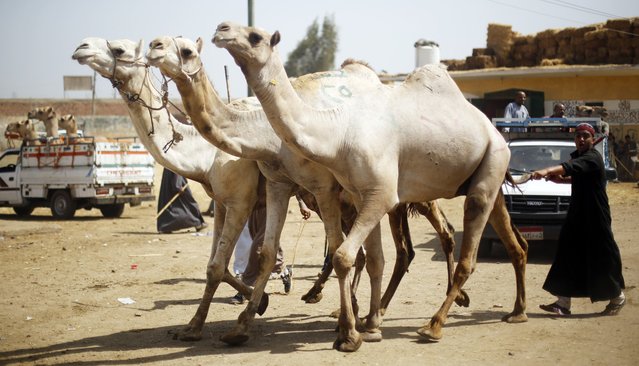
A man walks behind camels at the Birqash Camel Market, ahead of Eid al-Adha or Festival of Sacrifice, on the outskirts of Cairo September 29, 2014. (Photo by Amr Abdallah Dalsh/Reuters)

A man walks behind camels at the Birqash Camel Market, ahead of Eid al-Adha or Festival of Sacrifice, on the outskirts of Cairo September 29, 2014. Birqash Camel Market, one of the biggest markets for camel meat in Africa, draws sellers from Libya, Sudan, Somalia and other regions in Egypt. The camels sold at the market are also used in tourism. Traders say that the selling rate for a camel in 2014 is anywhere between 5,000 and 20,000 Egyptian pounds (700 – 2800 USD). (Photo by Amr Abdallah Dalsh/Reuters)
Details
02 Oct 2014 10:20:00