Loading...
Done
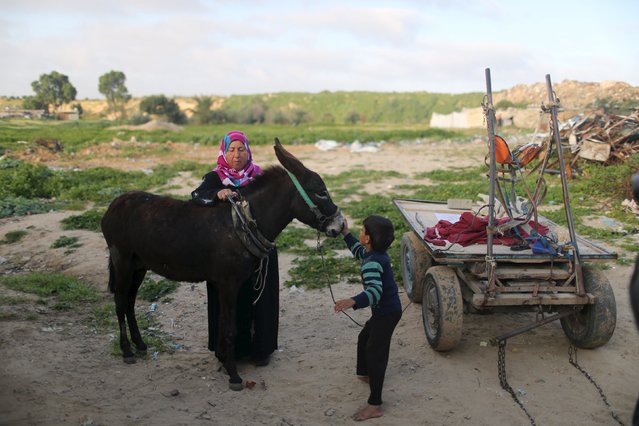
Palestinian woman Jihan Abu Muhsen prepares her donkey with her son Kareem before going work collecting bricks for sale from sites of demolished buildings, at her dwelling in Khan Younis in the southern Gaza Strip March 8, 2016. Abu Muhsen gathers bricks from the sites of demolished buildings and sells them to recycling factories. She earns around 20 shekels ($5) a day and her 10-year-old son Mohammad helps her when he is not at school. (Photo by Ibraheem Abu Mustafa/Reuters)

Palestinian woman Jihan Abu Muhsen prepares her donkey with her son Kareem before going work collecting bricks for sale from sites of demolished buildings, at her dwelling in Khan Younis in the southern Gaza Strip March 8, 2016. Abu Muhsen gathers bricks from the sites of demolished buildings and sells them to recycling factories. She earns around 20 shekels ($5) a day and her 10-year-old son Mohammad helps her when he is not at school. (Photo by Ibraheem Abu Mustafa/Reuters)
Details
19 Apr 2016 13:32:00
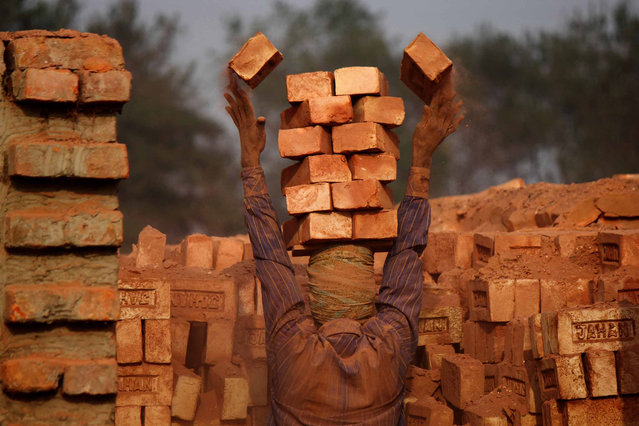
CGAP Photo Contest – South Asia Regional Winner: Bricks Worker, Bangladesh. A private enterprise worker is working at a brick field. These small businesses are creating new job opportunities for many poor people. (Photo by Moksumul Haque)

The shoemaker in Turkey, the potato seller in Vietnam, and the weaver in Bolivia are among the billions of low-income entrepreneurs who make the world go round. They are also the type of people who can benefit significantly from microfinance. Every year, the Consultative Group To Assist The Poor (or CGAP) hosts a photo contest asking entrants to submit photos based around the idea of microfinance.The purpose of the contest is to give amateur and professional photographers a chance to show the different ways that poor households manage their financial lives and make their lives better through financial inclusion. Photo: South Asia Regional Winner – “Bricks Worker”, Bangladesh. A private enterprise worker is working at a brick field. These small businesses are creating new job opportunities for many poor people. (Photo by Moksumul Haque)
Details
14 Aug 2014 10:58:00
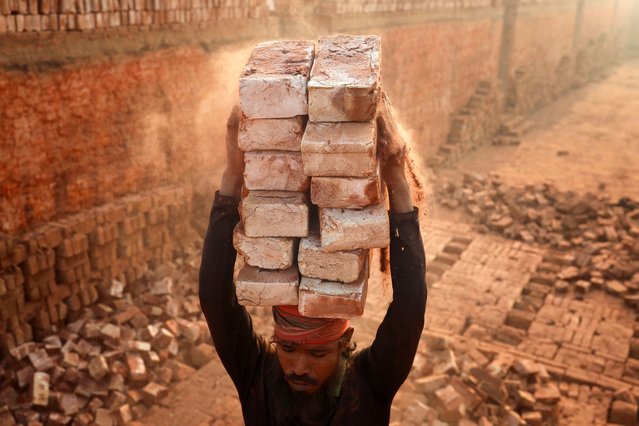
A man stacks more bricks on his head while working at in brickfields Narayanganj near Dhaka Bangladesh on January 02, 2021. (Photo by Kazi Salahuddin Razu/NurPhoto via Getty Images)

A man stacks more bricks on his head while working at in brickfields Narayanganj near Dhaka, Bangladesh on January 02, 2021. (Photo by Kazi Salahuddin Razu/NurPhoto via Getty Images)
Details
29 Jan 2021 09:38:00
How Snakeskin Handbags Are Made

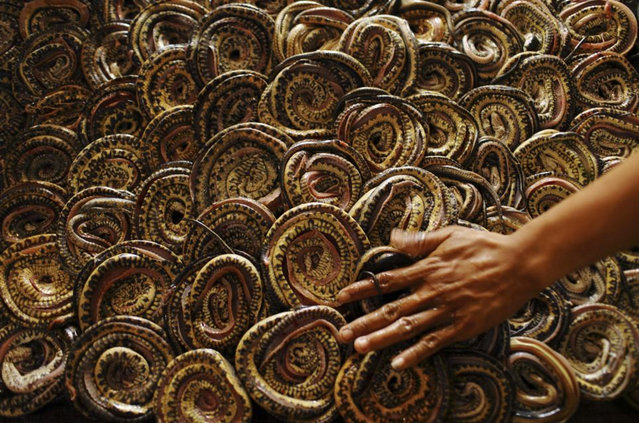
Images from a snake slaughterhouse at Kapetakan village in Indonesia’s West Java province. Wakira, who is known as “Boss Cobra”, owns the slaughterhouse that produces snake meat and skin. Snake meat is believed by some to be a remedy for skin diseases and asthma, as well as an aid to increase virility. The snake skins, measuring in the hundreds of metres, are sold to bag factories in the West and Central Java provinces on a monthly basis. The price of a bag made from snake skin costs between 150,000 rupiah ($ 15.60) and 300,000 rupiah ($31.20), depending on its size. That snakeskin handbag you’ll buy is costing a hell of a lot more.
Details
20 Feb 2013 12:00:00
Colombian-American actress Sofia Vergara shows some skin while basking on then beach early December 2024. (Photo by sofiavergara/Instagram)

Colombian-American actress Sofia Vergara shows some skin while basking on then beach early December 2024. (Photo by sofiavergara/Instagram)
Details
17 Dec 2024 04:15:00
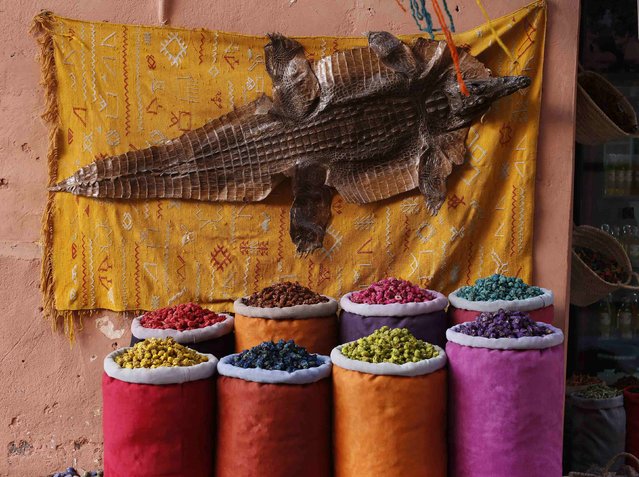
Crocodile skin is seen at a workshop in the old Medina of Marrakesh December 13, 2014. (Photo by Youssef Boudlal/Reuters)

Crocodile skin is seen at a workshop in the old Medina of Marrakesh December 13, 2014. (Photo by Youssef Boudlal/Reuters)
Details
19 Feb 2015 14:48:00
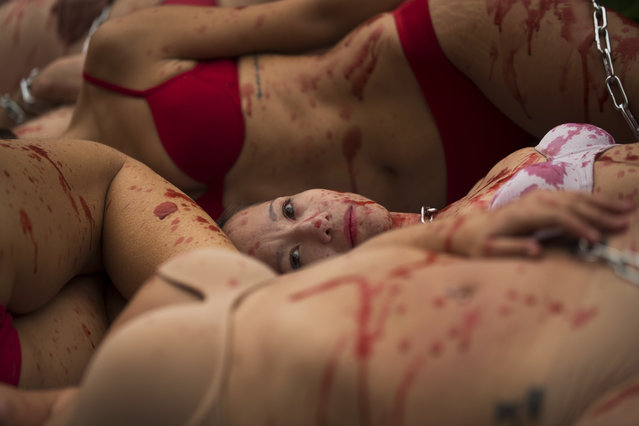
Animal rights activist, stained with fake blood, perform during a protest against the use of animal skins in the clothes and fashion industry, in Madrid, Sunday, December 10, 2017. (Photo by Francisco Seco/AP Photo)

Animal rights activist, stained with fake blood, perform during a protest against the use of animal skins in the clothes and fashion industry, in Madrid, Sunday, December 10, 2017. (Photo by Francisco Seco/AP Photo)
Details
11 Dec 2017 09:50:00
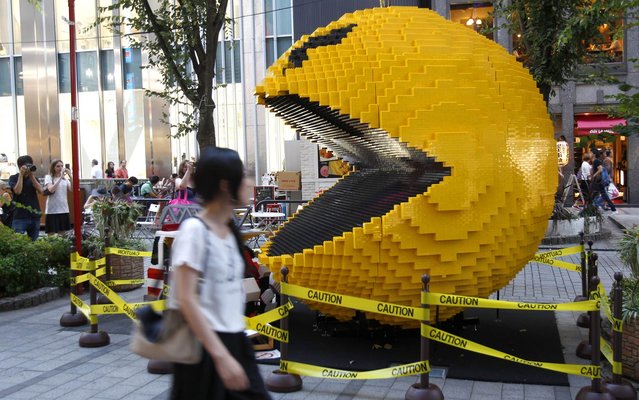
A woman walks past a giant Pac-Man in Tokyo's Shinjuku area, Wednesday, August 12, 2015. The three-meter (about nine feet and 10 inches)-tall Pac-Man and other video game characters, made of Lego bricks, were on display to promote the upcoming movie “Pixels”. (Photo by Ken Aragaki/AP Photo)

A woman walks past a giant Pac-Man in Tokyo's Shinjuku area, Wednesday, August 12, 2015. The three-meter (about nine feet and 10 inches)-tall Pac-Man and other video game characters, made of Lego bricks, were on display to promote the upcoming movie “Pixels”. (Photo by Ken Aragaki/AP Photo)
Details
13 Aug 2015 12:35:00