Loading...
Done
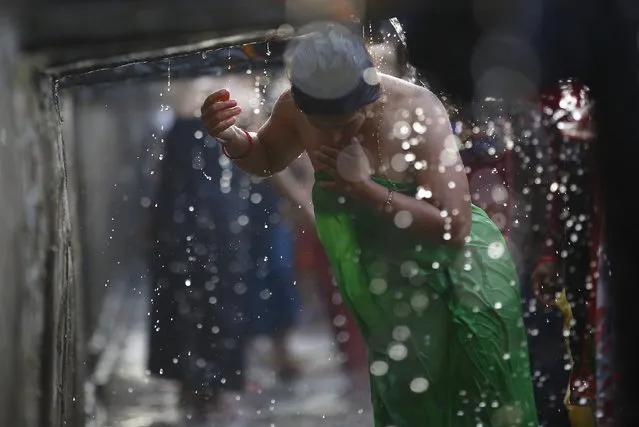
A devotee takes a holy bath at the Balaju Baise Dhara (22 water spouts) during the Baishak Asnan festival in Kathmandu April 4, 2015. Devotees believe that the water from these stone spouts, which is collected from the catchment area of the Nagarjun forest behind the spouts, will cure pains and skin diseases. (Photo by Navesh Chitrakar/Reuters)

A devotee takes a holy bath at the Balaju Baise Dhara (22 water spouts) during the Baishak Asnan festival in Kathmandu April 4, 2015. Devotees believe that the water from these stone spouts, which is collected from the catchment area of the Nagarjun forest behind the spouts, will cure pains and skin diseases. (Photo by Navesh Chitrakar/Reuters)
Details
04 Apr 2015 10:53:00
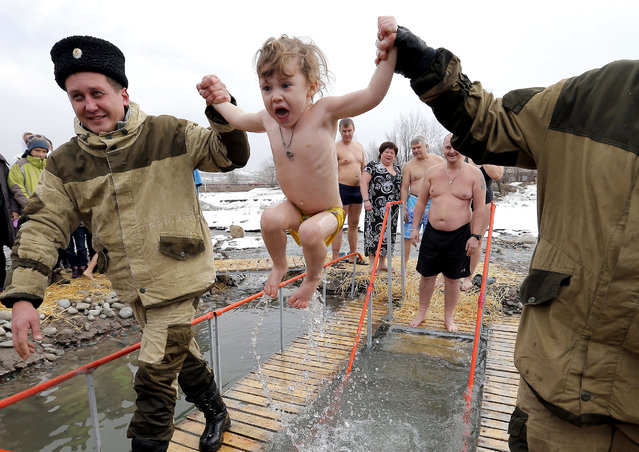
An Orthodox child is given an icy dip in a lake in celebration of Epiphan, near the village of Vorontsovka, some 20 km from the Kyrgyz capital of Bishkek, Kyrgyzstan, 19 January 2019. People believe that bathing in blessed waters during the holiday of Epiphany strengthens their spirit and body. (Photo by Igor Kovalenko/EPA/EFE)

An Orthodox child is given an icy dip in a lake in celebration of Epiphan, near the village of Vorontsovka, some 20 km from the Kyrgyz capital of Bishkek, Kyrgyzstan, 19 January 2019. People believe that bathing in blessed waters during the holiday of Epiphany strengthens their spirit and body. (Photo by Igor Kovalenko/EPA/EFE)
Details
21 Feb 2019 00:05:00
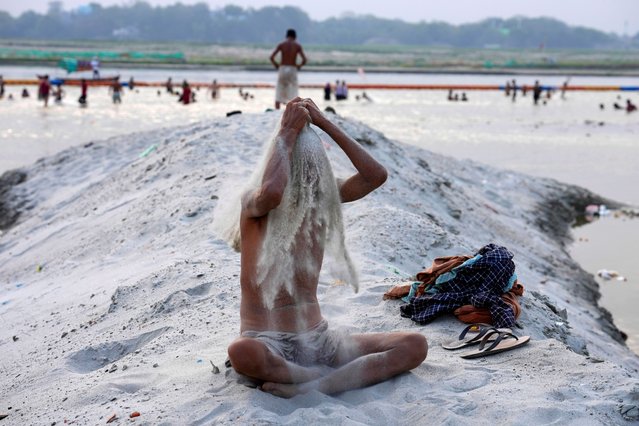
A Hindu devotee takes sand bath at Sangam, the confluence of the rivers Ganges and Yamuna, in Prayagraj, in the northern Indian state of Uttar Pradesh, Monday, June 5, 2023. Prayagraj in the northern Uttar Pradesh state is an important Hindu pilgrimage center. (Photo by Rajesh Kumar Singh/AP Photo)

A Hindu devotee takes sand bath at Sangam, the confluence of the rivers Ganges and Yamuna, in Prayagraj, in the northern Indian state of Uttar Pradesh, Monday, June 5, 2023. Prayagraj in the northern Uttar Pradesh state is an important Hindu pilgrimage center. (Photo by Rajesh Kumar Singh/AP Photo)
Details
13 Jun 2023 02:43:00
Lisa Yu crawls through a mud pit under low slung barbed wire as she competes in The Tough Bloke Challenge

Lisa Yu crawls through a mud pit under low slung barbed wire as she competes in The Tough Bloke Challenge on March 4, 2012 in Melbourne, Australia. The Tough Bloke Challenge is one of the most gruelling adventure runs in Australia consisting of 18 obstacles over a 6 km cross-country course laden with thick mud-pits and ice-cold water crossings. (Photo by Scott Barbour/Getty Images)
Details
04 Mar 2012 12:36:00
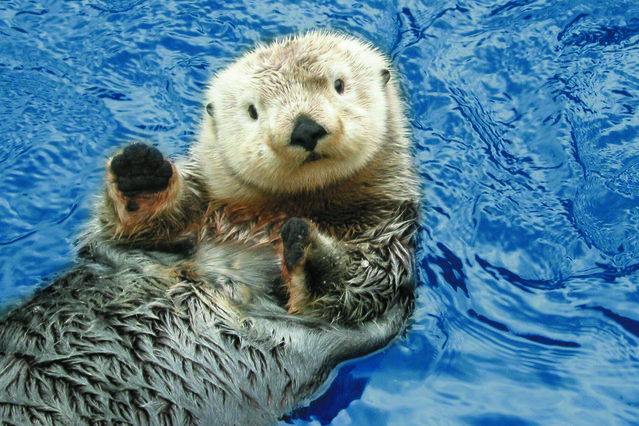
The Sea Otter

The sea otter (Enhydra lutris) is a marine mammal native to the coasts of the northern and eastern North Pacific Ocean. Adult sea otters typically weigh between 14 and 45 kg (31 and 99 lb), making them the heaviest members of the weasel family, but among the smallest marine mammals. Unlike most marine mammals, the sea otter's primary form of insulation is an exceptionally thick coat of fur, the densest in the animal kingdom. Although it can walk on land, the sea otter lives mostly in the ocean.
Details
26 Jan 2014 12:20:00
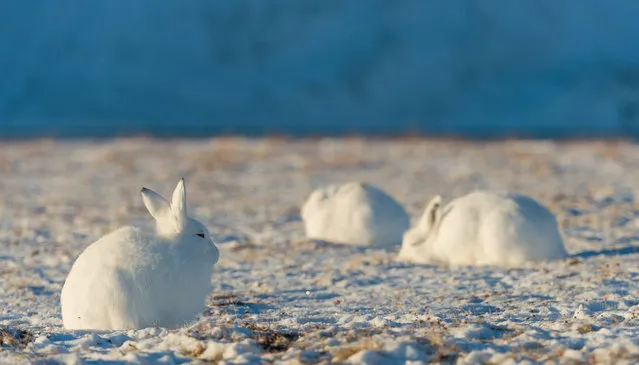
Arctic Hare

The arctic hare, or polar rabbit, is a species of hare which is adapted largely to polar and mountainous habitats. The arctic hare survives with a thick coat of fur and usually digs holes in the ground or under snow to keep warm and sleep. Arctic hares look like rabbits but have shorter ears, are taller when standing, and, unlike rabbits, can thrive in cold climates. They can travel together with many other hares, sometimes huddling with dozens or more, but are usually found alone, taking, in some cases, more than one partner. The arctic hare can run up to 60 kilometres per hour (40 mph). Its predators include the arctic wolf, arctic fox, and ermine.
Details
17 Mar 2014 13:56:00
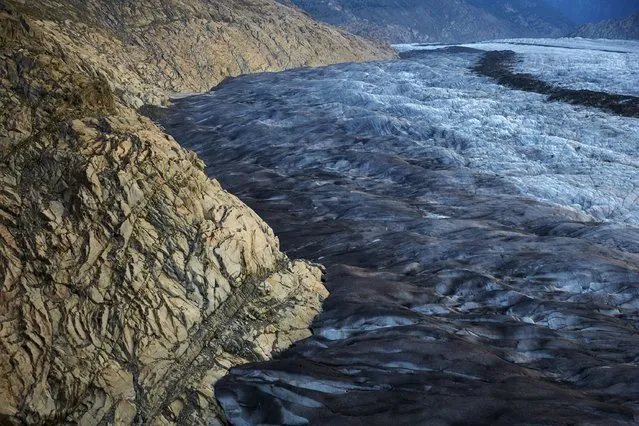
The Aletsch Glacier is pictured at dusk in Fiesch, Switzerland, August 11, 2015. (Photo by Denis Balibouse/Reuters)

The Aletsch Glacier is pictured at dusk in Fiesch, Switzerland, August 11, 2015. One of Europe's biggest glaciers, the Great Aletsch coils 23 km (14 miles) through the Swiss Alps – and yet this mighty river of ice could almost vanish in the lifetimes of people born today because of climate change. The glacier, 900 metres (2,950 feet) thick at one point, has retreated about 3 km (1.9 miles) since 1870 and that pace is quickening. (Photo by Denis Balibouse/Reuters)
Details
18 Oct 2015 08:05:00
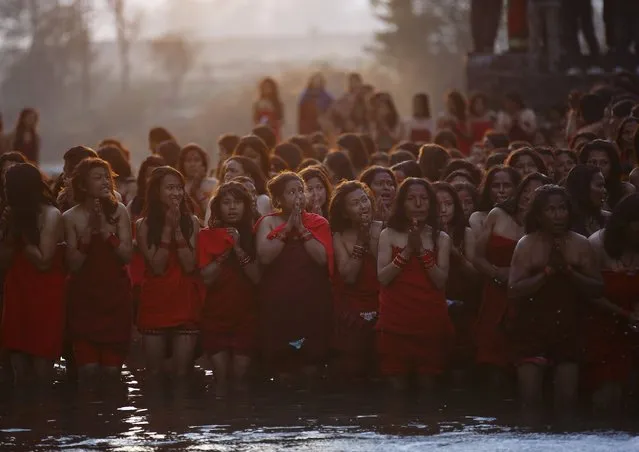
Devotees offer prayers before taking a holy bath during the Swasthani Bratakatha festival in the Triveni River in Panauti near Kathmandu January 24, 2015. (Photo by Navesh Chitrakar/Reuters)

Devotees offer prayers before taking a holy bath during the Swasthani Bratakatha festival in the Triveni River in Panauti near Kathmandu January 24, 2015. During the month long festival, devotees recite one chapter of a Hindu tale daily from the 31-chapter sacred Swasthani Brata Katha book that is dedicated to the God Madhavnarayan and the Goddess Swasthani, alongside various other gods and goddess and the miraculous feats performed by them. The devotees also go on pilgrimages to various temples, perform religious rituals, take a holy bath in the rivers and fast for a month, especially among women who believe fasting helps in their family's well-being or in getting them a good husband. (Photo by Navesh Chitrakar/Reuters)
Details
25 Jan 2015 10:02:00