Loading...
Done
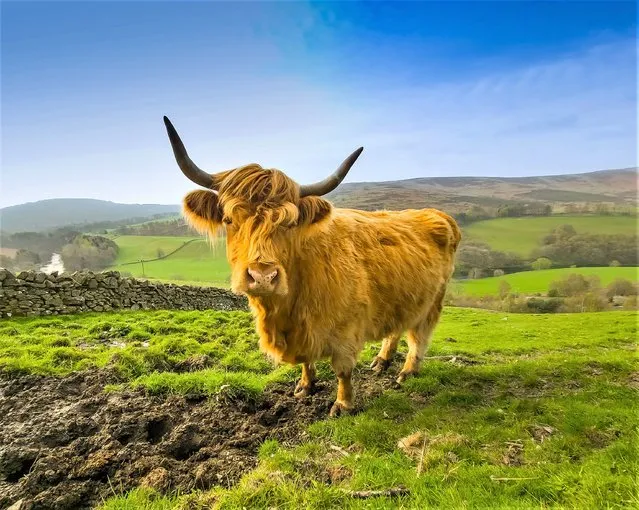
A highland cow grazing high above the River Tweed at Thormylee in the Scottish Borders strikes a formidable pose in the morning light on May 3, 2023. (Photo by Phil Wilkinson/The Times)

A highland cow grazing high above the River Tweed at Thormylee in the Scottish Borders strikes a formidable pose in the morning light on May 3, 2023. (Photo by Phil Wilkinson/The Times)
Details
07 May 2023 03:26:00
A group of Chinese hostesses walk during the opening session of the National People's Congress (NPC) at the Tiananmen square in Beijing on March 5, 2025. (Photo by WANG Zhao/AFP Photo)

A group of Chinese hostesses walk during the opening session of the National People's Congress (NPC) at the Tiananmen square in Beijing on March 5, 2025. (Photo by WANG Zhao/AFP Photo)
Details
21 Mar 2025 03:31:00
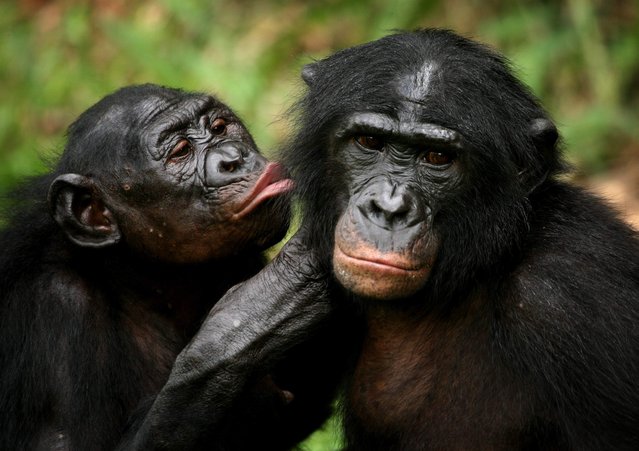
Bonobo apes, primates unique to Congo and humankind's closest relative, groom one another at a sanctuary just outside the capital Kinshasa, Congo on October 31, 2006. (Photo by Finbarr O'Reilly/Reuters)

Bonobo apes, primates unique to Congo and humankind's closest relative, groom one another at a sanctuary just outside the capital Kinshasa, Congo on October 31, 2006. (Photo by Finbarr O'Reilly/Reuters)
Details
08 Feb 2017 00:01:00
A woman wearing a face mask rides a bicycle with a child, following an outbreak of the coronavirus disease (COVID-19) in Wuhan, Hubei province, China on February 8, 2021. (Photo by Aly Song/Reuters)

A woman wearing a face mask rides a bicycle with a child, following an outbreak of the coronavirus disease (COVID-19) in Wuhan, Hubei province, China on February 8, 2021. (Photo by Aly Song/Reuters)
Details
16 Feb 2021 09:59:00
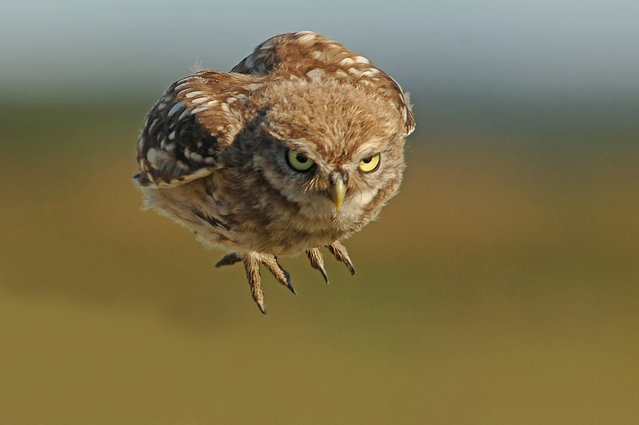
Little owl chicks in Northumberland, UK on August 19, 2018. Strutting up and down and barrelling through the air, these Little Owl chicks will soon be fending for themselves. The intense little birds were snapped by wildlife photographer Bill Doherty in his native Northumberland. The chicks have about seven or eight weeks to learn their survival skills before their parents drive them away to fend for themselves. (Photo by Bill Doherty/South West News Service)

Little owl chicks in Northumberland, UK on August 19, 2018. Strutting up and down and barrelling through the air, these Little Owl chicks will soon be fending for themselves. The intense little birds were snapped by wildlife photographer Bill Doherty in his native Northumberland. The chicks have about seven or eight weeks to learn their survival skills before their parents drive them away to fend for themselves. (Photo by Bill Doherty/South West News Service)
Details
26 Aug 2018 00:03:00
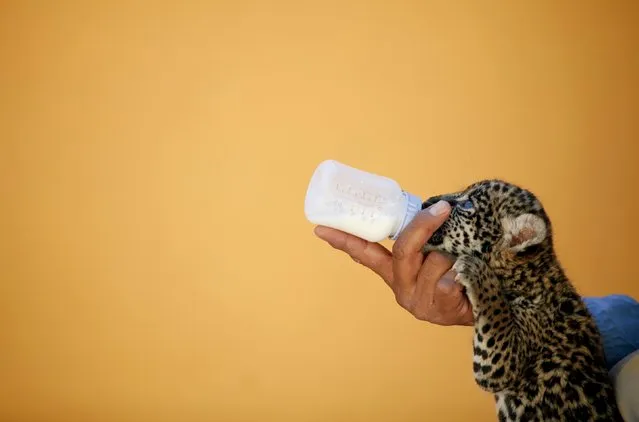
A keeper feeds a four-week-old jaguar while presenting it to the media, at a zoo in Ciudad Juarez, Mexico, October 14, 2015. (Photo by Jose Luis Gonzalez/Reuters)

A keeper feeds a four-week-old jaguar while presenting it to the media, at a zoo in Ciudad Juarez, Mexico, October 14, 2015. (Photo by Jose Luis Gonzalez/Reuters)
Details
19 Oct 2015 08:03:00
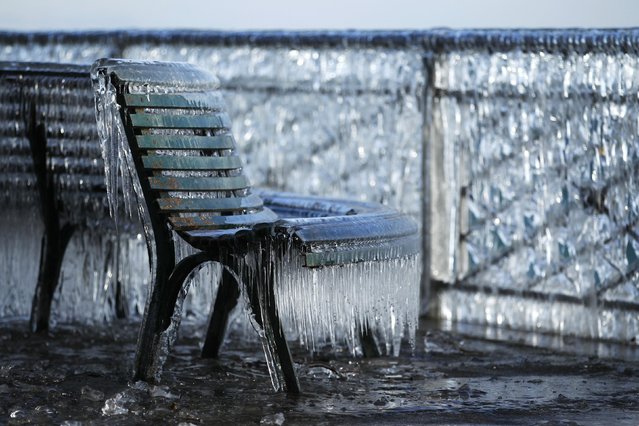
A frozen public bench is seen next to a lake side due to the heavy wind conditions in Geneva February 8, 2015. (Photo by Pierre Albouy/Reuters)

A frozen public bench is seen next to a lake side due to the heavy wind conditions in Geneva February 8, 2015. (Photo by Pierre Albouy/Reuters)
Details
19 Feb 2015 14:52:00
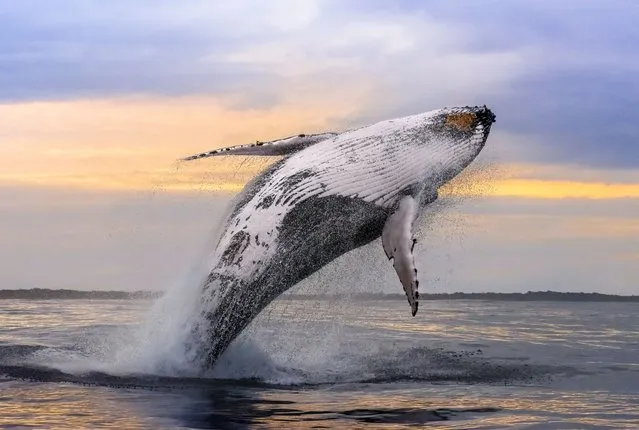
A 40-tonne humpback launching out of the water in an incredible breach in New South Wales, Australia on October 2022 in front of a sunset. The humpback whale can grow up to 56 feet long and typically covers 9,900 miles a year as it travels through the oceans of the world. Humpback whales are a species of Baleen whale, meaning they don't have teeth. Instead, they have baleen which helps them to filter feed. Their main source of food is krill or tiny bait fish. (Photo by Jodie Lowe/Media Drum Images)

A 40-tonne humpback launching out of the water in an incredible breach in New South Wales, Australia on October 2022 in front of a sunset. The humpback whale can grow up to 56 feet long and typically covers 9,900 miles a year as it travels through the oceans of the world. Humpback whales are a species of Baleen whale, meaning they don't have teeth. Instead, they have baleen which helps them to filter feed. Their main source of food is krill or tiny bait fish. (Photo by Jodie Lowe/Media Drum Images)

Details
30 Oct 2022 04:28:00