Loading...
Done
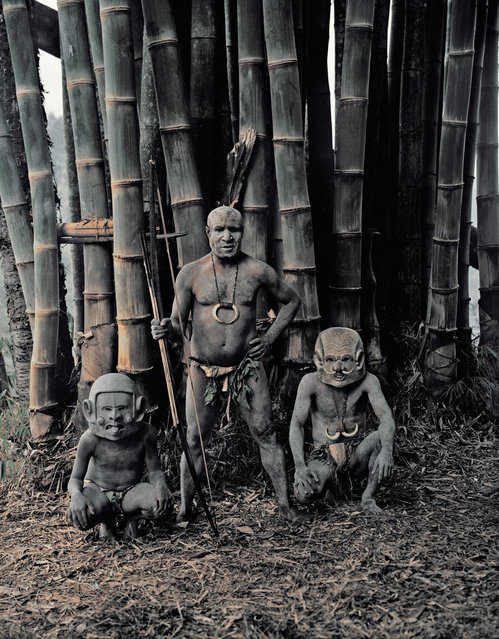
“Asaro from the Eastern Highlands”. The mudmen could not cover their faces with mud because the people of Papua New Guinea thought that the mud from the Asaro river was poisonous. So instead of covering their faces with this alleged poison, they made masks from pebbles that they heated and water from the waterfall, with unusual designs such as long or very short ears either going down to the chin or sticking up at the top, long joined eyebrows attached to the top of the ears, horns and sideways mouths. (Jimmy Nelson)

“Asaro from the Eastern Highlands”. The mudmen could not cover their faces with mud because the people of Papua New Guinea thought that the mud from the Asaro river was poisonous. So instead of covering their faces with this alleged poison, they made masks from pebbles that they heated and water from the waterfall, with unusual designs such as long or very short ears either going down to the chin or sticking up at the top, long joined eyebrows attached to the top of the ears, horns and sideways mouths. (Photo and caption by Jimmy Nelson)
Details
20 Oct 2013 08:54:00
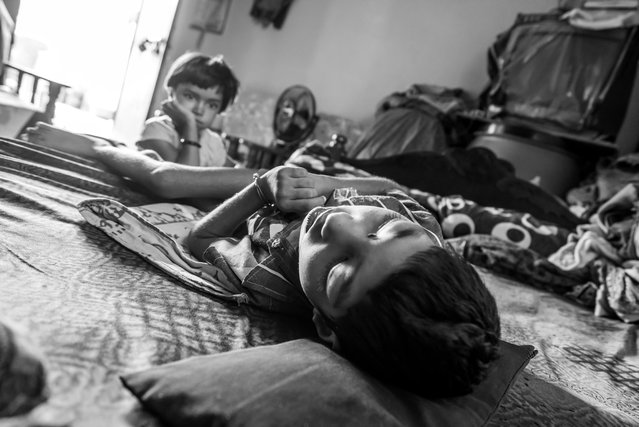
Unnati, 6 years old, at home with his sister Ishika, 4 years old, in the Mahamai Ka Bagh neighborhood. Unnati was born to parents contaminated by a carcinogenic and mutagenic water supply. This year marks the 31st anniversary of the 1984 Union Carbide gas tragedy that killed thousands of citizens of Bhopal within 72 hours and has gone on to claim thousands more as a result of the polluted environment. (Photo by Giles Clarke/Getty Images)

Unnati, 6 years old, at home with his sister Ishika, 4 years old, in the Mahamai Ka Bagh neighborhood. Unnati was born to parents contaminated by a carcinogenic and mutagenic water supply. This year marks the 31st anniversary of the 1984 Union Carbide gas tragedy that killed thousands of citizens of Bhopal within 72 hours and has gone on to claim thousands more as a result of the polluted environment. (Photo by Giles Clarke/Getty Images)
Details
04 Dec 2015 08:01:00
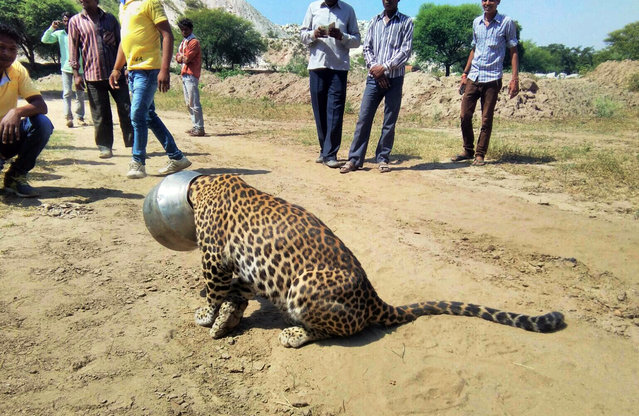
People stand around a leopard with its head stuck in a vessel in Rajsamand district of Rajasthan state, India, Wednesday, September 30, 2015. The leopard's head got stuck when it attempted to drink water from the pot, according to news reports. Forest officials tranquilized the animal and sawed off the vessel later in the day. (Photo by Kabir Jethi/AP Photo)

People stand around a leopard with its head stuck in a vessel in Rajsamand district of Rajasthan state, India, Wednesday, September 30, 2015. The leopard's head got stuck when it attempted to drink water from the pot, according to news reports. Forest officials tranquilized the animal and sawed off the vessel later in the day. (Photo by Kabir Jethi/AP Photo)
Details
31 Dec 2015 08:00:00
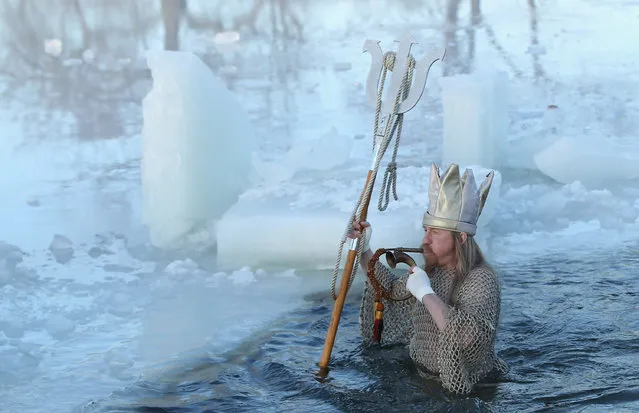
An ice swimming enthusiast dressed as Neptune takes to the frigid waters of Orankesee lake during the 27th annual "Winter Swimming in Berlin" on January 8, 2011 in Berlin, Germany. A local swimmers' group called the “Berlin Seals” invite ice swimmers from across Germany and abroad to the annual event. Members claim ice swimming is good for the body's blood circulation. (Photo by Sean Gallup)

An ice swimming enthusiast dressed as Neptune takes to the frigid waters of Orankesee lake during the 27th annual "Winter Swimming in Berlin" on January 8, 2011 in Berlin, Germany. A local swimmers' group called the “Berlin Seals” invite ice swimmers from across Germany and abroad to the annual event. Members claim ice swimming is good for the body's blood circulation. (Photo by Sean Gallup)
Details
16 Jun 2015 13:45:00
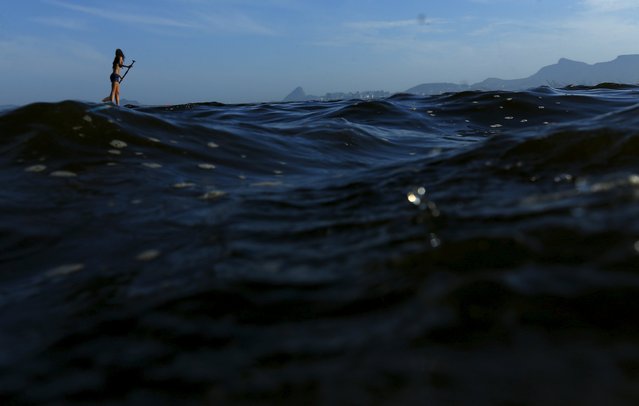
A girl paddles on her stand-up board on the waters of Guanabara bay at Bica beach in Rio de Janeiro Brazil, January 10, 2016. (Photo by Ricardo Moraes/Reuters)

A girl paddles on her stand-up board on the waters of Guanabara bay at Bica beach in Rio de Janeiro Brazil, January 10, 2016. Few features capture the beauty, or the problems, of one of the world's most dramatic urban landscapes like Guanabara Bay - the finger-like inlet that forms the shoreline and harbor for Rio de Janeiro. The bay, which carves into southeast Brazil from the Atlantic Ocean, literally gave Rio its name when Portuguese mariners mistook it for a “rio”, or “river”. Four centuries later, the bay is preparing to welcome another sort of seafarer – Olympic sailors, who will navigate the bay when the 2016 Rio Olympics kick off in August. (Photo by Ricardo Moraes/Reuters)
Details
28 Apr 2016 12:13:00
Visitors look at tropical fish transported from Japan's southern island of Okinawa displayed in a giant 14-ton fish tank at the Sony Square event space in Tokyo on July 17, 2016. The 45-day-long summer exhibition will be held through August 28 to display sea creatures common to the waters around Okinawa. (Photo by Kazuhiro Nogi/AFP Photo)

Visitors look at tropical fish transported from Japan's southern island of Okinawa displayed in a giant 14-ton fish tank at the Sony Square event space in Tokyo on July 17, 2016. The 45-day-long summer exhibition will be held through August 28 to display sea creatures common to the waters around Okinawa. (Photo by Kazuhiro Nogi/AFP Photo)
Details
18 Jul 2016 13:05:00
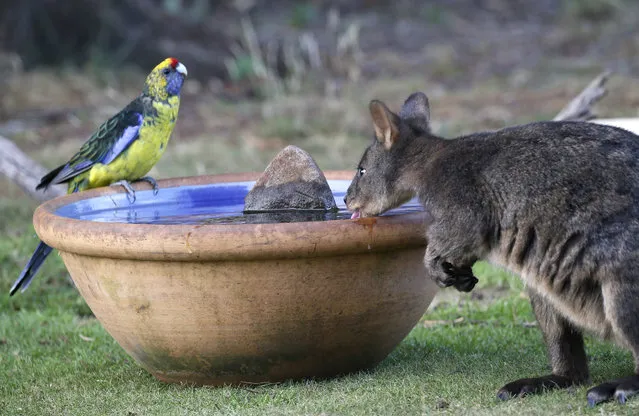
A green rosella and a wallaby, known as a Pademelon, eye off as they drink from a water bowl put out for thirsty wild animals at a back-yard in Kayena, in northern Tasmania, 01 February 2019. Australia recorded its hottest month on record in January; it was also the hottest and driest month on record for the Australian island state of Tasmania. (Photo by Barbara Walton/EPA/EFE)

A green rosella and a wallaby, known as a Pademelon, eye off as they drink from a water bowl put out for thirsty wild animals at a back-yard in Kayena, in northern Tasmania, 01 February 2019. Australia recorded its hottest month on record in January; it was also the hottest and driest month on record for the Australian island state of Tasmania. (Photo by Barbara Walton/EPA/EFE)
Details
03 Feb 2019 00:03:00
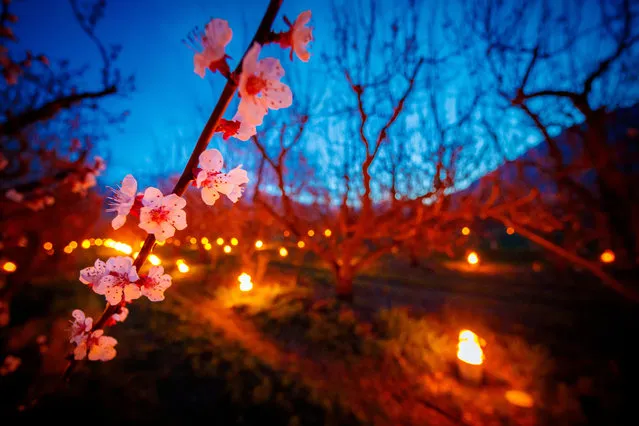
Anti-frost candles burn in apricot plantations to protect flowering buds and blossoms from frost in the midst of the Swiss Alps, in Saxon, Canton of Valais, Switzerland, 05 April 2019. With an unusually low temperature forecast for the season, fruit growers try to protect their buds from frost damage with two different means, icy water or large candles. (Photo by Valentin Flauraud/EPA/EFE)

Anti-frost candles burn in apricot plantations to protect flowering buds and blossoms from frost in the midst of the Swiss Alps, in Saxon, Canton of Valais, Switzerland, 05 April 2019. With an unusually low temperature forecast for the season, fruit growers try to protect their buds from frost damage with two different means, icy water or large candles. (Photo by Valentin Flauraud/EPA/EFE)
Details
18 Apr 2019 00:03:00