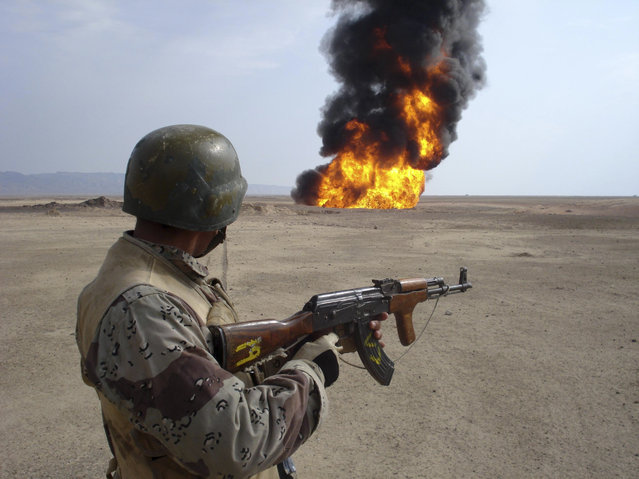
An Iraqi soldier stands guard as a pipeline burns in the background after an explosion 30 kilometers (20 miles) northeast of Tikrit, Iraq, Monday, February 11, 2008. (Photo by Bassem Daham/AP Photo)
Xiren Wang, Lili Wat, and Sitong Chen join the pageant’s opening routine, dancing to “The Boys”, a song by K-Pop group «Girls’ Generation». While the women come from a range of professional backgrounds – including economics, nursing, and acting – every contestant is looking for her big break into the entertainment industry. Most contestants said they would prefer to have a career in the U.S. but would go wherever the opportunity lies. (Photo and caption by John Brecher/Sahra Vang Nguyen/NBC News)
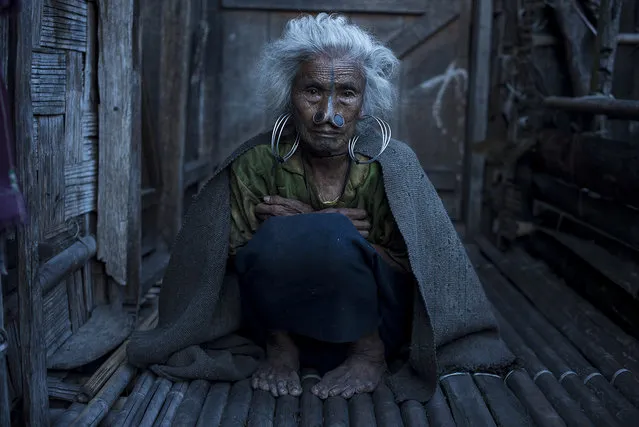
“YagYang”. The Apatani are tribal people living in north east of India in the region of Arunachal Pradesh. Tattooing and stuffing of large nose plugs is the particularity of these women. YagYang 75 years old, her husband passed away few months ago and she feels very alone, during my visit I was very fond of this woman and I wanted to spend some more time with her, so I asked her which was her favorite dish. The next day i returned with the fresh fish, as she mentioned, and when she saw me she was very happy and welcomed me with a big smile. Photo location: India. (Photo and caption by Passarini Mattia/National Geographic Photo Contest)
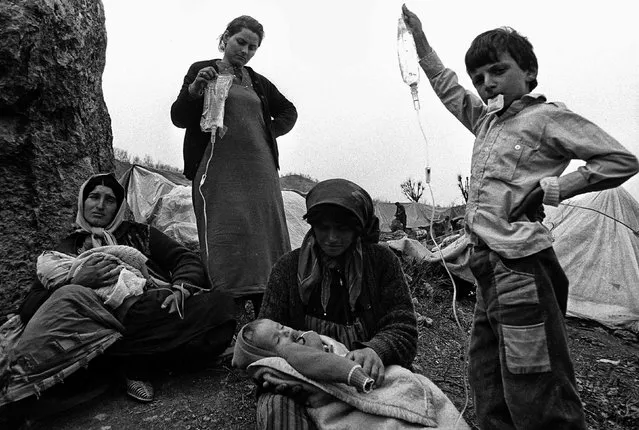
Iraqi Kurdish refugees wait with children in Cukurca refugee camp in Turkey April 8, 1991. Reuters photographers have chronicled Kurdish refugee crises over the years. In 1991 Srdjan Zivulovic documented refugees in Cukurca who had escaped a military operation by Saddam Hussein's government in Iraq aimed at “Arabising” Kurdish areas in the north. Hundreds of thousands fled into Turkey and Iran. Images shot in recent months show familiar scenes as crowds of people flee Islamic State militants in Syria. There are as many as 30 million Kurds, spread through Turkey, Iraq, Syria and Iran. Most Kurds are Sunni Muslims, but tend to feel more loyalty to their Kurdishness, rather than their religion. (Photo by Srdjan Zivulovic/Reuters)
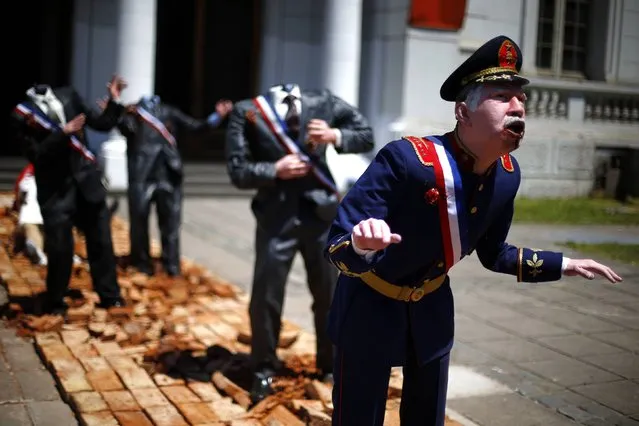
A sculptural artwork depicting former Chilean dictator Augusto Pinochet and headless presidents shot by a hooded high school student (not pictured) is seen at the Contemporary Art Museum in Santiago, December 2, 2014. The artwork, part of the “El ladrillo angular” (The angular brick) exhibition, portrays a student fighting against the ongoing continuity of dictatorship because of a political and economic system which has been impossible to destroy, according to “Papas Fritas” the artwork's creator. (Photo by Ivan Alvarado/Reuters)
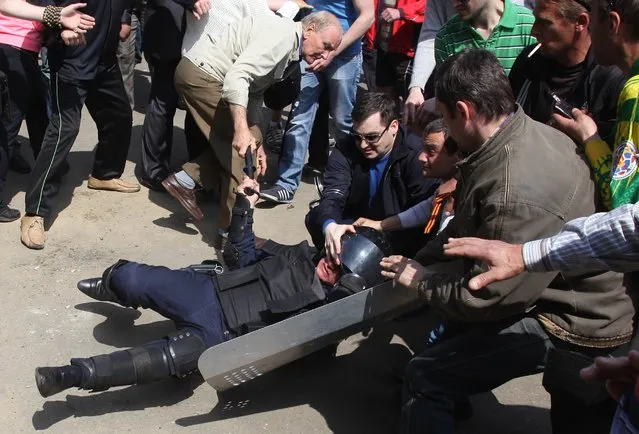
Pro-Russian activists attack policemen guarding the burned trade union building in the southern Ukrainian city of Odessa on May 3, 2014. More than 30 people were killed in a “criminal” blaze in Ukraine's southern city of Odessa, as violence spread across the country during the bloodiest day since Kiev's Western-backed government took power. Ukraine's interior ministry said at least 31 people had died in the fire Friday, with local media reporting that pro-Russian militants were believed to have been in the burning building at the time. (Photo by Anatolii Stepanov/AFP Photo)
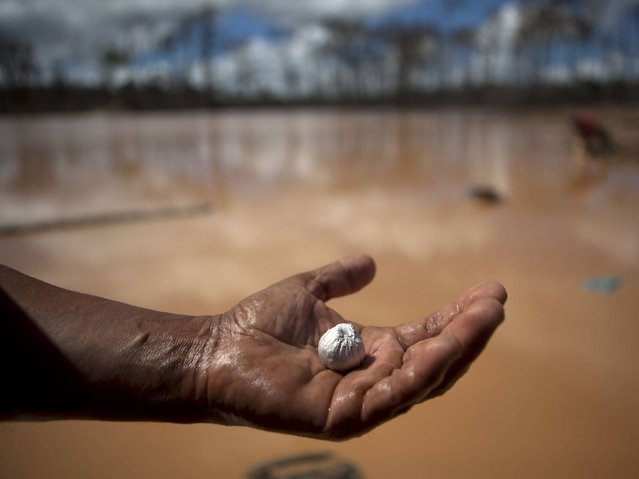
In this May 4, 2014 photo, a miner holds an amalgam of mercury and gold he mined after working a 28-hour shift at an illegal gold mining process, in La Pampa, in Peru's Madre de Dios region. Thousands of artisanal gold miners sweat through the long shifts and endure, for a few grams of gold, the perils of collapsing earth, limb-crushing machinery and the toxic mercury used to bind gold flecks. (Photo by Rodrigo Abd/AP Photo)
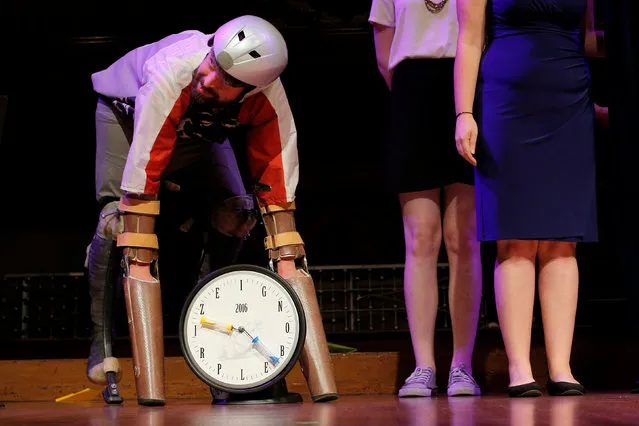
Thomas Thwaites of the United Kingdom accepts the 2016 Ig Nobel Prize in Biology for “creating prosthetic extensions of his limbs that allowed him to move in the manner of, and spend time roaming the hills in the company of, goats” during the 26th First Annual Ig Nobel Prize ceremony at Harvard University in Cambridge, Massachusetts, U.S. September 22, 2016. (Photo by Brian Snyder/Reuters)