Loading...
Done
Customers play with cats to find comfort at the Caturday Cat cafe after the government started opening some restaurants outside shopping malls, parks and barbershops, during the coronavirus disease (COVID-19) outbreak in Bangkok, Thailand on May 7, 2020. (Photo by Juarawee Kittisilpa/Reuters)

Customers play with cats to find comfort at the Caturday Cat cafe after the government started opening some restaurants outside shopping malls, parks and barbershops, during the coronavirus disease (COVID-19) outbreak in Bangkok, Thailand on May 7, 2020. (Photo by Juarawee Kittisilpa/Reuters)
Details
19 May 2020 00:05:00
Afghan bodybuilders compete in the Mr. Afghanistan bodybuilding competition in Kabul on July 10, 2024. (Photo by Wakil Kohsar/AFP Photo)

Afghan bodybuilders compete in the Mr. Afghanistan bodybuilding competition in Kabul on July 10, 2024. (Photo by Wakil Kohsar/AFP Photo)
Details
19 Jul 2024 05:11:00
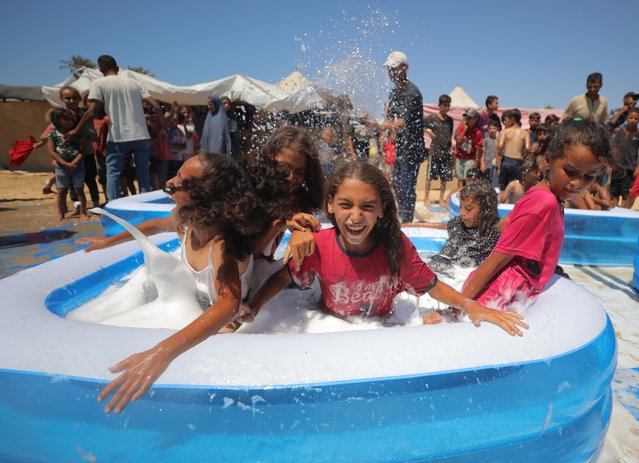
Inflatable pools were set up by volunteer youth to cool children living in tents in Khan Yunis city of Gaza under Israeli attacks, on July 18, 2024. (Photo by Hassan Jedi/Anadolu via Getty Images)

Inflatable pools were set up by volunteer youth to cool children living in tents in Khan Yunis city of Gaza under Israeli attacks, on July 18, 2024. (Photo by Hassan Jedi/Anadolu via Getty Images)
Details
25 Jul 2024 04:10:00
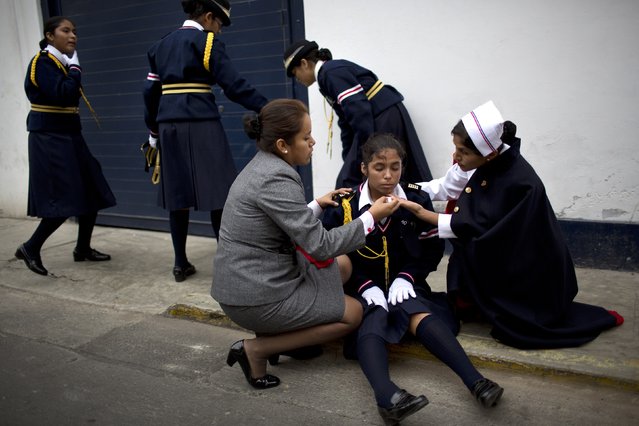
A student is assisted by teachers after she fell ill while marching in a parade celebrating Saint Peter's day in Lima, Peru, Monday, June 29, 2015. (Photo by Rodrigo Abd/AP Photo)

A student is assisted by teachers after she fell ill while marching in a parade celebrating Saint Peter's day in Lima, Peru, Monday, June 29, 2015. During the feast day of the Catholic saint, who is the patron saint of fishermen, coastal communities pay homage to St. Peter, whose statue is paraded to the sea and petitions are made to keep their vessels and all who work on them safe. (Photo by Rodrigo Abd/AP Photo)
Details
01 Jul 2015 13:46:00
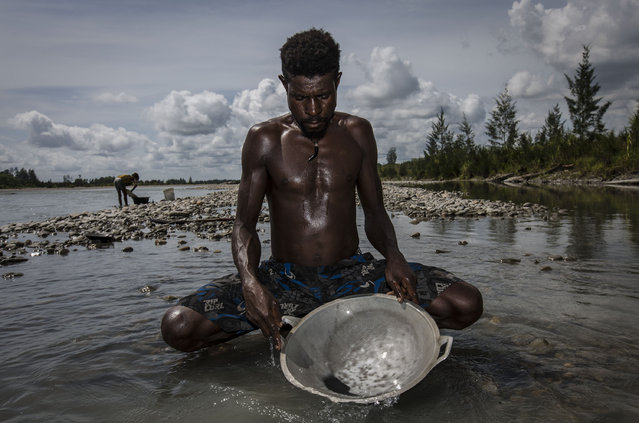
A illegal gold miner of Kamoro people, Tinus, pan for gold on February 4, 2017 in Timika, Papua Province, Indonesia. (Photo by Ulet Ifansasti/Getty Images)

A illegal gold miner of Kamoro people, Tinus, pan for gold on February 4, 2017 in Timika, Papua Province, Indonesia. Indonesia produces over 70 billion dollars in gold a year and is home to the largest gold mine and the third largest copper mine in the world, the Grasberg mine, which is located at West Papua. (Photo by Ulet Ifansasti/Getty Images)
Details
09 Feb 2017 00:05:00
A member of the Diablada  Urus group attends  the carnival parade in Oruro, Bolivia February 25, 2017. (Photo by David Mercado/Reuters)

A member of the Diablada Urus group attends the carnival parade in Oruro, Bolivia February 25, 2017. (Photo by David Mercado/Reuters)
Details
28 Feb 2017 00:04:00
Of all the species affected by river regulation in Australia, the ibis is one of the few that has changed its behaviour and moved to coastal cities. (Photo by Rick Stevens/The Guardian)

Tip turkey, dumpster chook, rubbish raptor – the Australian white ibis goes by many unflattering names. But it is a true urban success story, scavenging to survive in cities across Australia as wetlands have been lost. Wildlife photographer Rick Stevens captured them in Sydney. Here: Of all the species affected by river regulation in Australia, the ibis is one of the few that has changed its behaviour and moved to coastal cities. (Photo by Rick Stevens/The Guardian)
Details
11 Apr 2018 00:03:00
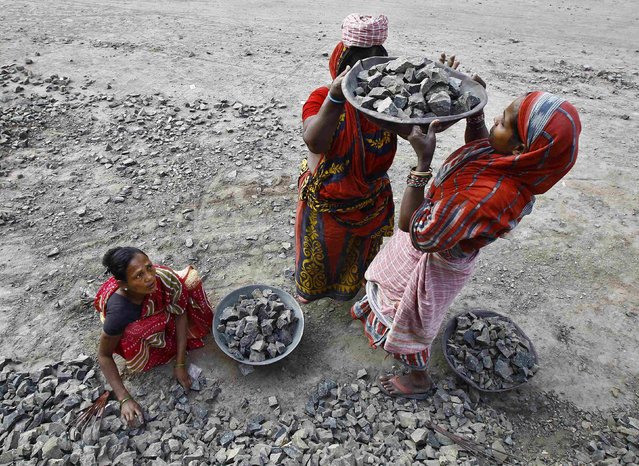
Women labourers work at the construction site of a road in Kolkata January 8, 2015. Across towns and cities in India, it is not uncommon to see women cleaning building sites, carrying bricks and or shoveling gravel - helping construct the infrastructure necessary for the country's economic and social development. (Photo by Rupak De Chowdhuri/Reuters)

Women labourers work at the construction site of a road in Kolkata January 8, 2015. Across towns and cities in India, it is not uncommon to see women cleaning building sites, carrying bricks and or shoveling gravel – helping construct the infrastructure necessary for the country's economic and social development. They help build roads, railway tracks, airports, and offices. They lay pipes for clean water supplies, cables for telecommunications, and dig the drains for sewage systems. But although women make up at least 20 percent of India's 40 million construction workers, they are less recognized than male workers with lower pay and often prone to safety hazards and sexual harassment. They are often unaware of their rights or scared to complain, say activists now trying to campaign for better treatment of women in the construction industry. (Photo by Rupak De Chowdhuri/Reuters)

Details
15 Jan 2015 13:47:00