Loading...
Done
Britain's skip Eve Muirhead, right, embraces Anna Sloan after defeating Switzerland to win the women's curling bronze medal at the 2014 Winter Olympics, Thursday, February 20, 2014, in Sochi, Russia. (Photo by Robert F. Bukaty/AP Photo)

Britain's skip Eve Muirhead, right, embraces Anna Sloan after defeating Switzerland to win the women's curling bronze medal at the 2014 Winter Olympics, Thursday, February 20, 2014, in Sochi, Russia. (Photo by Robert F. Bukaty/AP Photo)
Details
22 Feb 2014 13:17:00
David LaChapelle, Land Scape Anaheim, 2013, chromogenic print, 70 3/4 x 95 inches, 179.7 x 241.3 cm, edition of 3. Image courtesy of the artist and Paul Kasmin Gallery. (Photo by David LaChapelle Studio)

David LaChapelle, Land Scape Anaheim, 2013, chromogenic print, 70 3/4 x 95 inches, 179.7 x 241.3 cm, edition of 3. Image courtesy of the artist and Paul Kasmin Gallery. (Photo by David LaChapelle Studio)
Details
03 Mar 2014 10:14:00
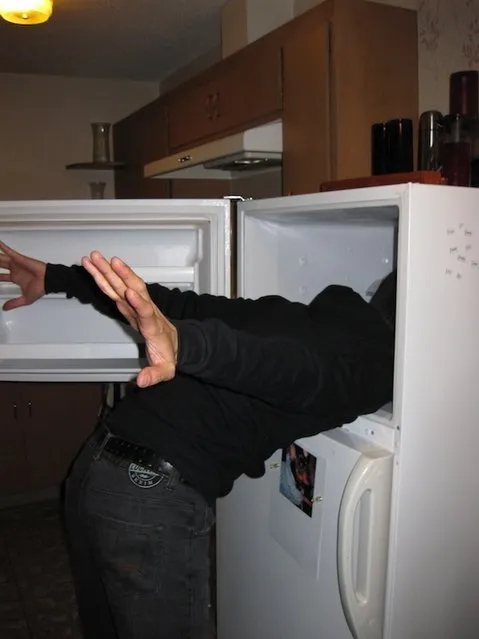
241543903 Heads In Freezer Part 2

241543903 (a.k.a “Heads in Freezers”) is a numerical keyword associated with a photo meme that involves people taking pictures with their heads in the freezer & sharing them online. By tagging a series of image files with a cryptic number, a high level of search engine optimization can be easily achieved. As a result, typing “241543903” into image search engines like Google Images successfully yields pages after pages of pictures showing people’s heads in freezers.
In 2009, David Horvitz started the “Heads in Freezers” meme. Participants took photos of their heads in freezers, tagged them with “241543903” and uploaded them to social media sites like Tumblr.
Details
12 Mar 2014 10:32:00
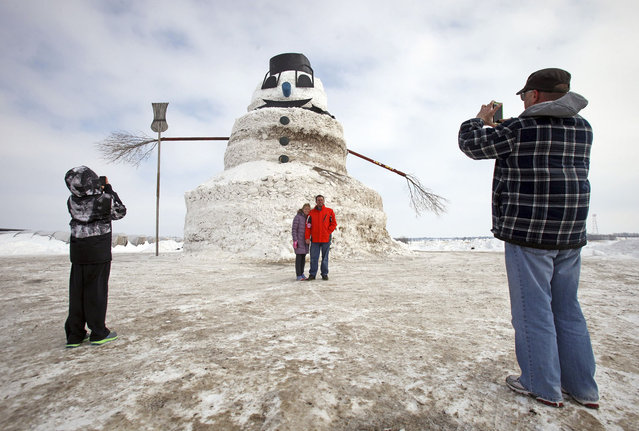
Kevin and Merith Starren have their picture taken by Merith's brother Mark Ernst (R) and nephew Logan Ernst (L) in front of a 50-foot snowman named “Granddaddy” in Gilman, Minnesota, March 6, 2014. (Photo by Eric Miller/Reuters)

Kevin and Merith Starren have their picture taken by Merith's brother Mark Ernst (R) and nephew Logan Ernst (L) in front of a 50-foot snowman named “Granddaddy” in Gilman, Minnesota, March 6, 2014. (Photo by Eric Miller/Reuters)
Details
08 Mar 2014 10:57:00
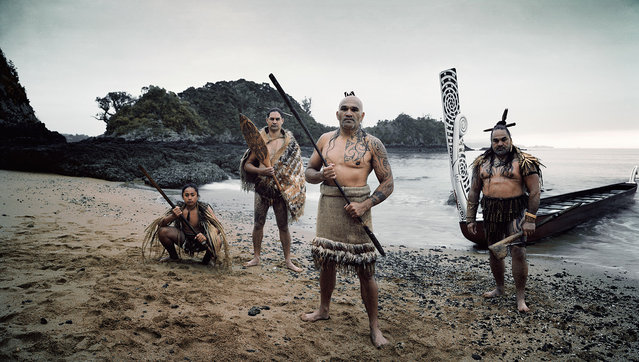
Maori  People New Zealand

The long and intriguing story of the origine of the indigenous Maori people can be traced back to the 13th century, the mythical homeland Hawaiki, Eastern Polynesia. Due to centuries of isolation, the Maori established a distinct society with characteristic art, a separate language and unique mythology. Defining aspects of Maori traditional culture include art, dance, legends, tattoos and community. While the arrival of European colonists in the 18th centure had a profound impact on the Maori way of life, many aspects of traditional society have survived into the 21th century.
Details
11 Mar 2014 14:40:00
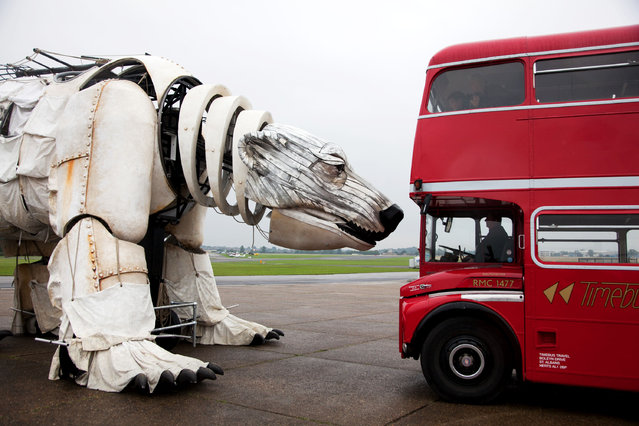
Giant Polar Bear Of London

Her name is Aurora, and she is the star of “Aurora's Parade”, the London chapter of ceride – Greenpeace’s global day of action to protest against Arctic destruction. According to DesignBoom, this giant people-powered super-puppet weighs about 3 tons and needs 15 puppeteers and 30 volunteers to operate. Aurora, described as “part protest, part performance”, has fur that includes the names of each supporter in the movement. Greenpeace hopes she will bring the voice and spirit of the Arctic to the public.
Details
13 Mar 2014 13:41:00
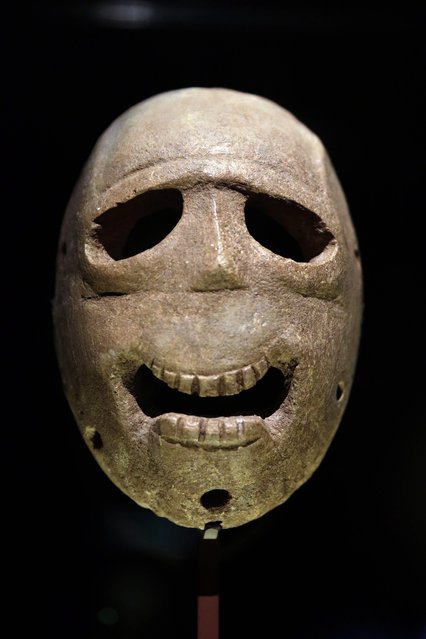
In this  Monday, March 10, 2014 photo, a 9,000 year-old mask is on display at the Israel Museum in Jerusalem.  (Photo by Tsafrir Abayov/AP Photo)

In this Monday, March 10, 2014 photo, a 9,000 year-old mask is on display at the Israel Museum in Jerusalem. The exhibition called “Face To Face” shows eleven stone masks, said to have been discovered in the Judean desert and hills near Jerusalem, which date back 9,000 years and offer a rare glimpse at some of civilization's first communal rituals. (Photo by Tsafrir Abayov/AP Photo)
Details
14 Mar 2014 08:25:00
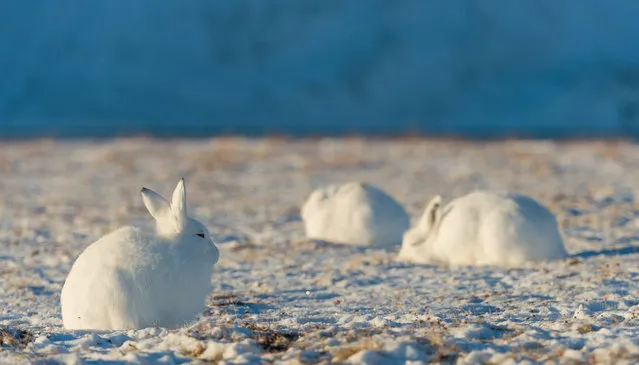
Arctic Hare

The arctic hare, or polar rabbit, is a species of hare which is adapted largely to polar and mountainous habitats. The arctic hare survives with a thick coat of fur and usually digs holes in the ground or under snow to keep warm and sleep. Arctic hares look like rabbits but have shorter ears, are taller when standing, and, unlike rabbits, can thrive in cold climates. They can travel together with many other hares, sometimes huddling with dozens or more, but are usually found alone, taking, in some cases, more than one partner. The arctic hare can run up to 60 kilometres per hour (40 mph). Its predators include the arctic wolf, arctic fox, and ermine.
Details
17 Mar 2014 13:56:00