Loading...
Done
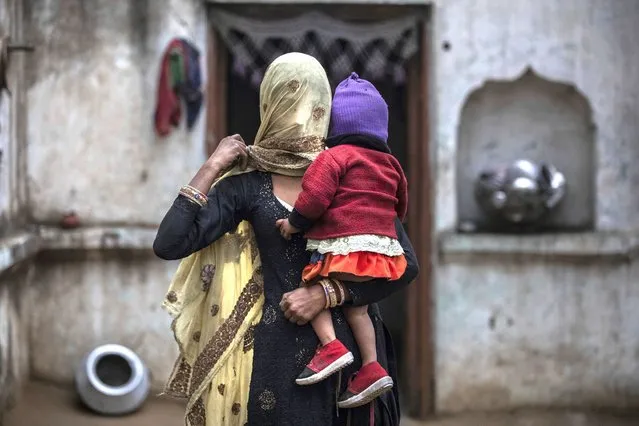
In this Tuesday, January 22, 2019 photo, the wife of Saghir Khan,Anisa Khan, holds their daughter, Alfisa, at the family's house in Mirzapur. Saghir was beaten by a group of Hindus after being spotted transporting cows. (Photo by Bernat Armangue/AP Photo)

In this Tuesday, January 22, 2019 photo, the wife of Saghir Khan,Anisa Khan, holds their daughter, Alfisa, at the family's house in Mirzapur. Saghir was beaten by a group of Hindus after being spotted transporting cows. (Photo by Bernat Armangue/AP Photo)
Details
09 Apr 2019 00:01:00
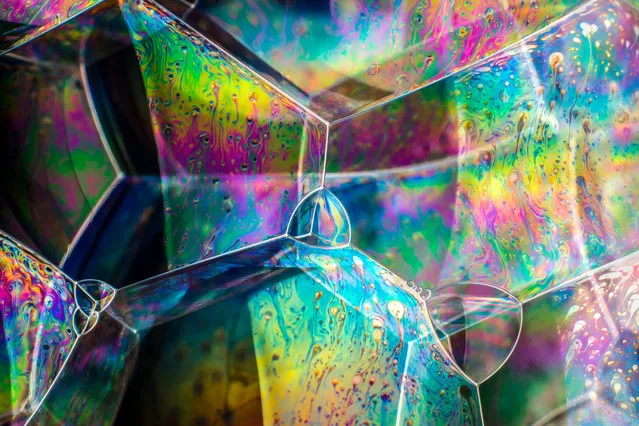
Soap Bubble Structures by Kym Cox. Bubbles optimise space and minimise their surface area for a given volume of air. This phenomenon makes them a useful tool in many areas of research, in particular, materials science and ‘packing’ – how things fit together. Bubble walls drain under gravity, thin at the top, thick at the bottom, which interferes with travelling lightwaves to create bands of colour. Black spots show the wall is too thin for interference colours, indicating the bubble is about to burst. (Photo by Kym Cox/2019 Science Photographer of the Year/RPS)

Soap Bubble Structures by Kym Cox. Bubbles optimise space and minimise their surface area for a given volume of air. This phenomenon makes them a useful tool in many areas of research, in particular, materials science and “packing” – how things fit together. Bubble walls drain under gravity, thin at the top, thick at the bottom, which interferes with travelling lightwaves to create bands of colour. Black spots show the wall is too thin for interference colours, indicating the bubble is about to burst. (Photo by Kym Cox/2019 Science Photographer of the Year/RPS)
Details
15 Aug 2019 00:03:00
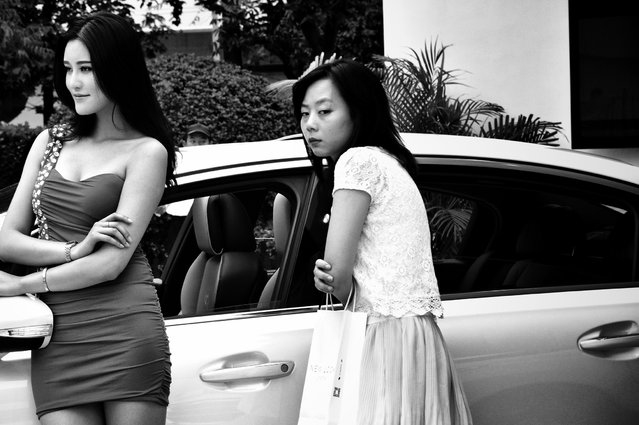
“Shanghai Tian Wai №26, 2014”. This series was an attempt to document an ever-changing city and the things it loses, as working-class neighbourhoods give way to ever-more modern urban development. (Photo by Liu Tao/The Guardian)

This 2014 series Shanghai Tian Wa saw Chinese photographer Liu Tao train his lens on two distinct districts in Shanghai. Here: “Shanghai Tian Wai №26, 2014”. (Photo by Liu Tao/The Guardian)
Details
25 May 2018 00:01:00
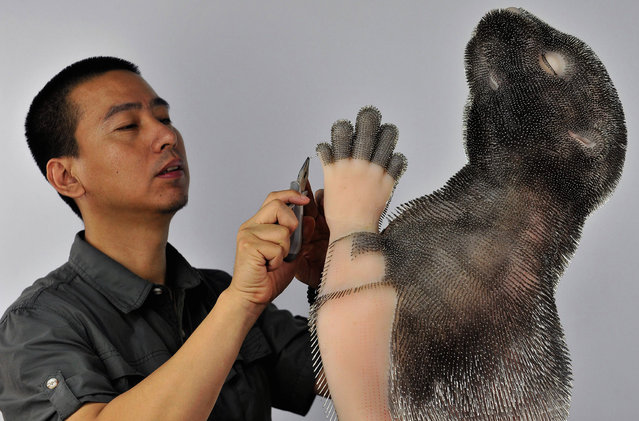
Professor Xie Yong works on an art installation of a beaver, which is made out of plastic and around 300,000 needles, in Shenyang, Liaoning province, July 23, 2013. The needles, according to Xie, represent the pain felt by animals when their fur is taken off to produce clothing. (Photo by Reuters/Stringer)

Professor Xie Yong works on an art installation of a beaver, which is made out of plastic and around 300,000 needles, in Shenyang, Liaoning province, July 23, 2013. The needles, according to Xie, represent the pain felt by animals when their fur is taken off to produce clothing. (Photo by Reuters/Stringer)
Details
27 Jul 2013 09:15:00
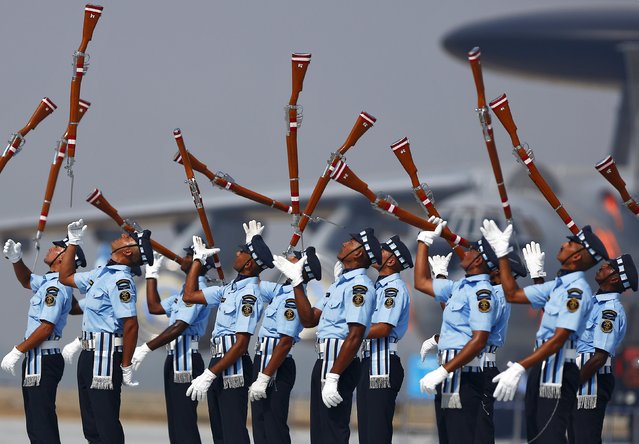
Indian Air Force soldiers toss their rifles as they perform during the full-dress rehearsal for Indian Air Force Day at the Hindon air force station on the outskirts of New Delhi October 6, 2015. (Photo by Anindito Mukherjee/Reuters)

Indian Air Force soldiers toss their rifles as they perform during the full-dress rehearsal for Indian Air Force Day at the Hindon air force station on the outskirts of New Delhi October 6, 2015. (Photo by Anindito Mukherjee/Reuters)
Details
08 Oct 2015 08:07:00
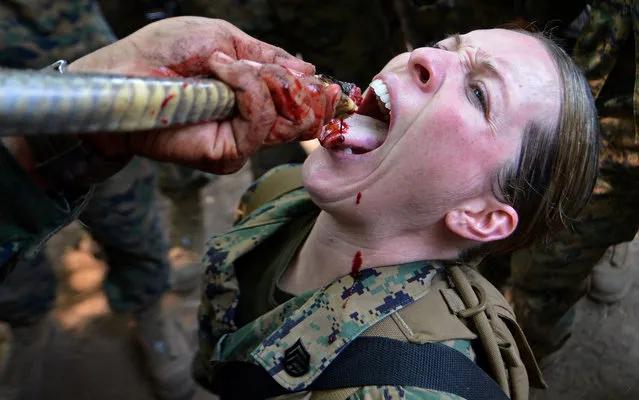
In a military base in the Thai province of Chon Buri February 20 U.S. Marines Navy with Thailand began their studies in jungle survival. The event is held in joint military exercises “Cobra Gold 2013”. During a jungle survival program February 20, 2013 taught by Royal Thai Special Forces in Sannapit, Thailand, U.S. Marines learned to catch cobras and drink their fresh blood, not to mention eat forest insects and pull the heads off of chicken. The training was part of Operation Cobra Gold 13, the 32nd edition of international military exercises hosted by the Thai. According to a U.S. Marines press release, Cobra Gold is the largest exercise of its kind in Asia and incorporates troops from five other nations in addition to the U.S. and Thailand. The Daily Mail reports that the Marines were invited to experience the local custom of drinking cobra blood after being taught to catch and kill cobras in the wild. As CNN notes, Cobra blood is believed to be a panacea and aphrodiasic in parts of Southeast Asia. In Jakarta, vendors can earn over $100 a night selling shots of cobra blood mixed with liquor. (Photo by Pornchai Kittiwongsakul/AFP Photo)

During a jungle survival program February 20, 2013 taught by Royal Thai Special Forces in Sannapit, Thailand, U.S. Marines learned to catch cobras and drink their fresh blood, not to mention eat forest insects and pull the heads off of chicken. The training was part of Operation Cobra Gold 13, the 32nd edition of international military exercises hosted by the Thai. According to a U.S. Marines press release, Cobra Gold is the largest exercise of its kind in Asia and incorporates troops from five other nations in addition to the U.S. and Thailand. The Daily Mail reports that the Marines were invited to experience the local custom of drinking cobra blood after being taught to catch and kill cobras in the wild. As CNN notes, Cobra blood is believed to be a panacea and aphrodiasic in parts of Southeast Asia. In Jakarta, vendors can earn over $100 a night selling shots of cobra blood mixed with liquor. (Photo by Pornchai Kittiwongsakul/AFP Photo)
Details
23 Feb 2013 11:52:00
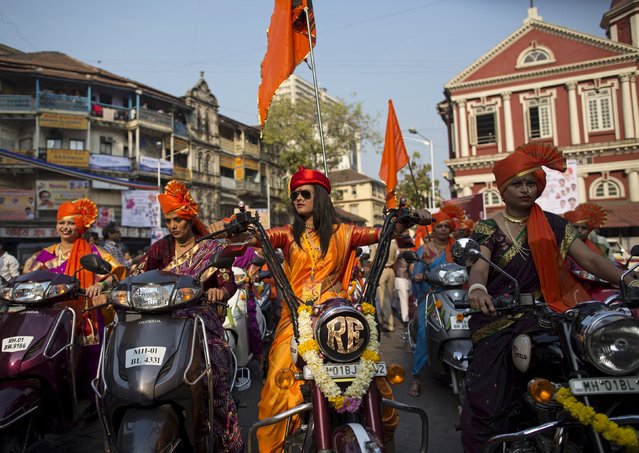
Maharashtrian women dressed in traditional costumes attend celebrations to mark the Gudi Padwa festival in Mumbai March 21, 2015. The festival marks the beginning of the new year for Maharashtrians and is celebrated widely in Maharashtra and in the Konkan region. (Photo by Danish Siddiqui/Reuters)

Maharashtrian women dressed in traditional costumes attend celebrations to mark the Gudi Padwa festival in Mumbai March 21, 2015. The festival marks the beginning of the new year for Maharashtrians and is celebrated widely in Maharashtra and in the Konkan region. (Photo by Danish Siddiqui/Reuters)
Details
02 Apr 2015 12:36:00
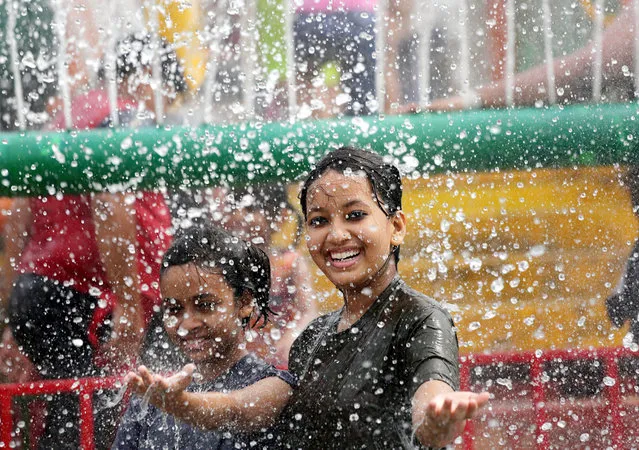
An Indian girl smiles under a water splash at a water park as the temperatures reached 38 degree Celsius in Calcutta, eastern India, 12 June 2016. The summer or pre-monsoon season lasts from March to July in eastern India with the highest day temperatures ranging from 38 to 45 degrees Celsius. (Photo by Piyal Adhikary/EPA)

An Indian girl smiles under a water splash at a water park as the temperatures reached 38 degree Celsius in Calcutta, eastern India, 12 June 2016. The summer or pre-monsoon season lasts from March to July in eastern India with the highest day temperatures ranging from 38 to 45 degrees Celsius. (Photo by Piyal Adhikary/EPA)
Details
13 Jun 2016 11:28:00