Loading...
Done
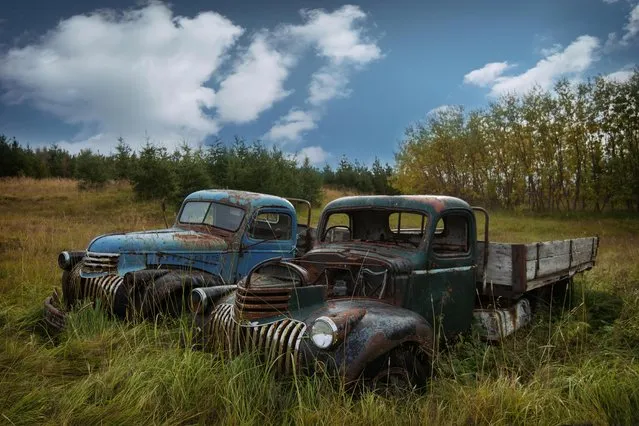
1941 Chevrolet 1.5 tonnes are left to rot in a field. (Photo by Robert Kahl/Mediadrumworld)

Feast your eyes on Europe’s most spectacular car graveyards as discovered by one auto-obsessed explorer who has dedicated over ten years to finding the best cars left to rot in the European wilderness. The beautiful set of images were taken in Germany, Sweden and Belgium by German Civil Servant Robert Kahl (30) using a Nikon D7100. He describes his photographs as showcasing “the beauty of transience and decayed charm”. Here: 1941 Chevrolet 1.5 tonnes are left to rot in a field. (Photo by Robert Kahl/Mediadrumworld)
Details
01 Mar 2017 00:04:00
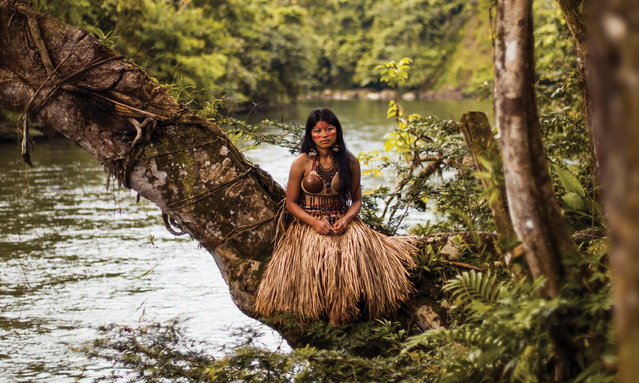
Ecuador: “More and more tribes of Amazonia are starting to adopt modern clothes for everyday life. But they are still keeping their traditional clothes for important events. I photographed this young woman in her wedding outfit”. (Photo by Mihaela Noroc/The Guardian)

Photographer Mihaela Noroc travelled the world from Ethiopia to the US and from Guatemala to France in search of natural and authentic beauty. She introduces some of the inspiring women she met on her journey. Here: Ecuador. “More and more tribes of Amazonia are starting to adopt modern clothes for everyday life. But they are still keeping their traditional clothes for important events. I photographed this young woman in her wedding outfit”. (Photo by Mihaela Noroc/The Guardian)
Details
27 Sep 2017 08:29:00
A bride stretches before the event during the “Running of the Brides” race, in Bangkok, Thailand, December 2, 2017. (Photo by Athit Perawongmetha/Reuters)

A bride stretches before the event during the “Running of the Brides” race, in Bangkok, Thailand, December 2, 2017. Six hundred of to be brides and their grooms compete a run race aimed to win more than two million baht (61,000 US dollars or 51,000 euro) of wedding package prizes including a pair of white gold diamond rings and honeymoon trip to the Maldives. (Photo by Athit Perawongmetha/Reuters)
Details
05 Dec 2017 07:55:00
Revellers dressed in mock military garb take part in the “Els Enfarinats” battle in the southeastern Spanish town of Ibi on December 28, 2017. (Photo by Jaime Reina/AFP Photo)

Revellers dressed in mock military garb take part in the “Els Enfarinats” battle in the southeastern Spanish town of Ibi on December 28, 2017. During this 200-year-old traditional festival participants known as Els Enfarinats (those covered in flour) dress in military clothes and stage a mock coup d'etat as they battle using flour, eggs and firecrackers outside the town hall as part of the celebrations of the Day of the Innocents. (Photo by Jaime Reina/AFP Photo)
Details
30 Dec 2017 06:08:00
This image of a man posing in knitwear, camouflaging into tiles of the steps and wall, is a personal favourite of Joseph’s. (Photo by Joseph Ford/South West News Service)

Joseph Ford is a 39-year-old photographer from Brighton, UK. He creates images seamlessly camouflaging people into backgrounds using knitwear made by Nina Dodd. It can take Dodd, 51, up to 40 hours to knit one item of clothing. This image of a man posing in knitwear, camouflaging into tiles of the steps and wall, is a personal favourite of Joseph’s. (Photo by Joseph Ford/South West News Service)
Details
26 Jan 2018 06:38:00
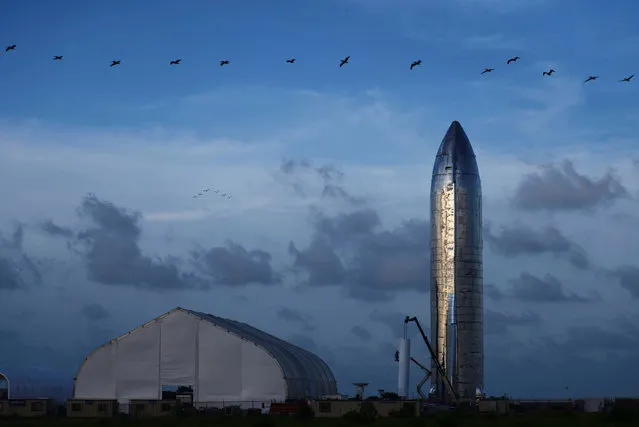
A prototype of SpaceX's Starship spacecraft is seen before SpaceX's Elon Musk gives an update on the company's Mars rocket Starship in Boca Chica, Texas U.S. September 28, 2019. (Photo by Callaghan O'Hare/Reuters)

A prototype of the Space Exploration Technologies Corp. (SpaceX) Starship launch vehicle stands during an event at the SpaceX launch facility in Cameron County, Texas, U.S., on Saturday, September 28, 2019. Elon Musk gave space fans an update Saturday evening on the status of “Starship”, the next-generation vehicle his SpaceX plans to use to eventually take humans to Mars. (Photo by Callaghan O'Hare/Reuters)
Details
30 Sep 2019 00:07:00
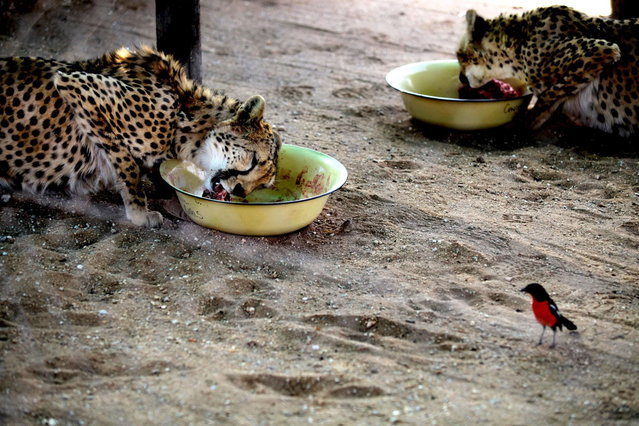
Young cheetahs eat meat at The Cheetah Conservation Fund (CCF) center in Otjiwarongo, Namibia, on August 13, 2013. The CCF started breeding Anatolian livestock dogs to promote cheetah-friendly farming after some 10,000 big cats – the current total worldwide population – were killed or moved off farms in the 1980s.  Up to 1,000 cheetahs were being killed a year, mostly by farmers who saw them as livestock killers. But the use of dogs has slashed losses for sheep and goat farmers and led to less retaliation against the vulnerable cheetah. (Photo by Jennifer Bruce/AFP Photo)

Young cheetahs eat meat at The Cheetah Conservation Fund (CCF) center in Otjiwarongo, Namibia, on August 13, 2013. The CCF started breeding Anatolian livestock dogs to promote cheetah-friendly farming after some 10,000 big cats – the current total worldwide population – were killed or moved off farms in the 1980s. Up to 1,000 cheetahs were being killed a year, mostly by farmers who saw them as livestock killers. But the use of dogs has slashed losses for sheep and goat farmers and led to less retaliation against the vulnerable cheetah. (Photo by Jennifer Bruce/AFP Photo)
Details
29 Aug 2013 10:56:00
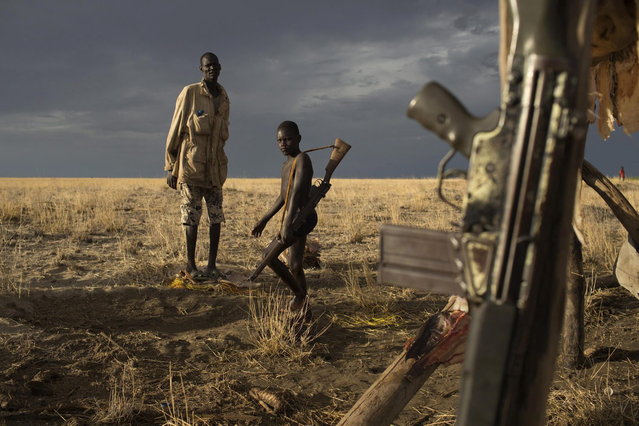
A Turkana man and a boy carrying a gun look on as a G3 battle rifle hangs from a structure used to dry fish at a fishing camp on the shores of Lake Turkana, some kilometres from Todonyang near the Kenya-Ethiopia border in northwestern Kenya October 12, 2013. (Photo by Siegfried Modola/Reuters)

A Turkana man and a boy carrying a gun look on as a G3 battle rifle hangs from a structure used to dry fish at a fishing camp on the shores of Lake Turkana, some kilometres from Todonyang near the Kenya-Ethiopia border in northwestern Kenya October 12, 2013The Turkana are traditionally nomadic pastoralists, but they have seen the pasture that they need to feed their herds suffer from recurring droughts and many have turned to fishing. However, Lake Turkana is overfished, and scarcity of food and pastureland is fuelling long-standing conflict with Ethiopian indigenous Dhaasanac, who have seen grazing grounds squeezed by large-scale government agricultural schemes in southern Ethiopia. The Dhaasanac now venture ever deeper into Kenyan territory in search of fish and grass, clashing with neighbours. Fighting between the communities has a long history, but the conflict has become ever more fatal as automatic weapons from other regional conflicts seep into the area. While the Turkana region is short of basics like grass and ground-water, it contains other resources including oil reserves and massive, newly discovered underground aquifers. (Photo by Siegfried Modola/Reuters)

Details
05 Dec 2013 12:08:00