Loading...
Done
While the lido was described as bringing “modernism to the masses” on the British coast it was just the latest example of a trend that had been developing since Victorian times – transforming seaside towns into resorts for leisure and entertainment. In the latter half of the nineteenth century, the fashion was for local authorities to build great piers stretching from the promenade out into the sea

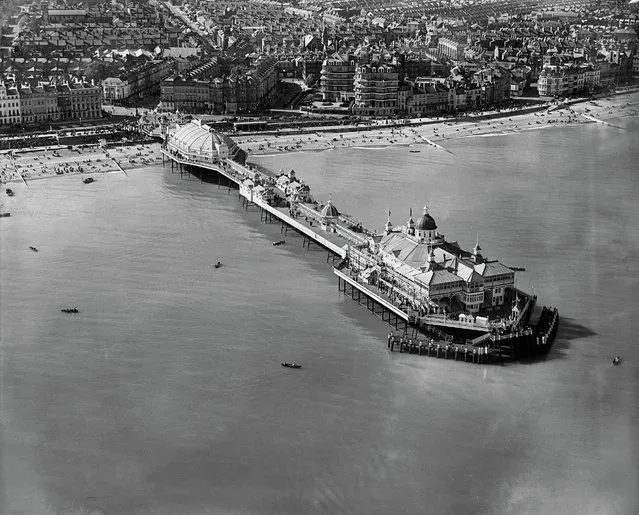
While the lido was described as bringing “modernism to the masses” on the British coast it was just the latest example of a trend that had been developing since Victorian times – transforming seaside towns into resorts for leisure and entertainment. In the latter half of the nineteenth century, the fashion was for local authorities to build great piers stretching from the promenade out into the sea. The Eastbourne Pier, pictured here in May 1931, was erected between 1866 and 1870 to an ingenious design by Eugenius Birch, which saw the structure sitting on special cups allowing the supporting struts to “move” in bad weather. Arranged on the pier's 1,000-foot length were kiosks, a theatre, a ballroom and a camera obscura. 1931. (Photo by Aerofilms Collection via “A History of Britain From Above”)
Details
25 Feb 2014 12:59:00
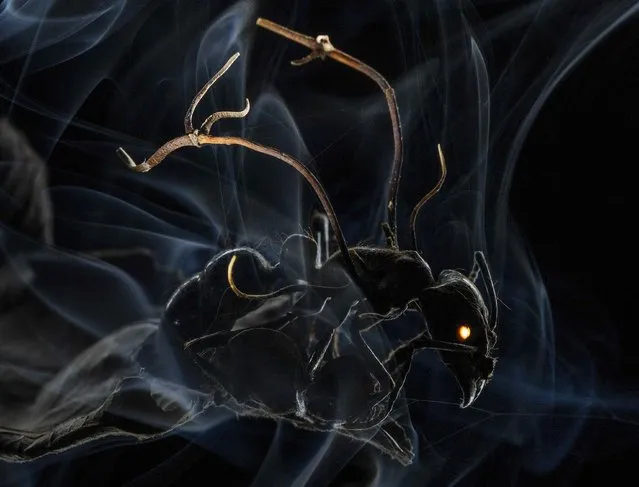
Anand Varma, a U.S. photographer working for the National Geographic, won the First Prize in the Nature Category, Stories, of the 2015 World Press Photo contest with his series of pictures, which includes this one of spores of a fungus landing on an ant, penetrating its exoskeleton and entering its brain, compelling the host to leave its normal habitat on the forest floor and scale a nearby tree, in this picture taken January 22, 2014 and released by the World Press Photo on February 12, 2015. (Photo by Anand Varma/Reuters/National Geographic/World Press Photo)

Anand Varma, a U.S. photographer working for the National Geographic, won the First Prize in the Nature Category, Stories, of the 2015 World Press Photo contest with his series of pictures, which includes this one of spores of a fungus landing on an ant, penetrating its exoskeleton and entering its brain, compelling the host to leave its normal habitat on the forest floor and scale a nearby tree, in this picture taken January 22, 2014 and released by the World Press Photo on February 12, 2015. (Photo by Anand Varma/Reuters/National Geographic/World Press Photo)
Details
15 Feb 2015 15:21:00
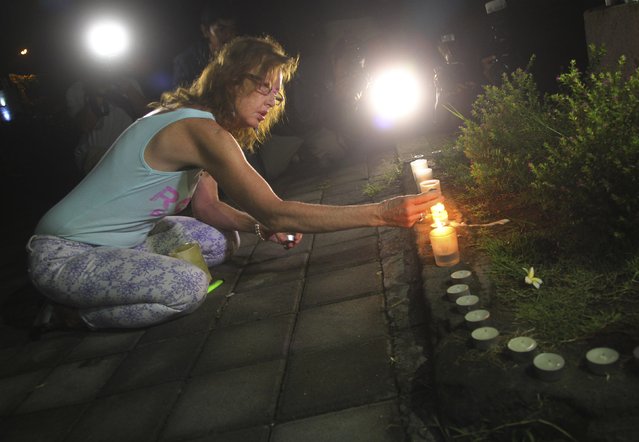
A woman lights a candle before praying in front of Kerobokan prison, before the transfer of the two Australian death row prisoners, Myuran Sukumaran and Andrew Chan, to the airport in Denpasar, on the Indonesian island of Bali March 4, 2015. REUTERS/Zul Edoardo

A woman lights a candle before praying in front of Kerobokan prison, before the transfer of the two Australian death row prisoners, Myuran Sukumaran and Andrew Chan, to the airport in Denpasar, on the Indonesian island of Bali March 4, 2015. The two convicted Australian drug smugglers were being transferred on Wednesday from a Bali prison to an island for execution along with other foreigners, underlining Indonesia's determination to use the death penalty despite international criticism. The planned executions of Myuran Sukumaran, 33, and Andrew Chan, 31, have ratcheted up diplomatic tensions between Australia and Indonesia following repeated pleas of mercy for the pair, who are among 11 death row convicts scheduled to go before a firing squad. REUTERS/Zul Edoardo
Details
05 Mar 2015 13:00:00
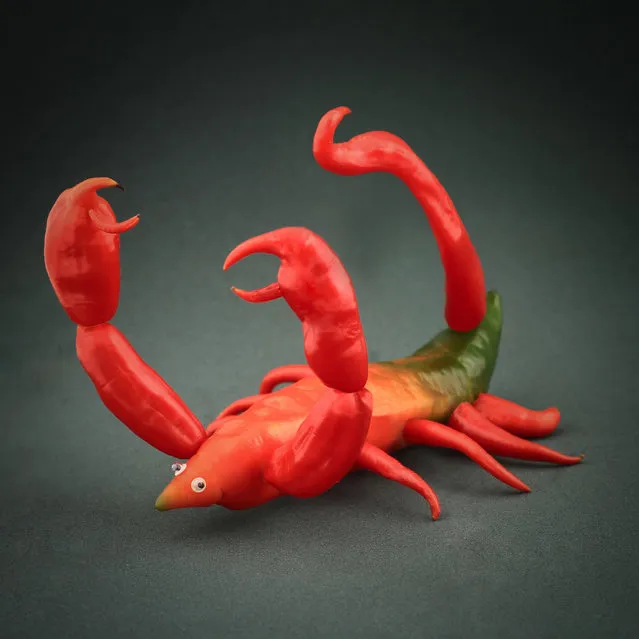
“Red Pepperpion. (Photo by Vanessa Dualib)

“Red Pepperpion. Red Pepperpions are secretive, nocturnal arachilli which can be spotted in kitchens of arid climates all around the world.

Red Pepperpions are equipped with a delicious (and depending on the quantity...deadly!) stinger at the end of its tail. If you happen to get bitten (or if you bite him!) it will produce a burning sensation on your taste nerves.

However, there is no need to worry, since the fact is that his potent stinger is usually only used when hunting or whenever the Pepperpion feels like he might become part of someones meal...

At daylight or when encountering a larger foe, such as a Saucier Chef, they retreat into burrows inside the fridge or hide beneath the oven”. (Photo and comment by Vanessa Dualib)


Details
08 Feb 2013 09:24:00
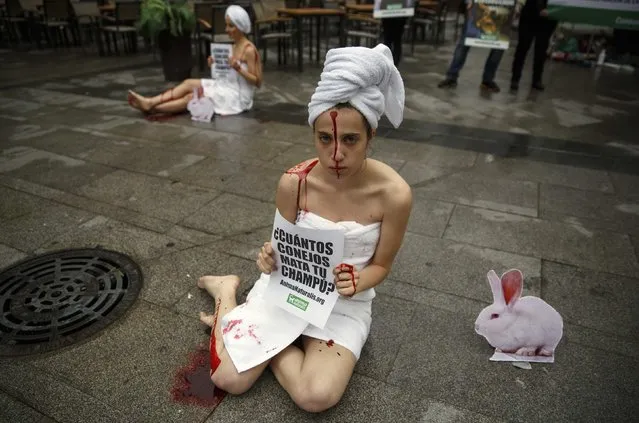
Animal rights activists covered with fake blood sit on the floor during a protest against the use of animals in research to mark World Day for Animals in Laboratories in central Madrid April 24, 2014. The sign reads, “How many rabbits do your shampoo kill?”. (Photo by Andrea Comas/Reuters)

Animal rights activists covered with fake blood sit on the floor during a protest against the use of animals in research to mark World Day for Animals in Laboratories in central Madrid April 24, 2014. The sign reads, “How many rabbits do your shampoo kill?”. (Photo by Andrea Comas/Reuters)
Details
26 Apr 2014 11:44:00
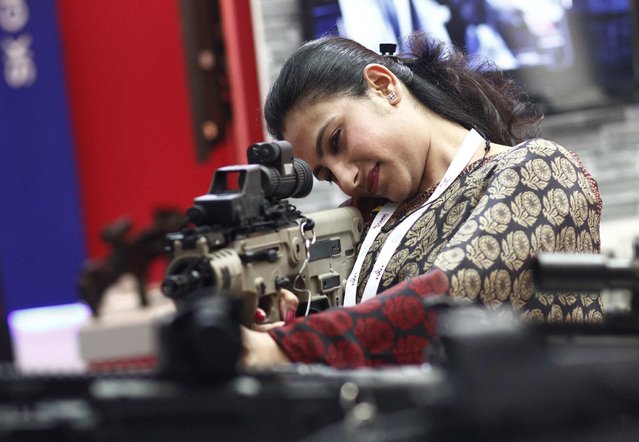
A visitor holds an Israeli-made rifle during the 8th International Land and Naval Defense system exhibition, in New Delhi, India, on February 6, 2014. (Photo by Anindito Mukherjee/Reuters)

A visitor holds an Israeli-made rifle during the 8th International Land and Naval Defense system exhibition, in New Delhi, India, on February 6, 2014. (Photo by Anindito Mukherjee/Reuters)
Details
08 Feb 2014 15:38:00
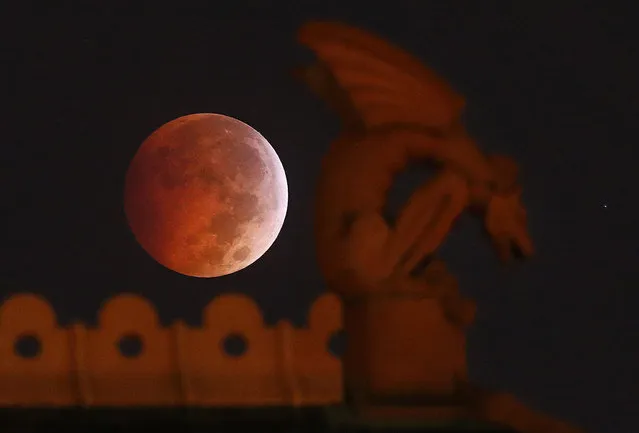
A lunar eclipse appears behind a gargoyle atop the old red Dallas County Courthouse early Wednesday morning, October 8, 2014. The moon appears orange or red, the result of sunlight scattering off Earth's atmosphere. This is known as the blood moon. (Photo by Tom Fox/AP Photo/The Dallas Morning News)

A lunar eclipse appears behind a gargoyle atop the old red Dallas County Courthouse early Wednesday morning, October 8, 2014. The moon appears orange or red, the result of sunlight scattering off Earth's atmosphere. This is known as the blood moon. (Photo by Tom Fox/AP Photo/The Dallas Morning News)
Details
11 Oct 2014 13:57:00
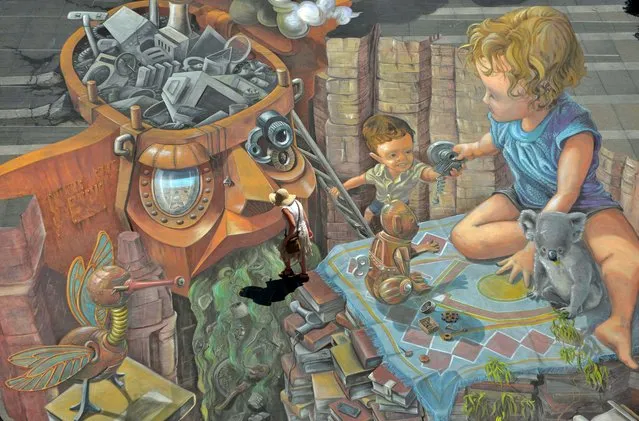
A visitor walks on a giant chalk artwork called “Wasting Time” at the Chalk Urban Arts Festival in Sydney on October 25, 2014. The picture is the biggest 3-D artwork created in Australia by two artists, Leon Keer from Holland and Jenny McCracken from Australia. (Photo by Peter Parks/AFP Photo)

A visitor walks on a giant chalk artwork called “Wasting Time” at the Chalk Urban Arts Festival in Sydney on October 25, 2014. The picture is the biggest 3-D artwork created in Australia by two artists, Leon Keer from Holland and Jenny McCracken from Australia. (Photo by Peter Parks/AFP Photo)
Details
25 Oct 2014 13:58:00