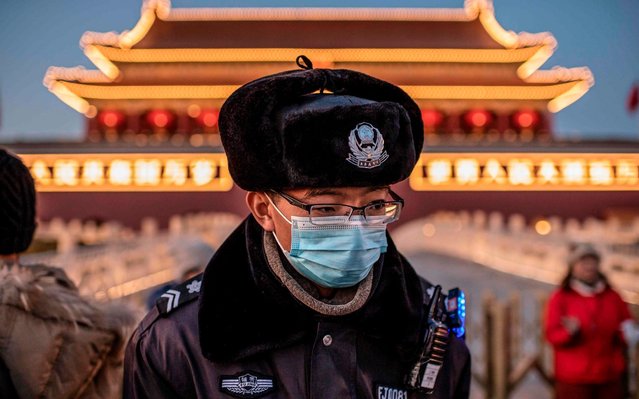
A police officer wearing a protective mask walks past the portrait of late communist leader Mao Zedong (not pictured) at Tiananmen Gate in Beijing on January 23, 2020. Large-scale Lunar New Year events in Beijing have been cancelled as part of national efforts to control the spread of a new SARS-like virus, city authorities announced on January 23. (Photo by Nicolas Asfouri/AFP Photo)
An injured person is seen after an earthquake hit Port-au-Prince, Haiti, Tuesday, January 12, 2010. A 7.0-magnitude earthquake, the largest ever recorded in the area, rocked Haiti on Tuesday. (Photo by Jorge Cruz/AP Photo)
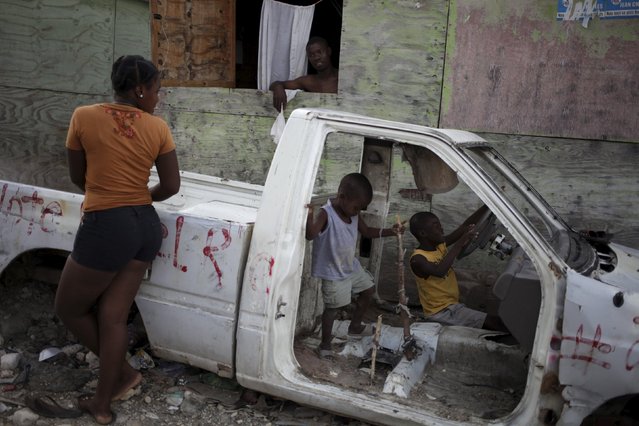
A woman talks to a man as two children play inside a wrecked car at a camp for displaced people in Port-au-Prince, Haiti, March 6, 2016. (Photo by Andres Martinez Casares/Reuters)
A Syrian boy looks through a gate as others wait to cross into Syria at Oncupinar border crossing in the southeastern city of Kilis, Turkey February 11, 2016.. (Photo by Osman Orsal/Reuters)
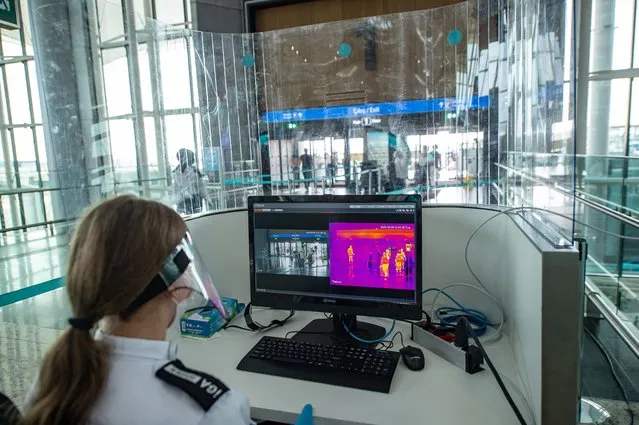
A security officer looks at a scanning screen for checking passengers' temperature at the Istanbul Airport in Istanbul, Turkey, on June 9, 2020. Technology and innovation will top the precautions of Turkey's biggest airport Istanbul Airport against the COVID-19 in the post-pandemic era, according to the management of the airport. The management on June 9 presented their final preparations and measures taken against coronavirus while Turkish airline companies are preparing to resume their international operations the next day. (Photo by Yasin Akgul/Xinhua News Agency via Getty Images)
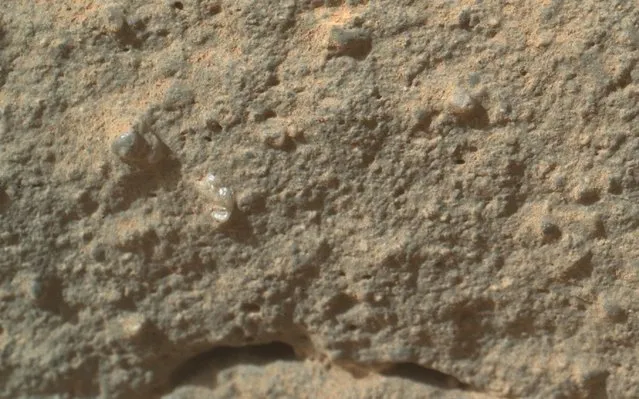
“The scientists behind NASA's $2.5 billion Curiosity rover mission on Mars on Tuesday explained the nature of a tiny, gleaming "flower" embedded in Red Planet rock, and revealed where they'll be using the SUV-sized robot's drill for the first time”. – Alan Boyle via NBCNews.com
Photo: Scientists say that a “Martian flower”, seen here in an image from the Curiosity rover's Mars Hand Lens Imager, is a 2-millimeter-wide grain or pebble that's embedded in the surrounding rock. Another, darker-colored mineral grain can be seen above and to the left. (Photo by NASA)