A woman dressed in traditional costume smiles at the Royal Plaza, as interest for historical clothing rises within the country, in Bangkok, Thailand April 6, 2018. (Photo by Soe Zeya Tun/Reuters)
A man, wearing a protective mask following an outbreak of the coronavirus disease (COVID-19), walks in Tokyo, Japan on March 17, 2020. (Photo by Edgard Garrido/Reuters)
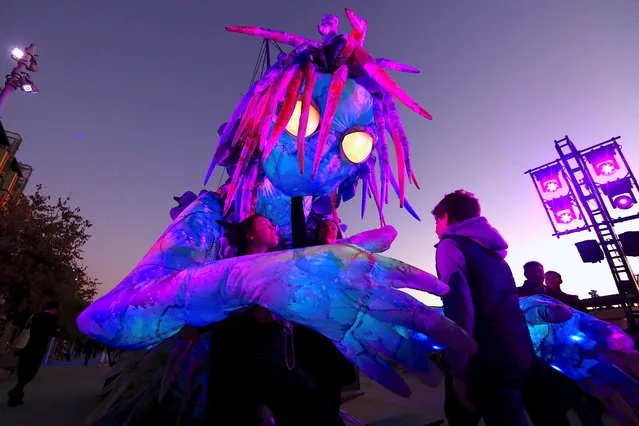
A boy looks at a six-metre tall luminescent puppet, operated by ten performers, during a preview of Vivid Sydney, promoted as the world's largest festival of light, music and ideas, in Sydney, Australia on May 23, 2018. “Vivid” is a major outdoor cultural event featuring light installations and projections with the annual event this year running from May 25 to June 16, 2018. (Photo by David Gray/Reuters)
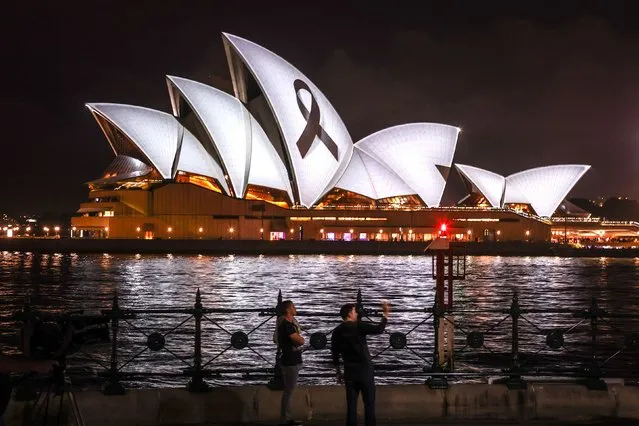
People stand in front of a black ribbon, symbolising remembrance and mourning, being projected onto the Sydney Opera House on February 9, 2023 in solidarity with Turkey and Syria after a massive earthquake devastated the two countries. (Photo by David Gray/AFP Photo)
Soviet cosmonaut and the first man to travel in space, Yury Alekseyvich Gagarin (1934–1968) arriving in London for a Russian trade fair. (Photo by Douglas Miller/Getty Images)
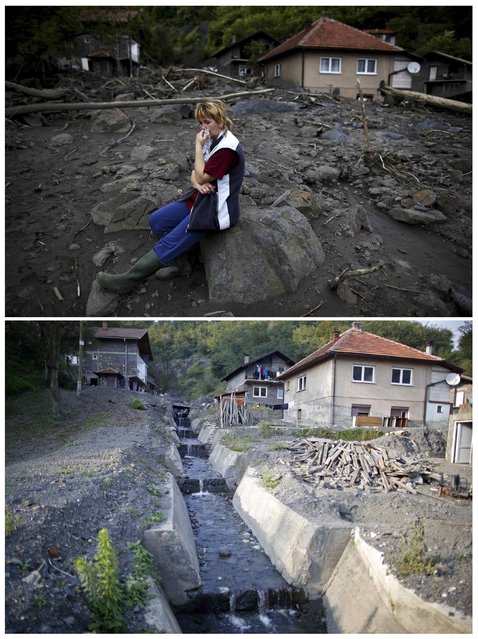
A combination photo shows Fata Kovacevic reacting near her flood-damaged house during floods May 20, 2014 (top) and the same place after floods October 8, 2014 in Topcic Polje. (Photo by Dado Ruvic/Reuters)
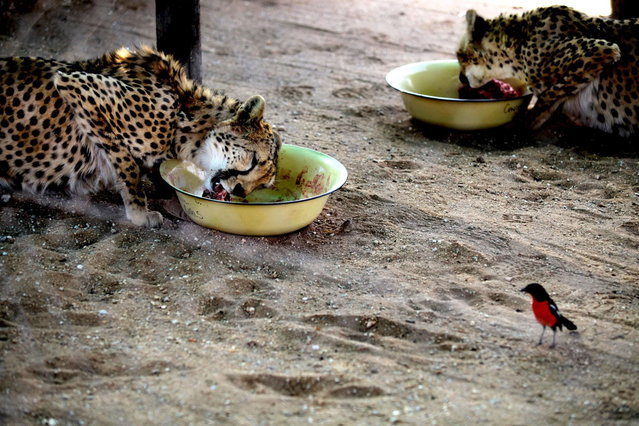
Young cheetahs eat meat at The Cheetah Conservation Fund (CCF) center in Otjiwarongo, Namibia, on August 13, 2013. The CCF started breeding Anatolian livestock dogs to promote cheetah-friendly farming after some 10,000 big cats – the current total worldwide population – were killed or moved off farms in the 1980s. Up to 1,000 cheetahs were being killed a year, mostly by farmers who saw them as livestock killers. But the use of dogs has slashed losses for sheep and goat farmers and led to less retaliation against the vulnerable cheetah. (Photo by Jennifer Bruce/AFP Photo)