Loading...
Done
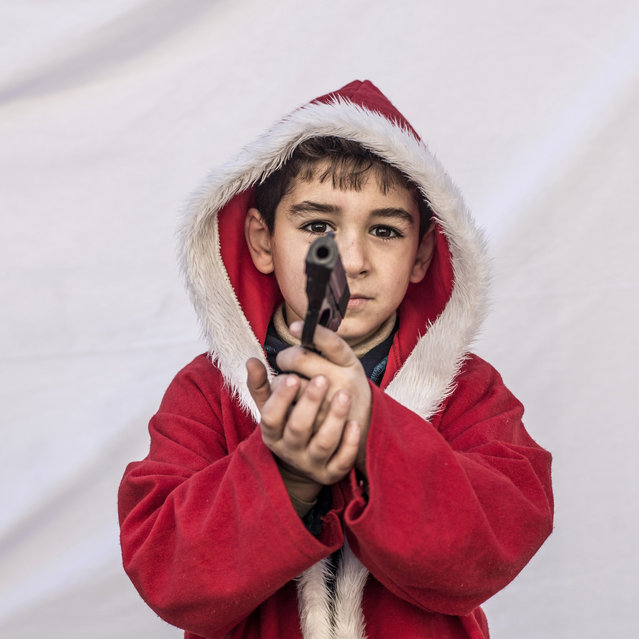
Kayaks, 7, poses for a picture holding toy gun in a camp where Christians displaced by Islamic State militants are living, in Irbil, Iraq, Friday, December 23, 2016. Iraq’s Christians are marking the holiday in his camp for displaced people with a sense of worry and despair,  unable to return to their towns they were forced to flee two years ago by the Islamic State group’s onslaught. (Photo by Manu Brabo/AP Photo)

Kayaks, 7, poses for a picture holding toy gun in a camp where Christians displaced by Islamic State militants are living, in Irbil, Iraq, Friday, December 23, 2016. Iraq’s Christians are marking the holiday in his camp for displaced people with a sense of worry and despair, unable to return to their towns they were forced to flee two years ago by the Islamic State group’s onslaught. (Photo by Manu Brabo/AP Photo)
Details
24 Dec 2016 09:33:00
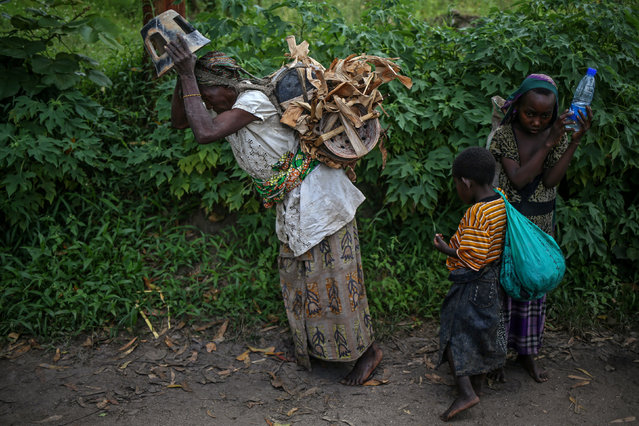
Habimana, 45, and her children walk to market to sell pottery on Idjwi island in the Democratic Republic of Congo, November 23, 2016. (Photo by Therese Di Campo/Reuters)

Habimana, 45, and her children walk to market to sell pottery on Idjwi island in the Democratic Republic of Congo, November 23, 2016. (Photo by Therese Di Campo/Reuters)
Details
13 Jan 2017 08:24:00
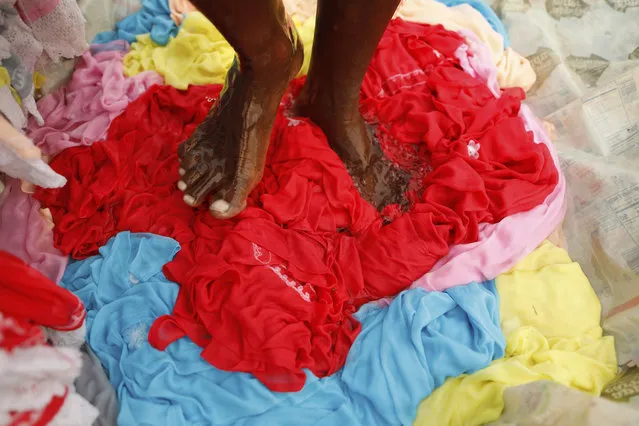
A dhobi, or a washerman washes cloths on the banks of the River Gomti in Lucknow, India, Saturday, September 12, 2020. Dhobis are traditional laundry workers who wash clothes by hand and dry them in the sun, an occupation which has been in existence for generations. Most cities in India have a Dhobi Ghat, or washermen's area, where the city's pile of clothes is laundered. This practice is still popular in India, despite of modern technology. Around 1,000 families work in Lucknow's Dhobi Ghat. However, in light of the novel coronavirus, their wages have decreased drastically. With each family earning around US$100-200 per month. (Photo by Rajesh Kumar Singh/AP Photo)

A dhobi, or a washerman washes cloths on the banks of the River Gomti in Lucknow, India, Saturday, September 12, 2020. Dhobis are traditional laundry workers who wash clothes by hand and dry them in the sun, an occupation which has been in existence for generations. Most cities in India have a Dhobi Ghat, or washermen's area, where the city's pile of clothes is laundered. This practice is still popular in India, despite of modern technology. Around 1,000 families work in Lucknow's Dhobi Ghat. However, in light of the novel coronavirus, their wages have decreased drastically. With each family earning around US$100-200 per month. (Photo by Rajesh Kumar Singh/AP Photo)
Details
25 Sep 2020 00:03:00
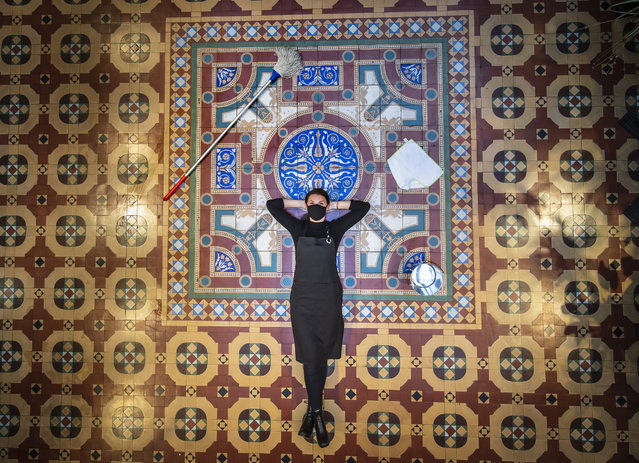
Bar Convent employee Lauren Masterman relaxes after cleaning a historic George and Arthur Maw tiled floor created in 1867, one of only two surviving examples of this assemblage of tiles, at England's oldest living convent Bar Convent on October 13, 2020. Visitors to the convent are being invited to follow in the footsteps of residents from the last 150 years and enjoy the historic space decorated with rare 19th century floor tiles. (Photo by Danny Lawson/PA Images via Getty Images)

Bar Convent employee Lauren Masterman relaxes after cleaning a historic George and Arthur Maw tiled floor created in 1867, one of only two surviving examples of this assemblage of tiles, at England's oldest living convent Bar Convent on October 13, 2020. Visitors to the convent are being invited to follow in the footsteps of residents from the last 150 years and enjoy the historic space decorated with rare 19th century floor tiles. (Photo by Danny Lawson/PA Images via Getty Images)
Details
15 Oct 2020 00:07:00
A CIT guard carries his gun handgun while bringing a bag containing cash inside an armoured vehicle during a money collection in Johannesburg's CBD, on December 8, 2020. As the Christmas festive season approaches, cash-in-transit (CIT) companies are gearing up as they continue to be target of crime, with about 3000 money vans traveling daily nationwide. Despite the COVID-19 lockdown, there have been 260 cash-in-transit heist incidents in South Africa this year, with 19 CIT crew members killed. Cash-in-transit heists in the country are often military-style planned operations with criminals recurring to bomb making and assault rifles attacks. (Photo by Michele Spatari/AFP Photo)

A CIT guard carries his gun handgun while bringing a bag containing cash inside an armoured vehicle during a money collection in Johannesburg's CBD, on December 8, 2020. As the Christmas festive season approaches, cash-in-transit (CIT) companies are gearing up as they continue to be target of crime, with about 3000 money vans traveling daily nationwide. Despite the COVID-19 lockdown, there have been 260 cash-in-transit heist incidents in South Africa this year, with 19 CIT crew members killed. Cash-in-transit heists in the country are often military-style planned operations with criminals recurring to bomb making and assault rifles attacks. (Photo by Michele Spatari/AFP Photo)
Details
18 Dec 2020 00:01:00
Two men look at the sea while taking part in the annual New Year's dive into the North Sea in Scheveningen, Netherlands on January 1, 2020. (Photo by Piroschka van de Wouw/Reuters)

Two men look at the sea while taking part in the annual New Year's dive into the North Sea in Scheveningen, Netherlands on January 1, 2020. (Photo by Piroschka van de Wouw/Reuters)
Details
29 Dec 2020 00:01:00
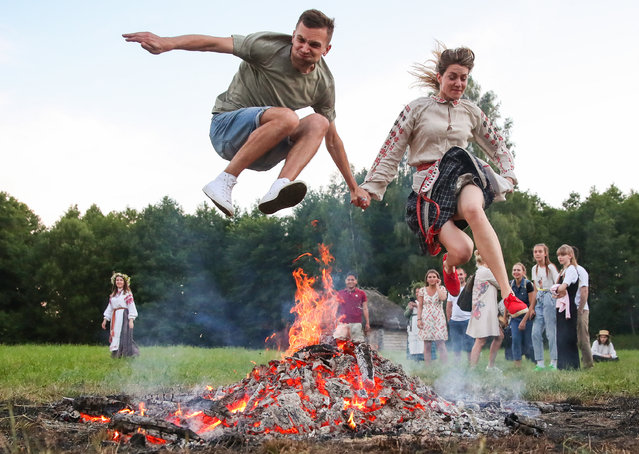
A man and a woman jump over a bonfire during Ivan Kupala Day celebrations held by the Belarusian State Museum of Folk Architecture and Rural Lifestyle in the village of Ozertso near Minsk, Belarus on July 4, 2020. Ivan Kupala Day, also known as Ivana-Kupala or Kupala Night, is a traditional pagan holiday celebrated in eastern Slavic cultures. Various rituals are traditionally performed on Kupala Night, including making flower wreaths, fortune-telling, jumping over bonfires, and burning a wheel-like effigy symbolizing the sun. (Photo by Natalia Fedosenko/TASS)

A man and a woman jump over a bonfire during Ivan Kupala Day celebrations held by the Belarusian State Museum of Folk Architecture and Rural Lifestyle in the village of Ozertso near Minsk, Belarus on July 4, 2020. Ivan Kupala Day, also known as Ivana-Kupala or Kupala Night, is a traditional pagan holiday celebrated in eastern Slavic cultures. Various rituals are traditionally performed on Kupala Night, including making flower wreaths, fortune-telling, jumping over bonfires, and burning a wheel-like effigy symbolizing the sun. (Photo by Natalia Fedosenko/TASS)
Details
23 Jan 2021 09:53:00
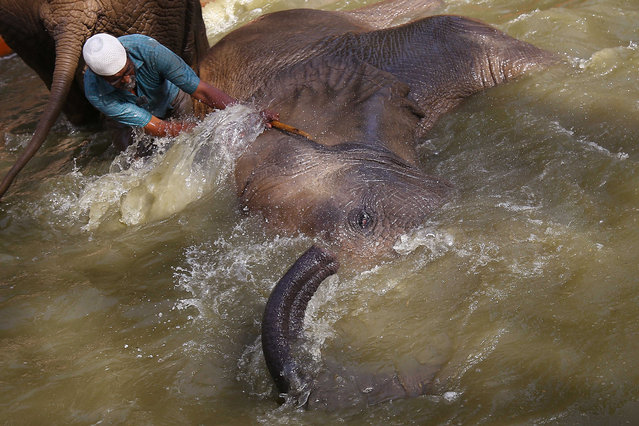
Elephants cool off at a zoo in Karachi, Pakistan, 31 March 2021. Caretakers at Karachi's zoo were working to keep animals cool during a heatwave affecting southern Pakistan. (Photo by Shahzaib Akber/EPA/EFE)

Elephants cool off at a zoo in Karachi, Pakistan, 31 March 2021. Caretakers at Karachi's zoo were working to keep animals cool during a heatwave affecting southern Pakistan. (Photo by Shahzaib Akber/EPA/EFE)
Details
13 Apr 2021 07:53:00