Loading...
Done
Inflatable dolls in the shape of ducks are seen in front of the National Congress during a protest against tax increases in Brasilia, Brazil, March 29, 2016. The campaign “I will not pay the Duck” is organized by the Federation of Industries of Sao Paulo (FIESP) and uses the duck symbol in reference to industries that pay high taxes. (Photo by Gregg Newton/Reuters)

Inflatable dolls in the shape of ducks are seen in front of the National Congress during a protest against tax increases in Brasilia, Brazil, March 29, 2016. The campaign “I will not pay the Duck” is organized by the Federation of Industries of Sao Paulo (FIESP) and uses the duck symbol in reference to industries that pay high taxes. (Photo by Gregg Newton/Reuters)
Details
30 Mar 2016 11:27:00
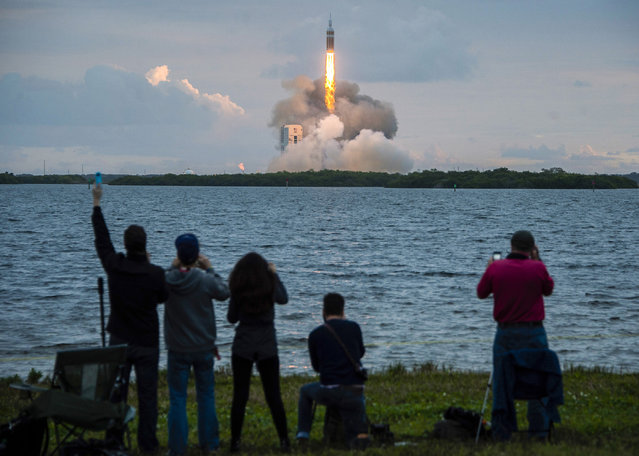
Spectators cheer as the United Launch Alliance Delta 4-Heavy rocket, with NASA's Orion spacecraft mounted atop, lifts off from the Air Force Station, December 5, 2014, in Cape Canaveral, Fla. (Photo by Smiley N. Pool/AP Photo/Houston Chronicle)

Spectators cheer as the United Launch Alliance Delta 4-Heavy rocket, with NASA's Orion spacecraft mounted atop, lifts off from the Air Force Station, December 5, 2014, in Cape Canaveral, Fla. (Photo by Smiley N. Pool/AP Photo/Houston Chronicle)
Details
06 Dec 2014 12:28:00
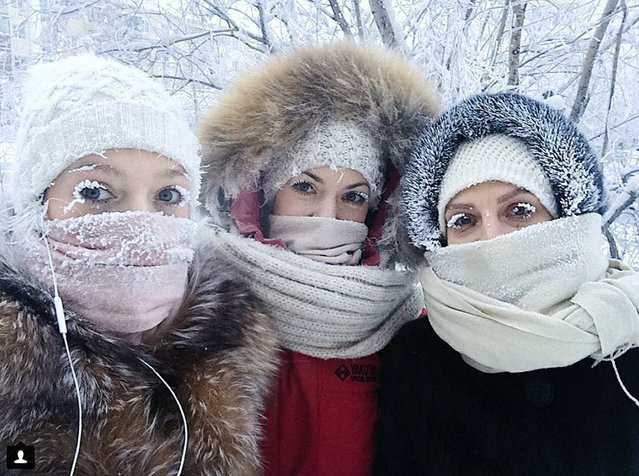
In this photo taken on Sunday, January 14, 2018, Anastasia Gruzdeva, left, poses for selfie with her friends as the temperature dropped to about –50 degrees (–58 degrees Fahrenheit) in Yakutsk, Russia. Temperatures in the remote, diamond-rich Russian region of Yakutia have dropped to near-record lows, plunging to –67 degrees Centigrade (-88.6 degrees Fahrenheit) in some areas. (Photo by Sakhalife.ru Photo via AP Photo)

In this photo taken on Sunday, January 14, 2018, Anastasia Gruzdeva, left, poses for selfie with her friends as the temperature dropped to about –50 degrees (–58 degrees Fahrenheit) in Yakutsk, Russia. Temperatures in the remote, diamond-rich Russian region of Yakutia have dropped to near-record lows, plunging to –67 degrees Centigrade (-88.6 degrees Fahrenheit) in some areas. (Photo by Sakhalife.ru Photo via AP Photo)


Details
17 Jan 2018 09:31:00
A Hindu holy man is reflected on a mirror as he prepares a bowl of vermillion powder for devotees near “Sangam”, the confluence of holy rivers of Ganges, Yamuna and the mythical Saraswati, during the annual traditional fair of Magh Mela in Allahabad, in the northern Indian state of Uttar Pradesh, India, Tuesday, January 6, 2015. (Photo by Rajesh Kumar Singh/AP Photo)

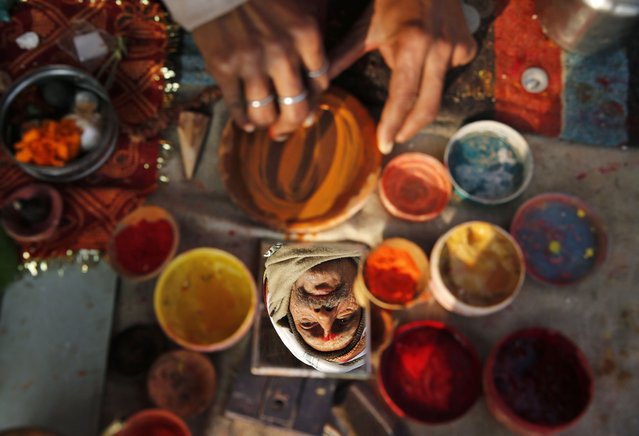
A Hindu holy man is reflected on a mirror as he prepares a bowl of vermillion powder for devotees near “Sangam”, the confluence of holy rivers of Ganges, Yamuna and the mythical Saraswati, during the annual traditional fair of Magh Mela in Allahabad, in the northern Indian state of Uttar Pradesh, India, Tuesday, January 6, 2015. Hundreds of thousands of devout Hindus are expected to take holy dips at the confluence during the astronomically auspicious period of over 45 days celebrated as Magh Mela. (Photo by Rajesh Kumar Singh/AP Photo)
Details
07 Jan 2015 13:41:00
Bjorn, aged 5, smiles as he poses with a Owl butterfly during an event to launch the Sensational Butterflies exhibition at the Natural History Museum in London, Britain March 23, 2016. (Photo by Dylan Martinez/Reuters)

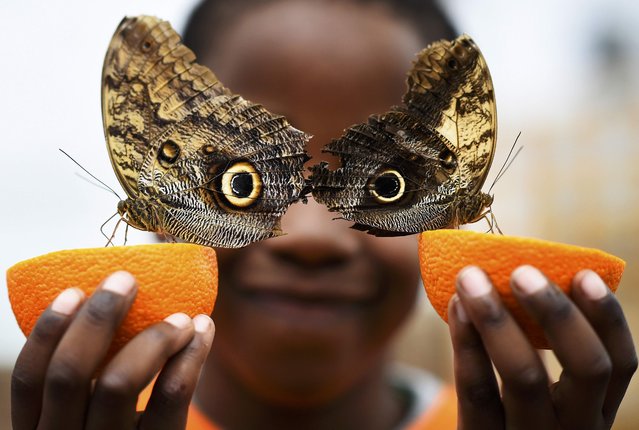
Bjorn, aged 5, smiles as he poses with a Owl butterfly during an event to launch the Sensational Butterflies exhibition at the Natural History Museum in London, Britain March 23, 2016. The exhibition opens to the public on March 24 and runs until September 11. (Photo by Dylan Martinez/Reuters)
Details
24 Mar 2016 12:31:00
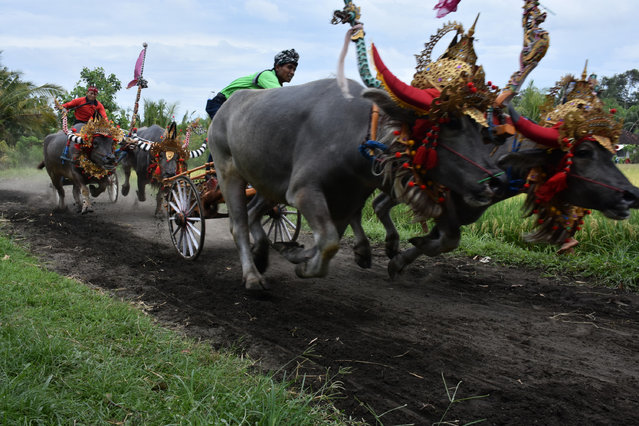
Jockeys spur buffalos during the Makepung buffalo races at Jembrana in Bali, Indonesia on October 23, 2016. Makepung is a tradition for farmers to celebrate a bumper harvest in Bali. (Photo by Kadek Raharja/Xinhua/Barcroft Images)

Jockeys spur buffalos during the Makepung buffalo races at Jembrana in Bali, Indonesia on October 23, 2016. Makepung is a tradition for farmers to celebrate a bumper harvest in Bali. (Photo by Kadek Raharja/Xinhua/Barcroft Images)
Details
25 Oct 2016 10:50:00
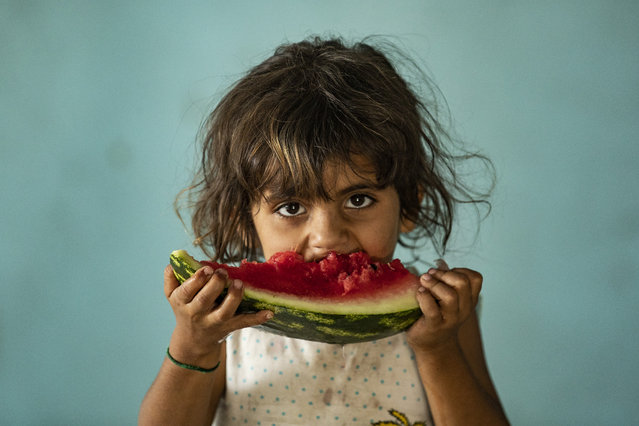
A girl eats a watermelon slice while at a school building where Syrians – displaced from the area of Ras al-Ain by the Turkish offensive on the northeast – are staying in the city of Hasakah, on June 30, 2020. (Photo by Delil Souleiman/AFP Photo)

A girl eats a watermelon slice while at a school building where Syrians – displaced from the area of Ras al-Ain by the Turkish offensive on the northeast – are staying in the city of Hasakah, on June 30, 2020. (Photo by Delil Souleiman/AFP Photo)
Details
11 Jul 2020 00:01:00
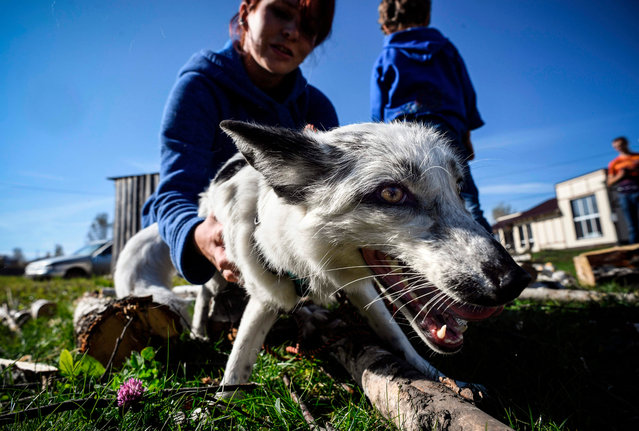
Tatyana Abramova, 33, plays with her home fox Plombir at her countryside house outside Siberian city of Novosibirsk on September 12, 2020. The official start of the Soviet experiment to better understand the domestication of animals by humans began in 1959, and was initiated by geneticists Dmitri Beliaiev and Lioudmila Trout on a farm in Akademgorodok, the scientific center of excellence in Siberia. Their primary objective was to domesticate foxes, to understand how the ancestor of wolves, another canine, evolved into a loyal and loving dog. And understand what this domestication tells us about the genetic evolution of species. (Photo by Alexander Nemenov/AFP Photo)

Tatyana Abramova, 33, plays with her home fox Plombir at her countryside house outside Siberian city of Novosibirsk on September 12, 2020. The official start of the Soviet experiment to better understand the domestication of animals by humans began in 1959, and was initiated by geneticists Dmitri Beliaiev and Lioudmila Trout on a farm in Akademgorodok, the scientific center of excellence in Siberia. Their primary objective was to domesticate foxes, to understand how the ancestor of wolves, another canine, evolved into a loyal and loving dog. And understand what this domestication tells us about the genetic evolution of species. (Photo by Alexander Nemenov/AFP Photo)
Details
25 Oct 2020 00:05:00