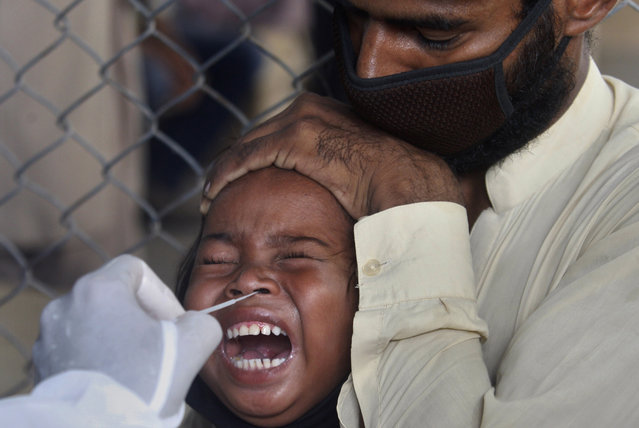
A girl reacts while getting a nasal swab sample at a testing and screening facility for the new coronavirus in a hospital in Karachi, Pakistan, Friday, July 17, 2020. (Photo by Fareed Khan/AP Photo)
Roxy, a Red Labradoodle, Jaku, a Black and Tan Lurcher, Kobe, a White German Shepherd, Rocky, a Black and Tan German Shepherd, and Busy, an English Springer Spaniel Cross, queue outside an Aldi store in Hinckley, Leicestershire, UK on Monday, December 1, 2025. (Phoot by Lucy Ray/PA Media Assignments)
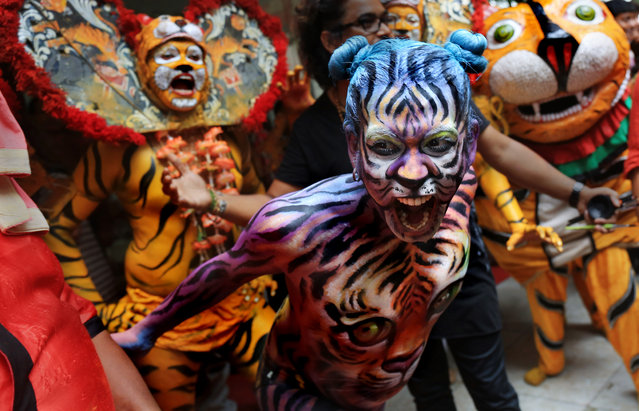
Indian dancers paint their body like tigers as they perform a Tiger dance during the International day of the Tiger in Calcutta, India, July 29, 2015. Students of Calcutta are taking part in an awareness campaign aiming to draw attention to the threats that tigers face due to habitat loss and poaching. (Photo by Piyal Adhikary/EPA)
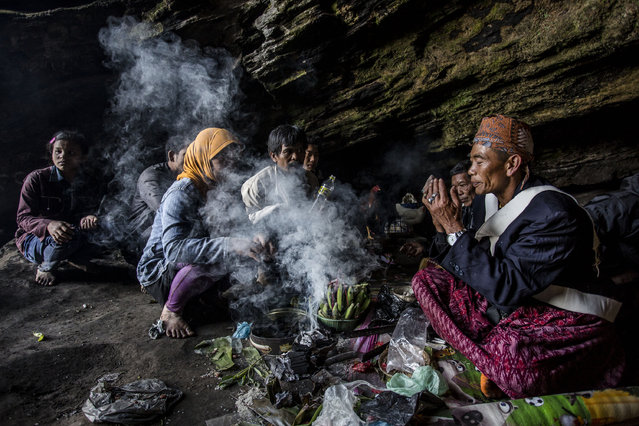
A Tenggerese shaman praying for worshippers at Widodaren cave during the Tenggerese Hindu Yadnya Kasada festival on July 31, 2015 in Probolinggo, East Java, Indonesia. The festival is the main festival of the Tenggerese people and lasts about a month. On the fourteenth day, the Tenggerese make the journey to Mount Bromo to make offerings of rice, fruits, vegetables, flowers and livestock to the mountain gods by throwing them into the volcano's caldera. The origin of the festival lies in the 15th century when a princess named Roro Anteng started the principality of Tengger with her husband Joko Seger, and the childless couple asked the mountain Gods for help in bearing children. The legend says the Gods granted them 24 children but on the provision that the 25th must be tossed into the volcano in sacrifice. The 25th child, Kesuma, was finally sacrificed in this way after initial refusal, and the tradition of throwing sacrifices into the caldera to appease the mountain Gods continues today. (Photo by Ulet Ifansasti/Getty Images)
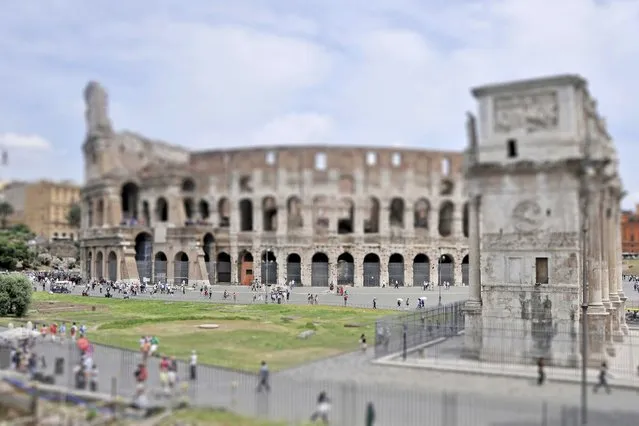
Richard Silver's photographs show us the world's biggest sights like Machu Picchu in Peru or Copacabana in Brazil. His photos, however, are not simply depictions of the landmarks but planned, artistic visual constructions that, with their playful combinations of sharpness and blur, create new worlds of experience. Photo: Coliseum, Rome. (Photo by Richard Silver)
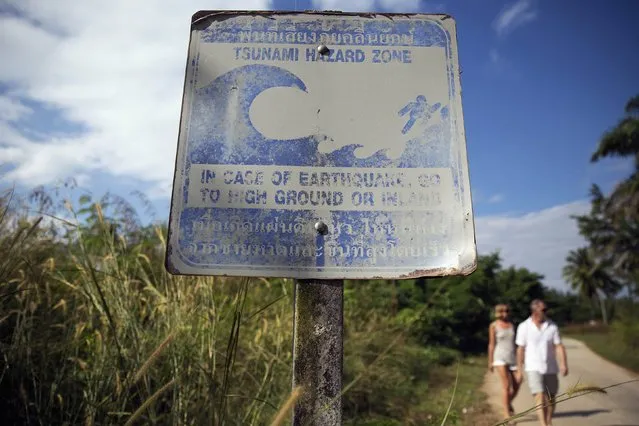
Tourists walk behind a faded sign warning of tsunami hazard in Khao Lak, Phang Nga province December 15, 2014. Ahead of the anniversary of the 2004 tsunami, experts and officials say key weaknesses remain across the region in the system designed to warn people of the next disaster, and get them to safety. Thailand prepares to mark the tenth anniversary of the 2004 tsunami, the deadliest on the record, that killed at least 226,000 people in 13 Asian and African countries. (Photo by Damir Sagolj/Reuters)
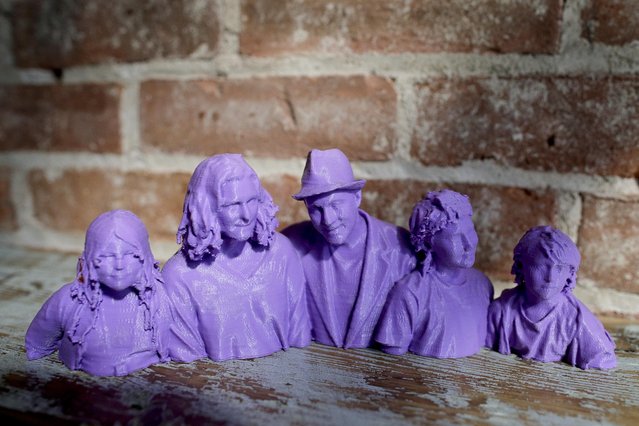
“The advent of digital cameras and smartphones killed the traditional mall portrait studio, but 3-D printing has sparked a new trend. Overloaded with digital photos, statues may be moving in to fulfill our desire for portraits that stand out”. – Peter Svensson via The Associated Press. (Photo by Julie Jacobson/AP Photo)
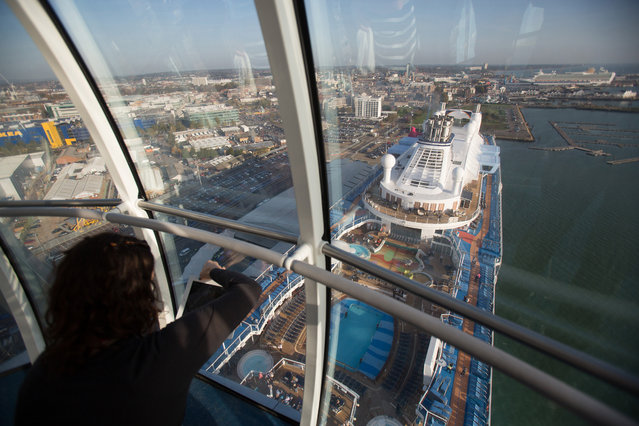
A visitor takes a photograph from the North Star observation capsule onboard the cruise ship Quantum of the Seas which is currently docked at Southampton on October 31, 2014 in Southampton, England. Billed as the world's first smartship, Royal Caribbean's Quantum of the Seas is claimed to be the most high-tech cruise ship in the world, with high tech modifications such as virtual balconies in windowless rooms and features such as the first dodgem ride on water, and a skydiving simulator. The ship will shortly begin its voyage from Southampton, where it docked earlier this week, to New York before relocating to the Caribbean for the 2014-15 season. (Photo by Matt Cardy/Getty Images)