Loading...
Done
NASA astronauts Stan Love and Loral O’Hara test Axiom Space’s lunar spacesuits underwater on October 1, 2025. The AxEMU suit is designed for the Artemis III mission to the moon’s south pole, due to lift off no earlier than mid-2027. (Photo by NBL/NASA via South West News Service)

NASA astronauts Stan Love and Loral O’Hara test Axiom Space’s lunar spacesuits underwater on October 1, 2025. The AxEMU suit is designed for the Artemis III mission to the moon’s south pole, due to lift off no earlier than mid-2027. (Photo by NBL/NASA via South West News Service)
Details
08 Oct 2025 03:56:00
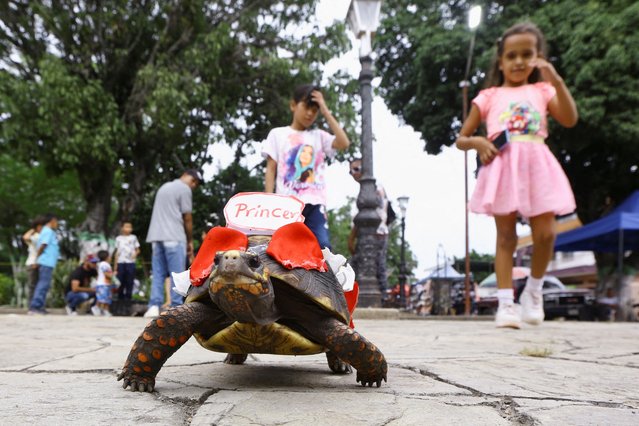
Children walk behind their Morrocoye, a terrestrial tortoise native to South America, before a tortoise race held to celebrate the upcoming feast day of Saint Francis of Assisi, the patron saint of animals, in the town of San Francisco de Asis, Venezuela, on October 3, 2025. (Photo by /Juan Carlos Hernandez/Reuters)

Children walk behind their Morrocoye, a terrestrial tortoise native to South America, before a tortoise race held to celebrate the upcoming feast day of Saint Francis of Assisi, the patron saint of animals, in the town of San Francisco de Asis, Venezuela, on October 3, 2025. (Photo by /Juan Carlos Hernandez/Reuters)
Details
18 Oct 2025 04:07:00
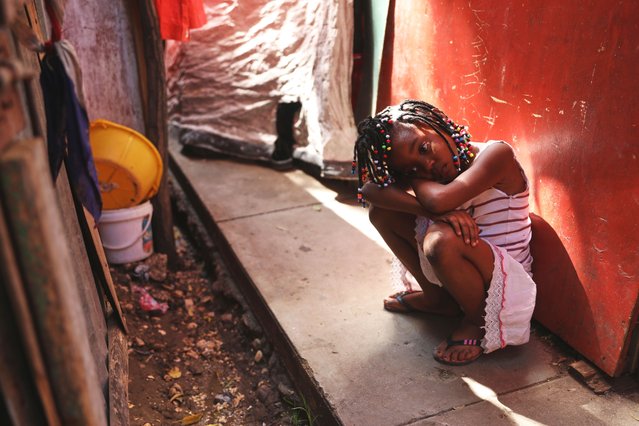
A child sits in a walkway at a shelter for families displaced by gang violence, in Port-au-Prince, Haiti, Thursday, May 22, 2025. (Photo by Odelyn Joseph/AP Photo)

A child sits in a walkway at a shelter for families displaced by gang violence, in Port-au-Prince, Haiti, Thursday, May 22, 2025. (Photo by Odelyn Joseph/AP Photo)
Details
20 Oct 2025 03:39:00
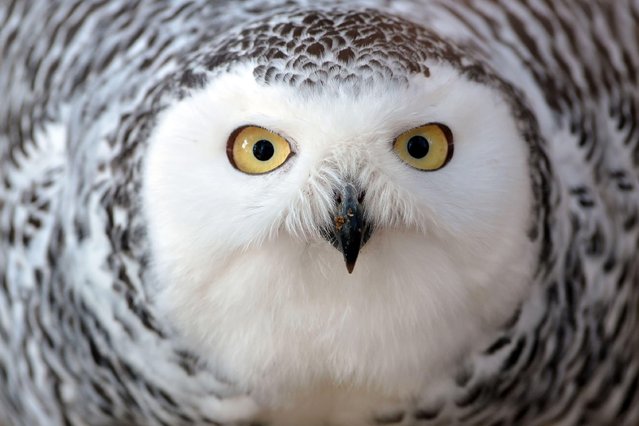
A snowy owl (Bubo scandiacus) raised by a falconer as part of a captive-breeding program, pictured in its enclosure in Vysocina, Czech Republic on October 22, 2025. (Photo by Slavek Ruta/ZUMA Press Wire via Alamy Live News)

A snowy owl (Bubo scandiacus) raised by a falconer as part of a captive-breeding program, pictured in its enclosure in Vysocina, Czech Republic on October 22, 2025. (Photo by Slavek Ruta/ZUMA Press Wire via Alamy Live News)
Details
02 Nov 2025 05:16:00
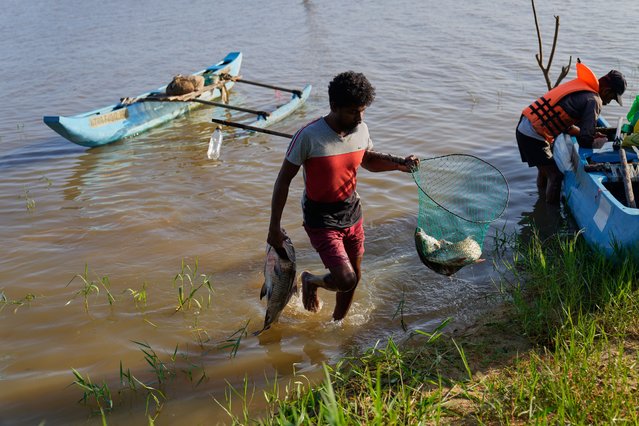
A fisherman brings his catch ashore from the Deduru Oya Reservoir, where giant snakeheads have become an invasive species in Walpaluwa village, Sri Lanka, Thursday, October 30, 2025. (Photo by Eranga Jayawardena/AP Photo)

A fisherman brings his catch ashore from the Deduru Oya Reservoir, where giant snakeheads have become an invasive species in Walpaluwa village, Sri Lanka, Thursday, October 30, 2025. (Photo by Eranga Jayawardena/AP Photo)
Details
17 Nov 2025 02:12:00
People pose for photos with scarecrow installations during the Scarecrow Art Festival at Huatuo Baicao Garden on November 22, 2025 in Bozhou, Anhui Province of China. (Photo by VCG/VCG via Getty Images)

People pose for photos with scarecrow installations during the Scarecrow Art Festival at Huatuo Baicao Garden on November 22, 2025 in Bozhou, Anhui Province of China. (Photo by VCG/VCG via Getty Images)
Details
29 Nov 2025 06:18:00
Canadian singer-songwriter Jessie Reyez performs during the Corona Capital music festival in Mexico City, Saturday, November 16, 2024. (Photo by Eduardo Verdugo/AP Photo)

Canadian singer-songwriter Jessie Reyez performs during the Corona Capital music festival in Mexico City, Saturday, November 16, 2024. (Photo by Eduardo Verdugo/AP Photo)
Details
21 Feb 2026 10:55:00
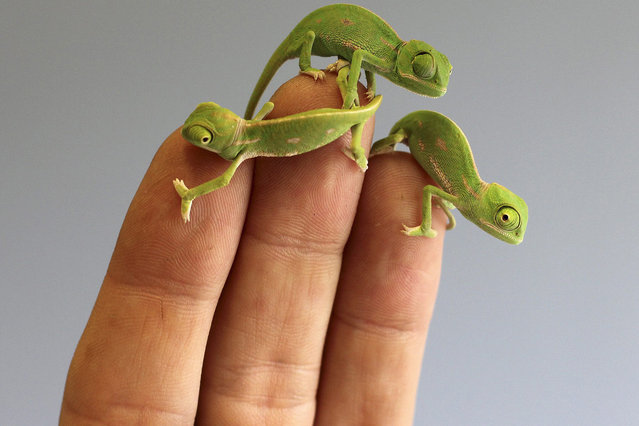
A handout image released by the Taronga Zoo shows Veiled Chameleon hatchlings at Taronga Zoo in Sydney, Australia, 11 March 2015. Taronga has welcomed more than 20 baby chameleons, with the last of three clutches of eggs hatching this week. Veiled Chameleons, or Chamaeleo calyptratus, are native to Saudi Arabia and Yemen and can live up to five years. (Photo by EPA/Taronga Zoo)

A handout image released by the Taronga Zoo shows Veiled Chameleon hatchlings at Taronga Zoo in Sydney, Australia, 11 March 2015. Taronga has welcomed more than 20 baby chameleons, with the last of three clutches of eggs hatching this week. Veiled Chameleons, or Chamaeleo calyptratus, are native to Saudi Arabia and Yemen and can live up to five years. (Photo by EPA/Taronga Zoo)
Details
21 Mar 2015 13:13:00