Loading...
Done
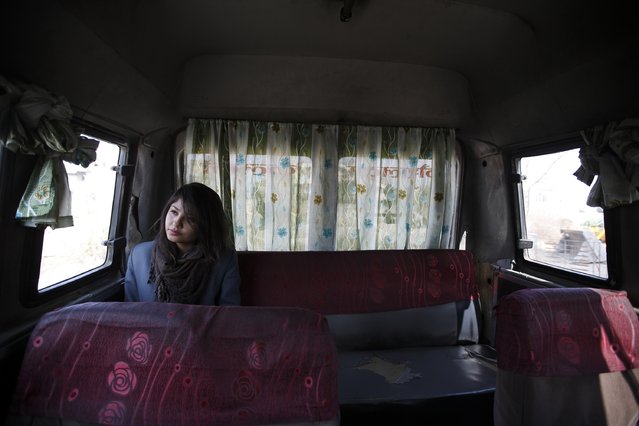
A woman rides a women-only bus as she returns from her college in Kathmandu January 6, 2015. Nepal's capital Kathmandu has introduced women-only buses in an attempt to reduce sexual harassment and groping on public transport, a senior government official said on Monday. The initiative will start with four 16-seater buses which will ply a popular east-west route across the city during peak morning and evening hours. (Photo by Navesh Chitrakar/Reuters)

A woman rides a women-only bus as she returns from her college in Kathmandu January 6, 2015. Nepal's capital Kathmandu has introduced women-only buses in an attempt to reduce sexual harassment and groping on public transport, a senior government official said on Monday. The initiative will start with four 16-seater buses which will ply a popular east-west route across the city during peak morning and evening hours. (Photo by Navesh Chitrakar/Reuters)
Details
07 Jan 2015 14:12:00
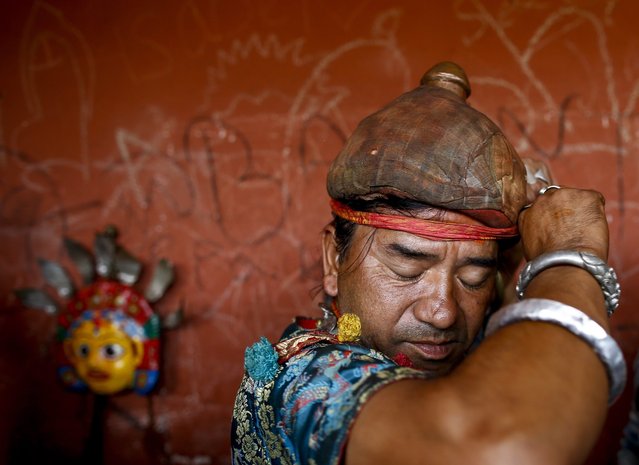
A Nepalese devotee prepares for a religious mask performance during the Seekaali Festival in Khokna village, near Kathmandu, Nepal, 07 October 2016. During the 300-year-old Seekali festival, elderly ethnic Newari devotees wear masks of 14 various goddesses including Lord Ganesha, Lord Shiva, Lord Laxmi, Lord Brahma and Lord Bishnu. The Khokna people celebrate the Seekaali festival as an alternative of the Dashain festival which is biggest festival of Nepalese Hindus that celebrates the victory of the gods over demons. (Photo by Narendra Shrestha/EPA)

A Nepalese devotee prepares for a religious mask performance during the Seekaali Festival in Khokna village, near Kathmandu, Nepal, 07 October 2016. During the 300-year-old Seekali festival, elderly ethnic Newari devotees wear masks of 14 various goddesses including Lord Ganesha, Lord Shiva, Lord Laxmi, Lord Brahma and Lord Bishnu. The Khokna people celebrate the Seekaali festival as an alternative of the Dashain festival which is biggest festival of Nepalese Hindus that celebrates the victory of the gods over demons. (Photo by Narendra Shrestha/EPA)
Details
09 Oct 2016 07:14:00
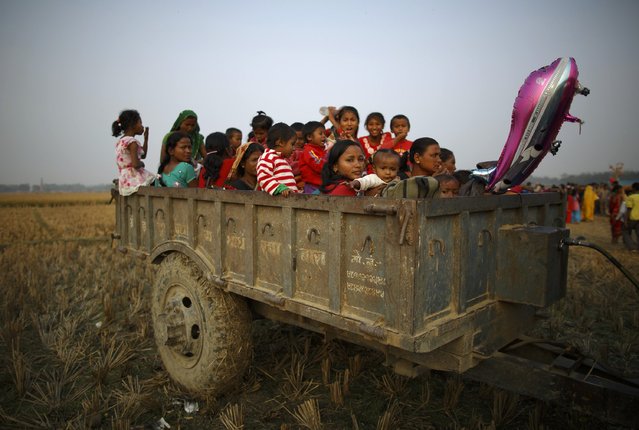
Family and friends sit in a vehicle trailer, where they will spend the night, near the enclosure for buffalos awaiting sacrifice on the eve of the sacrificial ceremony for the “Gadhimai Mela” festival in Bariyapur November 27, 2014. (Photo by Navesh Chitrakar/Reuters)

Family and friends sit in a vehicle trailer, where they will spend the night, near the enclosure for buffalos awaiting sacrifice on the eve of the sacrificial ceremony for the “Gadhimai Mela” festival in Bariyapur November 27, 2014. The festival renowned for its large number of animal sacrifices, is held every five years at the Gadhimai Temple where devotees from Nepal and bordering India will sacrifice buffaloes, goats and birds while offering prayers to Gadhimai, the goddess of power. (Photo by Navesh Chitrakar/Reuters)
Details
28 Nov 2014 12:03:00
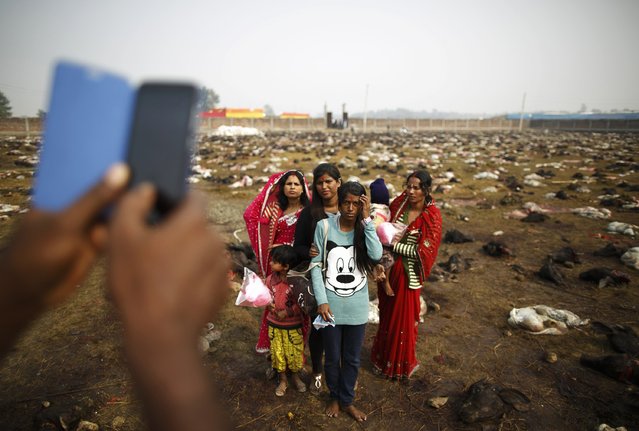
A family poses for a picture in front of the carcasses of sacrificed buffalos a day after the sacrificial ceremony of the “Gadhimai Mela” festival held in Bariyapur November 29, 2014. Sword-wielding Hindu devotees in Nepal began slaughtering thousands of animals and birds in a ritual sacrifice on Friday, ignoring calls by animal rights activists to halt what they described as the world's largest such exercise. (Photo by Navesh Chitrakar/Reuters)

A family poses for a picture in front of the carcasses of sacrificed buffalos a day after the sacrificial ceremony of the “Gadhimai Mela” festival held in Bariyapur November 29, 2014. Sword-wielding Hindu devotees in Nepal began slaughtering thousands of animals and birds in a ritual sacrifice on Friday, ignoring calls by animal rights activists to halt what they described as the world's largest such exercise. (Photo by Navesh Chitrakar/Reuters)
Details
30 Nov 2014 12:35:00
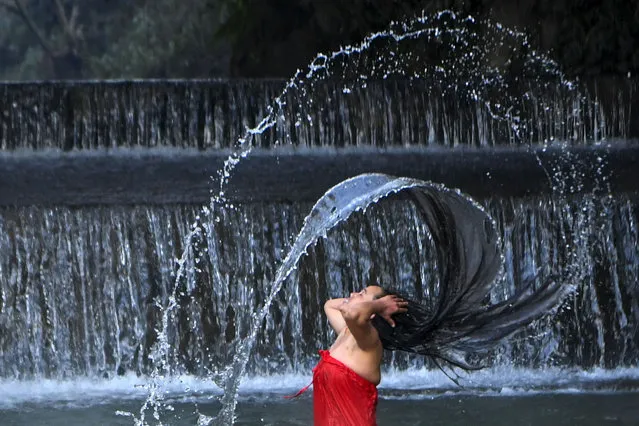
A Hindu devotee bathes in the Shali River during the Swasthani Brata Katha festival, marked with auspicious bathing in water bodies hoping for a prosperous life and conjugal happiness, on the outskirts of Kathmandu on January 28, 2021. (Photo by Prakash Mathema/AFP Photo)

A Hindu devotee bathes in the Shali River during the Swasthani Brata Katha festival, marked with auspicious bathing in water bodies hoping for a prosperous life and conjugal happiness, on the outskirts of Kathmandu on January 28, 2021. (Photo by Prakash Mathema/AFP Photo)
Details
01 Mar 2021 08:42:00
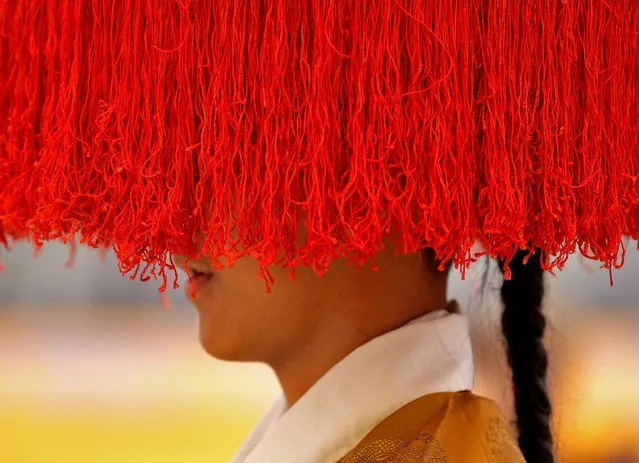
A Tibetan wearing a traditional headgear performs during a function organised to mark “Losar” or the Tibetan New Year in Kathmandu, Nepal on March 5, 2022. (Photo by Monika Deupala/Reuters)

A Tibetan wearing a traditional headgear performs during a function organised to mark “Losar” or the Tibetan New Year in Kathmandu, Nepal on March 5, 2022. (Photo by Monika Deupala/Reuters)
Details
14 Mar 2022 04:50:00
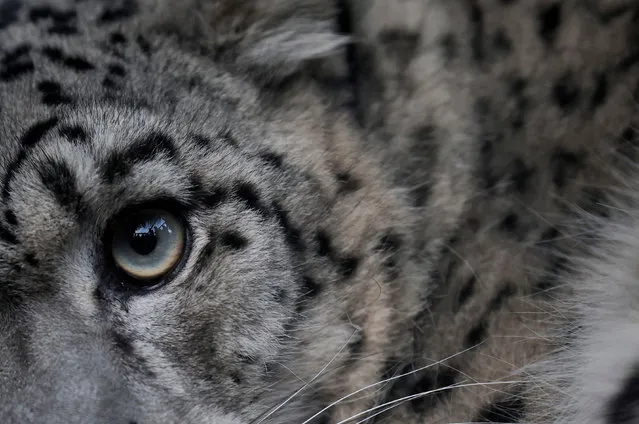
A snow leopard looks on from an inside of a cage, after being captured from the southern plains of Nepal and brought to the central zoo, which wildlife experts say is rare for the animal that is found in the higher altitude, in Kathmandu, Nepal on January 26, 2024. (Photo by Navesh Chitrakar/Reuters)

A snow leopard looks on from an inside of a cage, after being captured from the southern plains of Nepal and brought to the central zoo, which wildlife experts say is rare for the animal that is found in the higher altitude, in Kathmandu, Nepal on January 26, 2024. (Photo by Navesh Chitrakar/Reuters)
Details
03 Feb 2024 08:21:00
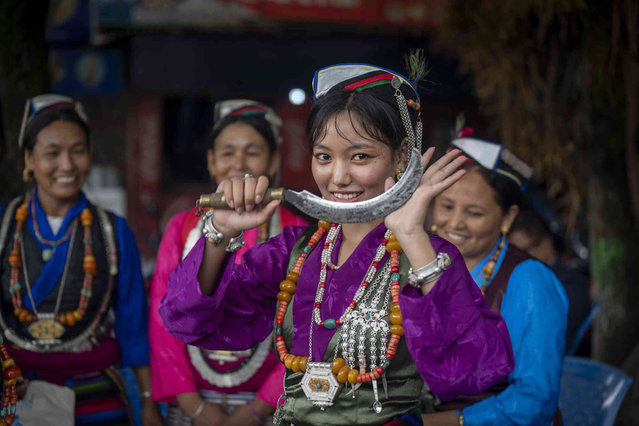
Nepal's indigenous women in traditional attire gather to participate in a rally to mark the International Day of the World's Indigenous People in Kathmandu, Nepal, Friday, August 9, 2024. (Photo by Niranjan Shrestha/AP Photo)

Nepal's indigenous women in traditional attire gather to participate in a rally to mark the International Day of the World's Indigenous People in Kathmandu, Nepal, Friday, August 9, 2024. (Photo by Niranjan Shrestha/AP Photo)
Details
24 Aug 2024 04:48:00