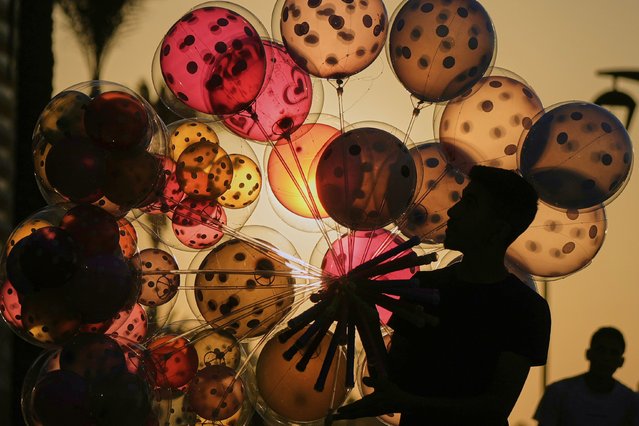
A Syrian boy sells balloons as the sun sets over the Mediterranean waterfront promenade in Beirut, Lebanon, Saturday, August 23, 2025. (Photo by Bilal Hussein/AP Photo)
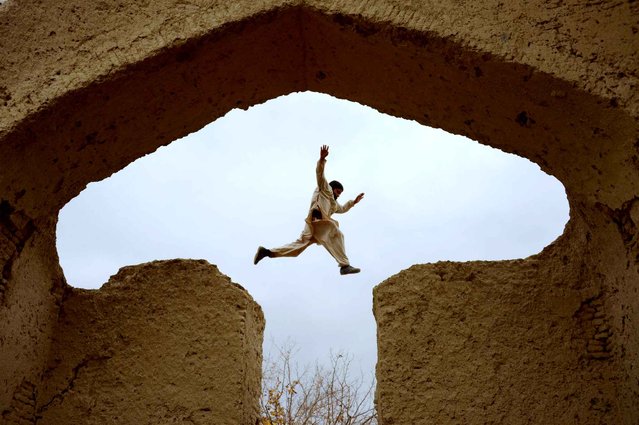
An Afghan boy plays in the ruins of a house that at one point belonged to the 13th-century Persian poet, Islamic scholar and Sufi mystic Jalal ad-Din Muhammad Rumi on the outskirts of Mazar-i-Sharif on November 25, 2015. (Photo by Farshad Usyan/AFP Photo)
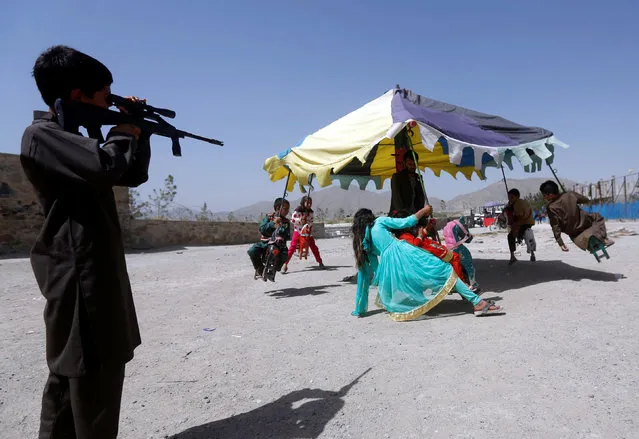
An Afghan boy looks through the scope of a toy gun, as other children ride on swings during the first day of the Muslim holiday of Eid al-Fitr, which marks the end of the holy month of Ramadan, in Kabul, Afghanistan June 25, 2017. (Photo by Omar Sobhani/Reuters)
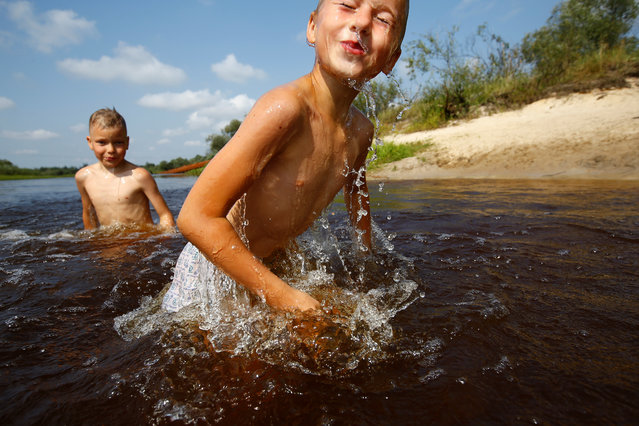
Just a few hours’ drive from the Belarus capital of Minsk, many villagers still live off the land. Nearly 80% of the country’s 9.5 million citizens live in urban areas, but for the rest, being close to nature can outweigh the hardships of country life. Here: Boys play in the Stviga River on a hot summer day near the village of Pogost, Belarus, August 16, 2017. (Photo by Vasily Fedosenko/Reuters)
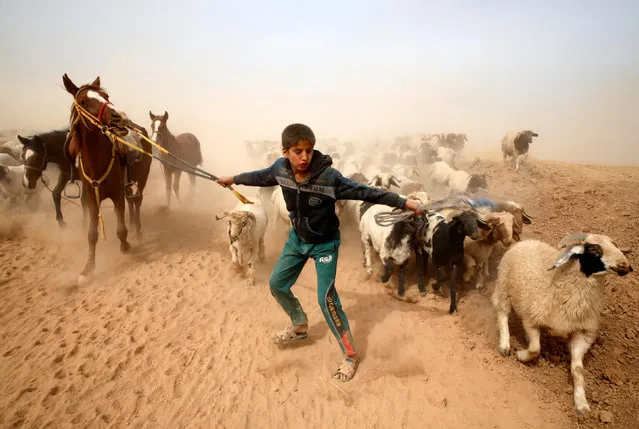
A displaced Iraqi boy leads his animals to safety after escaping from Islamic State controlled village of Abu Jarboa during clashes with IS militants near Mosul, Iraq November 1, 2016. (Photo by Ahmed Jadallah/Reuters)
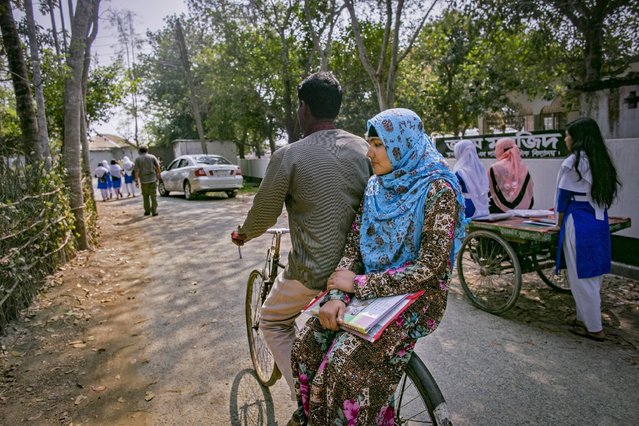
Rani rides home with her father on the back of his bicycle on March 6, 2017 in Khulna division, Bangladesh. Rani, who is now 16, was under pressure to marry a boy when she was 14-years-old despite the reluctance of Rani and her father, Abdul. (Photo by Allison Joyce/Getty Images)
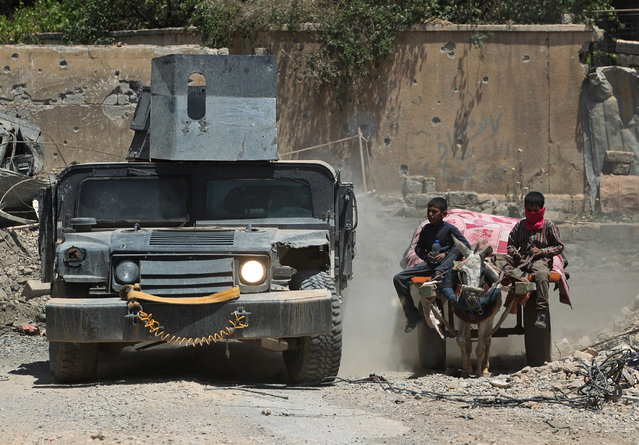
An Iraqi military vehicle passes displaced Iraqi boys returning to their homes in West Mosul's Oreibi neighbourhood after government forces retook control of the area from the Islamic State (IS) group during the ongoing offensive against the jihadists on May 21, 2017. (Photo by Ahmad Al-Rubaye/AFP Photo)
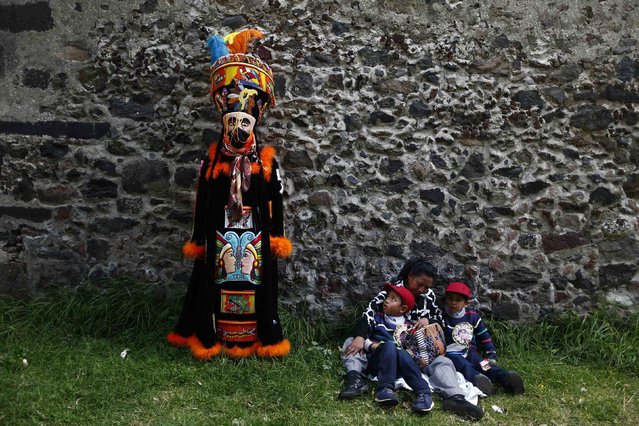
A boy sitting with his family looks up at a traditional Chinelo costumed dancer during a celebration 40 days after the birth of Jesus, in Xochimilco on the outskirts of Mexico City, February 2, 2015. The tradition of the Chinelo dates back to colonial times and the outfits and masks, which are supposed to resemble the faces of the Europeans and always sport an uptilted beard, became more elaborate between the 1800s and 1900s to make fun of the upper social classes. (Photo by Edgard Garrido/Reuters)