Loading...
Done
Papercuts by Joe Bagley

Joe Bagley is a paper artist who lives in Boston. All of his designs are original works, and each is cut by hand. No lasers, dies, or prints!
Details
24 Oct 2013 08:58:00
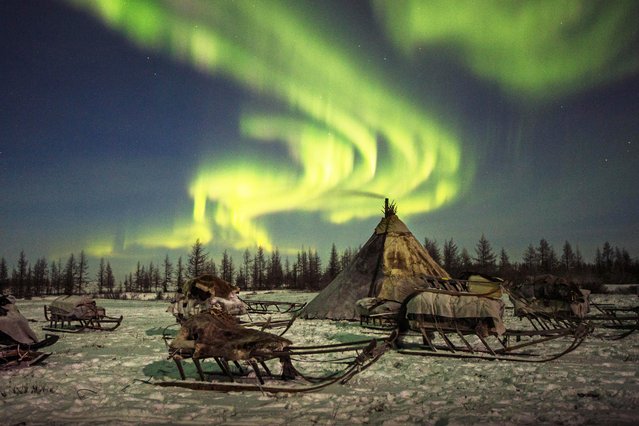
An empty camp is shown beneath a colourful sky in Siberia, December 2016. (Photo by Timothy Allen/Barcroft Productions)


A British photographer has captured life at the “edge of the world”. Timothy Allen, best known for his work on BBC's Human Planet, trekked through the freezing Siberian wilderness for 16 days as he joined part of an 800km migration of reindeer in the Yamal-Nenets region – a name that roughly translates to “edge of the world”. The stunning pictures feature the nomadic Nenets tribe, who drink blood to survive in -45°C temperatures. Timothy's epic journey, which will be revealed in an eight-minute documentary on Animal Planet USA, saw him travel across the bleak terrain of the frozen Ob River with the Nenets people in December last year. Here: An empty camp is shown beneath a colourful sky in Siberia, December 2016. (Photo by Timothy Allen/Barcroft Productions)

Details
19 Sep 2017 07:48:00
In this February 19, 2017 photo, a statue of the Death Saint stands inside Mercy Church as Juan Carlos Avila Mercado gives a service, on the edge of Mexico City's Tepito neighborhood. “She chooses them and has always been with us”, said Avila, who says he is a Catholic priest, but who is not listed among the archdiocese's priests. “We are born and we die with death”. (Photo by Marco Ugarte/AP Photo)

In this February 19, 2017 photo, a statue of the Death Saint stands inside Mercy Church as Juan Carlos Avila Mercado gives a service, on the edge of Mexico City's Tepito neighborhood. “She chooses them and has always been with us”, said Avila, who says he is a Catholic priest, but who is not listed among the archdiocese's priests. “We are born and we die with death”. (Photo by Marco Ugarte/AP Photo)
Details
14 Mar 2017 00:01:00
Rebel fighters fire towards positions of regime forces in Ramussa on the southwestern edges of Syria's northern city of Aleppo on August 6, 2016. Syrian rebels said they have broken a three-week government siege of second city Aleppo, turning the tables on Russian-backed regime forces who are now on the defensive. (Photo by Fadi Al-Halabi/AFP Photo)

Rebel fighters fire towards positions of regime forces in Ramussa on the southwestern edges of Syria's northern city of Aleppo on August 6, 2016. Syrian rebels said they have broken a three-week government siege of second city Aleppo, turning the tables on Russian-backed regime forces who are now on the defensive. (Photo by Fadi Al-Halabi/AFP Photo)
Details
08 Aug 2016 10:30:00
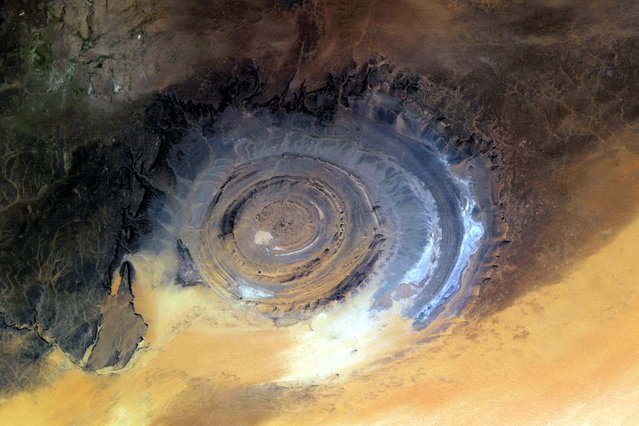
Eye Of The Sahara

The Richat Structure, also known as the Eye of the Sahara and Guelb er Richat, is a prominent circular feature in the Sahara desert of west–central Mauritania near Ouadane. This structure is a deeply eroded, slightly elliptical, 40 km in diameter, dome. The sedimentary rock exposed in this dome range in age from Late Proterozoic within the center of the dome to Ordovician sandstone around its edges.
Details
24 Mar 2013 12:32:00
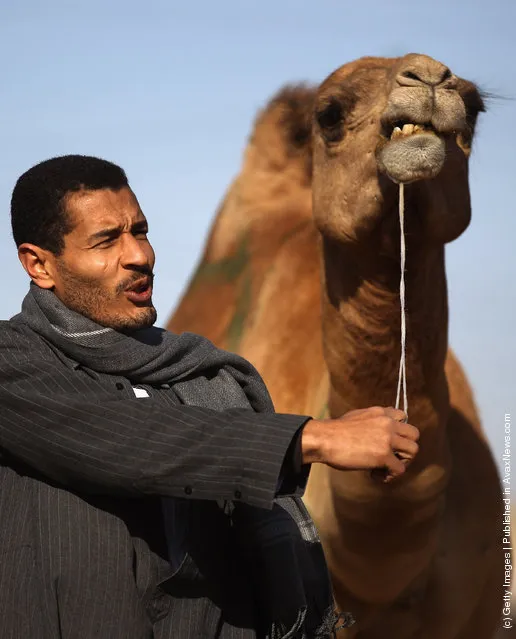
Men buy and sell camels at Birqash camel market in Cairo, Egypt

A man walks with a camel at Birqash camel market on January 27, 2012 in Cairo, Egypt. On the edge of the western dessert, thousands of camels are bought and sold every Friday at Brqash camel market, one of the biggest in the Middle East. (Photo by Jeff J. Mitchell/Getty Images)
Details
28 Jan 2012 14:55:00
Pygmy Marmoset - The Smallest Monkey

The pygmy marmoset (Cebuella pygmaea) is a small New World monkey native to rainforests of the western Amazon Basin in South America. It is notable for being the smallest monkey in the world at just over 100 grams (3.5 oz). It is generally found in evergreen and river edge forests and is a gum-feeding specialist
Details
29 Jan 2014 12:59:00
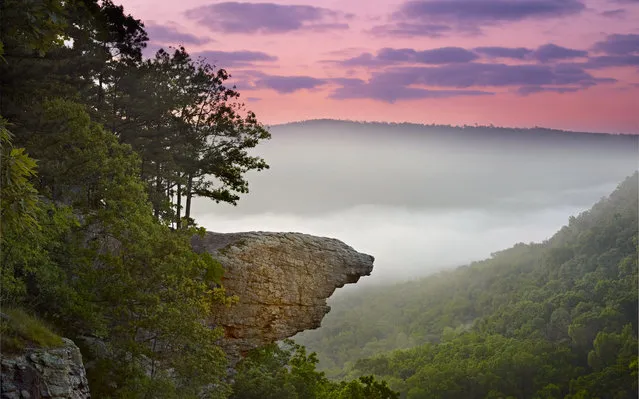
Hawksbill Crag In The Ozark National Forest

The Hawksbill Crag, also known as Whitaker Point, is located along the northern edge of the Upper Buffalo Wilderness in the Ozark National Forest, just south of the Buffalo National River. It is easily one of the most photograped and recognizable features in Arkansas, and is often seen on publications depicting the outdoors in Arkansas. The hike to it is an easy 3.0 mile round trip, and offers scenic vistas, huge boulders, beautiful waterfalls and colorful wildflowers.
Details
21 Jun 2013 11:43:00