Loading...
Done
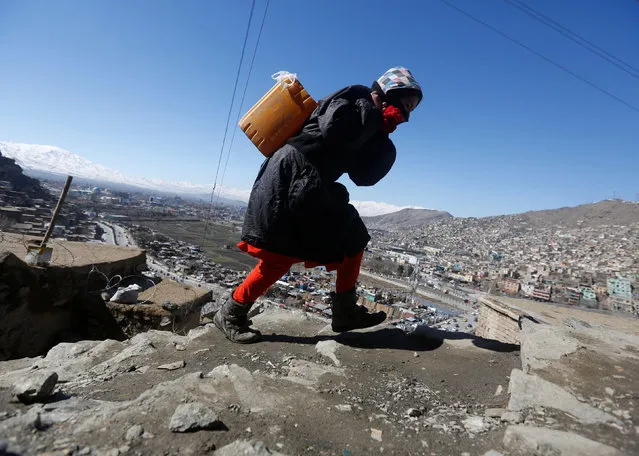
An Afghan girl carries water on her back as she climbs a hill in Kabul, Afghanistan February 20, 2017. (Photo by Omar Sobhani/Reuters)

An Afghan girl carries water on her back as she climbs a hill in Kabul, Afghanistan February 20, 2017. A growing population is straining water supplies in Afghanistan's capital, forcing those who can afford it to dig unregulated wells ever deeper to tap a falling water table. Finding water in arid Afghanistan is virtually always a challenge, but a drop in the groundwater level in Kabul caused by overuse and drought is making it even more difficult for residents, especially the poor. (Photo by Omar Sobhani/Reuters)
Details
02 Mar 2017 00:05:00
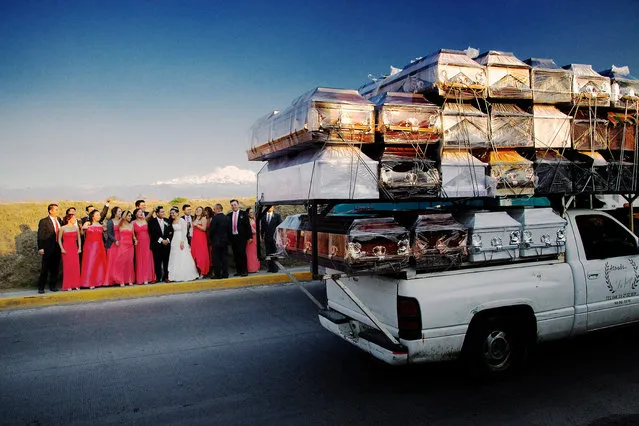
Subida Al Cielo, by José Nieto. Finalist, single image. (Photo by José Nieto/LensCulture 2018 Street Photography Awards)

Blow-up unicorns, a pig on a pulley and chickens on the lam populate the polychrome pictures in this year’s LensCulture street photography awards. Here: Subida Al Cielo, by José Nieto. Finalist, single image. (Photo by José Nieto/LensCulture 2018 Street Photography Awards)
Details
07 Jul 2018 00:03:00
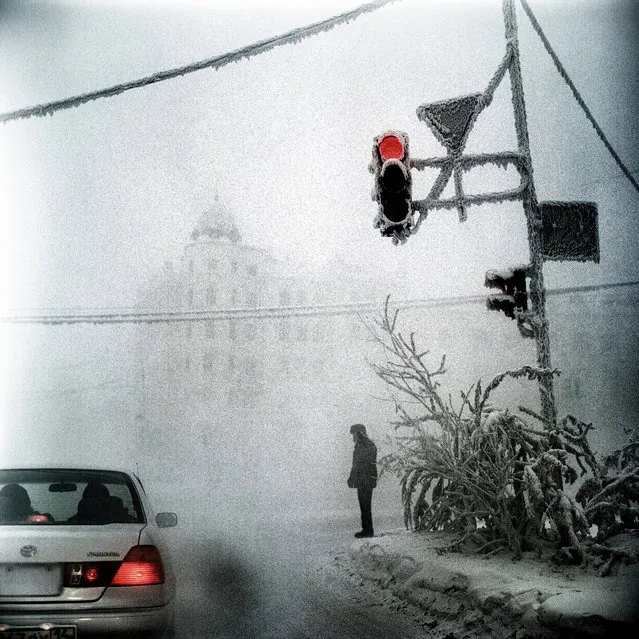
January 2013. A scene in Yakutsk, Siberia, the coldest city in the world. (Photo by Steeve Iuncker/Agence VU)

Yakutsk, a remote city in Eastern Siberia along the Lena River, is the coldest city in the world. Located 1840 km away from Irkoustk and 5000 km away from Moscow, this city founded in 1632 by the Cossacks imposes upon its inhabitants an extreme way of life. And yet, despite particularly harsh conditions, Yakutsk boasts a population of 270,000, or a quarter of the entire population of Siberia. No other place on the planet experiences the temperature extreme found here: in winter, the temperatures regularly fall to minus 40° (the coldest temperature recorded was –64°C) and in summer often reaches temperatures above 30°C. Photo: January 2013. A scene in Yakutsk, Siberia, the coldest city in the world. (Photo by Steeve Iuncker/Agence VU)
Details
29 Apr 2013 10:30:00
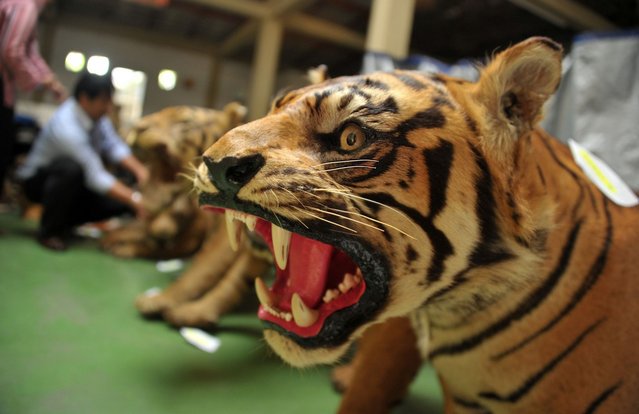
This photo taken on July 25, 2012 one of 14 preserved bodies of critically-endangered Sumatran tigers seized as members of the Indonesian national police and the special crime unit inspect the scene at a warehouse in Cibubur, south of Jakarta. Indonesian police seized 14 preserved bodies of critically-endangered Sumatran tigers in a raid on a house near Jakarta, a spokesman said on July 19. (Photo by Bay Ismoyo/AFP Photo)

“The Sumatran tiger (Panthera tigris sumatrae) is a rare tiger subspecies that inhabits the Indonesian island of Sumatra. It was classified as critically endangered by IUCN in 2008 as the population is projected to be 441 to 679 individuals, with no subpopulation having an effective population size larger than 50 individuals, with a declining trend”. – Wikipedia

This photo taken on July 25, 2012 one of 14 preserved bodies of critically-endangered Sumatran tigers seized as members of the Indonesian national police and the special crime unit inspect the scene at a warehouse in Cibubur, south of Jakarta. Indonesian police seized 14 preserved bodies of critically-endangered Sumatran tigers in a raid on a house near Jakarta, a spokesman said on July 19. (Photo by Bay Ismoyo/AFP Photo)
Details
04 Mar 2015 08:13:00
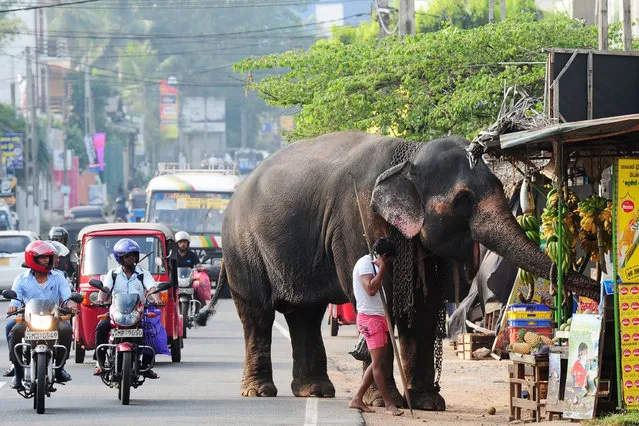
A Sri Lankan elephant, accompanied by his mahout, browse through a roadside fruit stall in Colombo on January 19, 2015. The Sri Lankan elephant is listed as endangered by the International Union for Conservation of Nature (IUCN) as the population has declined by at least 50 percent over the last three generations, with the species threatened by habitat loss, degradation and fragmentation. (Photo by Lakruwan Wanniarachchi/AFP Photo)

A Sri Lankan elephant, accompanied by his mahout, browse through a roadside fruit stall in Colombo on January 19, 2015. The Sri Lankan elephant is listed as endangered by the International Union for Conservation of Nature (IUCN) as the population has declined by at least 50 percent over the last three generations, with the species threatened by habitat loss, degradation and fragmentation. (Photo by Lakruwan Wanniarachchi/AFP Photo)
Details
23 Jan 2015 13:21:00
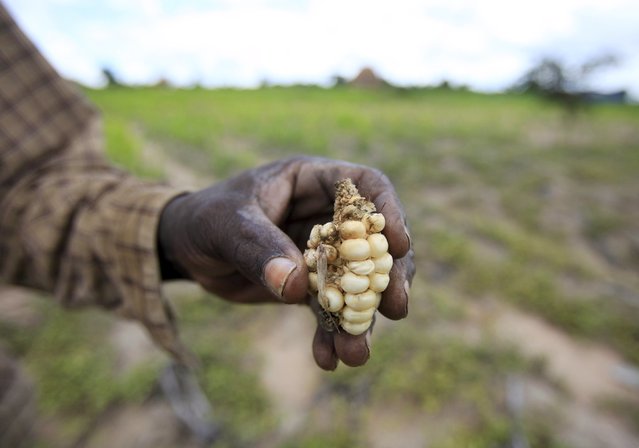
A Zimbabwean subsistence farmer holds a stunted maize cob in his field outside Harare, January 20, 2016. About 14 million people face hunger in Southern Africa because of a drought that has been exacerbated by an El Nino weather pattern, the United Nations World Food Programme (WFP) said on Monday. In Zimbabwe, 1.5 million people, more than 10 percent of the population, face hunger, WFP said. (Photo by Philimon Bulawayo/Reuters)

A Zimbabwean subsistence farmer holds a stunted maize cob in his field outside Harare, January 20, 2016. About 14 million people face hunger in Southern Africa because of a drought that has been exacerbated by an El Nino weather pattern, the United Nations World Food Programme (WFP) said on Monday. In Zimbabwe, 1.5 million people, more than 10 percent of the population, face hunger, WFP said. (Photo by Philimon Bulawayo/Reuters)
Details
22 Jan 2016 10:06:00
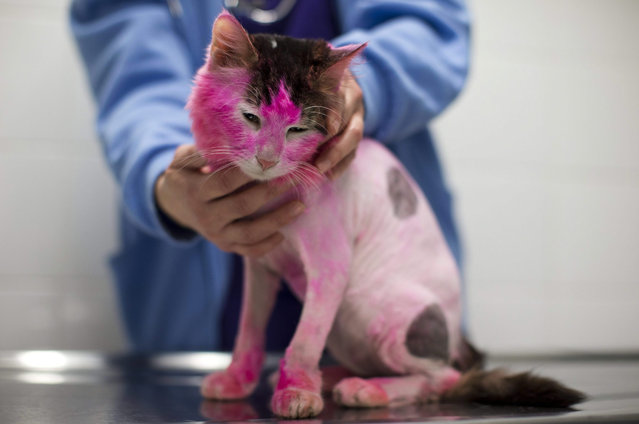
“Bazooka”, a one year old stray cat, is treated at the SPCA (Society for Prevention of Cruelty to Animals) clinic in Tel Aviv, Israel, 06 January 2016. Bazooka arrived at the clinic in critical condition after he went through severe abuse with bruises all over his body and painted with pink oxidation. (Photo by Abir Sultan/EPA)

“Bazooka”, a one year old stray cat, is treated at the SPCA (Society for Prevention of Cruelty to Animals) clinic in Tel Aviv, Israel, 06 January 2016. Bazooka arrived at the clinic in critical condition after he went through severe abuse with bruises all over his body and painted with pink oxidation. The Israeli street cat population is estimated to be about two million. Without enough financial support from the state, animal rights organizations find it difficult to keep the up with the pace when it comes to spaying and neutering feral cats, causing the population to grow. (Photo by Abir Sultan/EPA)
Details
27 Jan 2016 13:17:00
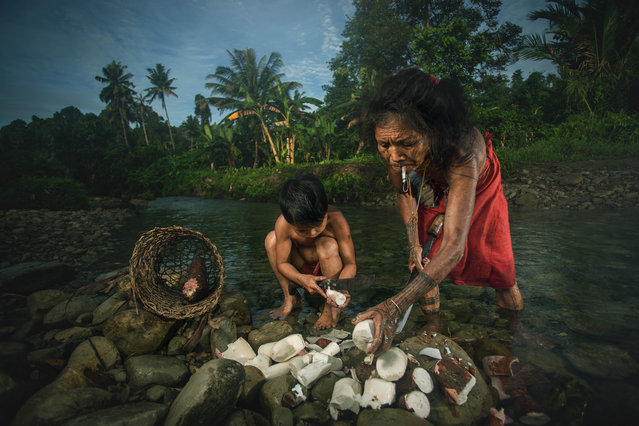
These stunning images document the everyday lives of the men, women and children of the Mentawai tribe. The Mentawai people, a native population in Indonesia, are famous for their decorative tattoos and for living a semi-nomadic life on the Mentawai Islands in West Sumatra. Shot by professional photographer Mohammed Saleh Bin Dollah, the series captures a glimpse of life on the island as the Mentawai men smoke and hunt for food and the children play in the river. (Photo by Muhamad Saleh Dollah/Barcroft Media)

These stunning images document the everyday lives of the men, women and children of the Mentawai tribe. The Mentawai people, a native population in Indonesia, are famous for their decorative tattoos and for living a semi-nomadic life on the Mentawai Islands in West Sumatra. Shot by professional photographer Mohammed Saleh Bin Dollah, the series captures a glimpse of life on the island as the Mentawai men smoke and hunt for food and the children play in the river. Here: A young boy helps a woman to prepare food taken on July 19, 2014 on the Mentawai Islands, Indonesia. (Photo by Muhamad Saleh Dollah/Barcroft Media)
Details
06 Feb 2016 13:09:00