Loading...
Done


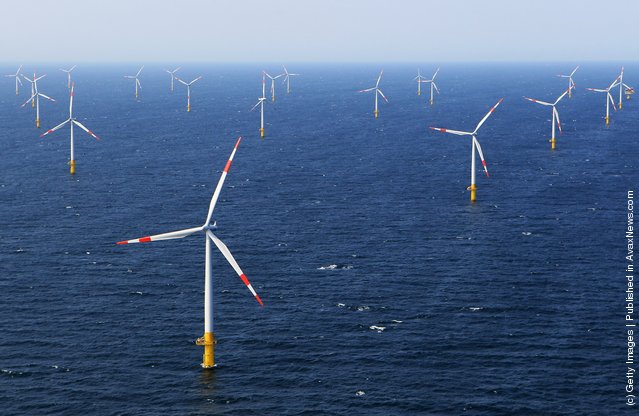
Wind turbines stand in the Baltic 1 offshore wind farm on April 29, 2011 in the Baltic Sea near Zingst, Germany. Baltic 1, a project of German energy utility EnBW that includes 21 turbines rated at 2.3 megawatts each, will be Germany's first commercial offshore wind farm once it officially begins operation on May 2. Germany has thus far lagged in offshore wind farm construction when compared to neighbors like Great Britain and Denmark, though German Chancellor Angela Merkel has vowed to invest heavily into offshore wind farms as part of an overall policy to encourage renewable energy production. (Photo by Joern Pollex/Getty Images)
Details
30 Apr 2011 12:54:00
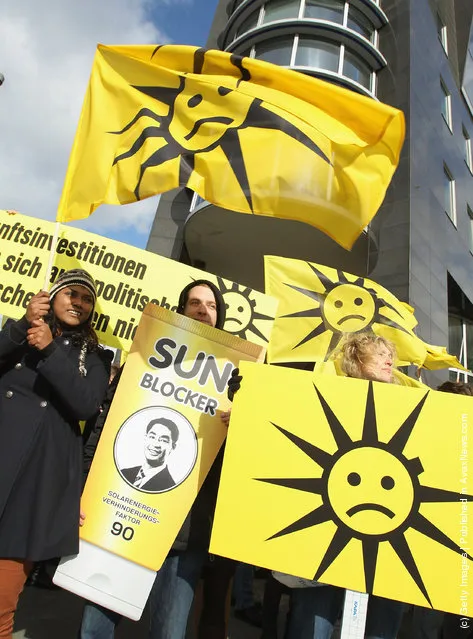
 Activists protesting cuts in subsidies to solar power in Germany protest outside the building where Vice Chancellor and Economy Minister Philipp Roesler and Environment Minister Norbert Roettgen were announcing the cuts

Activists protesting cuts in subsidies to solar power in Germany protest outside the building where Vice Chancellor and Economy Minister Philipp Roesler and Environment Minister Norbert Roettgen were announcing the cuts on February 23, 2012 in Berlin, Germany. (Photo by Sean Gallup/Getty Images)
Details
24 Feb 2012 11:29:00
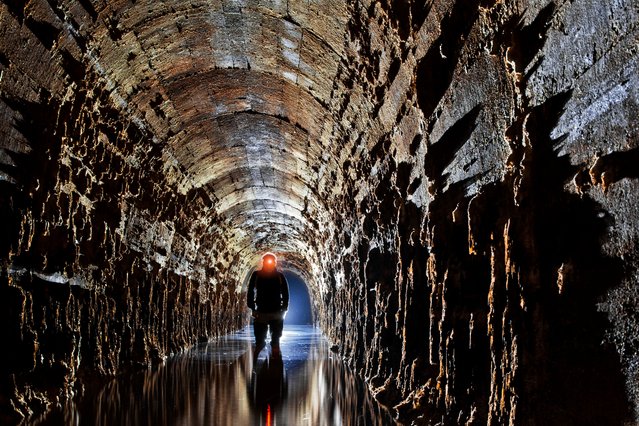
Regenwurmlager, Poland. The Regenwurmlager is an extensive underground fortification area constructed by Germany in 1920s-1940s, now in western Poland, near the city of Międzyrzecz. (Photo by Anna Arinova/Caters News)

Stunning silhouettes under European cities reveal the size and splendor of the continent’s urban foundations. Photographer and content-manager Anna Arinova, 28, from Moscow, captured the awe-inspiring labyrinths in Russia and Germany. Here: Regenwurmlager, Poland. The Regenwurmlager is an extensive underground fortification area constructed by Germany in 1920s-1940s, now in western Poland, near the city of Międzyrzecz. (Photo by Anna Arinova/Caters News)
Details
29 Dec 2016 07:53:00
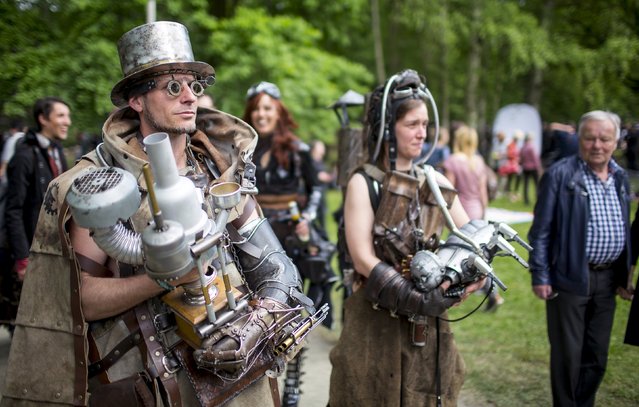
Revellers attend the Victorian Picnic during the Wave and Goth festival in Leipzig, Germany, May 22, 2015. The annual festival, known in Germany as Wave-Gotik Treffen (WGT), features over 100 bands and artists in venues all over the city playing Gothic rock and other styles of the dark wave music subculture. One of the biggest of its kind, the event attracts a regular audience of up to 20,000, the organisers said. (Photo by Hannibal Hanschke/Reuters)

Revellers attend the Victorian Picnic during the Wave and Goth festival in Leipzig, Germany, May 22, 2015. The annual festival, known in Germany as Wave-Gotik Treffen (WGT), features over 100 bands and artists in venues all over the city playing Gothic rock and other styles of the dark wave music subculture. One of the biggest of its kind, the event attracts a regular audience of up to 20,000, the organisers said. (Photo by Hannibal Hanschke/Reuters)
Details
23 May 2015 11:09:00
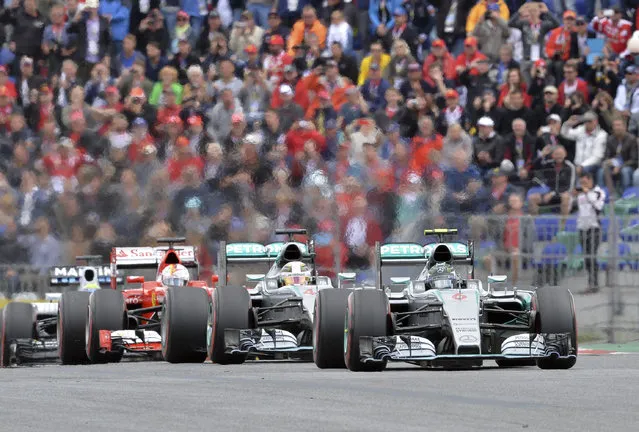
Mercedes driver Nico Rosberg, right, of Germany steers his car in front of Mercedes driver Mercedes driver Lewis Hamilton of Britain, center and Ferrari driver Sebastian Vettel of Germany during the Austrian Formula One Grand Prix race at the Red Bull Ring  in Spielberg, southern Austria, Sunday, June 21, 2015. (AP Photo/Kerstin Joensson)

Mercedes driver Nico Rosberg, right, of Germany steers his car in front of Mercedes driver Mercedes driver Lewis Hamilton of Britain, center and Ferrari driver Sebastian Vettel of Germany during the Austrian Formula One Grand Prix race at the Red Bull Ring in Spielberg, southern Austria, Sunday, June 21, 2015. (AP Photo/Kerstin Joensson)
Details
28 Jun 2015 16:26:00
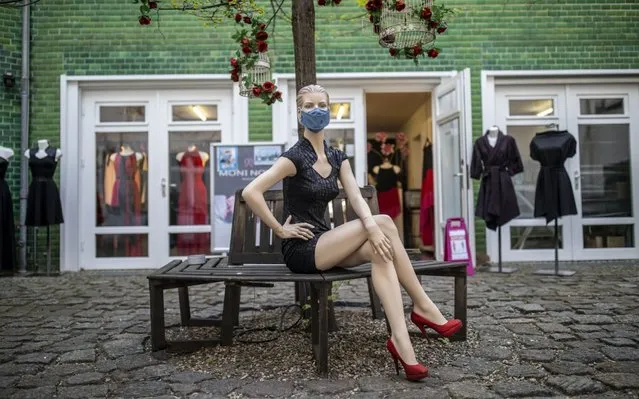
A store mannequin with a protective mask stands before a clothes store as they open for the first time since March during the novel coronavirus (COVID-19) pandemic on April 22, 2020 in Berlin, Germany. Small to midsized-shops are opening across Germany this week as state authorities follow a recommendation by the federal government to ease restrictions imposed in March meant to slow the spread of the coronavirus. Some schools are also planning to reopen soon, as are museums and hair salons in coming weeks. (Photo by Maja Hitij/Getty Images)

A store mannequin with a protective mask stands before a clothes store as they open for the first time since March during the novel coronavirus (COVID-19) pandemic on April 22, 2020 in Berlin, Germany. Small to midsized-shops are opening across Germany this week as state authorities follow a recommendation by the federal government to ease restrictions imposed in March meant to slow the spread of the coronavirus. Some schools are also planning to reopen soon, as are museums and hair salons in coming weeks. (Photo by Maja Hitij/Getty Images)
Details
08 Jan 2021 00:05:00
A Sorb egg painter decorates an Easter egg while using bent spoons full of melted wax as coloring at the annual Easter egg market on March 16, 2013 in Schleife, Germany. Easter is a particularly important time of year for Sorbs, a Slavic minority in eastern Germany, and the period includes the tradition of painting Easter eggs that include visual elements intended to ward off evil. Many Sorbs still speak Sorbian, a language closely related to Polish and Czech.  (Photo by Adam Berry)

A Sorb egg painter decorates an Easter egg while using bent spoons full of melted wax as coloring at the annual Easter egg market on March 16, 2013 in Schleife, Germany. Easter is a particularly important time of year for Sorbs, a Slavic minority in eastern Germany, and the period includes the tradition of painting Easter eggs that include visual elements intended to ward off evil. Many Sorbs still speak Sorbian, a language closely related to Polish and Czech. (Photo by Adam Berry)
Details
19 Mar 2013 06:41:00
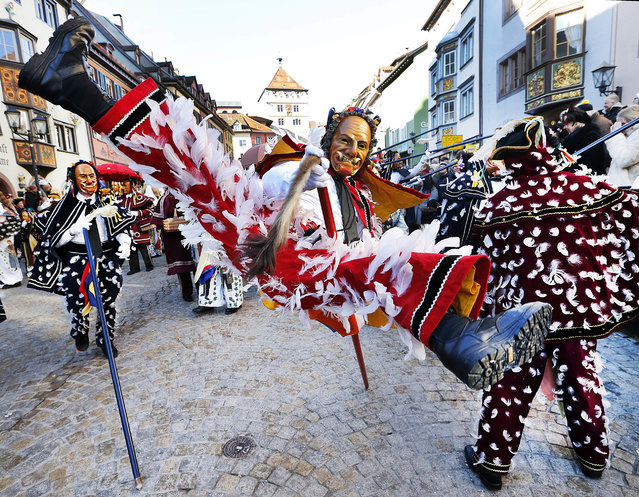
A “Federahannes”, a jester figure from Rottweil, participates in the “Narrensprung” (jester jump) parade in Rottweil, southern Germany, Monday, February 27, 2016. About 4000 jesters paraded through the city among thousands of spectators. The Rottweil Narrensprung is the highlight of the Swabian-Alemannic Fastnacht and one of the traditional pre-Lenten carnival parades in southwestern Germany. (Photo by Michael Probst/AP Photo)

A “Federahannes”, a jester figure from Rottweil, participates in the “Narrensprung” (jester jump) parade in Rottweil, southern Germany, Monday, February 27, 2016. About 4000 jesters paraded through the city among thousands of spectators. The Rottweil Narrensprung is the highlight of the Swabian-Alemannic Fastnacht and one of the traditional pre-Lenten carnival parades in southwestern Germany. (Photo by Michael Probst/AP Photo)
Details
04 Mar 2017 00:03:00