Loading...
Done
Giant pandas enjoy food around a table at Chongqing Zoo, Chongqing, China on May 21, 2023. (Photo by Rex Features/Shutterstock)

Giant pandas enjoy food around a table at Chongqing Zoo, Chongqing, China on May 21, 2023. (Photo by Rex Features/Shutterstock)
Details
01 Jun 2023 03:08:00
The sun sets behind the Giant Swing, also known as Sao Chingcha, in Bangkok, Thailand, on March 6, 2025. (Photo by Athit Perawongmetha/Reuters)

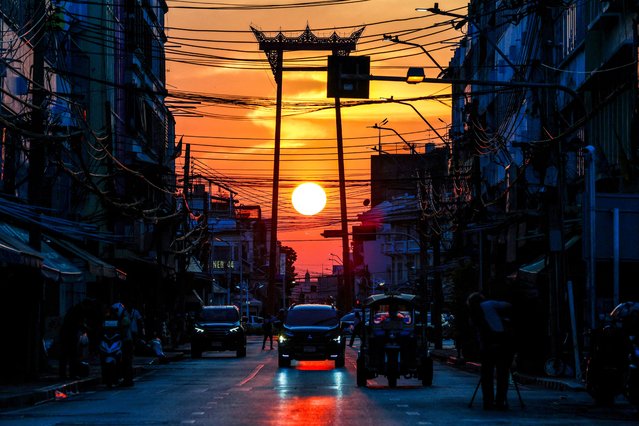
The sun sets behind the Giant Swing, also known as Sao Chingcha, in Bangkok, Thailand, on March 6, 2025. (Photo by Athit Perawongmetha/Reuters)
Details
12 Mar 2025 03:55:00
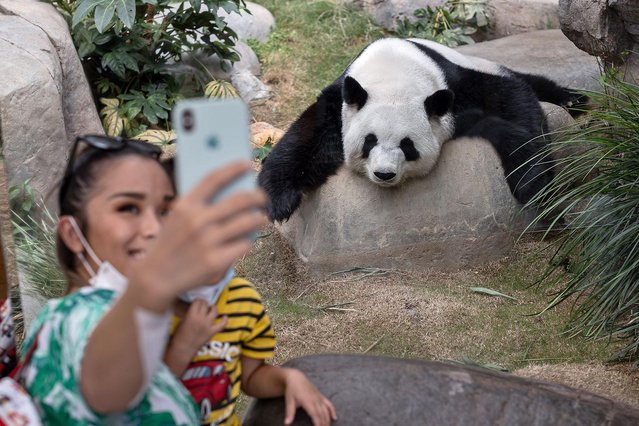
Giant panda Ying Ying rests on a rock in its enclosure while a visitor takes a selfie at Ocean Park in Hong Kong, China, 24 September 2020. An An turned 35 in August. Giant pandas in the wild can live up to 20 years on average, while lifespans of those under human care can reach over 30 years. (Photo by Jerome Favre/EPA/EFE)

Giant panda Ying Ying rests on a rock in its enclosure while a visitor takes a selfie at Ocean Park in Hong Kong, China, 24 September 2020. An An turned 35 in August. Giant pandas in the wild can live up to 20 years on average, while lifespans of those under human care can reach over 30 years. (Photo by Jerome Favre/EPA/EFE)
Details
08 Oct 2020 00:03:00
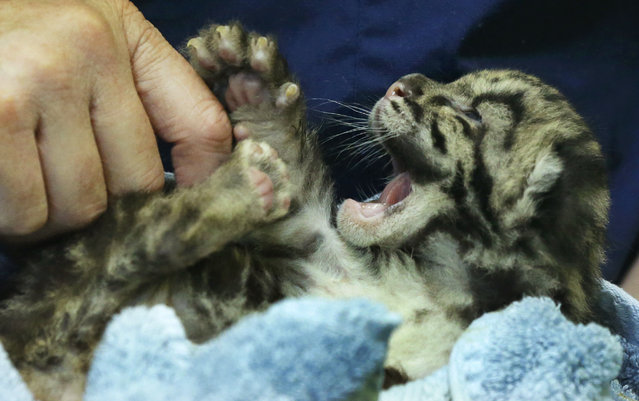
Andy Goldfarb, a staff biologist at the Point Defiance Zoo & Aquarium, plays with one of the four clouded leopard cubs currently at the zoo Friday, June 5, 2015 in Tacoma, Wash. The quadruplets were born on May 12, 2015 and now weigh about 1.7 lbs. each. Friday was their first official day on display for public viewing, usually during their every-four-hours bottle-feeding sessions, which were started after the cubs' mother did not show enough interest in continuing to nurse them. (AP Photo/Ted S. Warren)

Andy Goldfarb, a staff biologist at the Point Defiance Zoo & Aquarium, plays with one of the four clouded leopard cubs currently at the zoo Friday, June 5, 2015 in Tacoma, Wash. The quadruplets were born on May 12, 2015 and now weigh about 1.7 lbs. each. Friday was their first official day on display for public viewing, usually during their every-four-hours bottle-feeding sessions, which were started after the cubs' mother did not show enough interest in continuing to nurse them. (AP Photo/Ted S. Warren)
Details
19 Jun 2015 09:06:00
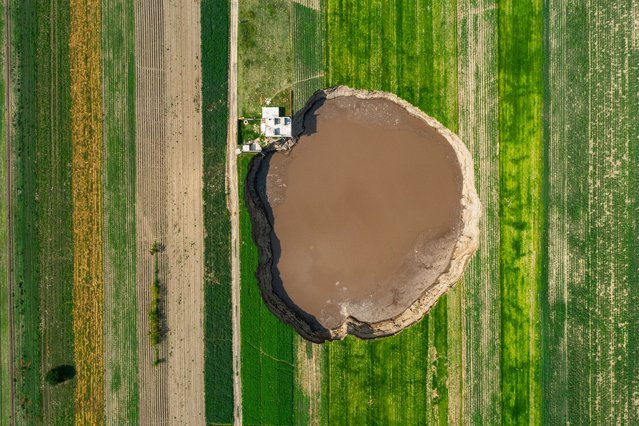
Aerial view of a giant sinkhole on June 09, 2021 in Santa María Zacatepec, Mexico. The giant sinkhole is located 20 kilometers northwest from the capital city Puebla, the hole now measures 110 meters across its widest point, covering around 11,000 square meters and damaging a house built near the place where it appeared. Farmers of the surroundings have been affected since they are not allowed to enter their fields due to the warning perimeter set up by the authorities. (Photo by Hector Vivas/Getty Images)

Aerial view of a giant sinkhole on June 09, 2021 in Santa María Zacatepec, Mexico. The giant sinkhole is located 20 kilometers northwest from the capital city Puebla, the hole now measures 110 meters across its widest point, covering around 11,000 square meters and damaging a house built near the place where it appeared. Farmers of the surroundings have been affected since they are not allowed to enter their fields due to the warning perimeter set up by the authorities. (Photo by Hector Vivas/Getty Images)
Details
10 Aug 2021 09:48:00
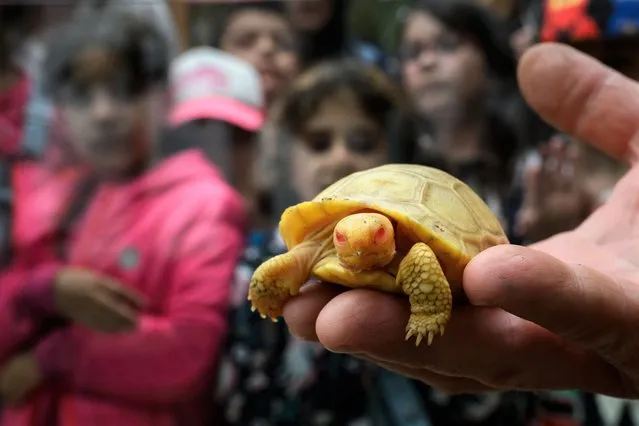
A picture taken on June 3, 2022 shows a unique albinos Galapagos giant tortoise baby, born on May 1, at the Tropicarium of Servion, western Switzerland. Albinos Galapagos tortoises have never been observed in captivity or in the nature. The Galapagos giant tortoises are strictly protected and are among the most endangered species among CITES-listed animals. (Photo by Fabrice Coffrini/AFP Photo)

A picture taken on June 3, 2022 shows a unique albinos Galapagos giant tortoise baby, born on May 1, at the Tropicarium of Servion, western Switzerland. Albinos Galapagos tortoises have never been observed in captivity or in the nature. The Galapagos giant tortoises are strictly protected and are among the most endangered species among CITES-listed animals. (Photo by Fabrice Coffrini/AFP Photo)
Details
19 Jun 2022 04:00:00
Visitors take photos of Fu Bao, a giant panda, at Everland amusement park in Yongin, south of Seoul, South Korea, 25 February 2024. The panda will be displayed to the public until 03 March, before returning to China in early April. The female panda, which was born to giant panda Ai Bao and her partner, Le Bao, at the Everland amusement park in Yongin, south of Seoul, in 2020, will be returned to China under an international agreement. (Photo by Yonhap/EPA)


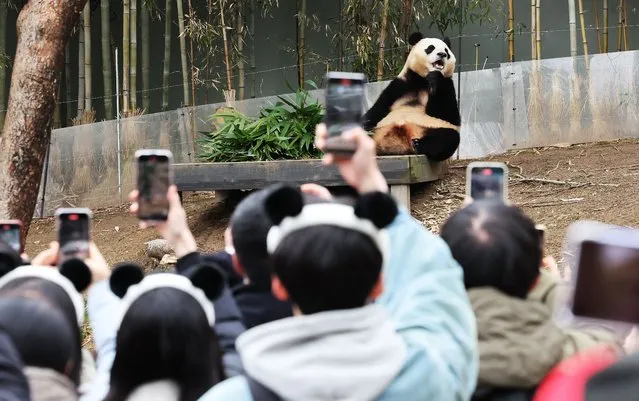
Visitors take photos of Fu Bao, a giant panda, at Everland amusement park in Yongin, south of Seoul, South Korea, 25 February 2024. The panda will be displayed to the public until 03 March, before returning to China in early April. The female panda, which was born to giant panda Ai Bao and her partner, Le Bao, at the Everland amusement park in Yongin, south of Seoul, in 2020, will be returned to China under an international agreement. (Photo by Yonhap/EPA)
Details
16 Mar 2024 00:49:00
Among the fish populations that could be harmed by the Xayaburi dam in Laos is the critically endangered Mekong giant catfish, considered by the Guinness Book of World Records to be the world’s largest freshwater fish. The fish, which grows to 650 pounds and about 10 feet long, is only found in the Mekong River. It is migratory, moving between downstream habitats in Cambodia upstream to northern Thailand and Laos each year to spawn. Some experts fear the Xayaburi dam could block the migration and drive the giant catfish to extinction

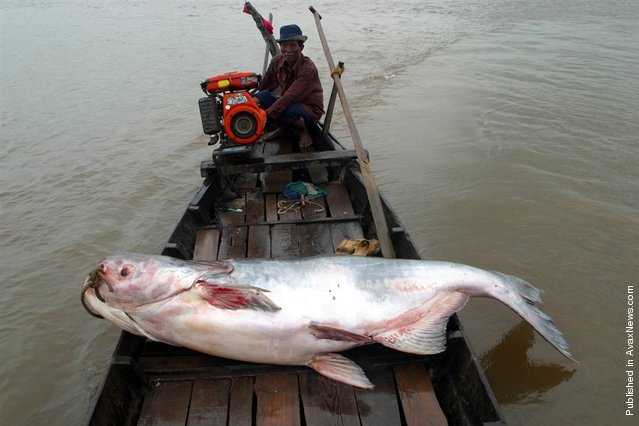
Among the fish populations that could be harmed by the Xayaburi dam in Laos is the critically endangered Mekong giant catfish, considered by the Guinness Book of World Records to be the world’s largest freshwater fish. The fish, which grows to 650 pounds and about 10 feet long, is only found in the Mekong River. It is migratory, moving between downstream habitats in Cambodia upstream to northern Thailand and Laos each year to spawn. Some experts fear the Xayaburi dam could block the migration and drive the giant catfish to extinction. (Photo by Courtesy of Zeb Hogan/University of Nevada, Reno)
Details
20 Apr 2012 13:10:00