Loading...
Done
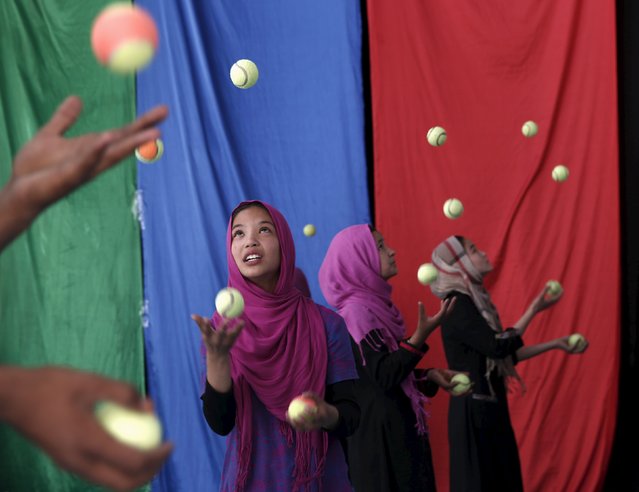
Girls, who are part of Afghan Mobile Mini Circus for Children (MMCC), participate in a juggling competition in Kabul, Afghanistan August 12, 2015. (Photo by Ahmad Masood/Reuters)

Girls, who are part of Afghan Mobile Mini Circus for Children (MMCC), participate in a juggling competition in Kabul, Afghanistan August 12, 2015. The MMCC, founded by David Mason from Denmark, teaches cooperation and creativity to children scarred by years of war in Afghanistan. Despite the dangers, the project has grown so popular that it now runs centres in ten provinces and has hundreds of regular students. The circus makes visits to internally displaced persons' camps, schools, orphanages, and holds annual festivals. The children are taught the skills of juggling clubs, walking on stilts and acrobatics. (Photo by Ahmad Masood/Reuters)
Details
01 Sep 2015 12:47:00
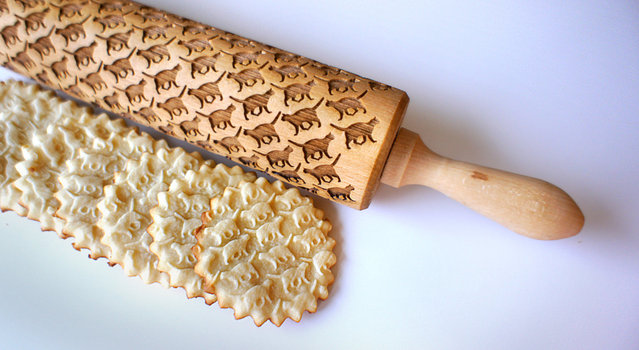
Laser Engraved Rolling Pins By Zuzia Kozerska

Last year around this time, Zuzia Kozerska of Valek Rolling Pins (previously) practically set the internet on fire with lasers, more specifically her laser engraved rolling pins that imprint different patterns in cookie dough. Kozerska has been hard at work creating increasingly more complex designs as well as special mini pins just for kids. You can see more in her Etsy shop.
Details
30 Jun 2015 09:19:00
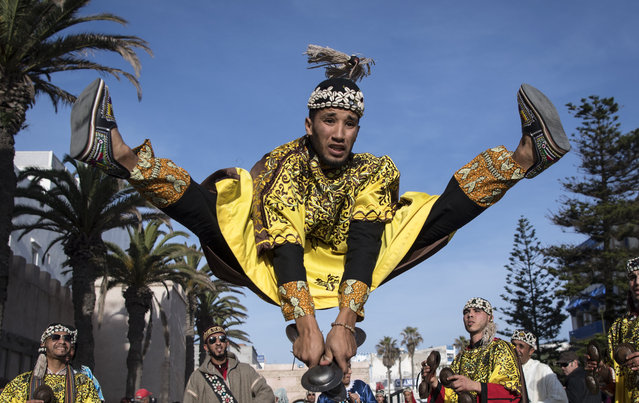
A Gnawa traditional group performs in the city of Essaouira on December 14, 2019, to celebrate the decision of adding the Gnawa culture to UNESCO's list of Intangible Cultural Heritage of Humanity. Gnawa culture, a centuries-old Moroccan practice rooted in music, African rituals and Sufi traditions, was added to UNESCO's list of Intangible Cultural Heritage of Humanity earlier in the week. Gnawa refers to a “set of musical productions, fraternal practices and therapeutic rituals where the secular mixes with the sacred”, according to the nomination submitted by Morocco. Often dressed in colourful outfits, Gnawa musicians play the guenbri, a type of lute with three strings, accompanied by steel castanets called krakebs. (Photo by Fadel Senna/AFP Photo)

A Gnawa traditional group performs in the city of Essaouira on December 14, 2019, to celebrate the decision of adding the Gnawa culture to UNESCO's list of Intangible Cultural Heritage of Humanity. Gnawa culture, a centuries-old Moroccan practice rooted in music, African rituals and Sufi traditions, was added to UNESCO's list of Intangible Cultural Heritage of Humanity earlier in the week. Gnawa refers to a “set of musical productions, fraternal practices and therapeutic rituals where the secular mixes with the sacred”, according to the nomination submitted by Morocco. Often dressed in colourful outfits, Gnawa musicians play the guenbri, a type of lute with three strings, accompanied by steel castanets called krakebs. (Photo by Fadel Senna/AFP Photo)
Details
18 Dec 2019 00:05:00
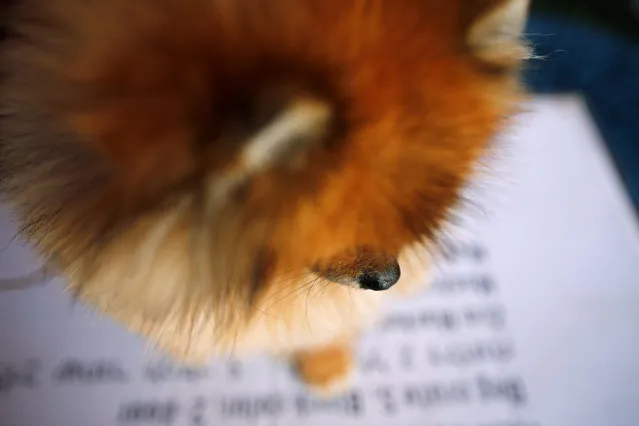
A Pomeranian dog is seen during an international dog exhibition in Kannot, central Israel May 21, 2016. (Photo by Amir Cohen/Reuters)

A Pomeranian dog is seen during an international dog exhibition in Kannot, central Israel May 21, 2016. Some 850 purebred dogs from about 200 mini breeds participated in the exhibition. (Photo by Amir Cohen/Reuters)
Details
22 May 2016 07:11:00
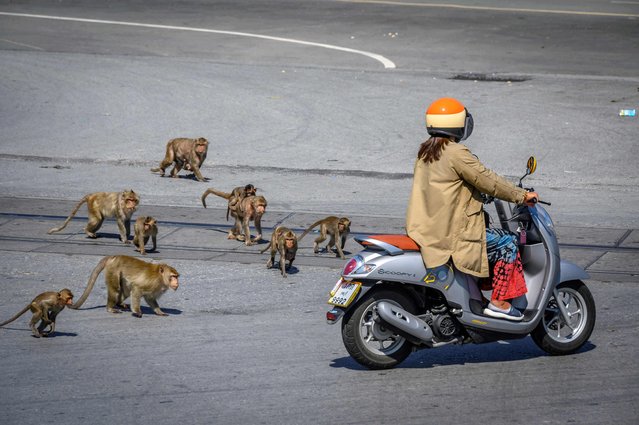
This picture taken on June 20, 2020 shows longtail macaques chasing a woman on a scooter in the town of Lopburi, some 155km north of Bangkok. Residents barricaded indoors, rival gang fights and no-go zones for humans. Welcome to Lopburi, an ancient Thai city overrun by monkeys super-charged on junk food, whose population is growing out of control. (Photo by Mladen Antonov/AFP Photo)

This picture taken on June 20, 2020 shows longtail macaques chasing a woman on a scooter in the town of Lopburi, some 155km north of Bangkok. Residents barricaded indoors, rival gang fights and no-go zones for humans. Welcome to Lopburi, an ancient Thai city overrun by monkeys super-charged on junk food, whose population is growing out of control. (Photo by Mladen Antonov/AFP Photo)
Details
12 Jul 2020 00:05:00
Revellers in Leeds, United Kingdom were excited to be out and about again on July 18, 2021. At a minute past midnight, England dropped most of its remaining Covid-19 social restrictions, such as those requiring indoor mask-wearing and limits on group gatherings. These changes come despite rising infections, pitting the country's vaccination programme against the virus's more contagious Delta variant. (Photo by Ioannis Alexopoulos/PA Wire Press Association via Getty Images)

Revellers in Leeds, United Kingdom were excited to be out and about again on July 18, 2021. At a minute past midnight, England dropped most of its remaining Covid-19 social restrictions, such as those requiring indoor mask-wearing and limits on group gatherings. These changes come despite rising infections, pitting the country's vaccination programme against the virus's more contagious Delta variant. (Photo by Ioannis Alexopoulos/PA Wire Press Association via Getty Images)
Details
19 Jul 2021 09:36:00
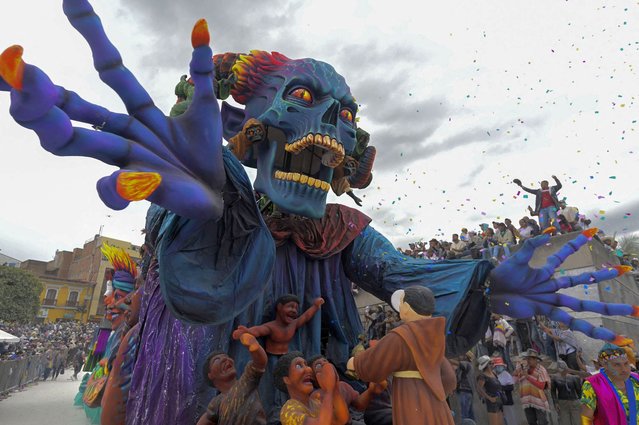
Picture of a float taking part in the “White Day” parade during the Carnival of Blacks and Whites in Pasto, Colombia on January 6, 2024. The Blacks and Whites carnival has its origins in a mix of Andean, Amazonian and Pacific cultural expressions, and it celebrates the ethnic diversity in the region and was proclaimed by UNESCO as intangible cultural heritage in 2009. (Photo by Joaquín Sarmiento/AFP Photo)

Picture of a float taking part in the “White Day” parade during the Carnival of Blacks and Whites in Pasto, Colombia on January 6, 2024. The Blacks and Whites carnival has its origins in a mix of Andean, Amazonian and Pacific cultural expressions, and it celebrates the ethnic diversity in the region and was proclaimed by UNESCO as intangible cultural heritage in 2009. (Photo by Joaquín Sarmiento/AFP Photo)
Details
17 Mar 2025 03:56:00
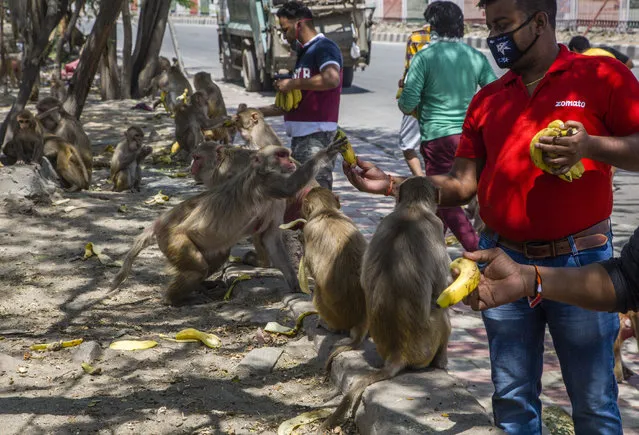
Men give bananas to monkeys gathered on the side of the road as India remains under an unprecedented lockdown over the highly contagious coronavirus (COVID-19) on April 08, 2020 in New Delhi, India. Wild animals, including monkeys, are roaming human settlements in India as people are staying indoors due to the 21-day lockdown. With India's 1.3 billion population and tens of millions of cars off the roads, wildlife is moving towards areas inhabited by humans. Wild animals in many countries have been seen roaming streets. A study says some 60 percent of the new diseases found around the globe every year are zoonotic, meaning they originate in animals and are passed on to humans. COVID-19 is a zoonotic disease that is suspected to have come from the wet markets of Wuhan, China. (Photo by Yawar Nazir/Getty Images)

Men give bananas to monkeys gathered on the side of the road as India remains under an unprecedented lockdown over the highly contagious coronavirus (COVID-19) on April 08, 2020 in New Delhi, India. Wild animals, including monkeys, are roaming human settlements in India as people are staying indoors due to the 21-day lockdown. (Photo by Yawar Nazir/Getty Images)
Details
12 Apr 2020 00:05:00