Loading...
Done
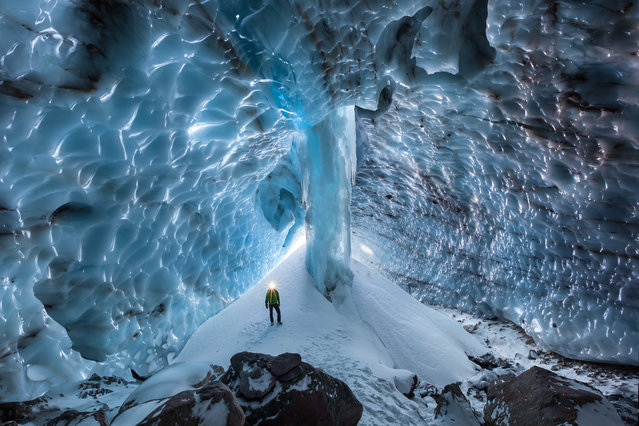
On the western side of Mount Hood lies the longest glacier cave system in the contiguous United States. In 2012, these caves were mapped to a combined length of 7,166.8 feet by cave explorers Brent McGregor and Eddy Cartaya. Currently, the total passage length is hundreds of feet less. Glaciers are frozen rivers; they are always moving and changing. In the past five years, we have seen the caves melt, shrink and collapse in a dramatic way. The caves are formed by water carving away at the ice. (Photo and caption by Josh Hydeman)

On the western side of Mount Hood lies the longest glacier cave system in the contiguous United States. In 2012, these caves were mapped to a combined length of 7,166.8 feet by cave explorers Brent McGregor and Eddy Cartaya. Currently, the total passage length is hundreds of feet less. Glaciers are frozen rivers; they are always moving and changing... (Photo and caption by Josh Hydeman)
Details
22 Mar 2015 11:05:00
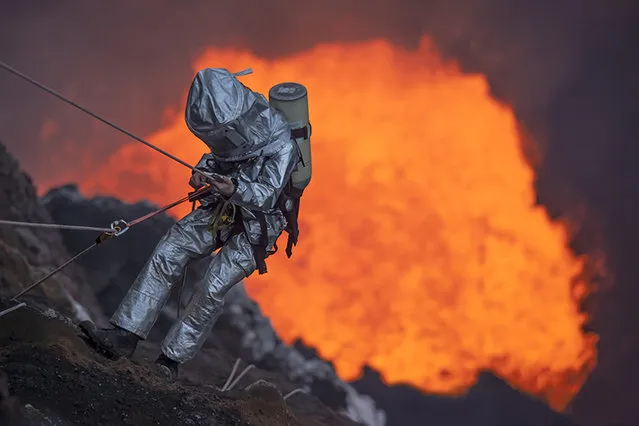
Descending into the Marum Volcano in Vanuatu, Intrepid explorers found an unusual way of staying warm this winter by spending Christmas day on an active volcano. British climber Chris Horsley, 22, and his friends Gareth Hawken, 30, Geoff Mackley, 50, and Bradley Ambrose, 36, from Auckland, New Zealand, hiked up the Marum Volcano, Vanuatu, on the morning of the 25th. Instead of passing the day with their families, the team climbed down a 1200ft cliff to get close to a flowing lake of lava. (Photo by Bradley Ambrose/Caters News)

Descending into the Marum Volcano in Vanuatu, Intrepid explorers found an unusual way of staying warm this winter by spending Christmas day on an active volcano. British climber Chris Horsley, 22, and his friends Gareth Hawken, 30, Geoff Mackley, 50, and Bradley Ambrose, 36, from Auckland, New Zealand, hiked up the Marum Volcano, Vanuatu, on the morning of the 25th. Instead of passing the day with their families, the team climbed down a 1200ft cliff to get close to a flowing lake of lava. (Photo by Bradley Ambrose/Caters News)
Details
31 Dec 2014 14:04:00
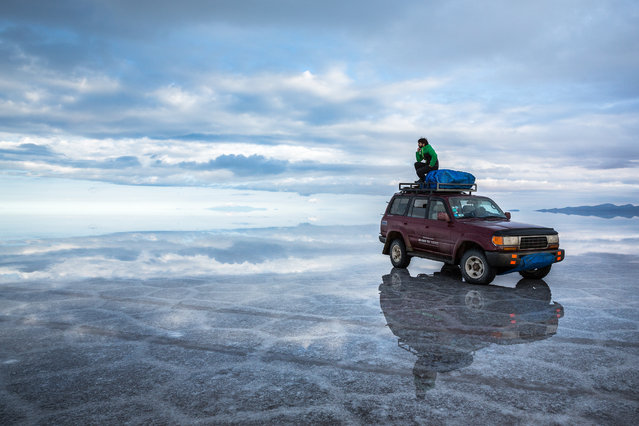
At 10,582 square kilometres, the Bolivian salt flats – otherwise known as Salar de Uyuni – are the largest on the planet and contain between 50 and 70% of the world’s lithium reserves. After exploring Chile and Argentina, photographer Joel Santos decided to travel to Bolivia in January 2017 to check the salt flats off his bucket list. With an electrical storm rolling in, Joel and his two travelling companions were the only souls left on the vast flats and captured the eerie flats without a person in sight. (Photo by Joel Santos/Barcroft Images)

At 10,582 square kilometres, the Bolivian salt flats – otherwise known as Salar de Uyuni – are the largest on the planet and contain between 50 and 70% of the world’s lithium reserves. After exploring Chile and Argentina, photographer Joel Santos decided to travel to Bolivia in January 2017 to check the salt flats off his bucket list. With an electrical storm rolling in, Joel and his two travelling companions were the only souls left on the vast flats and captured the eerie flats without a person in sight. (Photo by Joel Santos/Barcroft Images)
Details
12 Aug 2019 00:03:00


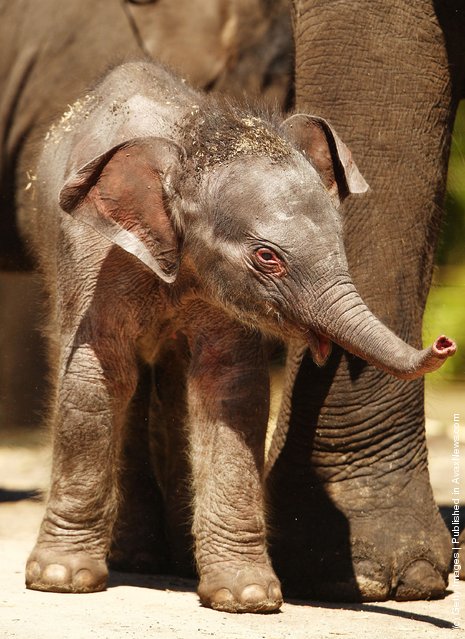
Taronga's first female elephant calf explores the paddock with her mother Pak Boon at Taronga Zoo on November 3, 2010 in Sydney, Australia. The 120kg elephant was born at 1:12am and is Taronga's first female calf and fifth born to The Australian Conservation Management Plan for endangered elephants. The calf will be given a Thai name to reflect the herds' cultural origin. (Photo by Brendon Thorne/Getty Images)
Details
16 Apr 2011 11:01:00
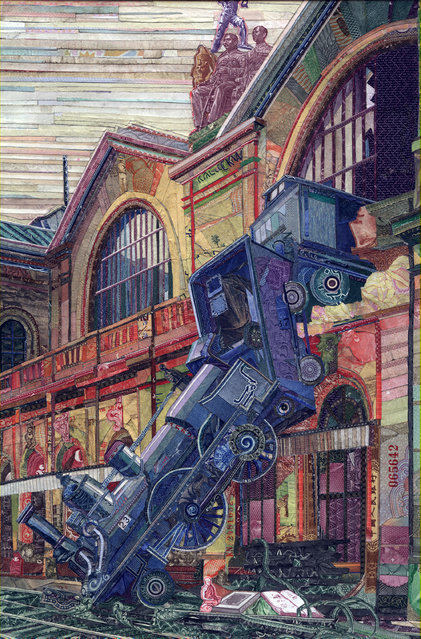
“Great Crash”. (Photo by C. K. Wilde)

Artist C. K. Wilde creates intricate collage compositions using pieces of paper currency from all over the world. His collages have referenced subjects ranging from space exploration, to mythology, religion, slavery, ecology, the history of warfare, the history of money, and art history. Photo: “Great Crash”. (Photo by C. K. Wilde)
Details
11 Jul 2014 12:06:00
“Ashes and Snow” by Gregory Colbert

“Ashes and Snow by Canadian artist Gregory Colbert is an installation of photographic artworks, films, and a novel in letters that travels in the Nomadic Museum, a temporary structure built exclusively to house the exhibition. The work explores the shared poetic sensibilities of human beings and animals”. – Wikipedia. (Photo by Gregory Colbert)
Details
12 Mar 2013 12:09:00
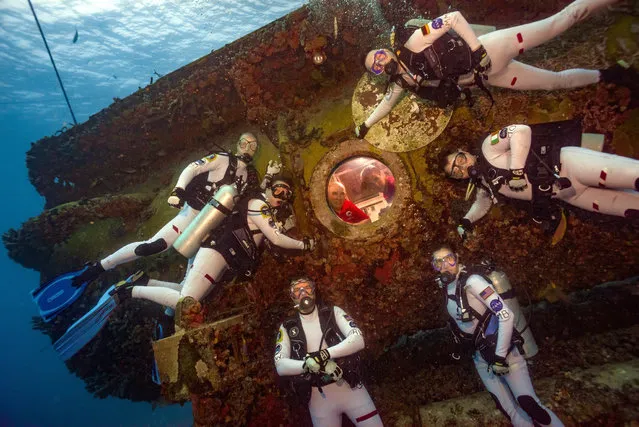
The NASA Extreme Environment Mission Operations (NEEMO) 21 mission began on July 21 as an international crew of aquanauts splashed down to the undersea Aquarius Reef Base, located 62 feet below the surface of the Atlantic Ocean in the Florida Keys National Marine Sanctuary. The NEEMO 21 crew will perform research both inside and outside the habitat during a 16-day simulated space mission. During simulated spacewalks carried out underwater, they will evaluate tools and mission operation techniques that could be used in future space missions, including journeys to Mars. (Photo by Karl Shreeves/NASA)

The NASA Extreme Environment Mission Operations (NEEMO) 21 mission began on July 21 as an international crew of aquanauts splashed down to the undersea Aquarius Reef Base, located 62 feet below the surface of the Atlantic Ocean in the Florida Keys National Marine Sanctuary. The NEEMO 21 crew will perform research both inside and outside the habitat during a 16-day simulated space mission. During simulated spacewalks carried out underwater, they will evaluate tools and mission operation techniques that could be used in future space missions, including journeys to Mars. (Photo by Karl Shreeves/NASA)
Details
31 Jul 2016 11:29:00
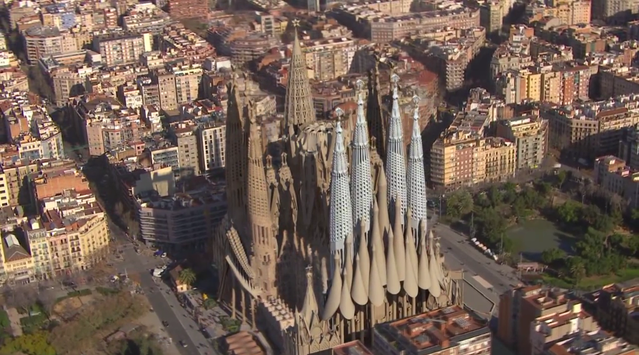
We Build Tomorrow – Sagrada Familia 2026 ( VIDEO )

For more than a century, the Barcelona skyline has been graced (or marred, depending on who’s talking) by the spectacle of the Basilica designed by Anton Gaudi, first started in 1882. If you want to know what it’ll look like when finished, don’t fret — 2026 is right around the corner. Or you can watch this video, released last week on YouTube by Basílica de la Sagrada Família and titled simply “2026 We Build Tomorrow,” a 3-D artists’ rendering of the building stages through completion.
(If 144 years sounds like a long time to finish a cathedral, keep in mind that there were decades that they didn’t work on it — and that Notre Dame de Paris took 182 years, although the 13th century Parisians didn’t have diesel-powered industrial cranes.) Now, if only the video could show us what the admission and hours will be in 2026 (and how to avoid the inevitable long lines).
Details
11 Jan 2014 10:59:00