Loading...
Done
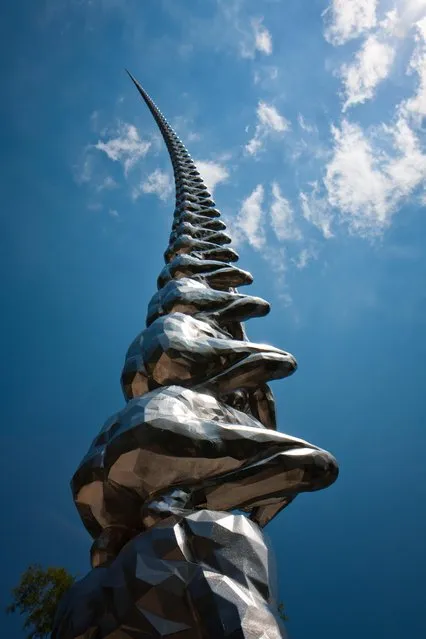
“Karma” by Do-Ho Suh. Sydney and Walda Besthoff Sculpture Garden, New Orleans Museum of Art, New Orleans, LA. (Photo by Alan Teo)

“Do-Ho Suh addresses issues of identity, memory, and relationships. Son of the famous Korean ink-painter Suh Se-Ok, Do-Ho Suh is a leading figure in the transnational avant-garde generation of Korean artists who came of age in the late 1990s, and his work eloquently represents a dual consciousness between East and West”.

Photo: “Karma” by Do-Ho Suh. Sydney and Walda Besthoff Sculpture Garden, New Orleans Museum of Art, New Orleans, LA. (Photo by Alan Teo)


Details
05 Mar 2013 09:37:00
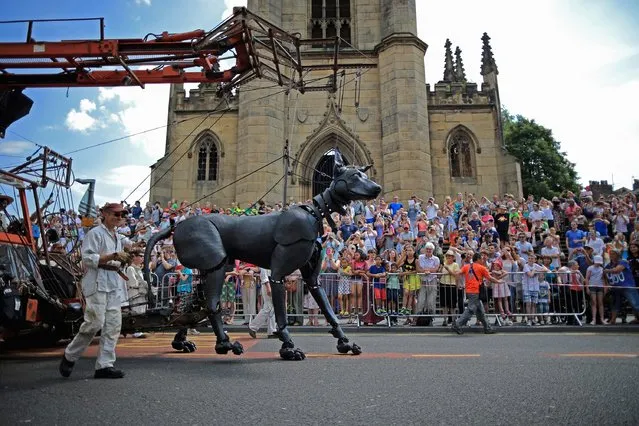
Crowds look on as Xolo the Giant Dog, one of the giant Royal De Luxe street puppets taking part in Liverpool's World War I centenary commemorations, walks through the streets of Liverpool on July 25, 2014 in Liverpool, England. (Photo by Christopher Furlong/Getty Images)

Crowds look on as Xolo the Giant Dog, one of the giant Royal De Luxe street puppets taking part in Liverpool's World War I centenary commemorations, walks through the streets of Liverpool on July 25, 2014 in Liverpool, England. French street theatre company Royal de Luxe are putting on a show throughout the city as part of Liverpool's World War I centenary commemorations from July 23-27. The giant puppet grandmother has slept in the hall for two days as part of “Memories of August 1914”. As the giants tour the city the Little Girl Giant and her dog Xolo will meet up with the giant Grandmother telling the story of life leading up to World War One. (Photo by Christopher Furlong/Getty Images)
Details
27 Jul 2014 10:52:00
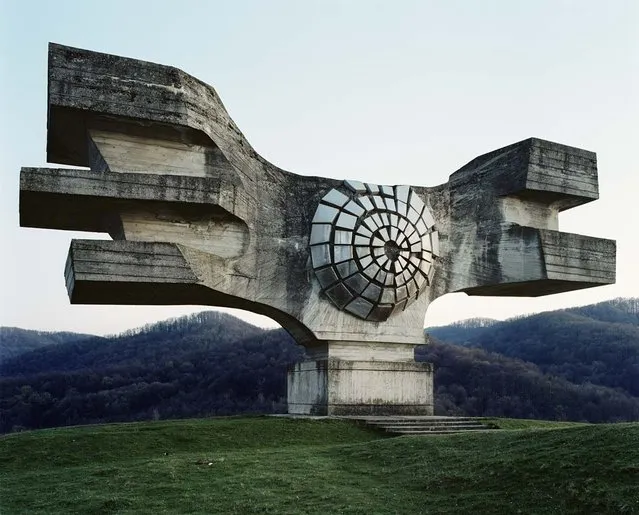
The monument of Ilirska Bistrica was designed by Janez Lenassi and built in 1965. It is dedicated to Slovenian soldiers that fell in World War II. (Photo by Jan Kempenaers)

The brutalist war memorials found throughout the former Yugoslavia were weird enough when they were built in the 1960s and 70s. Today, separated by the end of an architectural movement and the disintegration of the country, they seem almost alien. Belgian photographer Jan Kempenaers treats them purely as artistic objects in his book, “Spomenik”, named for the Serb-Croat word for monument. Known for photographing geographical oddities, Kempenaers was captivated by the spomenik after seeing them in an art encyclopedia. After hearing that many had been destroyed or abandoned, he set out to record what was left. (Photo by Jan Kempenaers)
Details
18 Aug 2014 09:07:00
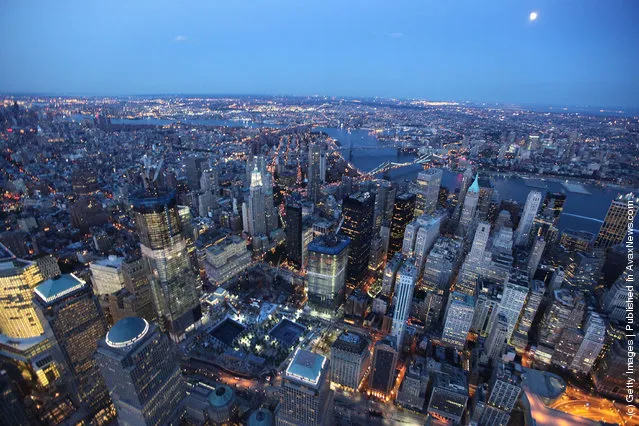
Construction Continues At Ground Zero On One World Trade Center

Construction continues on One World Trade Center (TALLEST BUILDING AT LOWER LEFT) as the memorial footprints of the twin towers are seen (BOTTOM C) on August 12, 2011 in New York City. Upon completion, One World Trade Center will be New York's tallest skyscraper, topping out at a symbolic 1,776 feet, with 3 million square feet of office space. More than 2,700 people were killed when al-Qaeda terrorists hijacked U.S. passenger jets and flew them into the twin towers of the World Trade Center on September 11, 2001. Nearly ten years after the crippling attacks on Lower Manhattan, business, tourism and new construction like One World Trade Center have rejuvenated the formerly devastated cityscape.(Photo by Mario Tama/Getty Images)
Details
14 Aug 2011 13:58:00
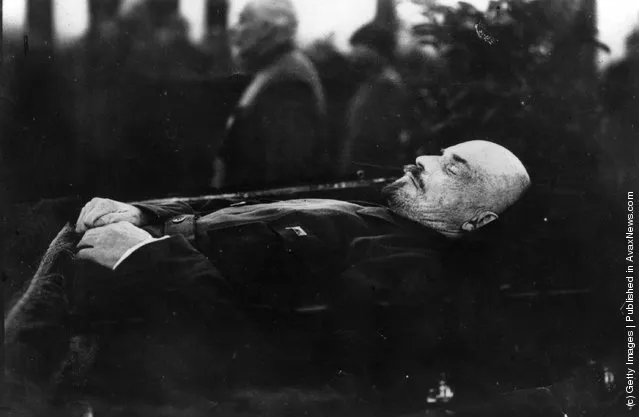
1924:  Vladimir Ilyich Lenin lying in state in the Kremlin

Photo: Vladimir Ilyich Lenin (1870 – 1924) lying in state in the Kremlin. (Photo by Hulton Archive/Getty Images). 1924

Important! For the same article in Russian language click here.

Something quite intriguing is happening within Russian-speaking internet during the last few – should you type a fully academic inquiry (at least, according to Russian academic requirements) in national search engines for "Lenin's mausoleum" – the first thing you get (even in top 10 searches) is website pages talking about black magic and occult. Website authors view this construction differently, but unconditionally agree on one thing: the mausoleum of the "leader of the world proletariat” – the essence of a magical artifact, a sort of “energy vampire”. It was built with a certain purpose: to drain the energy out of miserable Soviet citizens on one hand; and to poison the anthroposphere of one-sixth part of the earth with its vibes (the exact territory that was occupied by the former Soviet Union), depriving the Russian people of will to resist on the other hand. Complete nonsense? No doubt. Nevertheless, an intriguing one. Well, probably because some oddities do exist in mausoleum's history. These oddities are the thing we are going to discuss this time. First, let me refresh you memory on the subject.
Details
16 Oct 2011 11:27:00
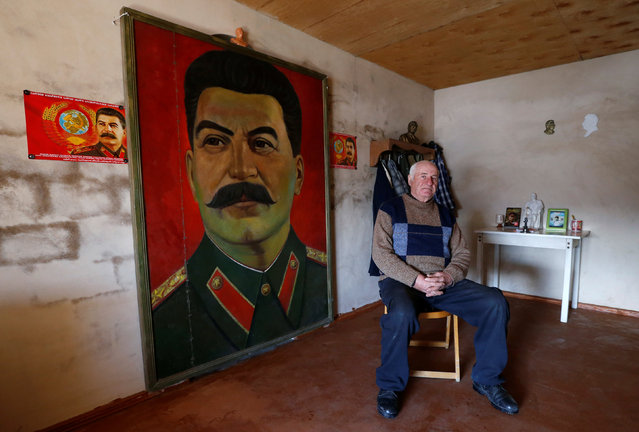
Retired builder Vasili Sidamonidze, 70, poses for a portrait at his home in Gori, Georgia, December 6, 2016. “Unfortunately, Stalin is not popular nowadays. Our people don't respect him. Only we, members of the (Communist) Party, respect him”, Sidamonidze said. “I always try to attend Stalin's birthday anniversaries in Gori. Unfortunately many people don't want to join us even if they live nearby. They look at us from their windows”. Stalin, who was born in Gori in 1878 and died in 1953, is largely reviled today in Georgia, which regained its independence during the 1991 collapse of the Soviet Union. Over the years, his memorials have been dismantled, most recently in 2010 when authorities removed a statue of the dictator from Gori's central square. But Stalin is still revered by a small group of mainly elderly supporters who stress his role in the industrialisation of the Soviet Union and in defeating Nazi Germany in World War Two. Each Dec. 21, a few dozen people mark his birthday by gathering outside a Gori museum dedicated to Stalin, where they make speeches and walk to the square where a 6-meter-high bronze statue of him once stood, calling for it to be reinstated. Opponents say it was a symbol of Moscow's still lingering shadow. In 2008, Russia fought a brief war with Georgia and recognised its breakaway regions of Abkhazia and South Ossetia as independent states. (Photo by David Mdzinarishvili/Reuters)

Retired builder Vasili Sidamonidze, 70, poses for a portrait at his home in Gori, Georgia, December 6, 2016. “Unfortunately, Stalin is not popular nowadays. Our people don't respect him. Only we, members of the (Communist) Party, respect him”, Sidamonidze said. “I always try to attend Stalin's birthday anniversaries in Gori. Unfortunately many people don't want to join us even if they live nearby. They look at us from their windows”. (Photo by David Mdzinarishvili/Reuters)
Details
17 Dec 2016 07:59:00
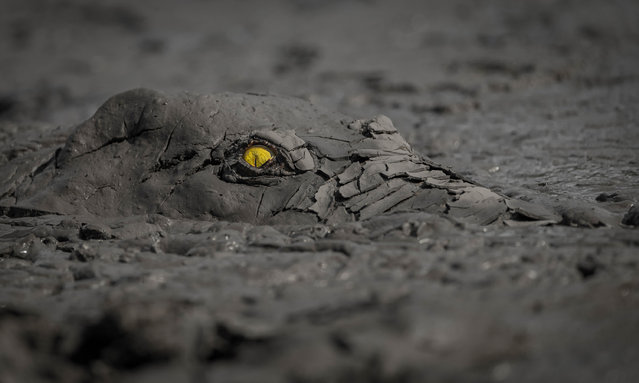
Winner, Other animals. Jens Cullmann – Danger in the Mud. Crocodile in a drying pool. (Photo by Jens Cullmann/2020 GDT Nature Photographer of the Year)

The German Society for Nature Photography (GDT) has selected its Nature Photographer of the Year 2020. Here: Winner, Other animals. Jens Cullmann – Danger in the Mud. Crocodile in a drying pool. (Photo by Jens Cullmann/2020 GDT Nature Photographer of the Year)
Details
01 May 2020 00:03:00
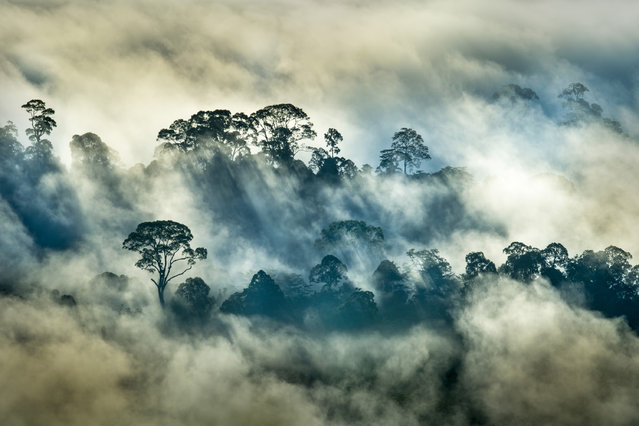
Landscapes, second place: Florian Smit, “Rainforest” (Danum valley, Borneo). (Photo by Florian Smit/2019 GDT Nature Photographer of the Year)

Run by the Society of German Nature Photographers (Gesellschaft Deutscher Tierfotografen), the prestigious annual contest celebrates the best wildlife photography from members in Germany. Here: Landscapes, second place: Florian Smit, “Rainforest” (Danum valley, Borneo). (Photo by Florian Smit/2019 GDT Nature Photographer of the Year)
Details
11 May 2019 00:03:00