Loading...
Done
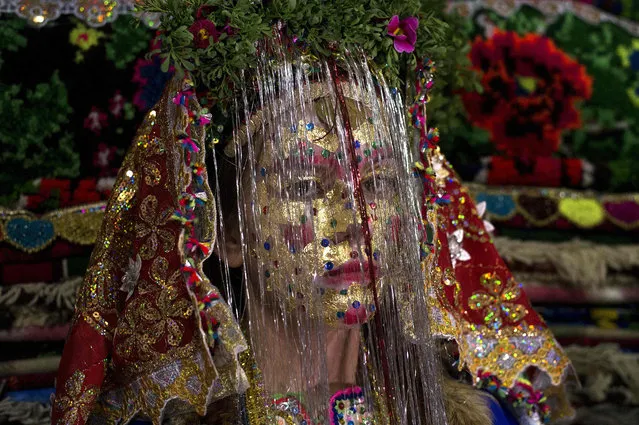
Emilia Pechinkova, a 24-years-old Bulgarian Pomak (Bulgarian speaking Muslims) bride poses for a photograph following the “gelina” or face painting ceremony carried out by female guests and relatives in preparation for her three-day wedding ceremony in the village of Draginovo, 100 kms southeast of Sofia on April 22, 2016. Bulgaria's Muslim population is one of the highest in the European Union. (Photo by Nikolay Doychinov/AFP Photo)

Emilia Pechinkova, a 24-years-old Bulgarian Pomak (Bulgarian speaking Muslims) bride poses for a photograph following the “gelina” or face painting ceremony carried out by female guests and relatives in preparation for her three-day wedding ceremony in the village of Draginovo, 100 kms southeast of Sofia on April 22, 2016. Bulgaria's Muslim population is one of the highest in the European Union. During the Communist regime religious rituals were not tolerated, and Muslims were forced to abandon wearing their traditional wedding outfits. Recently, more young Pomak women want to include traditional wedding customs that were forbidden during the regime, regardless of their secular lifestyles and the high cost of such a wedding. (Photo by Nikolay Doychinov/AFP Photo)
Details
25 Apr 2016 09:55:00
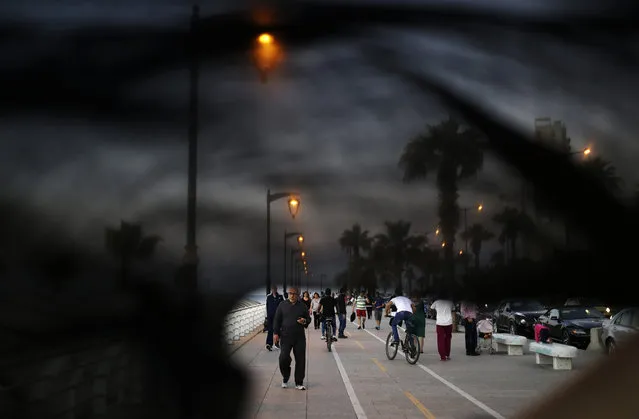
This Thursday, April 30, 2015 photo shows Lebanese citizens walking on the Corniche, or waterfront promenade in Beirut, Lebanon. (Photo by Hassan Ammar/AP Photo)

This Thursday, April 30, 2015 photo shows Lebanese citizens walking on the Corniche, or waterfront promenade in Beirut, Lebanon. This photo was shot through the lowered veil of a niqab, which is worn by some conservative Muslim women. The cloth allows women to follow a strict interpretation of their religious beliefs by preventing others from seeing their faces. (Photo by Hassan Ammar/AP Photo)
Details
18 May 2015 11:42:00
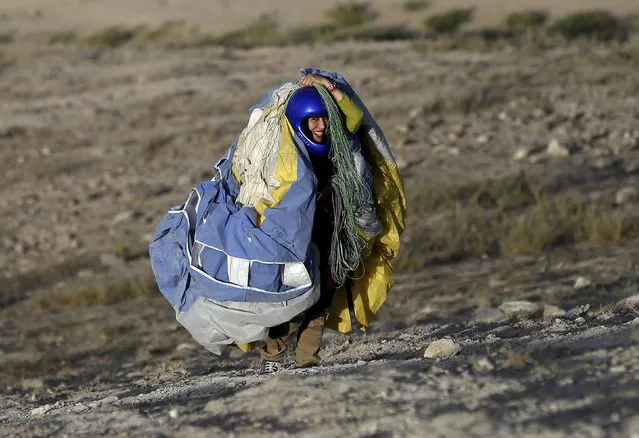
Afghan paraglider Leeda Ozori, 21, walks after practicing in Kabul, Afghanistan September 14, 2015. (Photo by Mohammad Ismail/Reuters)

Afghan paraglider Leeda Ozori, 21, walks after practicing in Kabul, Afghanistan September 14, 2015. She is one of a group of young Afghans taking to the skies of a capital where military helicopters and surveillance balloons are a far more familiar sight. Women in Afghanistan's conservative Muslim society are increasingly entering areas such as education, sports and the workplace, but most still wear the head-to-toe garment, the burqa. (Photo by Mohammad Ismail/Reuters)
Details
23 Sep 2015 08:02:00
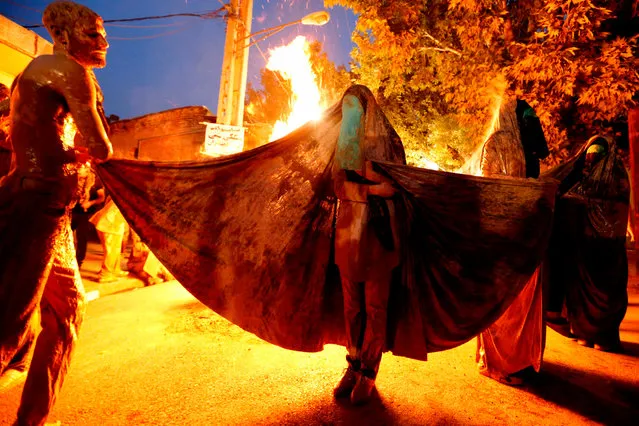
Iranian Shiite Muslim women gather around a bonfire after rubbing mud on their body during the “Kharrah Mali” (Mud Rubbing) ritual to mark the Ashura religious ceremony in the city of Khorramabad, some 470 kms southwest of Tehran, early in the morning on October 1, 2017. “Khrreh Mali” or “Mud Rubbing” is a ritual that is held in the city of Khorramabad every year to commemorate the seventh century slaying of Prophet Mohammed' s grandson Imam Hussein, in which Iranian men roll over in mud and dry themselves by gathering around the bonfires before flagellating themselves. (Photo by Atta Kenare/AFP Photo)

Iranian Shiite Muslim women gather around a bonfire after rubbing mud on their body during the “Kharrah Mali” (Mud Rubbing) ritual to mark the Ashura religious ceremony in the city of Khorramabad, some 470 kms southwest of Tehran, early in the morning on October 1, 2017. “Khrreh Mali” or “Mud Rubbing” is a ritual that is held in the city of Khorramabad every year to commemorate the seventh century slaying of Prophet Mohammed' s grandson Imam Hussein, in which Iranian men roll over in mud and dry themselves by gathering around the bonfires before flagellating themselves. (Photo by Atta Kenare/AFP Photo)
Details
02 Oct 2017 08:38:00
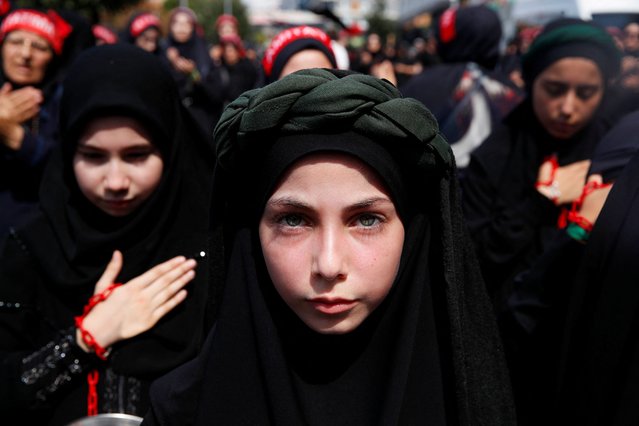
Shi'ite Muslim girls take part in a mourning procession to mark Ashura, the holiest day on the Shi'ite Muslim calendar, in Istanbul, Turkey, on July 16, 2024. (Photo by Dilara Senkaya/Reuters)

Shi'ite Muslim girls take part in a mourning procession to mark Ashura, the holiest day on the Shi'ite Muslim calendar, in Istanbul, Turkey, on July 16, 2024. (Photo by Dilara Senkaya/Reuters)
Details
03 Aug 2024 04:19:00
A Muslim bride waits for the start of a mass marriage ceremony in Mumbai, India, January 27, 2016. A total of 12 Muslim couples took their wedding vows during the mass marriage ceremony organised by a Muslim voluntary organisation, organisers said. (Photo by Danish Siddiqui/Reuters)

A Muslim bride waits for the start of a mass marriage ceremony in Mumbai, India, January 27, 2016. A total of 12 Muslim couples took their wedding vows during the mass marriage ceremony organised by a Muslim voluntary organisation, organisers said. (Photo by Danish Siddiqui/Reuters)
Details
28 Jan 2016 13:06:00
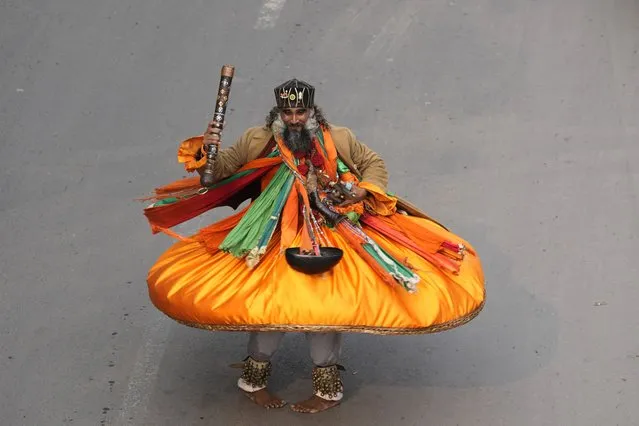
A Muslim dervish whirls during celebrations for Mawlid al-Nabi that marks the birthday of the Muslim Prophet Muhammad, in Peshawar, Pakistan, Sunday, October 9, 2022. Thousands of Muslims take part in religious processions, ceremonies and distribute free meals among the poor to mark the holiday. (Photo by Muhammad Sajjad/AP Photo)

A Muslim dervish whirls during celebrations for Mawlid al-Nabi that marks the birthday of the Muslim Prophet Muhammad, in Peshawar, Pakistan, Sunday, October 9, 2022. Thousands of Muslims take part in religious processions, ceremonies and distribute free meals among the poor to mark the holiday. (Photo by Muhammad Sajjad/AP Photo)
Details
24 Oct 2022 04:38:00
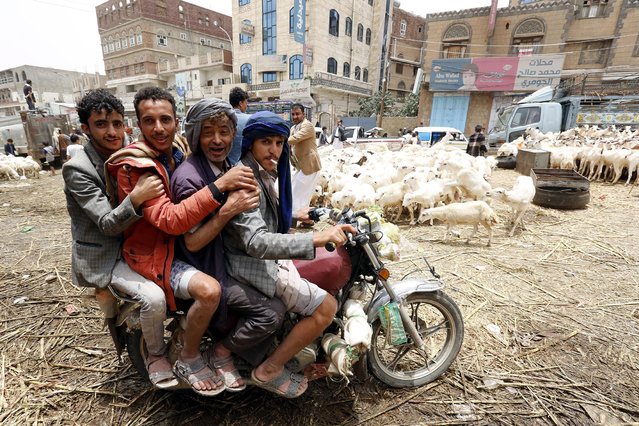
Four men ride a motorbike past sacrificial animals displayed for sale ahead of the Eid al-Adha festival at a livestock market in Sana'a, Yemen, 08 August 2019. Eid al-Adha is the holiest of the two Muslims holidays celebrated each year; it marks the yearly Muslim pilgrimage (Hajj) to visit Mecca, Islam's holiest place. Muslims slaughter a sacrificial animal and split the meat into three parts: one for family, one for friends and relatives, and one for the poor and needy. (Photo by Yahya Arhab/EPA/EFE)

Four men ride a motorbike past sacrificial animals displayed for sale ahead of the Eid al-Adha festival at a livestock market in Sana'a, Yemen, 08 August 2019. Eid al-Adha is the holiest of the two Muslims holidays celebrated each year; it marks the yearly Muslim pilgrimage (Hajj) to visit Mecca, Islam's holiest place. Muslims slaughter a sacrificial animal and split the meat into three parts: one for family, one for friends and relatives, and one for the poor and needy. (Photo by Yahya Arhab/EPA/EFE)
Details
29 Aug 2019 00:03:00