Loading...
Done
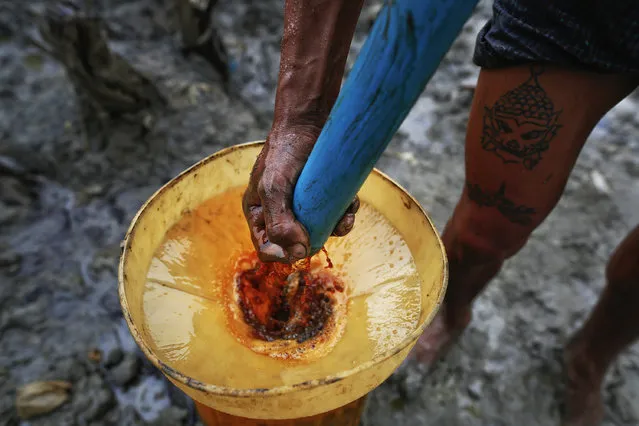
Ko Min, 26, manually extracts oil from one of three 300 feet deep wells he works on in the Minhla township of the Magwe district October 27, 2013. Everyday, Ko Min makes around $30 extracting crude oil from three small wells after he bought rights to use them for close to $1000 from a farmer who owns the land. (Photo by Damir Sagolj/Reuters)

Ko Min, 26, manually extracts oil from one of three 300 feet deep wells he works on in the Minhla township of the Magwe district October 27, 2013. Everyday, Ko Min makes around $30 extracting crude oil from three small wells after he bought rights to use them for close to $1000 from a farmer who owns the land. In Myanmar, an impoverished country rich with natural resources, people from poor communities find ways to supplement their income by exploiting such resources, such as the Minhla township, traditionally rich with oil, often using primitive and dangerous methods. (Photo by Damir Sagolj/Reuters)
Details
21 Apr 2014 10:06:00
Two Chinese farmers got more than they bargained for when they pulled up the root of a fleece flower – and came face-to-face with the doppelganger of Homer Simpson, on May 17, 2013. The large root appears to have two bulging eyes and a prominent nose – giving it an uncanny resemblance to the famous cartoon character. With two offshoot roots shaped like arms, it even looks like it is pondering or confused – just what you would expect from the real Homer. (Photo by ImagineChina)

Two Chinese farmers got more than they bargained for when they pulled up the root of a fleece flower – and came face-to-face with the doppelganger of Homer Simpson, on May 17, 2013. The large root appears to have two bulging eyes and a prominent nose – giving it an uncanny resemblance to the famous cartoon character. With two offshoot roots shaped like arms, it even looks like it is pondering or confused – just what you would expect from the real Homer. (Photo by ImagineChina)
Details
18 May 2013 11:52:00
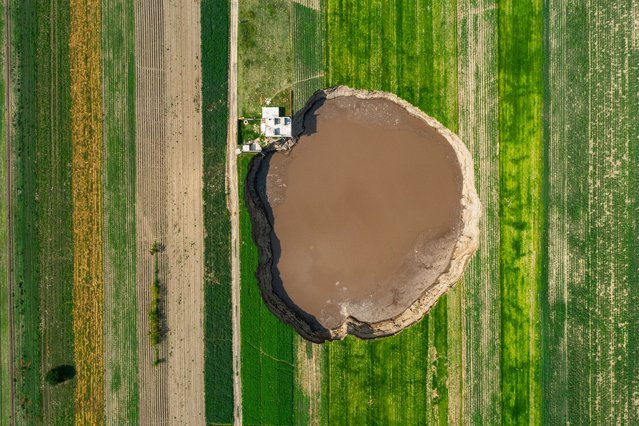
Aerial view of a giant sinkhole on June 09, 2021 in Santa María Zacatepec, Mexico. The giant sinkhole is located 20 kilometers northwest from the capital city Puebla, the hole now measures 110 meters across its widest point, covering around 11,000 square meters and damaging a house built near the place where it appeared. Farmers of the surroundings have been affected since they are not allowed to enter their fields due to the warning perimeter set up by the authorities. (Photo by Hector Vivas/Getty Images)

Aerial view of a giant sinkhole on June 09, 2021 in Santa María Zacatepec, Mexico. The giant sinkhole is located 20 kilometers northwest from the capital city Puebla, the hole now measures 110 meters across its widest point, covering around 11,000 square meters and damaging a house built near the place where it appeared. Farmers of the surroundings have been affected since they are not allowed to enter their fields due to the warning perimeter set up by the authorities. (Photo by Hector Vivas/Getty Images)
Details
10 Aug 2021 09:48:00
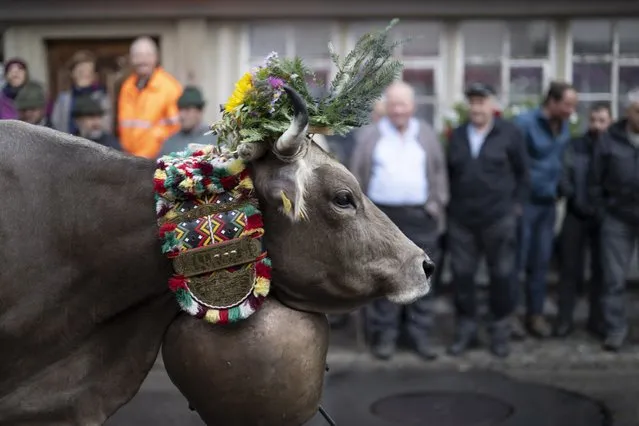
A cow carrying a bell and autumn flowers headgear walks by in front of spectators at the traditional cattle show in Schwellbrunn, Switzerland, 26 September 2022. The traditional show in the Appenzell region is held annually in autumn, when local farmers return from the alp with their groomed and cleaned cows to present them on a show ground. “The most beautiful and best performing cows are awarded prizes”, the Appenzellerland tourism office adds on their website. (Photo by Gian Ehrenzeller/EPA/EFE)

A cow carrying a bell and autumn flowers headgear walks by in front of spectators at the traditional cattle show in Schwellbrunn, Switzerland, 26 September 2022. The traditional show in the Appenzell region is held annually in autumn, when local farmers return from the alp with their groomed and cleaned cows to present them on a show ground. “The most beautiful and best performing cows are awarded prizes”, the Appenzellerland tourism office adds on their website. (Photo by Gian Ehrenzeller/EPA/EFE)
Details
23 Oct 2022 04:24:00
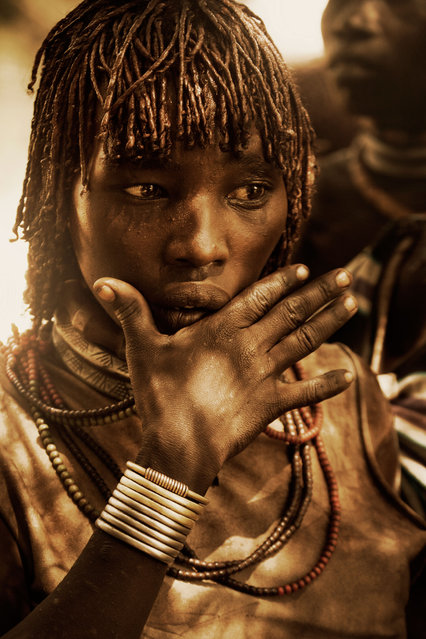
The Hamar people traditionally use red ocher clay to braid the hair of their women. (Photo by Diego Arroyo)

During his time in Ethiopia, New York-based art director and photographer Diego Arroyo spent time with the Hamar, Mursi, Dassanech, and Arbore Tribes. They, along with several others tribes, make up the 200,000 people situated in Africa’s Great Rift Valley. The people of the Omo Valley are still primarily herders and farmers, living an isolated and simple life. While they have yet to be truly touched by globalization, they could soon disappear. Their way of life is being threatened by a massive hydroelectric dam. (Photo by Diego Arroyo)
Details
13 Aug 2014 10:00:00
Funny Cartoons By Lucas Levitan Part 2

Being able to look at this world in a different light is the main thing that distinguishes a true artist from a common person. We can clearly see that Lucas Levitan is a true artist despite the crude drawings that he makes. By hunting through thousands of photos that people post on Instagram, he finds the ones that might have a completely different, surprising, and comical theme. For example, a sensual photo of lady’s eyelashes is transformed into a scene in which a farmer is harvesting his crops. This is imagination at its finest, which is why the art works of Lucas Levitan are so interesting to look at. (Photo by Lucas Levitan)
Details
04 Jan 2015 12:39:00
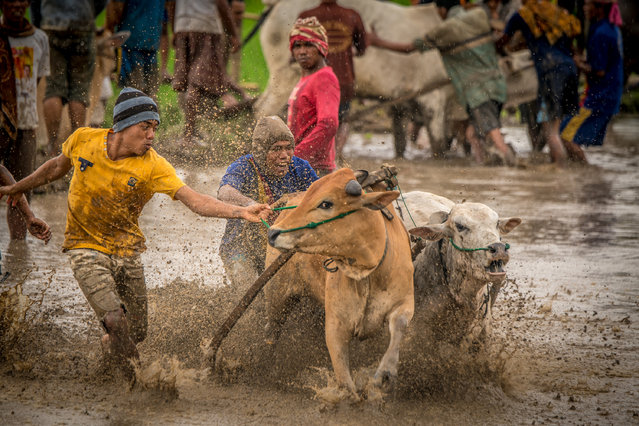
Cows rush through mud and water while jockey holds onto their tails, on March 12, 2016 in Padang, West Sumatra, Indonesia. (Photo by Teh Han Lin/Barcroft Images)

Cows rush through mud and water while jockey holds onto their tails, on March 12, 2016 in Padang, West Sumatra, Indonesia. For hundreds of years these farmers have competed in one of the worldís most oddest races in the hopes of showing off their cattle. Known as Pacu Jawi the traditional cow race takes place in Padang, West Sumatra, and has become the highlight of the year for locals. (Photo by Teh Han Lin/Barcroft Images)
Details
20 Jan 2017 08:07:00
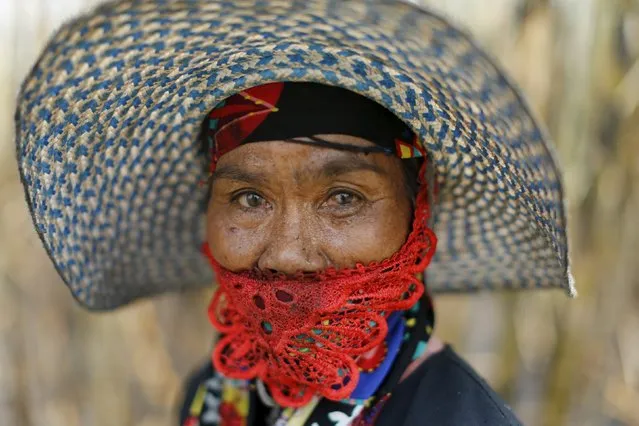
A sugar cane worker poses while working in a field at Pakchong district in Ratchaburi province, Thailand March 22, 2016. (Photo by Jorge Silva/Reuters)

A sugar cane worker poses while working in a field at Pakchong district in Ratchaburi province, Thailand March 22, 2016. The El Nino weather phenomenon has played havoc with crops across Southeast Asia and beyond. Thailand, the world's second-largest sugar exporter, will ship 20 percent less of the sweetener to international markets this year than last, and farmers fear the damage already inflicted on young cane plants could make next year worse. (Photo by Jorge Silva/Reuters)
Details
02 Apr 2016 09:49:00