Loading...
Done
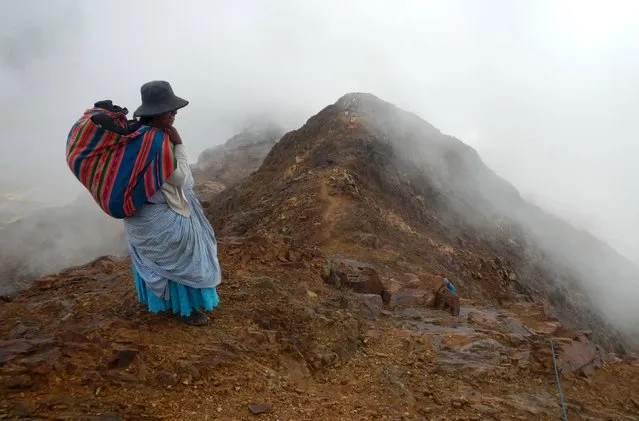
A porter stands at the bottom of the Illimani mountain, on the outskirts of La Paz, Bolivia, April 16, 2016. (Photo by David Mercado/Reuters)

A porter stands at the bottom of the Illimani mountain, on the outskirts of La Paz, Bolivia, April 16, 2016. For years, Lydia Huayllas, 48, has worked as a cook at base camps and mountain-climbing refuges on the steep, glacial slopes of Huayna Potosi, a 19,974-foot (6,088-meter) Andean peak outside of La Paz, Bolivia. But two years ago, she and 10 other Aymara indigenous women, ages 42 to 50, who also worked as porters and cooks for mountaineers, put on crampons – spikes fixed to a boot for climbing – under their wide traditional skirts and started to do their own climbing. (Photo by David Mercado/Reuters)
Details
22 Apr 2016 12:33:00
Kika-evolution, 5, an Auguste clown, poses for a photo during Mexico’s 17th annual clown convention, La Feria de la Risa, in Mexico City, October 23, 2012. Approximately 500 clowns gathered at two local theaters in the capital city to exchange ideas, compete for laughs and show off their comedy performances. (Photo by Anita BacaAP Photo)

Kika-evolution, 5, an Auguste clown, poses for a photo during Mexico’s 17th annual clown convention, La Feria de la Risa, in Mexico City, October 23, 2012. Approximately 500 clowns gathered at two local theaters in the capital city to exchange ideas, compete for laughs and show off their comedy performances. (Photo by Anita Baca/AP Photo)
Details
27 Oct 2012 07:51:00
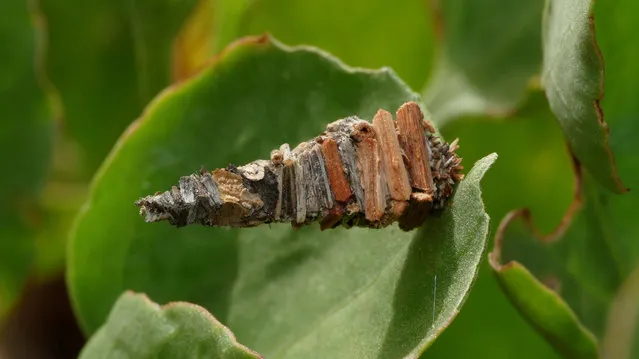
An undated handout photo made available by the Zerynthia Association shows the pupa of an amicta moneiba, a recently discovered species of moth endemic to La Gomera and El Hierro islands in the Canary Islands, Spain (issued 01 July 2020), as those two islands pulled apart from the rest of the Canary Islands 2.5 million years ago. The Institute of Evolutionary Biology of the Spanish National Research Council (CSIC) and the Zerynthia Association have recently discovered two new moth species in El Hierro and La Gomera. (Photo by Yeray Monasterio/Zerynthia/EPA/EFE)

An undated handout photo made available by the Zerynthia Association shows the pupa of an amicta moneiba, a recently discovered species of moth endemic to La Gomera and El Hierro islands in the Canary Islands, Spain (issued 01 July 2020), as those two islands pulled apart from the rest of the Canary Islands 2.5 million years ago. The Institute of Evolutionary Biology of the Spanish National Research Council (CSIC) and the Zerynthia Association have recently discovered two new moth species in El Hierro and La Gomera. (Photo by Yeray Monasterio/Zerynthia/EPA/EFE)
Details
11 Oct 2020 00:01:00
Villagers riding a rickshaw maneuver along an overflowing dam at the border between Cavite province and Las Pinas city, in Las Pinas, Philippines, 25 October 2020. According to Philippine Atmospheric Geophysical and Astronomical Services Administration (PAGASA), Typhoon Molave will make landfall in the evening of 25 October in southern Luzon island. An alert was issued to residents for possible floods and landslides. (Photo by Francis R Malasig/EPA/EFE)

Villagers riding a rickshaw maneuver along an overflowing dam at the border between Cavite province and Las Pinas city, in Las Pinas, Philippines, 25 October 2020. According to Philippine Atmospheric Geophysical and Astronomical Services Administration (PAGASA), Typhoon Molave will make landfall in the evening of 25 October in southern Luzon island. An alert was issued to residents for possible floods and landslides. (Photo by Francis R Malasig/EPA/EFE)
Details
28 Oct 2020 00:01:00
Residents cross a swelling dam, due to rising waters brought about by Typhoon Koppu, in Las Pinas city, metro Manila October 19, 2015. (Photo by Ezra Acayan/Reuters)

Residents cross a swelling dam, due to rising waters brought about by Typhoon Koppu, in Las Pinas city, metro Manila October 19, 2015. Powerful typhoon Koppu ploughed into the northeastern Philippines before dawn on Sunday destroying homes and displacing 10,000 people and whipping up coastal surges four meters (12 feet) high, disaster agency officials said. (Photo by Ezra Acayan/Reuters)
Details
21 Oct 2015 08:07:00
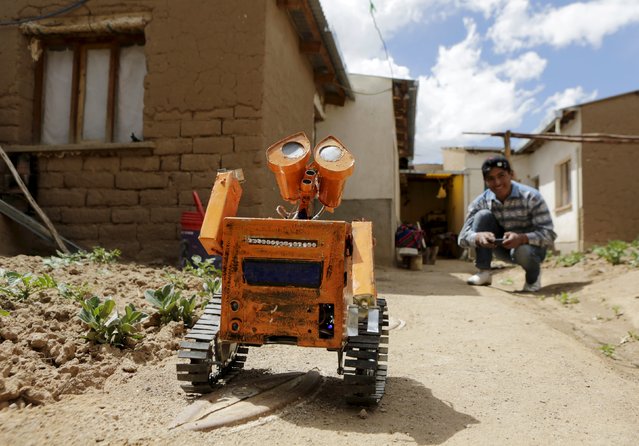
A replica of the Wall-E character is remotely controlled with a mobile phone by Bolivian student Esteban Quispe, 17, in Patacamaya, south of La Paz, December 10, 2015. (Photo by David Mercado/Reuters)

A replica of the Wall-E character is remotely controlled with a mobile phone by Bolivian student Esteban Quispe, 17, in Patacamaya, south of La Paz, December 10, 2015. Quispe built the Wall-E robot using materials he obtained from a rubbish dump in the town located in the Andean highland region. He hopes to mechanize agriculture in Patacamaya by making use of robots that operate on solar energy, Quispe told Reuters. (Photo by David Mercado/Reuters)
Details
13 Dec 2015 08:05:00
“Telemachus”. Farragut Street, New Orleans, La. Nov. 2006. (Photo by Frank Relle)

Photographer Frank Relle takes long-exposure images of houses in New Orleans. Says Relle, “The city at night comes alive for me. I imagine stories about the people’s lives inside the homes based on the evidence on the outside. My photographs become a portrait without the person. The night obscures details and the lack of information gives possibility”. Photo: “Telemachus”. Farragut Street, New Orleans, La. Nov. 2006. (Photo by Frank Relle)
Details
13 May 2014 08:59:00
Mara Salvatrucha (MS) gang members show off their weapons in the Las Victorias district of San Salvador. (Photo by Adam Hinton)

Mara Salvatrucha (MS) gang members show off their weapons in the Las Victorias district of San Salvador. In March 2012, the two largest gangs in El Salvador - the Mara Salvatrucha (MS) and the Barrio 18 (M18) - agreed on a truce following secret negotiations between gang leaders in prison which were mediated by a bishop and a former rebel leader. It is unclear whether the decision was the idea of the gangs themselves or whether they were encouraged by the government. (Photo by Adam Hinton)
Details
23 Oct 2013 11:59:00