Loading...
Done
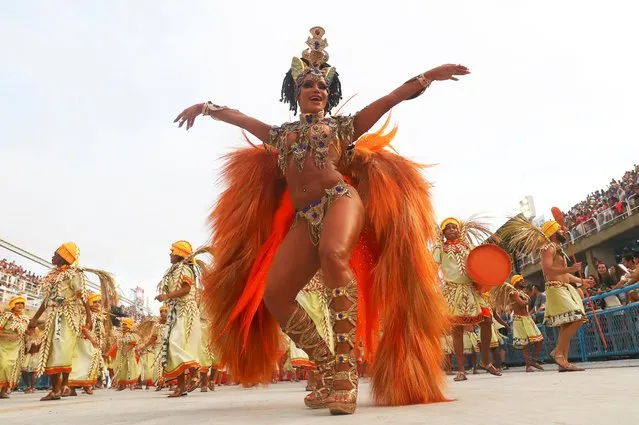
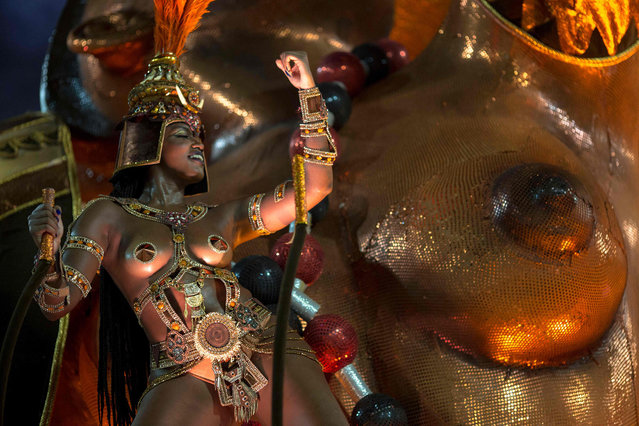
A reveller of the Salgueiro samba school performs during the second night of Rio's Carnival at the Sambadrome in Rio de Janeiro, Brazil, on February 13, 2018. (Photo by Mauro Pimentel/AFP Photo)

A reveller of the Salgueiro samba school performs during the second night of Rio's Carnival at the Sambadrome in Rio de Janeiro, Brazil, on February 13, 2018. (Photo by Mauro Pimentel/AFP Photo)
Details
15 Feb 2018 00:01:00
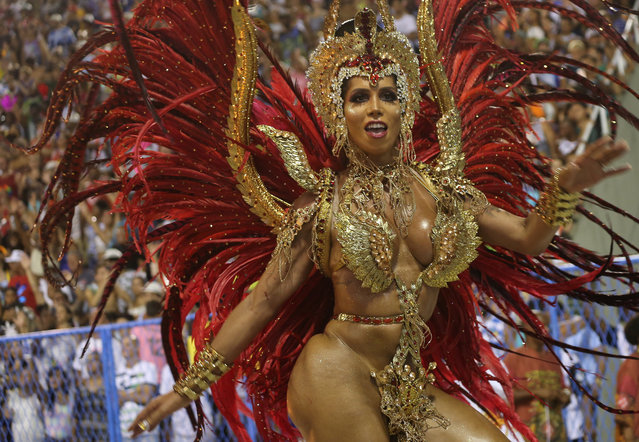
A reveller from Salgueiro performs during the second night of the Carnival parade at the Sambadrome in Rio de Janeiro, Brazil on February 13, 2018. (Photo by Sergio Moraes/Reuters)

A reveller from Salgueiro performs during the second night of the Carnival parade at the Sambadrome in Rio de Janeiro, Brazil on February 13, 2018. (Photo by Sergio Moraes/Reuters)
Details
15 Feb 2018 00:03:00
A reveller from Unidos da Tijuca samba school performs during the first night of the Carnival parade at the Sambadrome in Rio de Janeiro, Brazil on March 4, 2019. (Photo by Pilar Olivares/Reuters)

A reveller from Unidos da Tijuca samba school performs during the first night of the Carnival parade at the Sambadrome in Rio de Janeiro, Brazil on March 4, 2019. (Photo by Pilar Olivares/Reuters)
Details
08 Mar 2019 00:05:00
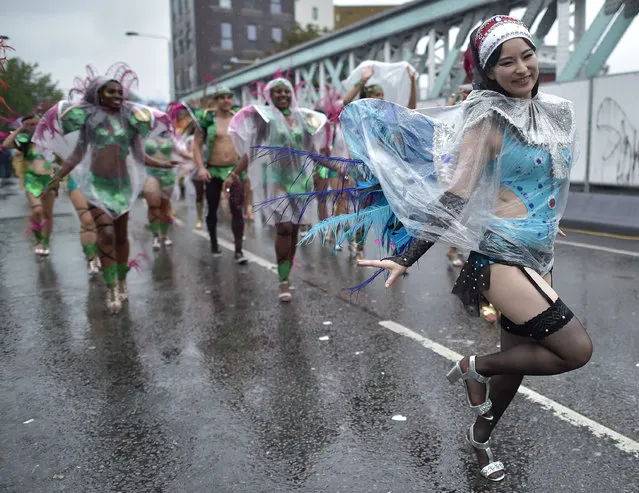
Performers in costume perform in the rain during the parade on the second day of the Notting Hill Carnival in west London on August 31, 2015. Nearly one million people are expected by the organizers Sunday and Monday in the streets of west London's Notting Hill to celebrate Caribbean culture at a carnival considered the largest street demonstration in Europe.  (Photo by Leon Neal/AFP Photo)

Performers in costume perform in the rain during the parade on the second day of the Notting Hill Carnival in west London on August 31, 2015. Nearly one million people are expected by the organizers Sunday and Monday in the streets of west London's Notting Hill to celebrate Caribbean culture at a carnival considered the largest street demonstration in Europe. The Notting Hill Carnival started in the 1960s, when the area had a large population of immigrants recently arrived from the Caribbean and was notorious for its slums – a far cry from today when it is one of London's most expensive places to live. (Photo by Leon Neal/AFP Photo)
Details
01 Sep 2015 15:17:00
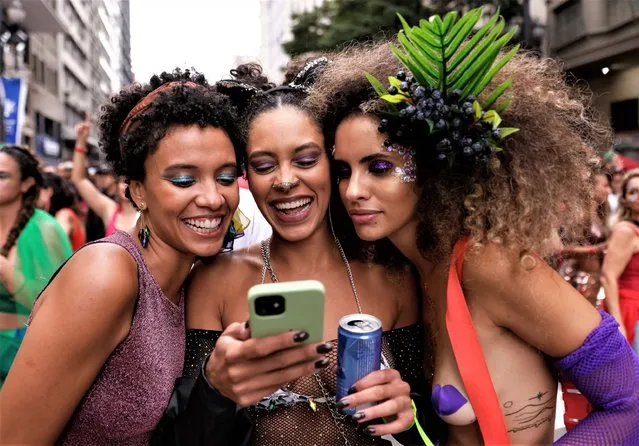
Revelers look at a cellphone during the annual street block party know as “Explode Coracao” on the third day of Carnival on February 19, 2023 in Sao Paulo, Brazil. According to the São Paulo City Council, during Carnival week more than 500 street blocks (blocos de rua) are held and more than 15 million people are expected to participate in them. Created in 2017, Explode Coracao is one of the most popular street blocks and attracted 150,000 revelers in its last edition, before the pandemic, in 2020. (Photo by Alexandre Schneider/Getty Images)

Revelers look at a cellphone during the annual street block party know as “Explode Coracao” on the third day of Carnival on February 19, 2023 in Sao Paulo, Brazil. According to the São Paulo City Council, during Carnival week more than 500 street blocks (blocos de rua) are held and more than 15 million people are expected to participate in them. Created in 2017, Explode Coracao is one of the most popular street blocks and attracted 150,000 revelers in its last edition, before the pandemic, in 2020. (Photo by Alexandre Schneider/Getty Images)
Details
22 Feb 2023 04:58:00
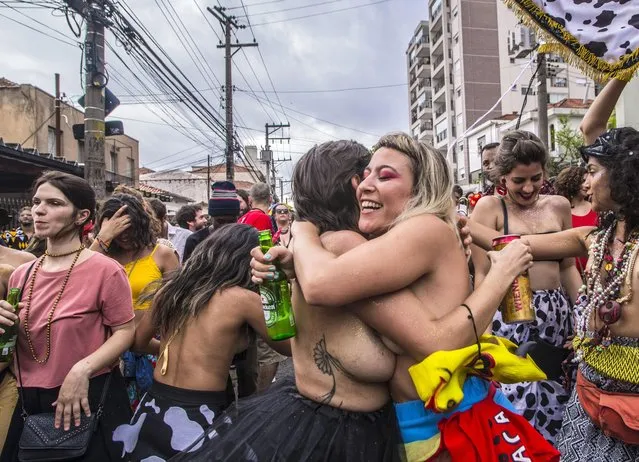
People enjoy carnival while shouting slogans of female empowerment and anti harrassment in Sao Paulo, Brazil on January 28, 2018. The carnival is marked by a lot of fun, but also has space to talk about more serious things – without losing the good mood. Parading for the first time in São Paulo, the Vaca Profana block proposed a reflection on sieges and machismo. With the breasts on display singing not only frevos but, mainly, shouting words of disorder, in order to stimulate female empowerment and against harassment. Our body is our struggle. The preservation of our physical integrity, our freedom of choice. Nude or clothed, we demand respect. (Photo by Cris Faga/Rex Features/Shutterstock)

People enjoy carnival while shouting slogans of female empowerment and anti harrassment in Sao Paulo, Brazil on January 28, 2018. The carnival is marked by a lot of fun, but also has space to talk about more serious things – without losing the good mood. Parading for the first time in São Paulo, the Vaca Profana block proposed a reflection on sieges and machismo. (Photo by Cris Faga/Rex Features/Shutterstock)
Details
29 Jan 2018 08:29:00
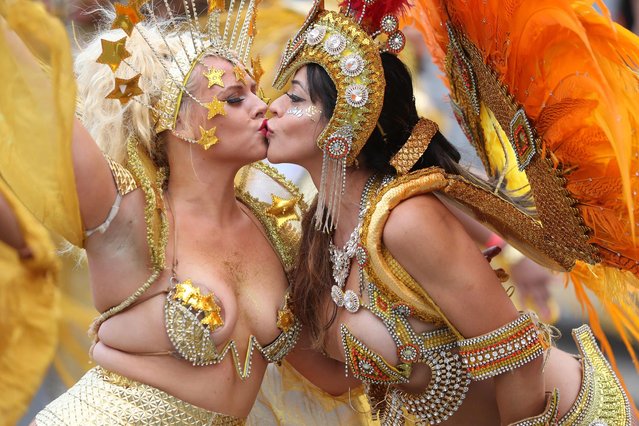
Performers in costume kiss as they take part in the carnival on the main Parade day of the Notting Hill Carnival in west London on August 27, 2018. Nearly one million people are expected by the organizers Sunday and Monday in the streets of west London' s Notting Hill to celebrate Caribbean culture at a carnival considered the largest street demonstration in Europe. (Photo by Daniel Leal-Olivas/AFP Photo)

Performers in costume kiss as they take part in the carnival on the main Parade day of the Notting Hill Carnival in west London on August 27, 2018. Nearly one million people are expected by the organizers Sunday and Monday in the streets of west London' s Notting Hill to celebrate Caribbean culture at a carnival considered the largest street demonstration in Europe. (Photo by Daniel Leal-Olivas/AFP Photo)
Details
29 Aug 2018 00:01:00
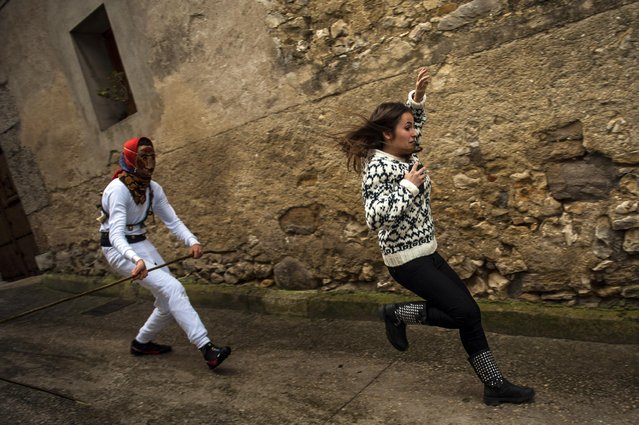
In this photo taken on Sunday, February 15, 2015 a girl runs away from a “Mamuxarro” during the carnival, in the small town of Unanu, northern Spain. While Rio de Janeiro may boast the world’s most famous carnival, the festive period of masquerades and wild and colorful costumes that precedes the Christian religious season of Lent is also a permanent and popular fixture for celebration in Spain and Portugal, with each country having its own strange and unique way of doing it. (Photo by Alvaro Barrientos/AP Photo)

In this photo taken on Sunday, February 15, 2015 a girl runs away from a “Mamuxarro” during the carnival, in the small town of Unanu, northern Spain. In the northern Spanish ancient village of Unamu, people dress up as “Mamuxarro”, folkloric figures in white with a red sash and a metal mask to cover their faces as they pursue townsfolk with sticks. According to custom, their “victims” (usually young women) must kneel and kiss the mamuxarro’s knee after he makes the sign of the cross on their forehead. (Photo by Alvaro Barrientos/AP Photo)
Details
22 Feb 2015 10:51:00