Loading...
Done
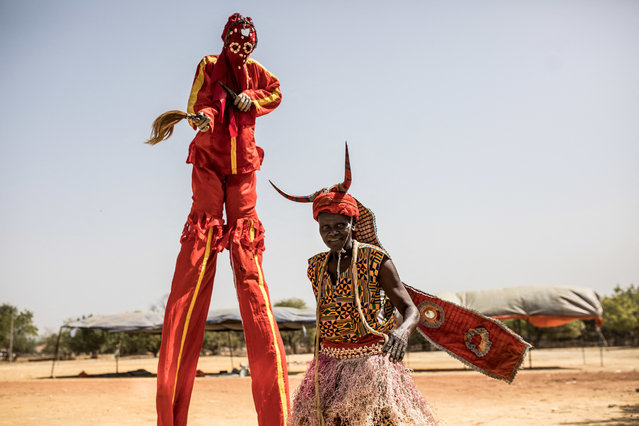
A masquerade dances to drums along the streets during the kankurang Festival in Janjanbureh on January 27, 2024. Listed as a UNESCO World Heritage Site since 2005, Kankurang, a combination of the Mandingo words “kango” and “Kurango”, literally translated as “voice” and “force”, ensures the transmission and teaching of the values and practices that form the basis of Mandingo cultural identity, a West African people whose historical home was the Mali empire. (Photo by Muhamadou Bittaye/AFP Photo)

A masquerade dances to drums along the streets during the kankurang Festival in Janjanbureh on January 27, 2024. Listed as a UNESCO World Heritage Site since 2005, Kankurang, a combination of the Mandingo words “kango” and “Kurango”, literally translated as “voice” and “force”, ensures the transmission and teaching of the values and practices that form the basis of Mandingo cultural identity, a West African people whose historical home was the Mali empire. (Photo by Muhamadou Bittaye/AFP Photo)
Details
13 Mar 2025 01:44:00
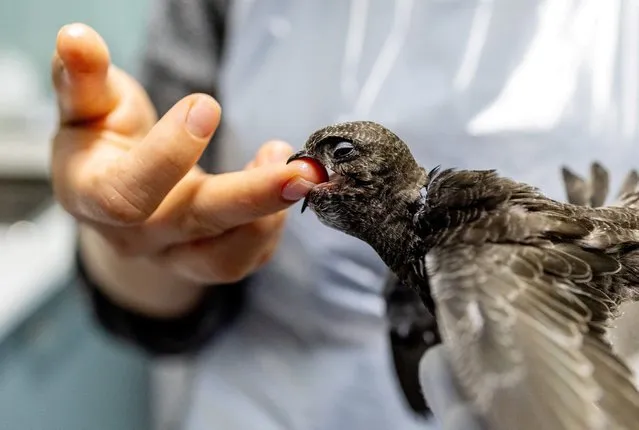
A volunteer feeds a swift chick after it was found on the ground during a heatwave and given to the Centre Ornithologique de Readaptation in Genthod near Geneva, Switzerland on July 25, 2023. (Photo by Denis Balibouse/Reuters)

A volunteer feeds a swift chick after it was found on the ground during a heatwave and given to the Centre Ornithologique de Readaptation in Genthod near Geneva, Switzerland on July 25, 2023. (Photo by Denis Balibouse/Reuters)
Details
06 Aug 2023 04:09:00
A performer dances at a housing exhibition in Wuhan, Hubei province, China, September 27, 2015. Picture taken September 27, 2015. (Photo by Reuters/Stringer)

A performer dances at a housing exhibition in Wuhan, Hubei province, China, September 27, 2015. (Photo by Reuters/Stringer)
Details
30 Sep 2015 08:07:00
A dancer warms up backstage before the final of the 46th Prix de Lausanne, in Lausanne, Switzerland, 03 February 2018. Launched in 1973, the Prix de Lausanne is an international dance competition for young dancers aged 15 to 18. Closing the six-day event, prizes are awarded to the best of 21 finalists consisting of scholarships granting free tuition in a world-renowned dance school or dance company. (Photo by Valentin Flauraud/EPA/EFE)

A dancer warms up backstage before the final of the 46th Prix de Lausanne, in Lausanne, Switzerland, 03 February 2018. Launched in 1973, the Prix de Lausanne is an international dance competition for young dancers aged 15 to 18. Closing the six-day event, prizes are awarded to the best of 21 finalists consisting of scholarships granting free tuition in a world-renowned dance school or dance company. (Photo by Valentin Flauraud/EPA/EFE)
Details
11 Feb 2018 00:03:00
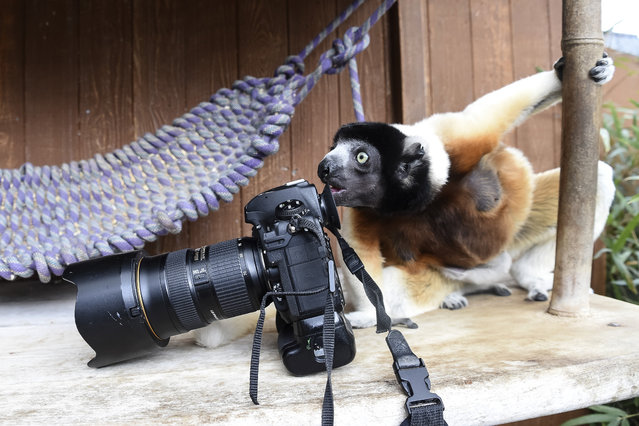
Poppy, a female Crowned sifaka, inspects a photographer's camera in the enclosure at the zoo of Mulhouse, eastern France, on March 5, 2019. The Crowned sifaka is a critically endangered species from Madagascar. (Photo by Sebastien Bozon/AFP Photo)

Poppy, a female Crowned sifaka, inspects a photographer's camera in the enclosure at the zoo of Mulhouse, eastern France, on March 5, 2019. The Crowned sifaka is a critically endangered species from Madagascar. (Photo by Sebastien Bozon/AFP Photo)
Details
10 Mar 2019 00:03:00
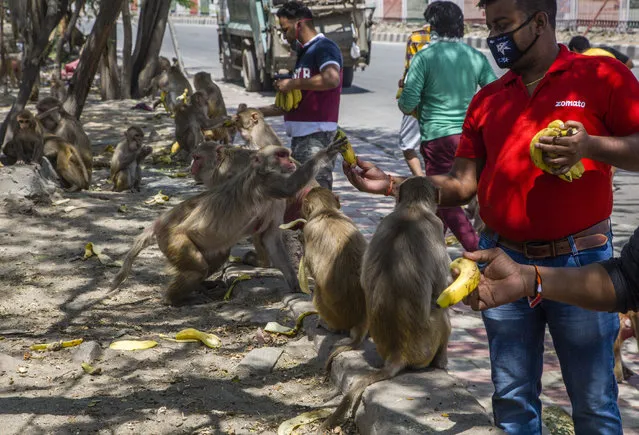
Men give bananas to monkeys gathered on the side of the road as India remains under an unprecedented lockdown over the highly contagious coronavirus (COVID-19) on April 08, 2020 in New Delhi, India. Wild animals, including monkeys, are roaming human settlements in India as people are staying indoors due to the 21-day lockdown. With India's 1.3 billion population and tens of millions of cars off the roads, wildlife is moving towards areas inhabited by humans. Wild animals in many countries have been seen roaming streets. A study says some 60 percent of the new diseases found around the globe every year are zoonotic, meaning they originate in animals and are passed on to humans. COVID-19 is a zoonotic disease that is suspected to have come from the wet markets of Wuhan, China. (Photo by Yawar Nazir/Getty Images)

Men give bananas to monkeys gathered on the side of the road as India remains under an unprecedented lockdown over the highly contagious coronavirus (COVID-19) on April 08, 2020 in New Delhi, India. Wild animals, including monkeys, are roaming human settlements in India as people are staying indoors due to the 21-day lockdown. (Photo by Yawar Nazir/Getty Images)
Details
12 Apr 2020 00:05:00
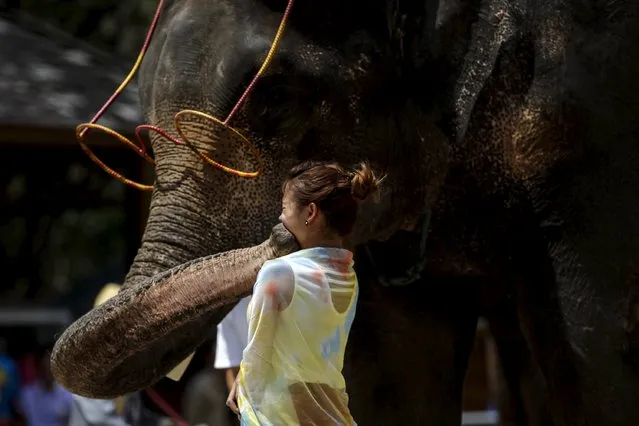
An elephant “kisses” a visitor during a show at an elephant training school in Xishuangbanna, Yunnan province, April 18, 2015. Some 16 elephants live at the school and give four 30-minute performances everyday for visitors. (Photo by Wong Campion/Reuters)

An elephant “kisses” a visitor during a show at an elephant training school in Xishuangbanna, Yunnan province, April 18, 2015. Some 16 elephants live at the school and give four 30-minute performances everyday for visitors. (Photo by Wong Campion/Reuters)
Details
25 Apr 2015 09:41:00
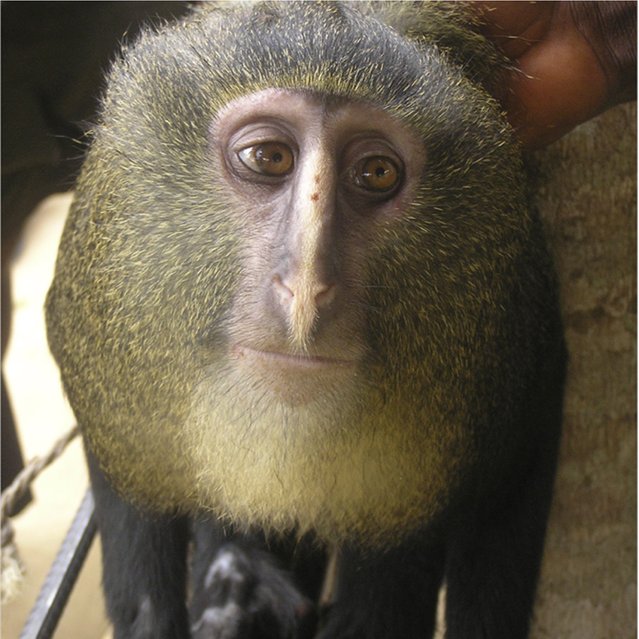
A new species of monkey found in the Democratic Republic of the Congo and identified as Lesula (Cercopithecus lomamiensis) is seen in this undated photograph from an article published September 12, 2012 in the science journal PLOS One. (Photo by Hart J. A., Detwiler K. M., Gilbert C. C./Reuters)

A new species of monkey found in the Democratic Republic of the Congo and identified as Lesula (Cercopithecus lomamiensis) is seen in this undated photograph from an article published September 12, 2012 in the science journal PLOS One. The monkey was first seen in 2007 by researchers John and Terese Hart of the Peabody Museum of Natural History at Yale Research Project. The finding of C. lomamiensis represents only the second new species of African monkey to be discovered in the past 28 years, according to the research article. (Photo by Hart J. A., Detwiler K. M., Gilbert C. C./Reuters)
Details
27 Sep 2012 08:17:00