Loading...
Done
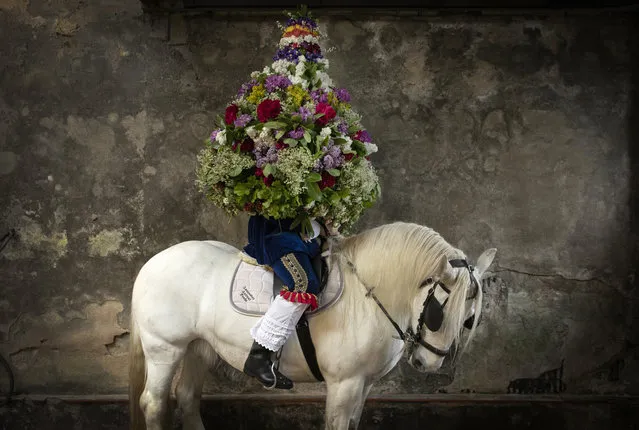
“The King”, Johnathon Haddock poses for a portrait with the Garland before the procession during “Castleton Garland Day” on May 29, 2019 in Castleton, England. The first records of Garland day date back to the 1700's and though it's true origins are not fully understood it is believed to be an ancient fertility rite with Celtic connections. The celebration also incorporates more recent elements of 'Oak Apple Day' which falls on May 29th, and celebrates the restoration of the monarchy in 1660. The garland is a framework of cut flowers which is prepared on the day by villagers before being placed on the head of the “King”, and paraded around the town on horseback with his “Consort”, also on horseback, dressed in Stuart costume. (Photo by Dan Kitwood/Getty Images)

“The King”, Johnathon Haddock poses for a portrait with the Garland before the procession during “Castleton Garland Day” on May 29, 2019 in Castleton, England. The first records of Garland day date back to the 1700's and though it's true origins are not fully understood it is believed to be an ancient fertility rite with Celtic connections. (Photo by Dan Kitwood/Getty Images)
Details
01 Jun 2019 00:07:00
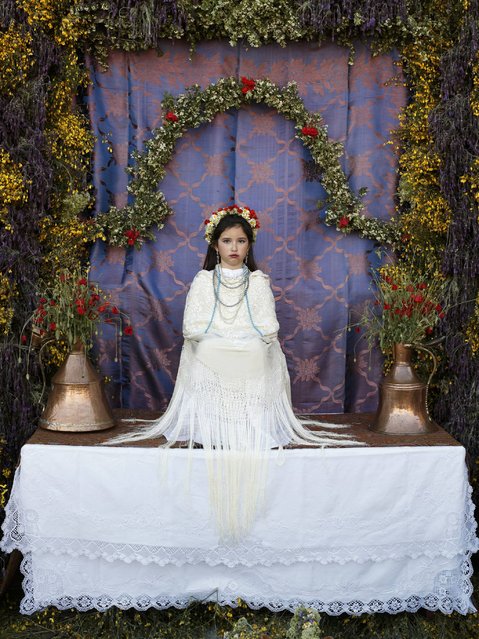
A “Maya” girl sits in an altar during the traditional celebration of “Las Mayas” on the streets in Colmenar Viejo, near Madrid, Spain, Friday, May 2, 2014. (Photo by Daniel Ochoa de Olza/AP Photo)

A “Maya” girl sits in an altar during the traditional celebration of “Las Mayas” on the streets in Colmenar Viejo, near Madrid, Spain, Friday, May 2, 2014. The festivity of the Maya comes from pagan rites and dates from the medieval age, appearing in ancient documents, it takes place every year in the beginning of May and celebrates the beginning off the spring. A girl between 7 and 11years is chosen as “Maya” and should sit still, serious, and quiet for a couple of hours in an altar on the street decorated with flowers and plants, afterwards they walk to the church with their family where they attend a ceremony. (Photo by Daniel Ochoa de Olza/AP Photo)
Details
13 May 2014 10:17:00
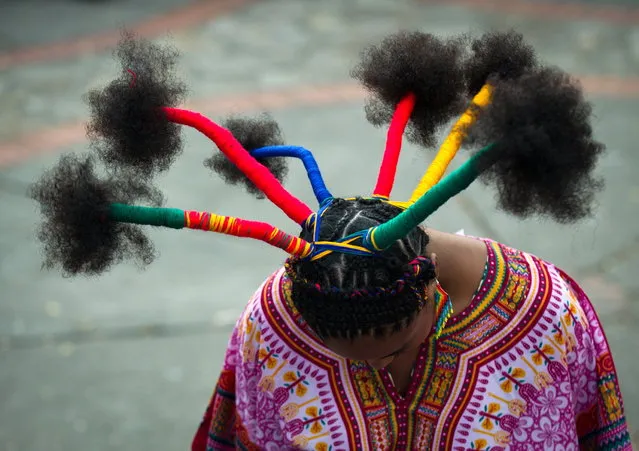
A woman presents an Afro-Colombian hairstyle during the 9th contest of Afro-hairdressers, in Cali, Valle del Cauca departament, Colombia, on May 12, 2013. The Afro hairstyles have their origins in the time of slavery, when women sat to comb their children hair after work. (Photo by Luis Robayo/AFP Photo)

A woman presents an Afro-Colombian hairstyle during the 9th contest of Afro-hairdressers, in Cali, Valle del Cauca departament, Colombia, on May 12, 2013. The Afro hairstyles have their origins in the time of slavery, when women sat to comb their children hair after work. (Photo by Luis Robayo/AFP Photo)
Details
13 May 2013 11:01:00
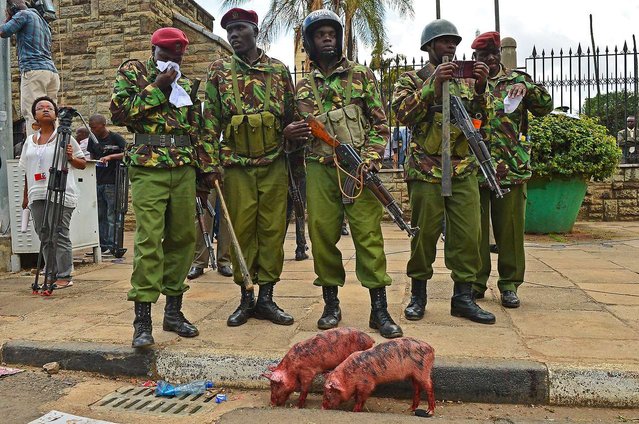
Riot police stood by the gates of parliament in Nairobi, Kenya, Tuesday, May 14, 2013, during a demonstration against members of parliament who demanded higher wages. Demonstrators released two dozen piglets and poured blood on the pavement to protest the demands for a wage hike. (Photo by Carl de Souza/AFP Photo)

Riot police stood by the gates of parliament in Nairobi, Kenya, Tuesday, May 14, 2013, during a demonstration against members of parliament who demanded higher wages. Demonstrators released two dozen piglets and poured blood on the pavement to protest the demands for a wage hike. (Photo by Carl de Souza/AFP Photo)
Details
15 May 2013 10:27:00
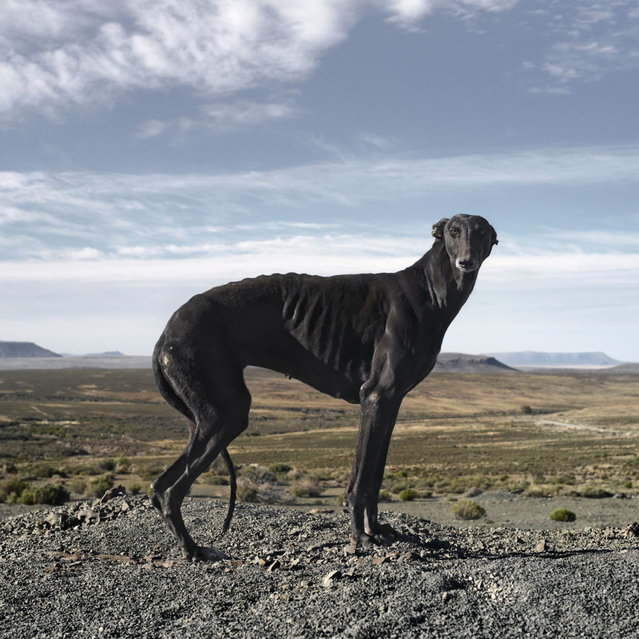
Africanis 18. Murraysburg, Western Cape, May 10, 2010. (Photo by Daniel Naudé)

“The Africanis is a landrace of South African dogs. It is believed to be of ancient origin, directly descended from hounds and pariah dogs of ancient Africa, introduced into the Nile Valley from the Levant. The Swahili name for the breed is umbwa wa ki-shenzi meaning common or mongrel or “traditional dog”. Africanis is also an umbrella name for all the aboriginal dogs in southern Africa”. – Wikipedia. Photo: Africanis 18. Murraysburg, Western Cape, May 10, 2010. (Photo by Daniel Naudé)
Details
19 May 2013 11:51:00
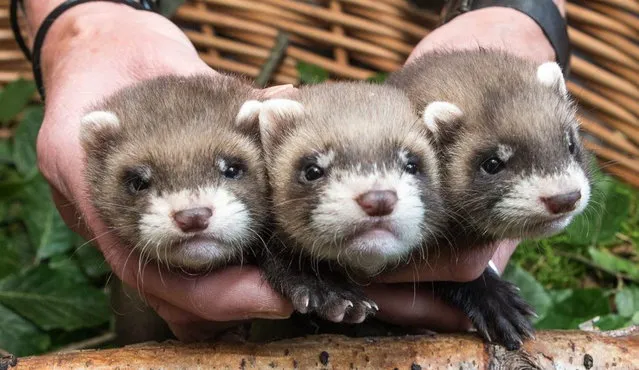
In this picture made available Thursday July 11, 2013 a  zoo-keeper presents three of twelve ferret babies at Eekholt Zoo in Grossenaspe, Germany,  Wednesday July 10, 2013. The ferret babies were born May 25, 2013. (Photo by Markus Scholz/AP Photo/Dpa)

In this picture made available Thursday July 11, 2013 a zoo-keeper presents three of twelve ferret babies at Eekholt Zoo in Grossenaspe, Germany, Wednesday July 10, 2013. The ferret babies were born May 25, 2013. (Photo by Markus Scholz/AP Photo/Dpa)
Details
14 Jul 2013 08:16:00
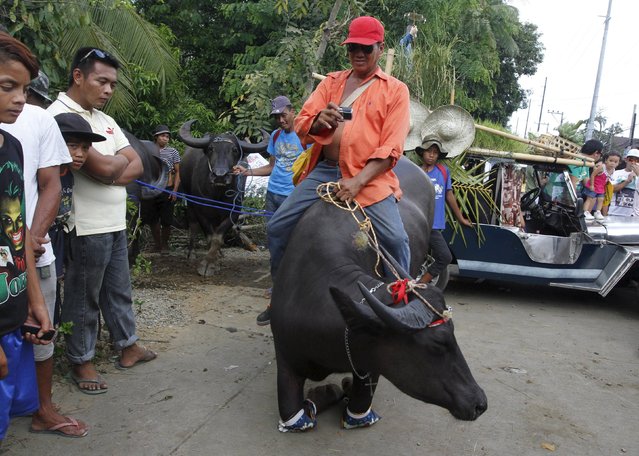
A farmer uses a GoPro as he takes a picture of his carabao kneeling during the annual Carabao Festival in Pulilan, Bulacan in northern Philippines May 14, 2015. (Photo by Lorgina Minguito/Reuters)

A farmer uses a GoPro as he takes a picture of his carabao kneeling during the annual Carabao Festival in Pulilan, Bulacan in northern Philippines May 14, 2015. Water buffalos, locally known as carabaos, are led during a parade in the streets of the town to honour its patron saint San isidro Labrador, and carabaos will kneel in front of the church to give thanks for a year-long bountiful harvest. (Photo by Lorgina Minguito/Reuters)
Details
15 May 2015 10:30:00
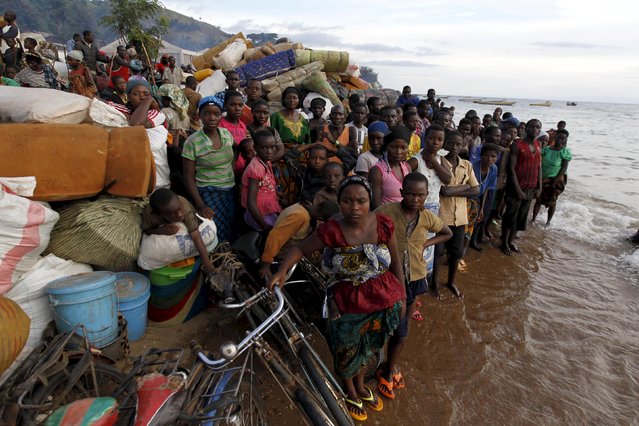
Burundian refugees gather on the shores of Lake Tanganyika in Kagunga village in Kigoma region in western Tanzania with their belongings, as they wait for MV Liemba to transport them to Kigoma township, May 17, 2015. (Photo by Thomas Mukoya/Reuters)

Burundian refugees gather on the shores of Lake Tanganyika in Kagunga village in Kigoma region in western Tanzania with their belongings, as they wait for MV Liemba to transport them to Kigoma township, May 17, 2015. Burundi's embattled President Pierre Nkurunziza sacked his defense and foreign ministers on Monday, five days after surviving an attempted coup by generals opposed to his bid for a third term in office. (Photo by Thomas Mukoya/Reuters)
Details
19 May 2015 11:50:00