Loading...
Done
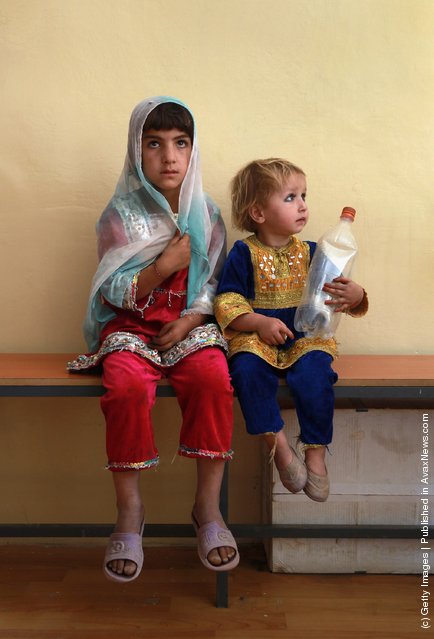
Afghan children wait as their mothers receive treatment at a USAID-funded health center

Afghan children wait as their mothers receive treatment at a USAID-funded health center on September 7, 2011 in Farza, Afghanistan. Almost 10 years after the 9/11 attacks and the U.S. invasion of Afghanistan, the U.S. government funds some of 500 Afghan health facilities nationwide, most run by non-governmental organizations contracted by the Afghan Ministry of Public Health. (Photo by John Moore/Getty Images)
Details
09 Sep 2011 09:54:00
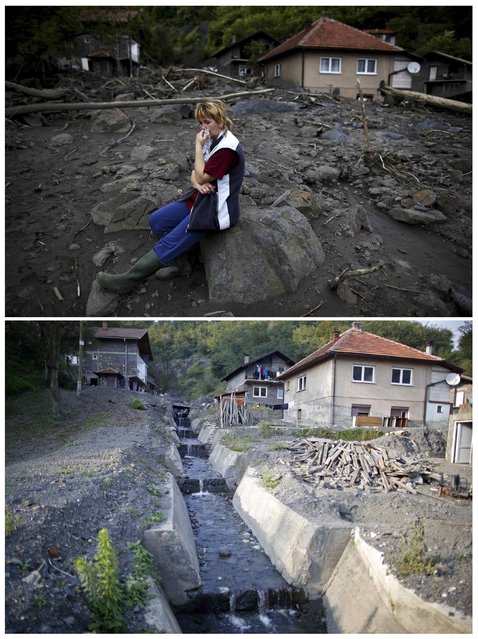
A combination photo shows Fata Kovacevic reacting near her flood-damaged house during floods May 20, 2014 (top) and the same place after floods October 8, 2014 in Topcic Polje. (Photo by Dado Ruvic/Reuters)

A combination photo shows Fata Kovacevic reacting near her flood-damaged house during floods May 20, 2014 (top) and the same place after floods October 8, 2014 in Topcic Polje. (Photo by Dado Ruvic/Reuters)
Details
09 Oct 2014 12:18:00


Soviet cosmonaut and the first man to travel in space, Yury Alekseyvich Gagarin (1934–1968) arriving in London for a Russian trade fair. (Photo by Douglas Miller/Getty Images)
Details
11 Apr 2011 10:24:00
A Panasonic Toughpad is displayed during a press event at The Venetian for the 2012 International Consumer Electronics Show

A Panasonic Toughpad is displayed during a press event at The Venetian for the 2012 International Consumer Electronics Show (CES) January 9, 2012 in Las Vegas, Nevada. CES, the world's largest annual consumer technology trade show, runs from January 10-13 and is expected to feature 2,700 exhibitors showing off their latest products and services to about 140,000 attendees. (Photo by Ethan Miller/Getty Images)
Details
10 Jan 2012 13:12:00
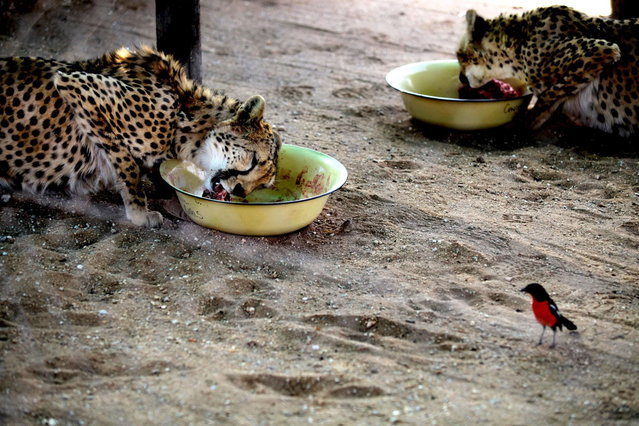
Young cheetahs eat meat at The Cheetah Conservation Fund (CCF) center in Otjiwarongo, Namibia, on August 13, 2013. The CCF started breeding Anatolian livestock dogs to promote cheetah-friendly farming after some 10,000 big cats – the current total worldwide population – were killed or moved off farms in the 1980s.  Up to 1,000 cheetahs were being killed a year, mostly by farmers who saw them as livestock killers. But the use of dogs has slashed losses for sheep and goat farmers and led to less retaliation against the vulnerable cheetah. (Photo by Jennifer Bruce/AFP Photo)

Young cheetahs eat meat at The Cheetah Conservation Fund (CCF) center in Otjiwarongo, Namibia, on August 13, 2013. The CCF started breeding Anatolian livestock dogs to promote cheetah-friendly farming after some 10,000 big cats – the current total worldwide population – were killed or moved off farms in the 1980s. Up to 1,000 cheetahs were being killed a year, mostly by farmers who saw them as livestock killers. But the use of dogs has slashed losses for sheep and goat farmers and led to less retaliation against the vulnerable cheetah. (Photo by Jennifer Bruce/AFP Photo)
Details
29 Aug 2013 10:56:00
Friends pose for a picture on a night out in Leeds, United Kingdom after receiving their A Level results on Tuesday, August 10, 2021. Students hit the town across the country, downing cocktails and letting their hair down after two years of studying during the pandemic. (Photo by Nb press ltd)

Friends pose for a picture on a night out in Leeds, United Kingdom after receiving their A Level results on Tuesday, August 10, 2021. Students hit the town across the country, downing cocktails and letting their hair down after two years of studying during the pandemic. (Photo by Nb press ltd)
Details
11 Aug 2021 10:24:00
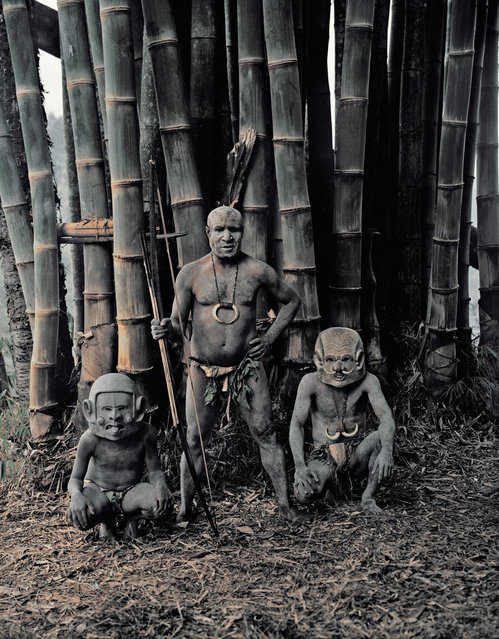
“Asaro from the Eastern Highlands”. The mudmen could not cover their faces with mud because the people of Papua New Guinea thought that the mud from the Asaro river was poisonous. So instead of covering their faces with this alleged poison, they made masks from pebbles that they heated and water from the waterfall, with unusual designs such as long or very short ears either going down to the chin or sticking up at the top, long joined eyebrows attached to the top of the ears, horns and sideways mouths. (Jimmy Nelson)

“Asaro from the Eastern Highlands”. The mudmen could not cover their faces with mud because the people of Papua New Guinea thought that the mud from the Asaro river was poisonous. So instead of covering their faces with this alleged poison, they made masks from pebbles that they heated and water from the waterfall, with unusual designs such as long or very short ears either going down to the chin or sticking up at the top, long joined eyebrows attached to the top of the ears, horns and sideways mouths. (Photo and caption by Jimmy Nelson)
Details
20 Oct 2013 08:54:00
Sjinkie Knegt of Netherlands, left, and Park Se-Yeong of South Korea crash out as they compete in a men's 1500m short track speedskating final at the Iceberg Skating Palace during the 2014 Winter Olympics, Monday, February 10, 2014, in Sochi, Russia. (Photo by Bernat Armangue/AP Photo)

Sjinkie Knegt of Netherlands, left, and Park Se-Yeong of South Korea crash out as they compete in a men's 1500m short track speedskating final at the Iceberg Skating Palace during the 2014 Winter Olympics, Monday, February 10, 2014, in Sochi, Russia. (Photo by Bernat Armangue/AP Photo)
Details
11 Feb 2014 09:36:00