Loading...
Done
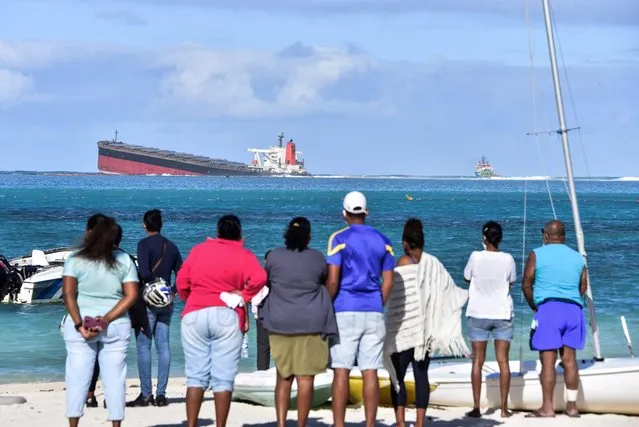
Bystanders look at MV Wakashio bulk carrier that had run aground and from which oil is leaking near Blue Bay Marine Park in south-east Mauritius on August 6, 2020. The carrier, belonging to a Japanese company but Panamanian-flagged, ran aground on July 25 and its crew was evacuated safely. The ship was empty at the time but was carrying 200 tonnes of diesel and 3,800 tonnes of bunker fuel, according to the local press. (Photo by Dev Ramkhelawon/L'Express Maurice/AFP Photo)

Bystanders look at MV Wakashio bulk carrier that had run aground and from which oil is leaking near Blue Bay Marine Park in south-east Mauritius on August 6, 2020. The carrier, belonging to a Japanese company but Panamanian-flagged, ran aground on July 25 and its crew was evacuated safely. The ship was empty at the time but was carrying 200 tonnes of diesel and 3,800 tonnes of bunker fuel, according to the local press. (Photo by Dev Ramkhelawon/L'Express Maurice/AFP Photo)
Details
27 Sep 2020 00:05:00
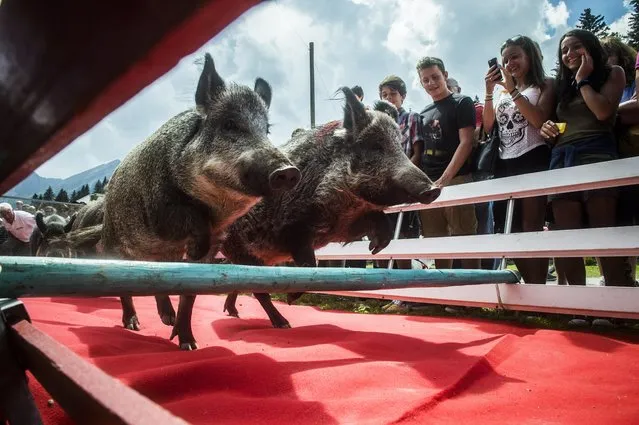
Two race pigs jump over an obstacle during a rural festivity in reference to Maria Ascension in San Bernardino, Switzerland on Monday, August 15 2016.  (Photo by Samuel Golay/Keystone/TI-Press via AP Photo)

Two race pigs jump over an obstacle during a rural festivity in reference to Maria Ascension in San Bernardino, Switzerland on Monday, August 15 2016. (Photo by Samuel Golay/Keystone/TI-Press via AP Photo)
Details
16 Aug 2016 10:08:00
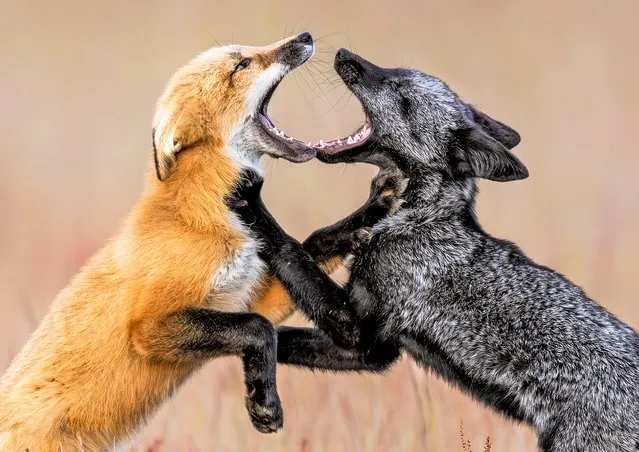
The rabbit population of San Juan Island, brought in to feed lighthouse keepers, got so big that in the 1930s foxes were introduced to kill them. Although they are red foxes, their coats can be orange, silver, black or multi-coloured. Picture date: September 2023. (Photo by Jun Zuo/Solent News)

The rabbit population of San Juan Island, brought in to feed lighthouse keepers, got so big that in the 1930s foxes were introduced to kill them. Although they are red foxes, their coats can be orange, silver, black or multi-coloured. Picture date: September 2023. (Photo by Jun Zuo/Solent News)
Details
08 Oct 2023 04:03:00
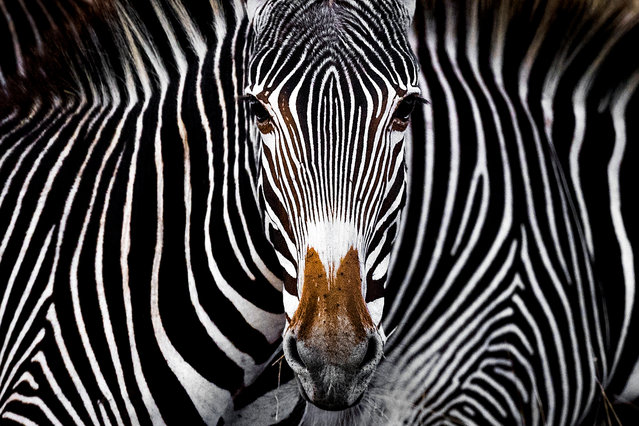
The Grevy’s Illusion by Yaron Schmid, USA: a Grevy’s zebra staring at the camera in Lewa, Kenya. Third place – wildlife. (Photo by Yaron Schmid/The Nature Conservancy Global Photo Contest 2019)

The Grevy’s Illusion by Yaron Schmid, USA: a Grevy’s zebra staring at the camera in Lewa, Kenya. Third place – wildlife. (Photo by Yaron Schmid/The Nature Conservancy Global Photo Contest 2019)
Details
24 Sep 2019 00:05:00
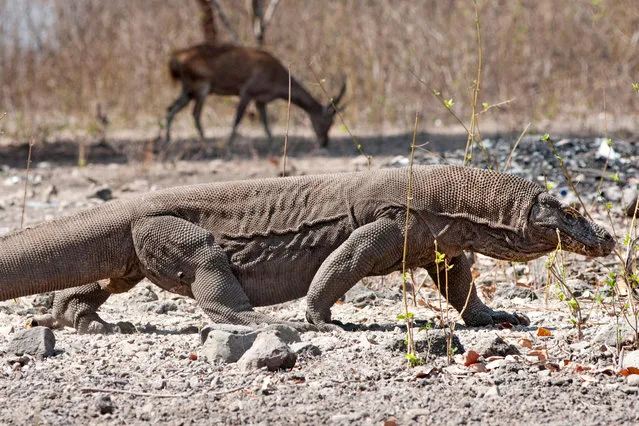
The Komodo dragon (Varanus komodoensis) was the most popular species overall based on English language Wikipedia page views. It is the world’s largest lizard, living on the islands of Komodo, Rinca and other smaller islands, and on Flores island in Indonesia. (Photo by Eric Nathan/Alamy)

The Komodo dragon (Varanus komodoensis) was the most popular species overall based on English language Wikipedia page views. It is the world’s largest lizard, living on the islands of Komodo, Rinca and other smaller islands, and on Flores island in Indonesia. (Photo by Eric Nathan/Alamy)
Details
06 May 2016 13:15:00
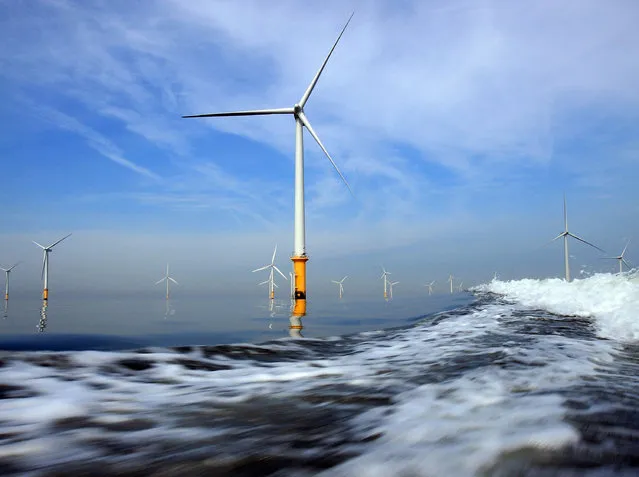
Turbines of the new Burbo Bank off shore wind farm lay in the wake of a maintenance boat in the mouth of the River Mersey on May 12, 2008 in Liverpool, England. The Burbo Bank Offshore Wind Farm comprises 25 wind turbines and is situated on the Burbo Flats in Liverpool Bay at the entrance to the River Mersey, approximately 6.4km (4.0 miles) from the Sefton coastline and 7.2km (4.5 miles) from North Wirral. The wind farm is capable of generating up to 90MW (megawatts) of clean, environmentally sustainable electricity. This is enough power for approximately 80,000 homes. The site is run by Danish energy company Dong Energy. (Photo by Christopher Furlong/Getty Images)

Turbines of the new Burbo Bank off shore wind farm lay in the wake of a maintenance boat in the mouth of the River Mersey on May 12, 2008 in Liverpool, England. (Photo by Christopher Furlong/Getty Images)
Details
29 Apr 2023 04:31:00
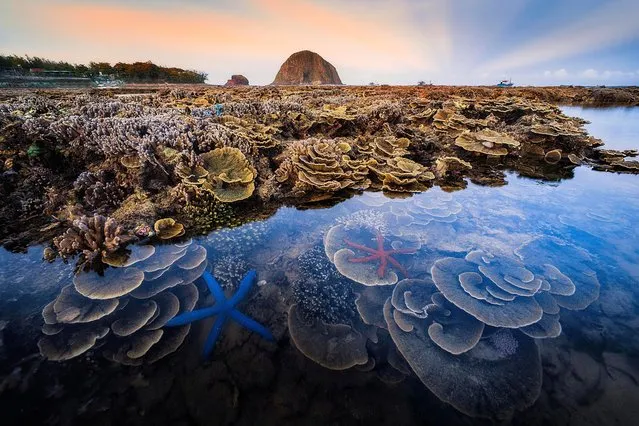
Runner-up; Hon Yen marine ecosystem. Phu Yen, Vietnam. Every year between May and August, the coral of this rich and diverse ecosystem becomes exposed at low tide. (Photo by Truong Hoai Vu/Royal Society of Biology Photography Competition)

Runner-up; Hon Yen marine ecosystem. Phu Yen, Vietnam. Every year between May and August, the coral of this rich and diverse ecosystem becomes exposed at low tide. (Photo by Truong Hoai Vu/Royal Society of Biology Photography Competition)
Details
31 Oct 2021 05:12:00
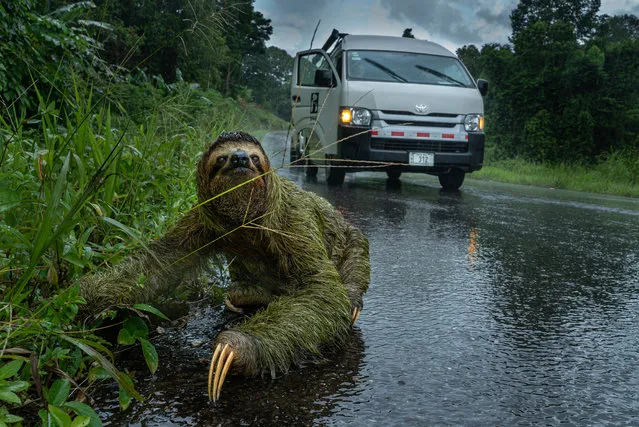
People and Nature category winner: Why did the sloth cross the road? by Andrew Whitworth (Osa Conservation and University of Glasgow), taken in Osa Peninsula, Costa Rica. “I was driving out from the Osa Peninsula, located on the southern Pacific coast of Costa Rica on a dark, stormy day. This female three-toed sloth (Bradypus variegatus) had luckily just about made it across the road, and the drivers of the Toyota on this occasion had spotted her in good time”. (Photo by Andrew Whitworth/2019 British Ecological Society Photography Competition)

People and Nature category winner: Why did the sloth cross the road? by Andrew Whitworth (Osa Conservation and University of Glasgow), taken in Osa Peninsula, Costa Rica. “I was driving out from the Osa Peninsula, located on the southern Pacific coast of Costa Rica on a dark, stormy day. This female three-toed sloth (Bradypus variegatus) had luckily just about made it across the road, and the drivers of the Toyota on this occasion had spotted her in good time”. (Photo by Andrew Whitworth/2019 British Ecological Society Photography Competition)
Details
30 Nov 2019 00:05:00