Loading...
Done
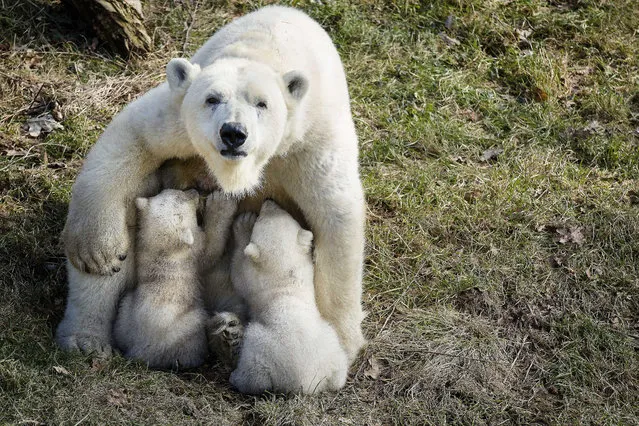
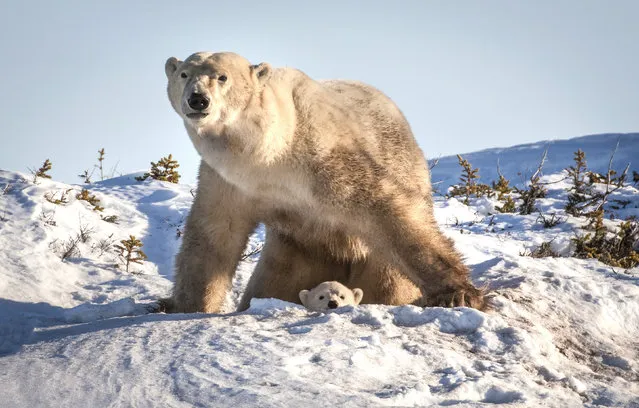
A Polar bear with its cub. (Photo by David Jenkins/Caters News)

These adorable images of new born polar bears are bound to warm the hearts of even the biggest Ba-humbugs this Christmas. The stunning collection of photographs, taken over the space of ten years, manage to capture the tender bond between both mother and child as they emerge from their den for the very first time. Here: a Polar bear with its cub. (Photo by David Jenkins/Caters News)
Details
22 Dec 2014 13:07:00
Polar bear twins make their first public appearance with their mother “Freedom” at Ouwehands Zoo Rhenen, in Rhenen, The Netherlands, 19 February 2015. The twins, who were born in November 2014, have not been named because their gender has not yet been determined. (Photo by Bart Maat/EPA)

Polar bear twins make their first public appearance with their mother “Freedom” at Ouwehands Zoo Rhenen, in Rhenen, The Netherlands, 19 February 2015. The twins, who were born in November 2014, have not been named because their gender has not yet been determined. (Photo by Bart Maat/EPA)
Details
21 Feb 2015 11:58:00
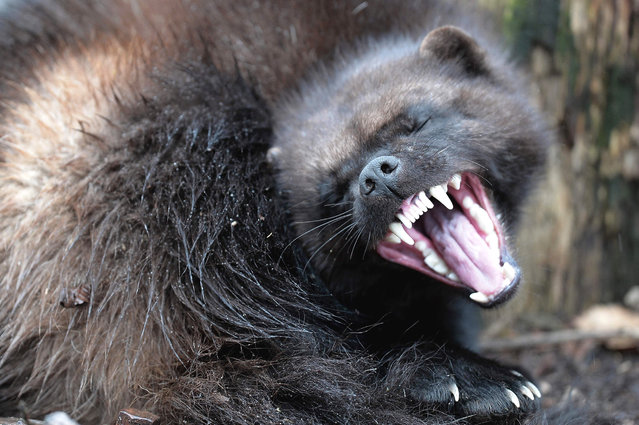
A wolverine is pictured during its first public appearance at the Animal Park of Sainte-Croix in Rhodes, eastern France on January 28, 2016. (Photo by Frederick Florin/AFP Photo)

A wolverine is pictured during its first public appearance at the Animal Park of Sainte-Croix in Rhodes, eastern France on January 28, 2016. (Photo by Frederick Florin/AFP Photo)
Details
31 Jan 2016 08:43:00
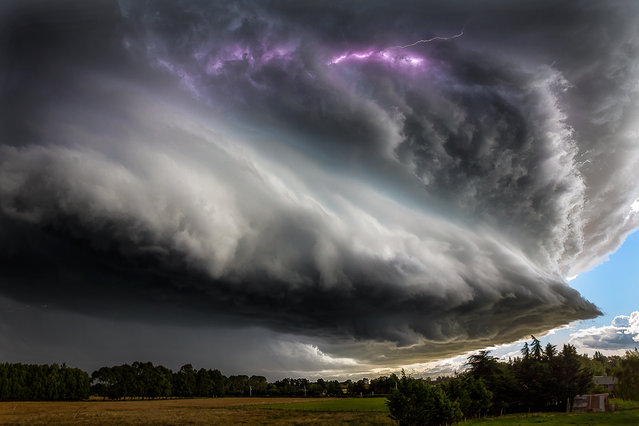
“Thunderstruck”. Summer stom. A super cell formed off the coast of New Zealand, intensified and swept across Christchurch and North Canterbury, February 23, 2014. Photo location: Christchurch, New Zealand. (Photo and caption by David Hardy/National Geographic Photo Contest)

“Thunderstruck”. Summer stom. A super cell formed off the coast of New Zealand, intensified and swept across Christchurch and North Canterbury, February 23, 2014. Photo location: Christchurch, New Zealand. (Photo and caption by David Hardy/National Geographic Photo Contest)
Details
15 Apr 2014 11:46:00
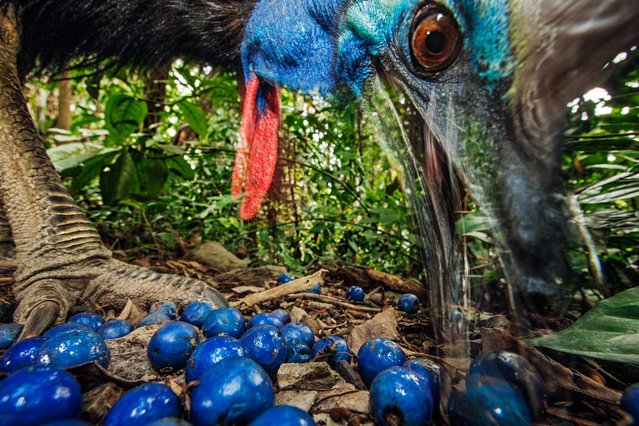
“Cassowaries are large, flightless birds related to emus and (more distantly) to ostriches, rheas, and kiwis”, writes Olivia Judson in the September issue of National Geographic magazine. (Photo by Christian Ziegler/National Geographic)

“Cassowaries are large, flightless birds related to emus and (more distantly) to ostriches, rheas, and kiwis”, writes Olivia Judson in the September issue of National Geographic magazine. How large? People-size: Adult males stand well over five foot five and top 110 pounds. Females are even taller, and can weigh more than 160 pounds. Dangerous when roused, they’re shy and peaceable when left alone. But even birds this big and tough are prey to habitat loss. The dense New Guinea and Australia rain forests where they live have dwindled. Today cassowaries might number 1,500 to 2,000. And because they help shape those same forests – by moving seeds from one place to another – “if they vanish”, Judson writes, “the structure of the forest would gradually change” too. (Photo by Christian Ziegler/National Geographic)
Details
06 Jan 2014 12:21:00
A visitor holds an Israeli-made rifle during the 8th International Land and Naval Defense system exhibition, in New Delhi, India, on February 6, 2014. (Photo by Anindito Mukherjee/Reuters)

A visitor holds an Israeli-made rifle during the 8th International Land and Naval Defense system exhibition, in New Delhi, India, on February 6, 2014. (Photo by Anindito Mukherjee/Reuters)
Details
08 Feb 2014 15:38:00
A girl sticks out her tongue during snowfalls on a street in Hefei, Anhui province February 13, 2014. (Photo by Reuters/Stringer)

A girl sticks out her tongue during snowfalls on a street in Hefei, Anhui province February 13, 2014. (Photo by Reuters/Stringer)
Details
15 Feb 2014 12:09:00
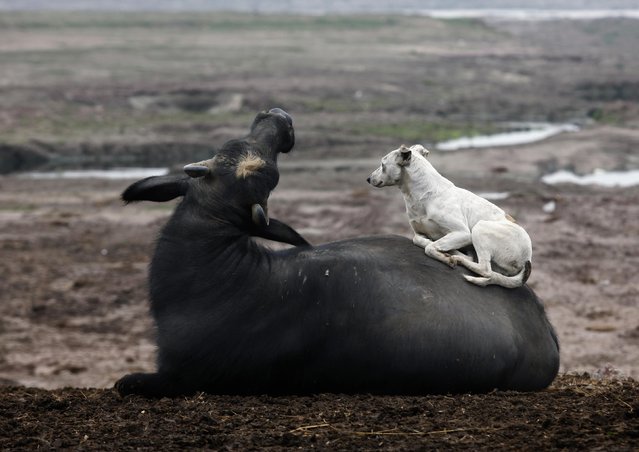
A dog rests on a buffalo near Ravi River in Lahore, Pakistan, on Febuary 4, 2013. (Photo by Mohsin Raza/Reuters)

A dog rests on a buffalo near Ravi River in Lahore, Pakistan, on Febuary 4, 2013. (Photo by Mohsin Raza/Reuters)

P.S. All pictures are presented in high resolution. To see Hi-Res images – just TWICE click on any picture. In other words, click small picture – opens the BIG picture. Click BIG picture – opens VERY BIG picture (if available; this principle works anywhere on the site AvaxNews).
Details
17 Feb 2013 17:02:00