Loading...
Done
This aerial photo shows bullet trains parked at a station in preparation for the upcoming Lunar New Year travel peak in Nanjing, in eastern China's Jiangsu province on January 27, 2021, as authorities have encouraged people to stay put during the Spring Festival to curb the spread of of COVID-19 coronavirus. (Photo by AFP Photo/China Stringer Network)

This aerial photo shows bullet trains parked at a station in preparation for the upcoming Lunar New Year travel peak in Nanjing, in eastern China's Jiangsu province on January 27, 2021, as authorities have encouraged people to stay put during the Spring Festival to curb the spread of of COVID-19 coronavirus. (Photo by AFP Photo/China Stringer Network)
Details
02 Feb 2021 11:36:00
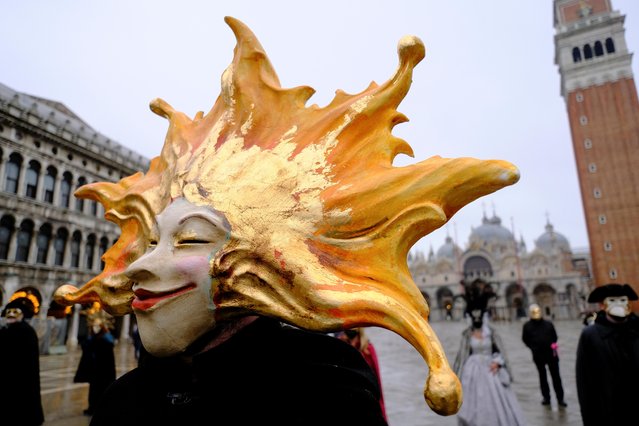
A reveller wears a carnival mask in St. Mark's Square to celebrate Venice's annual colourful carnival, which has been cancelled this year due to the coronavirus disease (COVID-19) pandemic, in Venice, Italy, February 7, 2021. (Photo by Manuel Silvestri/Reuters)

A reveller wears a carnival mask in St. Mark's Square to celebrate Venice's annual colourful carnival, which has been cancelled this year due to the coronavirus disease (COVID-19) pandemic, in Venice, Italy, February 7, 2021. (Photo by Manuel Silvestri/Reuters)
Details
09 Feb 2021 10:24:00
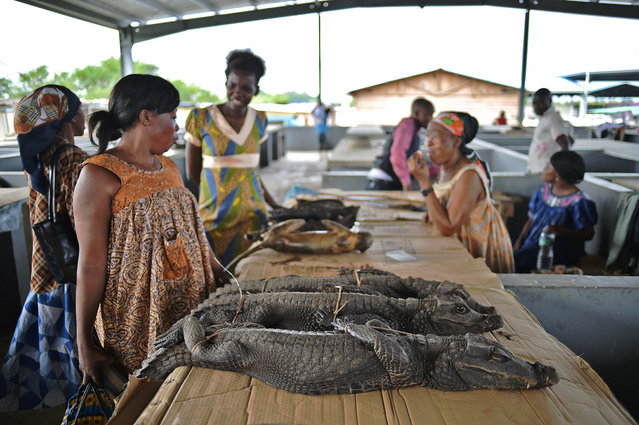
Shoppers walk past crocodiles for sale at a market in Bata on February 3, 2015. Markets in Equatorial Guinea sell a variety of animals including pangolins, monkeys and crocodiles as food. (Photo by Carl de Souza/AFP Photo)

Shoppers walk past crocodiles for sale at a market in Bata on February 3, 2015. Markets in Equatorial Guinea sell a variety of animals including pangolins, monkeys and crocodiles as food. (Photo by Carl de Souza/AFP Photo)
Details
30 Nov 2017 08:33:00
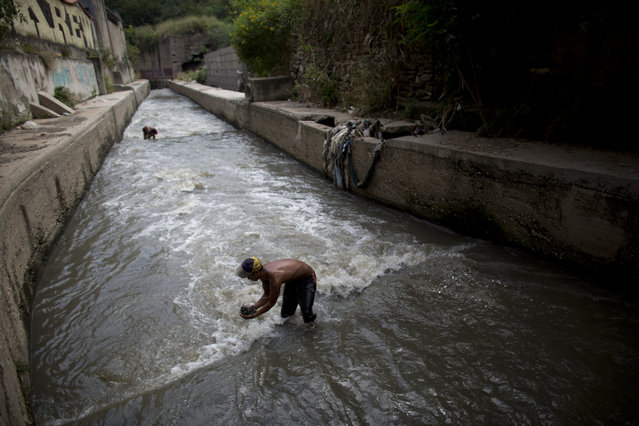
In this November 30, 2017 photo, Douglas scoops up mud from the bottom of the polluted Guaire River, in search of gold and anything valuable he can sell, in Caracas, Venezuela. Some stretches of the river smell of sewer while others emit a toxic odor of fuel, a stench that stays in ones nose for hours after leaving the water. (Photo by Ariana Cubillos/AP Photo)

In this November 30, 2017 photo, Douglas scoops up mud from the bottom of the polluted Guaire River, in search of gold and anything valuable he can sell, in Caracas, Venezuela. Some stretches of the river smell of sewer while others emit a toxic odor of fuel, a stench that stays in ones nose for hours after leaving the water. (Photo by Ariana Cubillos/AP Photo)
Details
11 Jan 2018 07:35:00
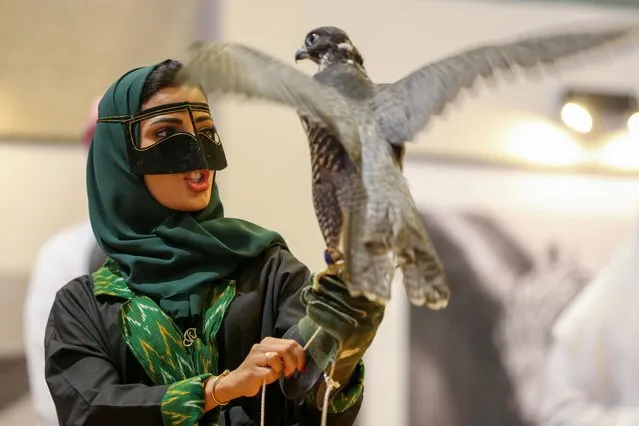
A Saudi woman holds a falcon as she participate for the first time in the 2nd Saudi Falcons and Hunting Exhibition in Riyadh, Saudi Arabia on October 16, 2019. (Photo by Ahmed Yosri/Reuters)

A Saudi woman holds a falcon as she participate for the first time in the 2nd Saudi Falcons and Hunting Exhibition in Riyadh, Saudi Arabia on October 16, 2019. (Photo by Ahmed Yosri/Reuters)
Details
18 Oct 2019 00:07:00
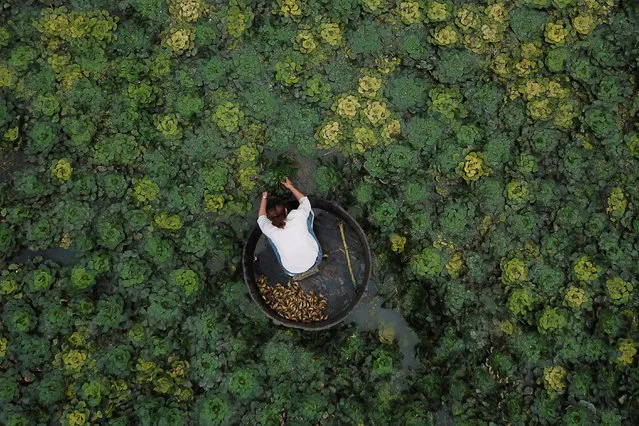
A villager harvests water chestnuts in Feijiadai Village, Zhejiang Province, China on September 20, 2019. (Photo by Huang Zongzhi/Xinhua News Agency/Barcroft Media)

A villager harvests water chestnuts in Feijiadai Village, Zhejiang Province, China on September 20, 2019. (Photo by Huang Zongzhi/Xinhua News Agency/Barcroft Media)
Details
01 Nov 2019 00:01:00
Members of the Women's Organization to War on Styles (WOW) picket a dress shop in Berkeley, Calif., August 23, 1947, in protest to longer skirts and padded hips. They are the wives of GI students at the University of California. Left to right: Jackie Houser; Wanda Ames; Dorothy Inman; Terry Ligon; Ruth Van Arkel; Carrol Reynolds, and Barbara Carmichael. (Photo by AP Photo)

Members of the Women's Organization to War on Styles (WOW) picket a dress shop in Berkeley, Calif., August 23, 1947, in protest to longer skirts and padded hips. They are the wives of GI students at the University of California. Left to right: Jackie Houser; Wanda Ames; Dorothy Inman; Terry Ligon; Ruth Van Arkel; Carrol Reynolds, and Barbara Carmichael. (Photo by AP Photo)
Details
18 Sep 2017 07:34:00
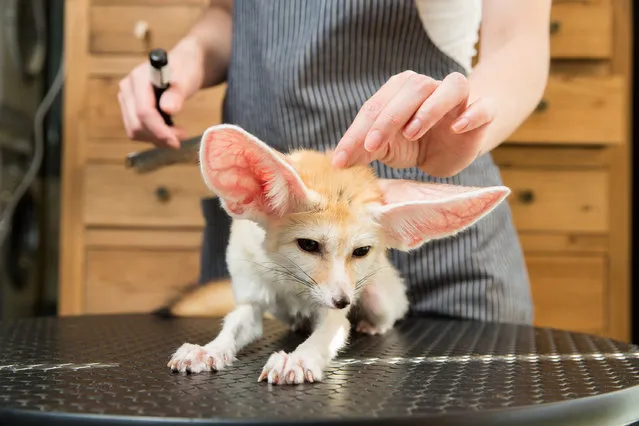
A fennec fox (Vulpes zerda) is groomed in a pet store in central Beijing. Native to the Sahara in North Africa, the species became a popular pet after being depicted as a character in Disney’s 2016 animated movie Zootopia. Individuals can cost between $2,000–$3,000. (Photo by Sean Gallagher/The Guardian)

A dramatic rise in owning exotic pets in China is fuelling global demand for threatened species. The growing trade in alligators, snakes, monkeys, crocodiles and spiders is directly linked to species loss in some of the world’s most threatened ecosystems. Here: A fennec fox (Vulpes zerda) is groomed in a pet store in central Beijing. Native to the Sahara in North Africa, the species became a popular pet after being depicted as a character in Disney’s 2016 animated movie Zootopia. Individuals can cost between $2,000–$3,000. (Photo by Sean Gallagher/The Guardian)
Details
23 Sep 2017 08:04:00