Loading...
Done
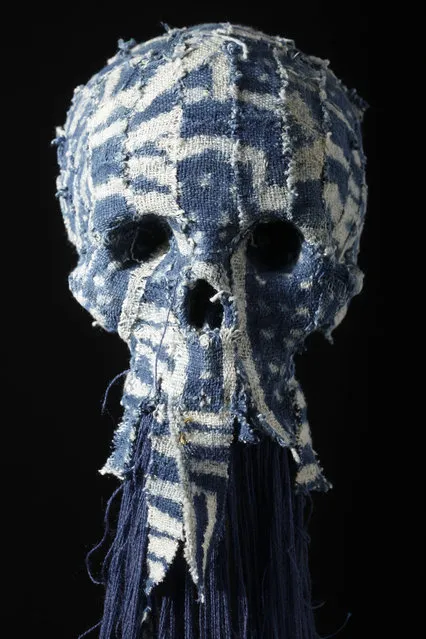
Skulls By Jim Skull

Inspired by personal experiences, a mix of cultures, rituals, and travelling the world, artist Jim Skull creates elaborate woven skull sculptures. He likes to be referred to as Jim Skull as a reflection of his interest in skulls; a symbol that he has been working with since the 1980s. He is currently living in France where he creates beautifully crafted sculptures out of rope, Papier-mâché, and other natural materials. He was born in New Caledonia and there’s no doubt that the influences of the tribal arts from Oceania, Africa, and North America are evident within his technique.
Details
11 Apr 2014 13:30:00
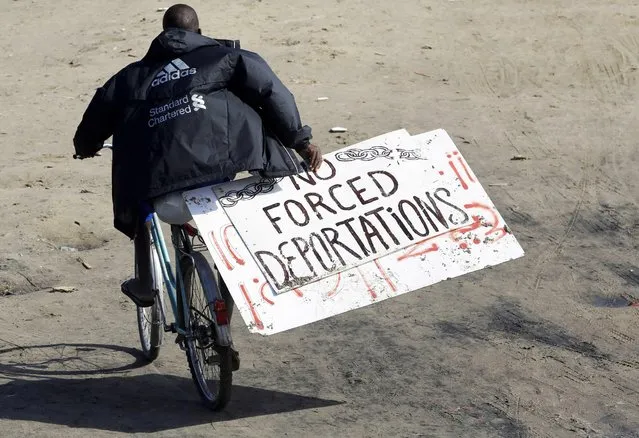
A migrant holds a placard which reads “No Forced Deportations” as he rides his bicycle at the makeshift camp called “The New Jungle” in Calais, France, September 18, 2015. (Photo by Regis Duvignau/Reuters)

A migrant holds a placard which reads “No Forced Deportations” as he rides his bicycle at the makeshift camp called “The New Jungle” in Calais, France, September 18, 2015. Around 3,500 migrants and refugees are camped in Calais, fleeing war and poverty in the Middle East, Africa and Asia and now living in the jungle. Most of them are hoping to make the crossing to England. (Photo by Regis Duvignau/Reuters)
Details
25 Sep 2015 08:00:00
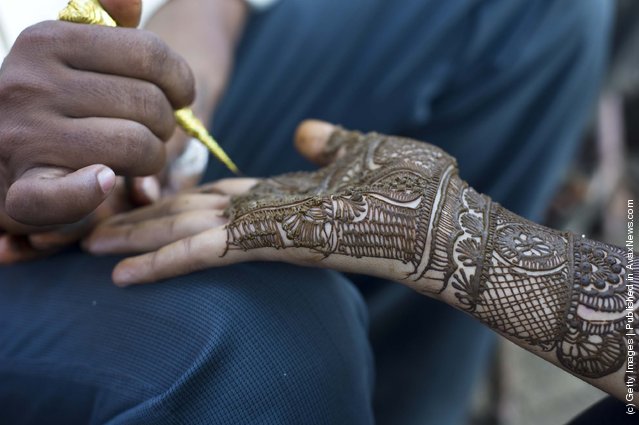
Application of henna or “Mehndi”  to a girls hand in a market in Jaipur, India

“Mehndi or menhdi is the application of henna as a temporary form of skin decoration in India, as well as by expatriate communities from the country. The word mehndi is derived from the Sanskrit word mendhikā. The use of mehndi and turmeric is described in the earliest Vedic ritual books. Haldi (Staining oneself with turmeric paste) as well as mehndi are important Vedic customs as a symbolic representation of the Outer and the Inner Sun. Vedic customs are meant to awaken the “inner light” and so the gold of the inner Sun has an important symbolic function”. – Wikipedia

Photo: Application of henna or “Mehndi” to a girls hand in a market on October 18, 2010 in Jaipur, India. (Photo by Simon de Trey-White/Getty Images)
Details
23 Nov 2011 13:33:00
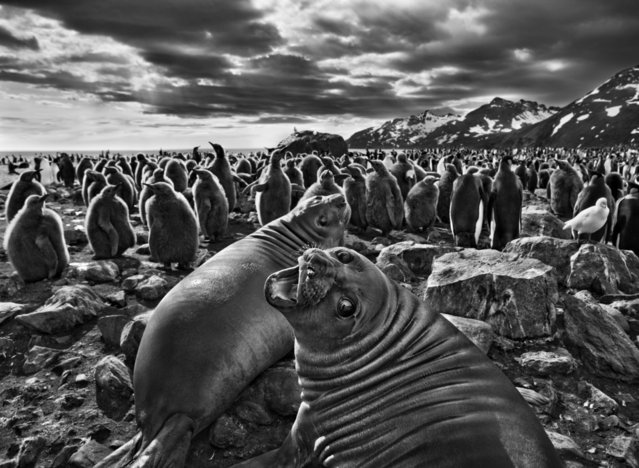
On South Georgia, a barren island in the far South Atlantic, a pair of southern elephant seal calves beckon before a colony of king penguins. “The male seals can grow to almost five tons,” says Salgado, “but these are just babies. This one looked at me with beautiful eyes”. (Photo by Sebastião Salgado/Amazonas/Contact Press Images)

Sebastião Salgado is a Brazilian documentary photographer living in Paris. He has produced several books, and his work has been exhibited extensively around the world. His latest work, «Genesis», premieres at The Natural History Museum in London on April 11, on view through September 8, 2013. Photo: On South Georgia, a barren island in the far South Atlantic, a pair of southern elephant seal calves beckon before a colony of king penguins. “The male seals can grow to almost five tons,” says Salgado, “but these are just babies. This one looked at me with beautiful eyes”. (Photo by Sebastião Salgado/Amazonas/Contact Press Images)
Details
30 Apr 2013 12:17:00
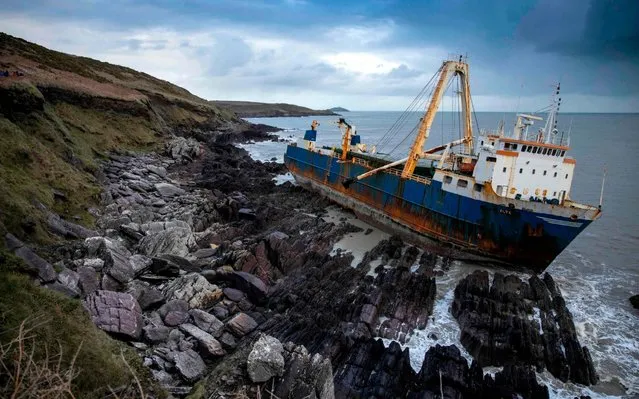
The abandoned 77-metre (250-feet) cargo ship MV Alta is pictured stuck on rocks near the village of Ballycotton south-east of Cork in Southern Ireland on February 18, 2020. A “ghost ship” drifting without a crew for more than a year washed ashore on Ireland's south coast in high seas caused by Storm Dennis, the Republic's coast guard said. (Photo by Cathal Noonan/AFP Photo)

The abandoned 77-metre (250-feet) cargo ship MV Alta is pictured stuck on rocks near the village of Ballycotton south-east of Cork in Southern Ireland on February 18, 2020. A “ghost ship” drifting without a crew for more than a year washed ashore on Ireland's south coast in high seas caused by Storm Dennis, the Republic's coast guard said. (Photo by Cathal Noonan/AFP Photo)
Details
20 Feb 2020 00:07:00
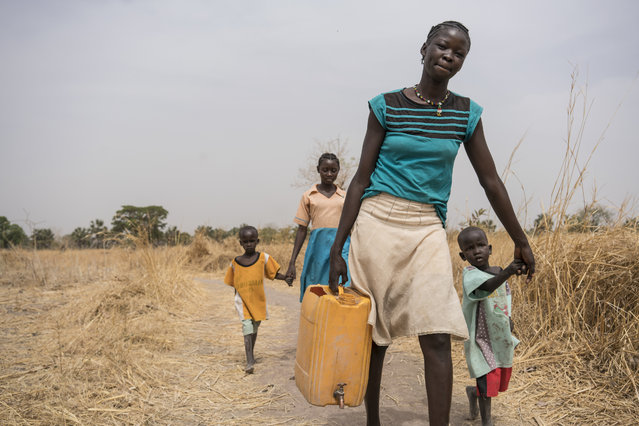
In this photo taken Sunday, March 12, 2017, a girl Abuk walks home with her brothers and friends after collecting clean water from a water point four kilometers away from her home, in Aweil, in South Sudan. As World Water Day approaches on March 22, more than 5 million people in South Sudan, do not have access to safe, clean water, compounding the problems of famine and civil war, according to the UNICEF. (Photo by Mackenzie Knowles-Coursin/UNICEF via AP Photo)

In this photo taken Sunday, March 12, 2017, a girl Abuk walks home with her brothers and friends after collecting clean water from a water point four kilometers away from her home, in Aweil, in South Sudan. As World Water Day approaches on March 22, more than 5 million people in South Sudan, do not have access to safe, clean water, compounding the problems of famine and civil war, according to the UNICEF. (Photo by Mackenzie Knowles-Coursin/UNICEF via AP Photo)
Details
21 Mar 2017 07:53:00
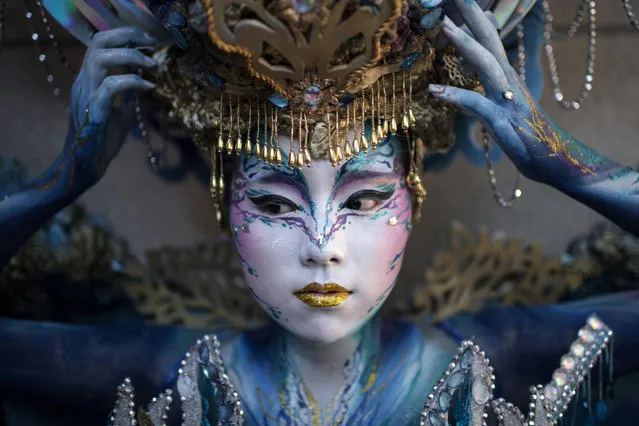
In this photo taken on August 26, 2017, a contestant of the “fantasy” category prepares to be judged during the Daegu International Bodypainting Festival in Daegu, South Korea. The bodies of dozens of female models turned into living canvases this weekend as they allowed delicate brush strokes and flamboyant illustrations to cover up their bare skin. They are part of the 2017 Daegu International Bodypainting Festival along with top artists from 10 countries that runs until August 27 in South Korea's southeastern city of Daegu. (Photo by Ed Jones/AFP Photo)

In this photo taken on August 26, 2017, a contestant of the “fantasy” category prepares to be judged during the Daegu International Bodypainting Festival in Daegu, South Korea. The bodies of dozens of female models turned into living canvases this weekend as they allowed delicate brush strokes and flamboyant illustrations to cover up their bare skin. They are part of the 2017 Daegu International Bodypainting Festival along with top artists from 10 countries that runs until August 27 in South Korea's southeastern city of Daegu. (Photo by Ed Jones/AFP Photo)
Details
03 Sep 2017 07:32:00
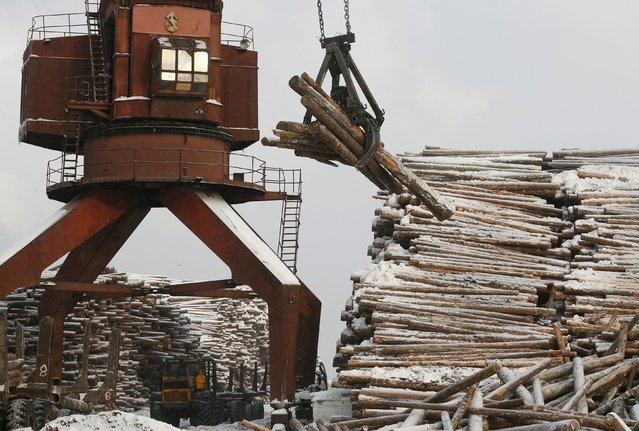
A crane loads logs at the Novoyeniseisk wood processing plant, with the air temperature at about minus 20 degrees Celsius (minus 4 degrees Fahrenheit), in the town of Lesosibirsk in Krasnoyarsk Region, Siberia, Russia, February 16, 2016. The plant exports timber to Europe, Northern Africa and Asia. The Taiga, also known as the boreal forest, on the coast of the Angara River and Yenisei River is one of the main areas for the industrial cutting of wood thanks to the high quality of the Angara pine. (Photo by Ilya Naymushin/Reuters)

A crane loads logs at the Novoyeniseisk wood processing plant, with the air temperature at about minus 20 degrees Celsius (minus 4 degrees Fahrenheit), in the town of Lesosibirsk in Krasnoyarsk Region, Siberia, Russia, February 16, 2016. The plant exports timber to Europe, Northern Africa and Asia. The Taiga, also known as the boreal forest, on the coast of the Angara River and Yenisei River is one of the main areas for the industrial cutting of wood thanks to the high quality of the Angara pine. Open air work continues all year around regardless to temperatures which can drop to minus 52 degrees Celsius (minus 61.6 degrees Fahrenheit), according to employees. (Photo by Ilya Naymushin/Reuters)
Details
18 Feb 2016 13:10:00