Loading...
Done
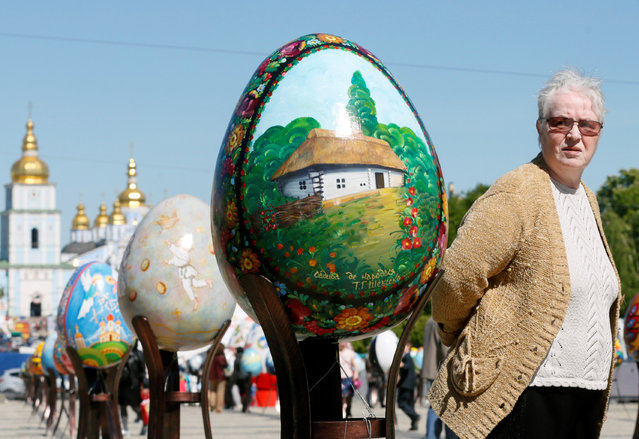
A woman looks at traditional Ukrainian Easter eggs “Pysanka”, installed as part of the upcoming celebrations of Easter, in central Kiev, Ukraine, April 29, 2016. A pysanka is a Ukrainian Easter egg, decorated with traditional Ukrainian folk designs using a wax-resist (batik) method. The word pysanka comes from the verb pysaty, “to write”, as the designs are not painted on, but written with beeswax. Many other eastern European ethnic groups decorate eggs using wax resist for Easter. These include the Belarusians, Bulgarians, Croats, Czechs, Hungarians, Lithuanians, Poles, Romanians, Serbs, Slovaks, Slovenes and Sorbs. (Photo by Valentyn Ogirenko/Reuters)

A woman looks at traditional Ukrainian Easter eggs “Pysanka”, installed as part of the upcoming celebrations of Easter, in central Kiev, Ukraine, April 29, 2016. A pysanka is a Ukrainian Easter egg, decorated with traditional Ukrainian folk designs using a wax-resist (batik) method. The word pysanka comes from the verb pysaty, “to write”, as the designs are not painted on, but written with beeswax. Many other eastern European ethnic groups decorate eggs using wax resist for Easter. These include the Belarusians, Bulgarians, Croats, Czechs, Hungarians, Lithuanians, Poles, Romanians, Serbs, Slovaks, Slovenes and Sorbs. (Photo by Valentyn Ogirenko/Reuters)
Details
30 Apr 2016 09:00:00
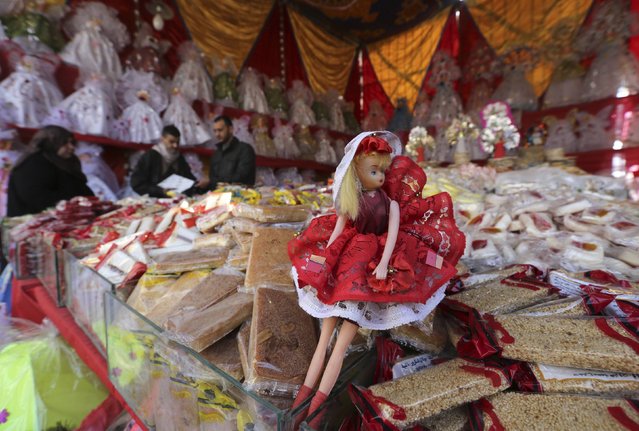
A man sells traditional doll toys and sweets for children to celebrate the birthday of prophet Muhammad, also known as “mawlid al nabi”, which will fall next week, in a makeshift tent in Cairo, December 30, 2014. (Photo by Mohamed Abd El Ghany/Reuters)

A man sells traditional doll toys and sweets for children to celebrate the birthday of prophet Muhammad, also known as “mawlid al nabi”, which will fall next week, in a makeshift tent in Cairo, December 30, 2014. (Photo by Mohamed Abd El Ghany/Reuters)
Details
31 Dec 2014 14:21:00
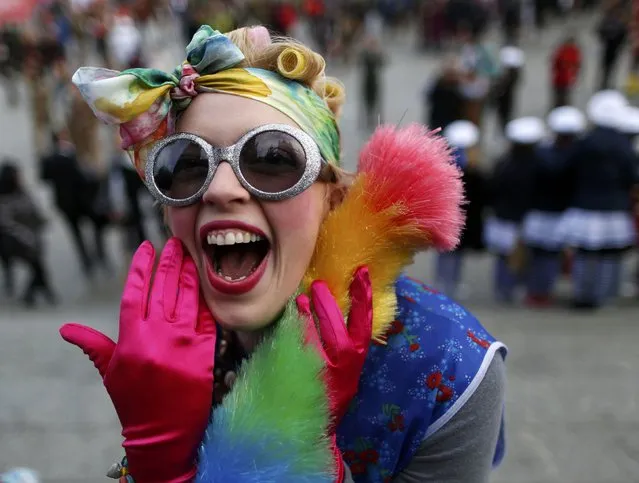
A woman dressed as a cleaning lady laughs during “Weiberfastnacht” (Women's Carnival) in Cologne February 12, 2015. (Photo by Ina Fassbender/Reuters)

A woman dressed as a cleaning lady laughs during “Weiberfastnacht” (Women's Carnival) in Cologne February 12, 2015. Women's Carnival marks the start of a week of street festivals, the highlight of the event being “Rosenmontag” (Rose Monday), the final day of the carnival where mass processions are held. (Photo by Ina Fassbender/Reuters)
Details
13 Feb 2015 13:22:00
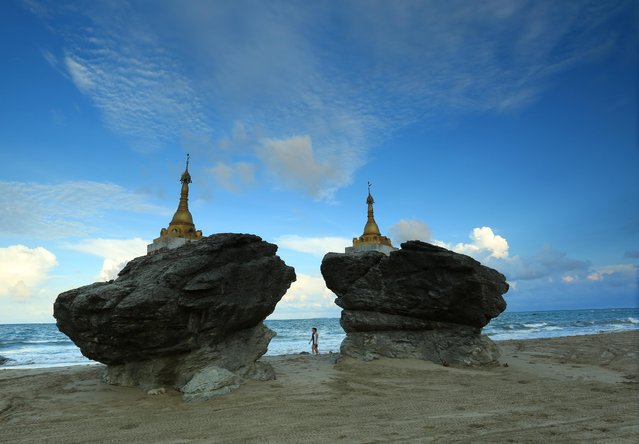
In this May 17, 2015, photo, two men walk past pagodas at Ngwe Saung beach, Pathein township, about 145 miles from Yangon, Myanmar. (Photo by Khin Maung Win/AP Photo)

In this May 17, 2015, photo, two men walk past pagodas at Ngwe Saung beach, Pathein township, about 145 miles from Yangon, Myanmar. (Photo by Khin Maung Win/AP Photo)
Details
22 May 2015 12:10:00
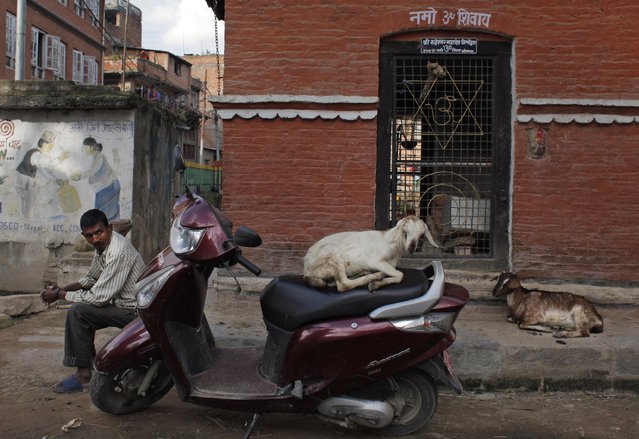
A Nepalese man sits outside a Hindu temple as a goat rests on a parked scooter in Khokana, Lalitpur District, Nepal, Monday, Sept. 26, 2016. Writing on the wall offers prayers to Hindu god Shiva. (Photo by Niranjan Shrestha/AP Photo)

A Nepalese man sits outside a Hindu temple as a goat rests on a parked scooter in Khokana, Lalitpur District, Nepal, Monday, September 26, 2016. Writing on the wall offers prayers to Hindu god Shiva. (Photo by Niranjan Shrestha/AP Photo)
Details
27 Sep 2016 09:27:00
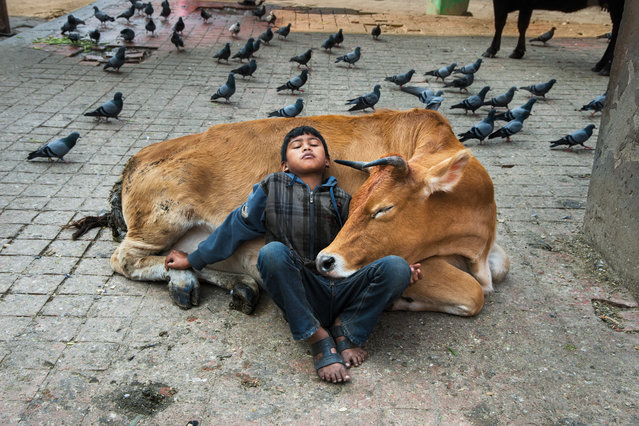
A boy rests against a cow, Kathmandu, Nepal, 2013. “Cows have been designated the national animal in Nepal. They roam freely, and are considered sacred by the 80% of Nepalis who are Hindu”. (Photo by Steve McCurry/The Guardian)

The legendary US photographer’s favourite shots of creatures and how they interact with humans feature in “Animals”, his latest book. Here: A boy rests against a cow, Kathmandu, Nepal, 2013. “Cows have been designated the national animal in Nepal. They roam freely, and are considered sacred by the 80% of Nepalis who are Hindu”. (Photo by Steve McCurry/The Guardian)
Details
07 Nov 2019 00:01:00
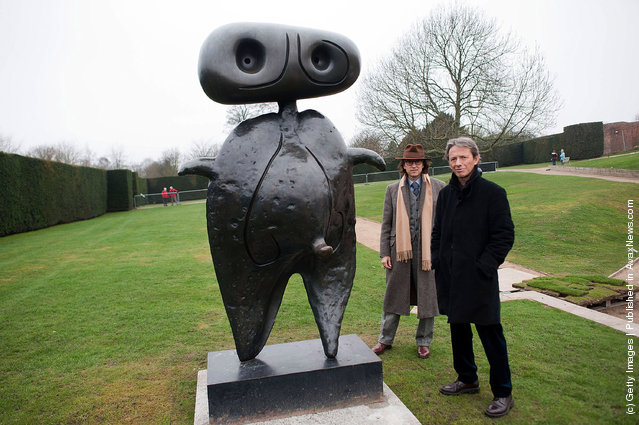
Joan Miro's, grandsons, Emilio Fernandez Miro and Joan Punyet Miro pose beside Personnage (1970) in the Yorkshire Sculpture park

“Joan Miro i Ferra (April 20, 1893 – December 25, 1983) was a Spanish Catalan painter, sculptor, and ceramicist born in Barcelona. Earning international acclaim, his work has been interpreted as Surrealism, a sandbox for the subconscious mind, a re-creation of the childlike, and a manifestation of Catalan pride. In numerous interviews dating from the 1930s onwards, Miro expressed contempt for conventional painting methods as a way of supporting bourgeois society, and famously declared an “assassination of painting” in favour of upsetting the visual elements of established painting”. – Wikipedia

Photo: Joan Miro's, grandsons, Emilio Fernandez Miro and Joan Punyet Miro pose beside Personnage (1970) in the Yorkshire Sculpture park on March 14, 2012 in Wakefield, England. Yorkshire Sculpture Park stages the first major UK survey of sculpture by Spanish artist Joan Miro. (Photo by Bethany Clarke/Getty Images)
Details
15 Mar 2012 13:47:00
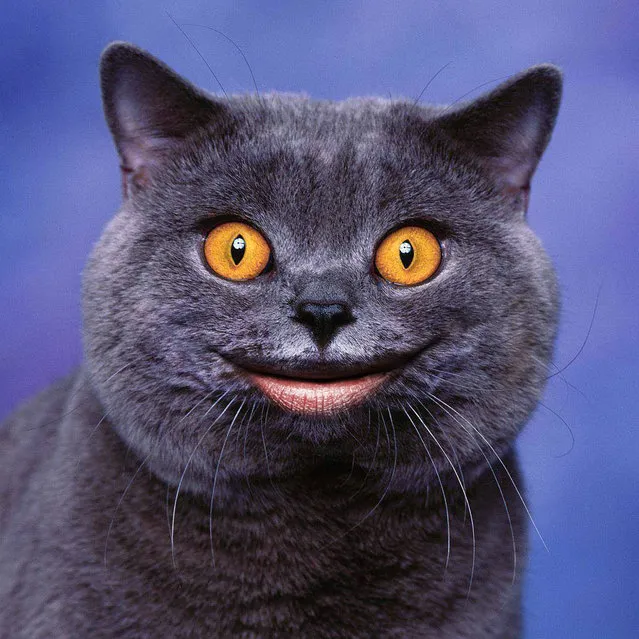
Smiling Cat. (Photo by Sebastian Niedlich)

Smiling Cat. (Photo by Sebastian Niedlich)
Details
09 Aug 2012 11:27:00