Loading...
Done
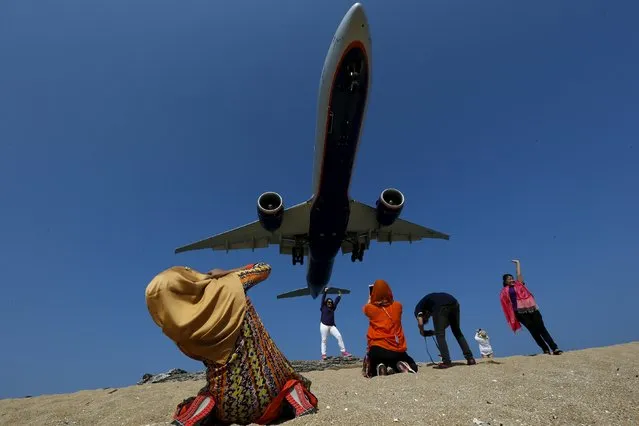
Tourist take pictures at Mai Khao Beach, as a plane approaches the Phuket International Airport in Phuket, Thailand March 17, 2016. With its palm-fringed beaches, Buddhist culture and racy nightlife, Thailand has been the poster child for Asian tourism for decades, attracting a range of visitors from backpackers and adventure-seekers, to families and culture vultures. But dark clouds could be forming even as a record of 32 million tourists are expected this year. (Photo by Athit Perawongmetha/Reuters)

Tourist take pictures at Mai Khao Beach, as a plane approaches the Phuket International Airport in Phuket, Thailand March 17, 2016. With its palm-fringed beaches, Buddhist culture and racy nightlife, Thailand has been the poster child for Asian tourism for decades, attracting a range of visitors from backpackers and adventure-seekers, to families and culture vultures. But dark clouds could be forming even as a record of 32 million tourists are expected this year. (Photo by Athit Perawongmetha/Reuters)
Details
31 Mar 2016 11:01:00
Robot Xian'er is placed in the main building of Longquan Buddhist temple for photographs by the temple's staff, on the outskirts of Beijing, April 20, 2016. (Photo by Kim Kyung-Hoon/Reuters)

Robot Xian'er is placed in the main building of Longquan Buddhist temple for photographs by the temple's staff, on the outskirts of Beijing, April 20, 2016. (Photo by Kim Kyung-Hoon/Reuters)
Details
23 Apr 2016 13:43:00
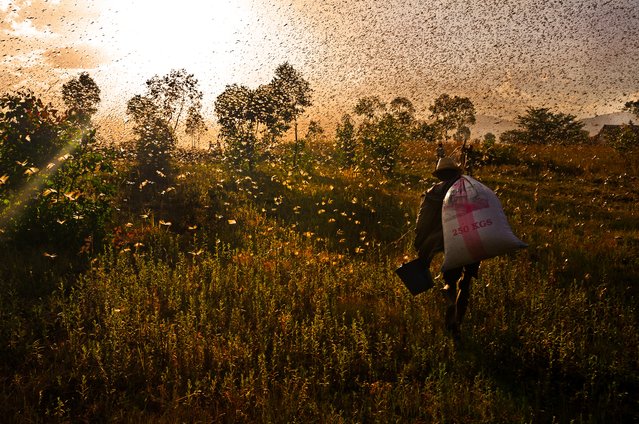
“Locusts & Men”. Oppression, interaction, collaboration. In the life cycle of nature nothing is lost, but the coexistence of different species is sometimes difficult. In Madagascar periodically returns the archaic antagonism between man and the migratory locust, in a circle of life where the two species are looking for space and food for their survival. Photo location: Madagascar, 2013. (Photo and caption by Michele Martinelli/National Geographic Photo Contest)

“Locusts & Men”. Oppression, interaction, collaboration. In the life cycle of nature nothing is lost, but the coexistence of different species is sometimes difficult. In Madagascar periodically returns the archaic antagonism between man and the migratory locust, in a circle of life where the two species are looking for space and food for their survival. At the end of the day a man walks home carrying on his shoulders the heavy bag which contains the locusts captured during the day. The insects provide nutritious meals for the man and his family. Photo location: Madagascar, 2013. (Photo and caption by Michele Martinelli/National Geographic Photo Contest)

ATTENTION! All pictures are presented in high resolution. To see Hi-Res images – just TWICE click on any picture. In other words, click small picture – opens the BIG picture. Click BIG picture – opens VERY BIG picture.
Details
03 Dec 2013 10:59:00
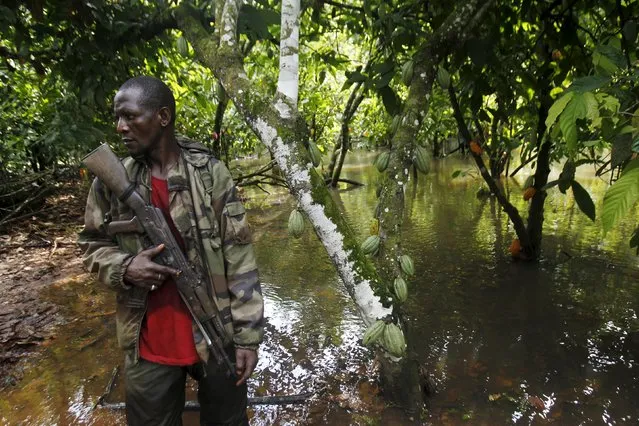
An agent of the OIPR, one of the government agencies charged with managing protected land, stands next to cocoa trees inside Mont Peko National Park in Duekoue department, western Ivory Coast August 18, 2015. (Photo by Luc Gnago/Reuters)

An agent of the OIPR, one of the government agencies charged with managing protected land, stands next to cocoa trees inside Mont Peko National Park in Duekoue department, western Ivory Coast August 18, 2015. (Photo by Luc Gnago/Reuters)
Details
08 Oct 2015 08:06:00
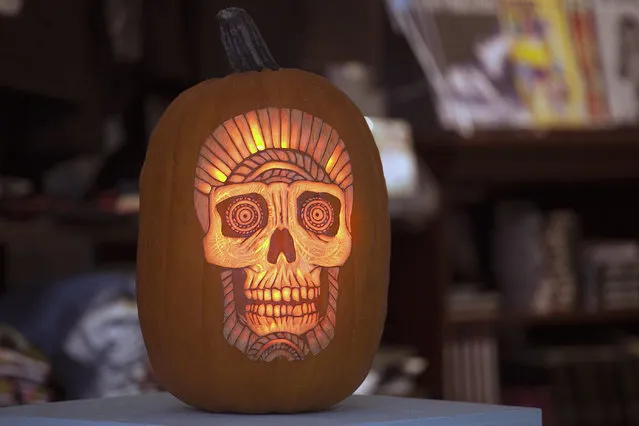
A Tara BONETHROWER pumpkin created by the Maniac Pumpkin Carvers at Cotton Candy Machine in Brooklyn, N.Y. on October 18, 2014. (Photo by Siemond Chan/Yahoo Finance)


In time for Halloween the Maniac Pumpkin Carvers, creative art studio, held the Cotton Candy Machine workshop in Brooklyn, N.Y., demonstrating techniques and tools to create intricate pumpkin art. Maniac Pumpkin Carvers, which focuses on elevating the art of pumpkin carving, were a past winner of the Food Network's Halloween Wars. Their work has been displayed at MOMA, the Whitney Museum and Yankee Stadium. Here: A Tara Bonethrower pumpkin created by the Maniac Pumpkin Carvers at Cotton Candy Machine in Brooklyn, N.Y. on October 18, 2014. (Photo by Siemond Chan/Yahoo Finance)
Details
22 Oct 2014 14:08:00
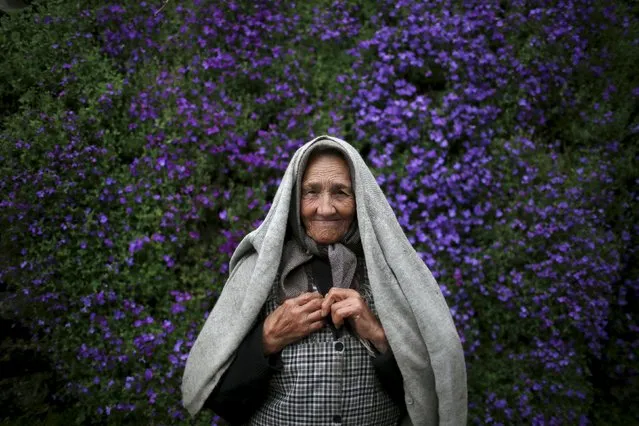
Zulmira Jesus poses for a portrait at a street in Povoa de Agracoes, near Chaves, Portugal April 19, 2016. (Photo by Rafael Marchante/Reuters)

Zulmira Jesus poses for a portrait at a street in Povoa de Agracoes, near Chaves, Portugal April 19, 2016. In the villages of Agracoes and Povoa de Agracoe, the steady drip-drip of emigration has brought down population numbers from more than 50 residents to fewer than a dozen each. These remaining villagers share the same glum acceptance that, after they have gone, their villages will die out too. It is the same desolate picture in scores of other backwater settlements in Portugal's interior, north to south. (Photo by Rafael Marchante/Reuters)
Details
29 Apr 2016 12:05:00
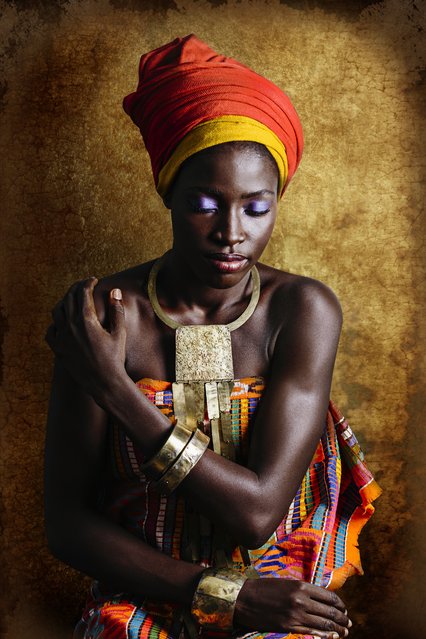
Ebrié Akan. Another series meanwhile goes behind the scenes of an Ivorian mannequin manufacturer, to highlight the construction of African beauty ideals. (Photo by Joana Choumali/The Guardian)

African women in their grandmothers' clothes: Joana Choumali’s portraits show modern African women swapping jeans for kente cloth – and diving into the dazzling cultural heritage of their families. (Photo by Joana Choumali/The Guardian)
Details
04 May 2016 11:43:00
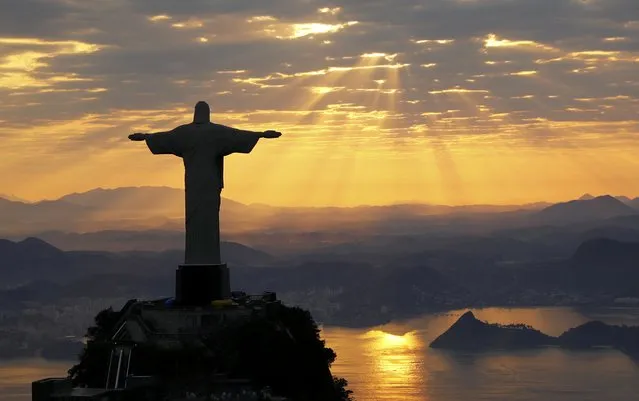
Jesus Christ The Redeemer is seen during sunrise in Rio de Janeiro, Brazil August 2, 2016. (Photo by Wolfgang Rattay/Reuters)

Jesus Christ The Redeemer is seen during sunrise in Rio de Janeiro, Brazil August 2, 2016. Christ the Redeemer is an Art Deco statue of Jesus Christ in Rio de Janeiro, Brazil, created by Polish-French sculptor Paul Landowski and built by the Brazilian engineer Heitor da Silva Costa, in collaboration with the French engineer Albert Caquot. The face was created by the Romanian artist Gheorghe Leonida1. (Photo by Kai Pfaffenbach/Reuters)
Details
03 Aug 2016 11:33:00