Loading...
Done
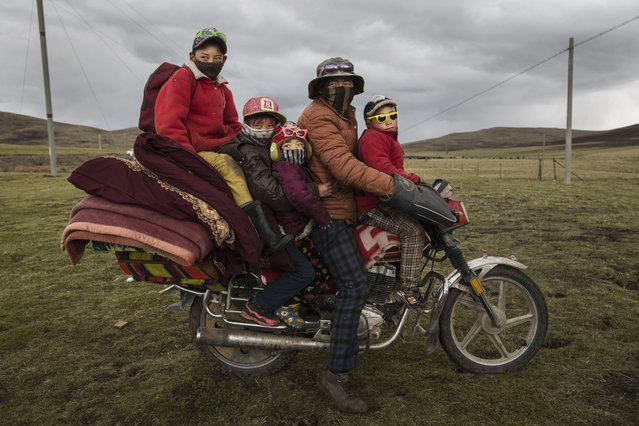
A Tibetan nomad family crowds on a motorcycle at a camp for cordycep pickers on May 21, 2016 near Sershul on the Tibetan Plateau in the Garze Tibetan Autonomous Prefecture of Sichuan province. (Photo by Kevin Frayer/Getty Images)

A Tibetan nomad family crowds on a motorcycle at a camp for cordycep pickers on May 21, 2016 near Sershul on the Tibetan Plateau in the Garze Tibetan Autonomous Prefecture of Sichuan province. (Photo by Kevin Frayer/Getty Images)
Details
05 Jun 2016 13:03:00
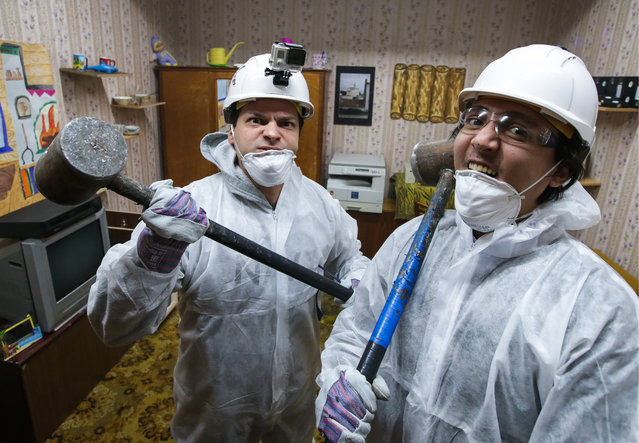
People in hard hats in a rage room in Moscow, Russia on January 27, 2016. The Debosh stress relief service gives its customers an opportunity to smash the rage room up with sledgehammers and bats to relieve stress and tension. (Photo by Artyom Geodakyan/TASS/Barcroft Media)

People in hard hats in a rage room in Moscow, Russia on January 27, 2016. The Debosh stress relief service gives its customers an opportunity to smash the rage room up with sledgehammers and bats to relieve stress and tension. (Photo by Artyom Geodakyan/TASS/Barcroft Media)
Details
05 Feb 2016 11:10:00
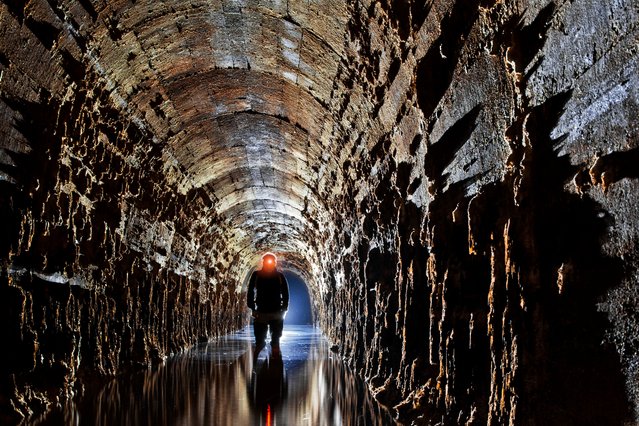
Regenwurmlager, Poland. The Regenwurmlager is an extensive underground fortification area constructed by Germany in 1920s-1940s, now in western Poland, near the city of Międzyrzecz. (Photo by Anna Arinova/Caters News)

Stunning silhouettes under European cities reveal the size and splendor of the continent’s urban foundations. Photographer and content-manager Anna Arinova, 28, from Moscow, captured the awe-inspiring labyrinths in Russia and Germany. Here: Regenwurmlager, Poland. The Regenwurmlager is an extensive underground fortification area constructed by Germany in 1920s-1940s, now in western Poland, near the city of Międzyrzecz. (Photo by Anna Arinova/Caters News)
Details
29 Dec 2016 07:53:00
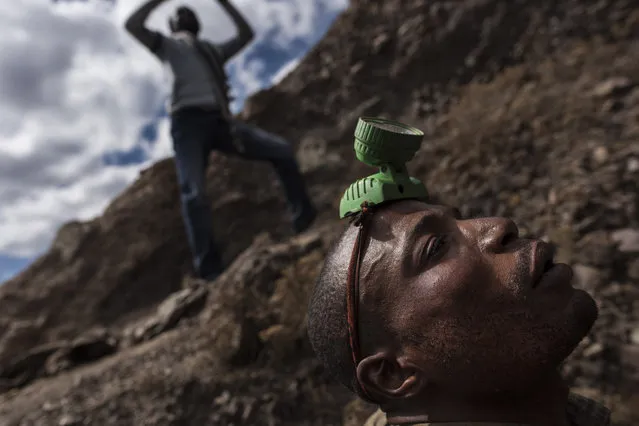
A “creuseur”, or digger, a plastic lantern on his head, readies to enter a copper and cobalt mine in Kawama, Democratic Republic of Congo on June 8, 2016. Cobalt is used in the batteries for electric cars and mobile phones. Working conditions are dangerous, often with no safety equipment or structural support for the tunnels. The diggers say they are paid on average US$2-3/day. (Photo by Michael Robinson Chavez/The Washington Post)

A “creuseur”, or digger, a plastic lantern on his head, readies to enter a copper and cobalt mine in Kawama, Democratic Republic of Congo on June 8, 2016. Cobalt is used in the batteries for electric cars and mobile phones. Working conditions are dangerous, often with no safety equipment or structural support for the tunnels. The diggers say they are paid on average US$2-3/day. (Photo by Michael Robinson Chavez/The Washington Post)
Details
30 Dec 2016 10:29:00
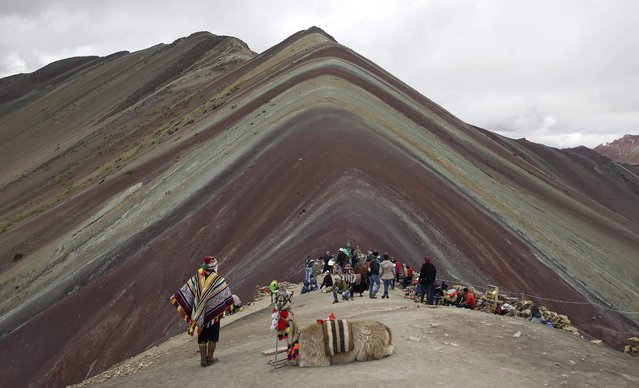
In this March 2, 2018 photo, an Andean man rests with his llama while tourists take in the natural wonder of Rainbow Mountain in Pitumarca, Peru. Tourists gasp for breath as they climb for two hours to the 16,404-foot (5,000-meter) peak in the Peruvian Andes, but stunned by the magical beauty that unfurls before them. (Photo by Martin Mejia/AP Photo)

In this March 2, 2018 photo, an Andean man rests with his llama while tourists take in the natural wonder of Rainbow Mountain in Pitumarca, Peru. Tourists gasp for breath as they climb for two hours to the 16,404-foot (5,000-meter) peak in the Peruvian Andes, but stunned by the magical beauty that unfurls before them. (Photo by Martin Mejia/AP Photo)
Details
07 May 2018 00:01:00
Sgt. William Olas Bee, a U.S. Marine from the 24th Marine Expeditionary Unit, has a close call after Taliban fighters opened fire near Garmsir in Helmand Province of Afghanistan, May 18, 2008. (Photo by Goran Tomasevic/Reuters)

Sgt. William Olas Bee, a U.S. Marine from the 24th Marine Expeditionary Unit, has a close call after Taliban fighters opened fire near Garmsir in Helmand Province of Afghanistan, May 18, 2008. (Photo by Goran Tomasevic/Reuters)
Details
24 Sep 2014 12:07:00
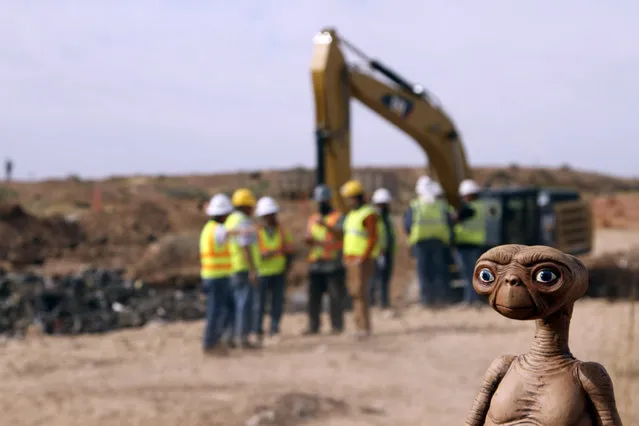
An E.T. doll is seen while construction workers prepare to dig into a landfill in Alamogordo, N.M., Saturday, April 26, 2014. Producers of a documentary are digging in the landfill in search of millions of cartridges of the Atari “E.T. The Extra-Terrestrial” game that has been called the worst game in the history of videogaming. A New York Times article from 1983 reported that Atari cartridges of “E.T. The Extraterrestrial” were dumped in the landfill in Alamogordo. (Photo by Juan Carlos Llorca/AP Photo)

An E.T. doll is seen while construction workers prepare to dig into a landfill in Alamogordo, N.M., Saturday, April 26, 2014. Producers of a documentary are digging in the landfill in search of millions of cartridges of the Atari “E.T. The Extra-Terrestrial” game that has been called the worst game in the history of videogaming. A New York Times article from 1983 reported that Atari cartridges of “E.T. The Extraterrestrial” were dumped in the landfill in Alamogordo. (Photo by Juan Carlos Llorca/AP Photo)
Details
28 Apr 2014 12:45:00
Aerial view of tourists cooling off at a water park in summer on June 27, 2023 in Zhengzhou, Henan Province of China. Zhengzhou Meteorological Observatory on June 27 issued an orange alert for high temperatures. (Photo by VCG/VCG via Getty Images)

Aerial view of tourists cooling off at a water park in summer on June 27, 2023 in Zhengzhou, Henan Province of China. Zhengzhou Meteorological Observatory on June 27 issued an orange alert for high temperatures. (Photo by VCG/VCG via Getty Images)
Details
30 Jul 2023 03:54:00