Christmas baubles shaped as Santa Clauses wearing protective masks are pictured amid the coronavirus disease (COVID-19) pandemic in Eichenau, Germany, November 26, 2021. (Photo by Michaela Rehle/Reuters)
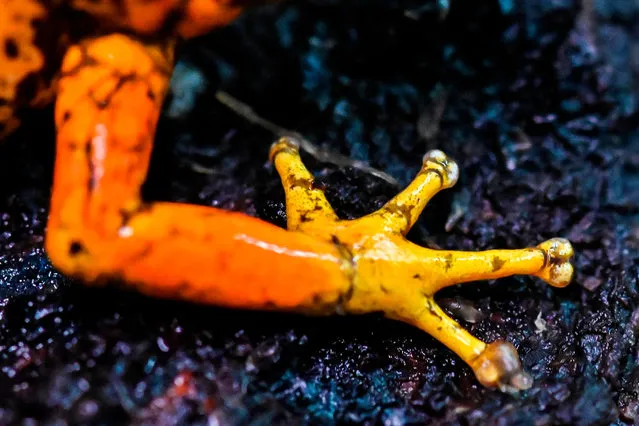
A leg of a “diablito” frog (Oophaga sylvatica) is photographed in a laboratory at a laboratory in the zoo of Cali, Colombia, on July 19, 2019. Colombia is the second country with the largest number of amphibians in the world after Brazil. More than 40% of amphibian species worldwide are in danger of extinction. (Photo by Luis Robayo/AFP Photo)
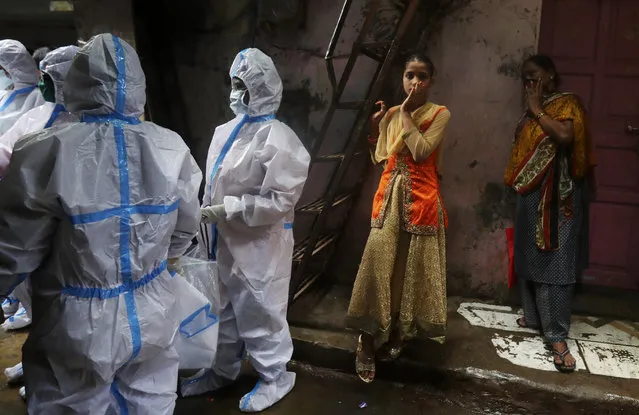
Health workers screen residents for COVID-19 symptoms at Dharavi, one of Asia's biggest slums, in Mumbai, India, Monday, August 3, 2020. India is the third hardest-hit country by the pandemic in the world after the United States and Brazil. (Photo by Rafiq Maqbool/AP Photo)
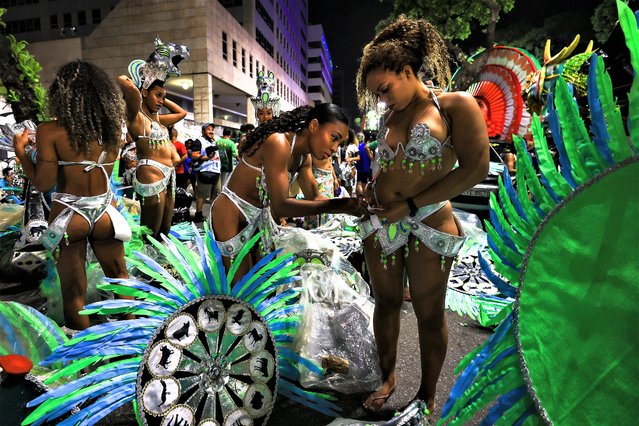
Members of Imperio Serrano samba school get ready prior to their entrance during 2023 Carnival parades at Marquês de Sapucaí Sambodrome on February 19, 2023 in Rio de Janeiro, Brazil. (Photo by Buda Mendes/Getty Images)
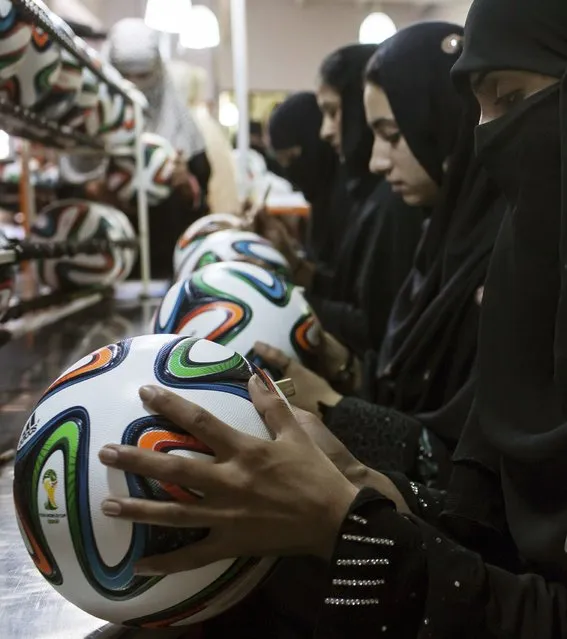
Employees conduct a final check to fix any cavities in the seams of balls inside the soccer ball factory that produces official match balls for the 2014 World Cup in Brazil, in Sialkot, Punjab province May 16, 2014. It was when he felt the roar of the crowd at the 2006 World Cup in Germany that Pakistani factory owner Khawaja Akhtar first dreamt up a goal of his own: to manufacture the ball for the biggest soccer tournament on the planet. Last year he finally got his chance – but only 33 days to make it happen. (Photo by Sara Farid/Reuters)
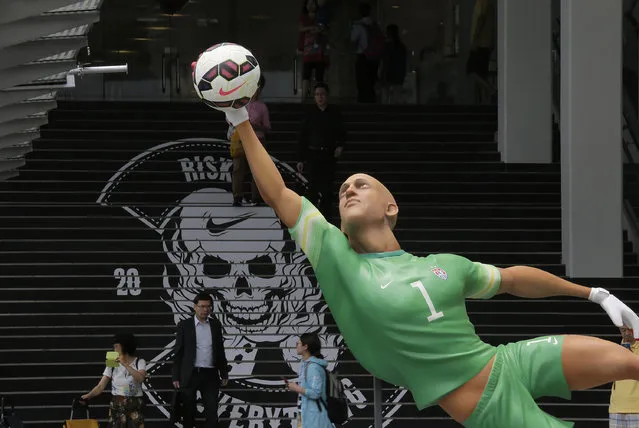
A giant size figure of the United States' goalkeeper Tim Howard is displayed outside a shopping mall in Hong Kong, Thursday, June 12, 2014, to promote the upcoming 2014 World Cup in Brazil. A total of seven 3.5 meters to 4 meters (11 feet 6 inch to 13 feet one inch) tall figures of famous players attract many soccer fans. (Photo by Vincent Yu/AP Photo)
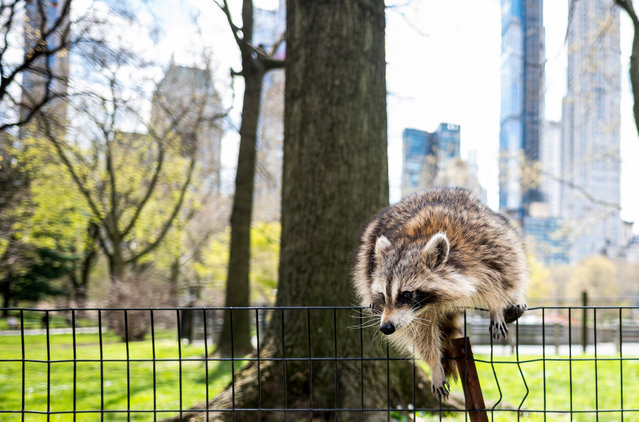
A racoon jumps over a fence in almost deserted Central Park in Manhattan on April 16, 2020 in New York City. Gone are the softball games, horse-drawn carriages and hordes of tourists. In their place, pronounced birdsong, solitary walks and renewed appreciation for Central Park's beauty during New York's coronavirus lockdown. The 843-acre (341-hectare) park – arguably the world's most famous urban green space – normally bustles with human activity as winter turns to spring, but this year due to Covid-19 it's the wildlife that is coming out to play. (Photo by Johannes Eisele/AFP Photo)