Loading...
Done
A Belgian shrimp fisherman rides a carthorse to haul a net out in the sea to catch shrimps during low tide at the coastal town of Oostduinkerke, Belgium July 3, 2015. (Photo by Yves Herman/Reuters)

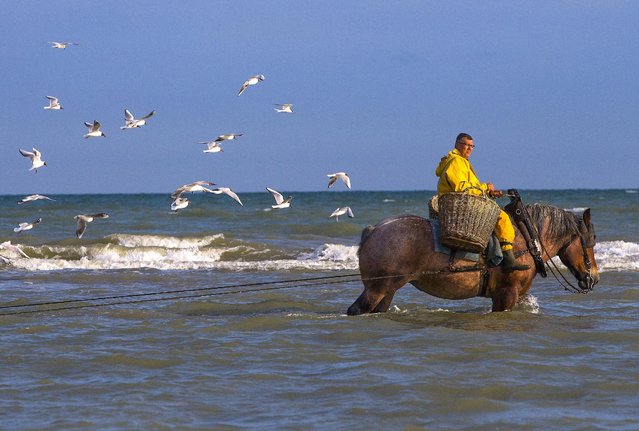
A Belgian shrimp fisherman rides a carthorse to haul a net out in the sea to catch shrimps during low tide at the coastal town of Oostduinkerke, Belgium July 3, 2015. At the end of each fishing session, the fishermen and their mounts leave the water to empty the net's contents into two wicker baskets fixed on each side of the horse. This traditional method of catching shrimps along the North Sea coast, which dates back to some 500 years, attracts tourists every summer. In 2013, Unesco recognized shrimp fishing on horseback as an intangible cultural heritage. (Photo by Yves Herman/Reuters)
Details
04 Jul 2015 11:29:00
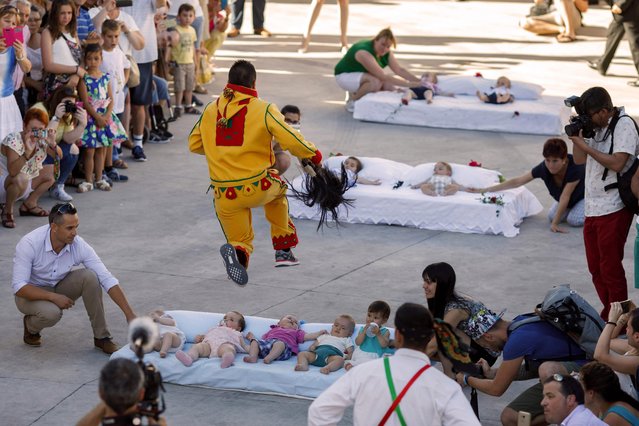
A man dressed up as the devil jumps over babies lying on a mattress in the street during “El Colacho”, the “baby jumping festival” in the village of Castrillo de Murcia, near Burgos on June 18, 2017. Baby jumping (El Colacho) is a traditional Spanish practice dating back to 1620 that takes place annually to celebrate the Catholic feast of Corpus Christi. During the act – known as El Salto del Colacho (the devil's jump) or simply El Colacho – men dressed as the Devil jump over babies born in the last twelve months of the year who lie on mattresses in the street. (Photo by Cesar Manso/AFP Photo)

A man dressed up as the devil jumps over babies lying on a mattress in the street during “El Colacho”, the “baby jumping festival” in the village of Castrillo de Murcia, near Burgos on June 18, 2017. Baby jumping (El Colacho) is a traditional Spanish practice dating back to 1620 that takes place annually to celebrate the Catholic feast of Corpus Christi. During the act – known as El Salto del Colacho (the devil's jump) or simply El Colacho – men dressed as the Devil jump over babies born in the last twelve months of the year who lie on mattresses in the street. (Photo by Cesar Manso/AFP Photo)
Details
20 Jun 2017 07:29:00
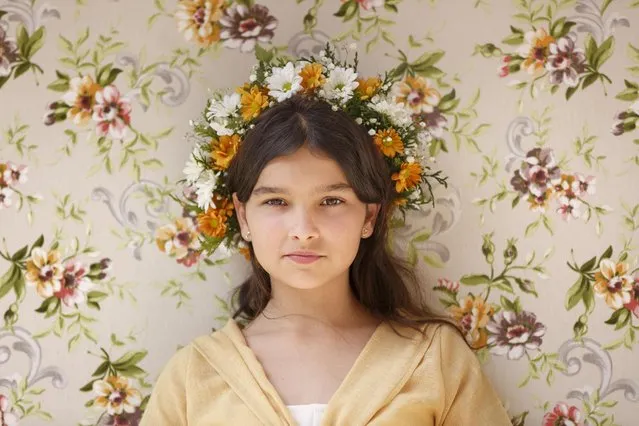
A “Maya” girl sits in an altar during the traditional celebration of “Las Mayas” on the streets in Madrid, Spain Sunday, May 10, 2015. The festivity of the Maya comes from pagan rites and dates from the medieval age, appearing in ancient documents. It takes place every year in the beginning of May and celebrates the beginning of the spring. (Photo by Daniel Ochoa de Olza/AP Photo)

A “Maya” girl sits in an altar during the traditional celebration of “Las Mayas” on the streets in Madrid, Spain Sunday, May 10, 2015. The festivity of the Maya comes from pagan rites and dates from the medieval age, appearing in ancient documents. It takes place every year in the beginning of May and celebrates the beginning of the spring. Girls between 7 and 11 years old are chosen as “Maya” and should sit still, serious and quiet for a couple of hours in altars on the street decorated with flowers and plants and afterwards they walk to the church with their family where they attend a ceremony. (Photo by Daniel Ochoa de Olza/AP Photo)
Details
14 May 2015 11:12:00
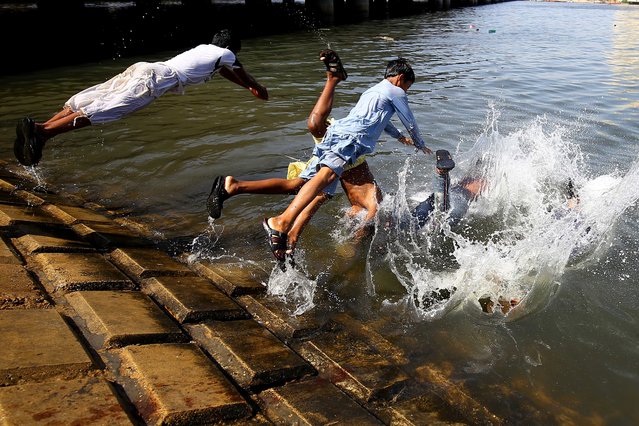
Children play in water to beat the heat during the Muslim holy month of Ramadan amid lockdown of the Sindh province due to the ongoing coronavirus COVID-19 disease pandemic in Karachi, Pakistan, 28 April 2020. Muslims around the world celebrate the holy month of Ramadan, by praying during the night time and abstaining from eating, drinking, and sexual acts during the period between sunrise and sunset. Ramadan is the ninth month in the Islamic calendar and it is believed that the revelation of the first verse in Koran was during its last 10 nights. (Photo by Shahzaib Akber/EPA/EFE)

Children play in water to beat the heat during the Muslim holy month of Ramadan amid lockdown of the Sindh province due to the ongoing coronavirus COVID-19 disease pandemic in Karachi, Pakistan, 28 April 2020. Muslims around the world celebrate the holy month of Ramadan, by praying during the night time and abstaining from eating, drinking, and sexual acts during the period between sunrise and sunset. Ramadan is the ninth month in the Islamic calendar and it is believed that the revelation of the first verse in Koran was during its last 10 nights. (Photo by Shahzaib Akber/EPA/EFE)
Details
20 May 2020 00:05:00


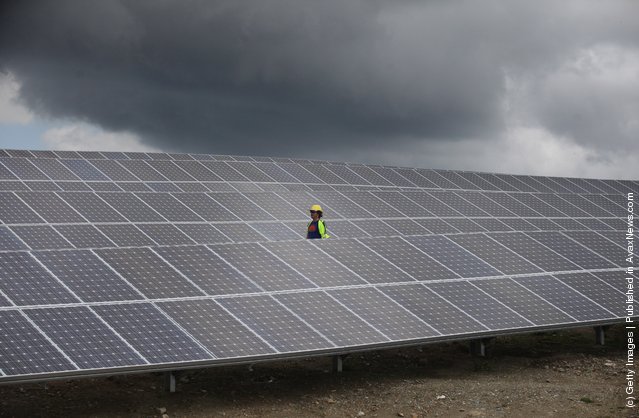
Jason Arnold, project manager from solarcentury walks between lines of solar panels erected at Weighbridge, Wheal Jane, Baldhu on July 7, 2011 near Truro, England. A ceremony was held today to mark the connection of the 1.4kw solar farm, which on a 6.2 acre plot is the first in the South West and biggest in the UK to date, using 5,680 panels. (Photo by Matt Cardy/Getty Images)
Details
08 Jul 2011 10:01:00
Muslims offer prayers during Jumat-ul-Vida or the last Friday of the holy fasting month of Ramadan in Allahabad, India, July 1, 2016. (Photo by Jitendra Prakash/Reuters)

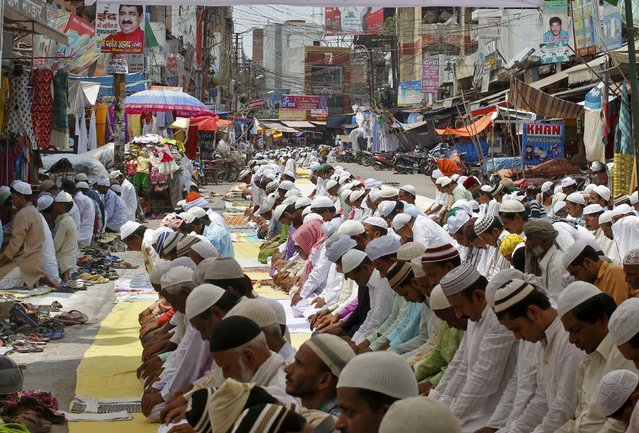
Muslims offer prayers during Jumat-ul-Vida or the last Friday of the holy fasting month of Ramadan in Allahabad, India, July 1, 2016. Muslims throughout the world are marking the month of Ramadan, the holiest month on the Islamic calendar, by fasting from dawn till dusk. (Photo by Jitendra Prakash/Reuters)
Details
03 Jul 2016 10:29:00
A Buddhist monk salvages a statue of a Buddhist deity from a monastery around the famous Swayambhunath stupa after it was damaged by Saturday's earthquake in  Kathmandu, Nepal, Thursday, April 30, 2015. In mere seconds, Saturday's earthquake devastated a swathe of Nepal. Three of the seven World Heritage sites in the Kathmandu Valley have been severely damaged, including Durbar Square with pagodas and temples dating from the 15th to 18th centuries, according to UNESCO, the United Nations cultural agency. (Photo by Niranjan Shrestha/AP Photo)

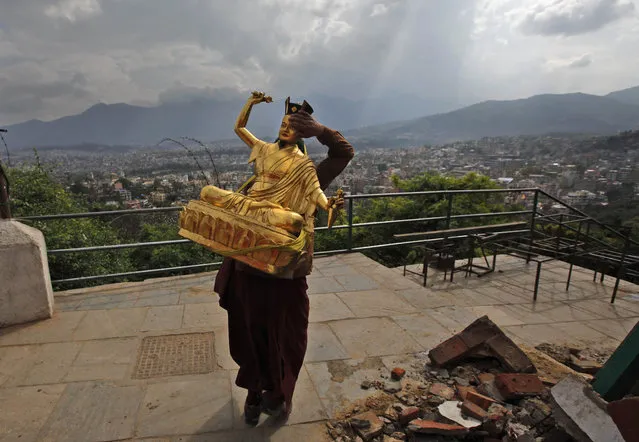
A Buddhist monk salvages a statue of a Buddhist deity from a monastery around the famous Swayambhunath stupa after it was damaged by Saturday's earthquake in Kathmandu, Nepal, Thursday, April 30, 2015. In mere seconds, Saturday's earthquake devastated a swathe of Nepal. Three of the seven World Heritage sites in the Kathmandu Valley have been severely damaged, including Durbar Square with pagodas and temples dating from the 15th to 18th centuries, according to UNESCO, the United Nations cultural agency. (Photo by Niranjan Shrestha/AP Photo)
Details
02 May 2015 14:35:00
Danila Shmelev, an artist from Moscow, Russia, works on a 3-D picture in Dubai, United Arab Emirates, Monday, February 27, 2017. Artists who focus on 3-D pictures have gathered in Dubai for the Dubai Canvas 3-D Art Festival, which runs from March 1 through March 7. (Photo by Jon Gambrell/AP Photo)

Danila Shmelev, an artist from Moscow, Russia, works on a 3-D picture in Dubai, United Arab Emirates, Monday, February 27, 2017. Artists who focus on 3-D pictures have gathered in Dubai for the Dubai Canvas 3-D Art Festival, which runs from March 1 through March 7. (Photo by Jon Gambrell/AP Photo)
Details
28 Feb 2017 11:18:00