Loading...
Done
The shuttle never got its final coat of paint and was left unfinished. (Photo by Ralph Mirebs/Exclusivepix Media)

Ralph Mirebs, an urban explorer and photographer in Russia, has revealed extraordinary photos of Soviet space shuttle prototypes gathering dust in an abandoned hangar. The abandoned hangar is located at the Baikonur Cosmodrome in Kazakhstan, which is still in operation today (with the close of NASA’s shuttle program, Russian Soyuz shuttles are the only way for astronauts to reach the International Space Station). The Buran prototype shuttles found by Mirebs, however, are from an earlier era – they are the last remnants of a space program that began in 1974 and was finally shuttered in 1993. (Photo by Ralph Mirebs/Exclusivepix Media)
Details
12 Mar 2017 00:05:00
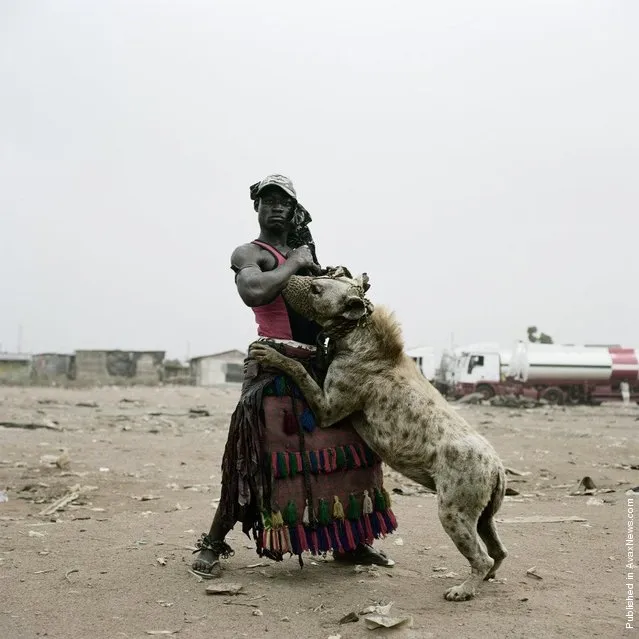
Abdullahi Mohammed with Mainasara, Ogere-Remo, Nigeria 2007

“Pieter Hugo was born 1976 and grew up in Cape Town, South Africa. He is a South African photographer who primarily works in portraiture and whose work engages with both documentary and art traditions with a focus on African communities. His most recognized work is the series called “The Hyena & Other Men” and which was published as a monograph. It has received a great deal of attention. Hugo won first prize in the Portraits section of the World Press Photo 2005 for a portrait of a man with a hyena”. – Wikipedia

Photo: Abdullahi Mohammed with Mainasara, Ogere-Remo, Nigeria 2007. (Photo by Pieter Hugo)
Details
24 Apr 2012 13:03:00
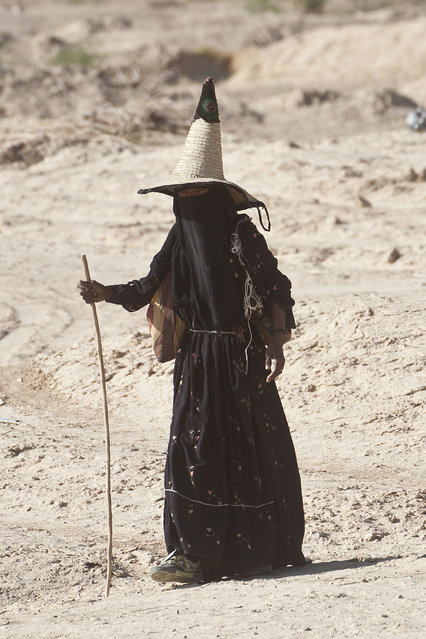
Wadi Hadhramaut, Hadhramaut Governorate, Yemen: women in abayas and traditional straw hats – conical witches hats, known as madhalla. (Photo by Eric Lafforgue)

“Hadhramaut (Hadhramout, Hadramawt or Ḥaḍramūt) is the formerly independent Qu'aiti state and Kathiri sultanate encompassing a historical region of the south Arabian Peninsula along the Gulf of Aden in the Arabian Sea, extending eastwards from Yemen to the borders of the Dhofar region of Oman. The name of the region is currently retained in the smaller Hadhramaut Governorate of the Republic of Yemen. The people of Hadhramaut are called Hadhramis and speak Hadhrami Arabic”. – Wikipedia

Photo: Wadi Hadhramaut, Hadhramaut Governorate, Yemen: A woman in abayas and traditional straw hats - conical witches hats, known as madhalla. (Photo by Eric Lafforgue)
Details
08 Jan 2013 11:45:00
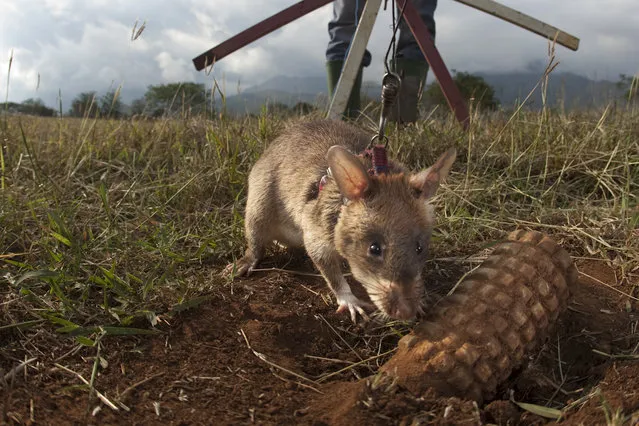
APOPO’s Training Center, situated on Sokoine Univeristy of Agriculture (SUA) in Tanzania, was established in 2000 to accommodate training and testing of mine detection rats in near-to-real conditions. Rats learn to look for mines

“APOPO’s Training Center, situated on Sokoine Univeristy of Agriculture (SUA) in Tanzania, was established in 2000 to accommodate training and testing of mine detection rats in near-to-real conditions”. – APOPO

Photo: MDR (Mine Detection Rat) learn to look for mines. (Photo by APOPO's HeroRATs)


Details
28 Feb 2013 14:08:00
A spinner shark swims just offshore on Midtown Beach in Palm Beach on Tuesday. (Photo by Jeffrey Langlois/Palm Beach Daily News)

Several beaches along South Florida's Atlantic coast line were closed after thousands of sharks were seen migrating in the waters. The sharks were migrating from Boca Raton to Jupiter since the beginning of March, marine biologists told NBC Miami. Photo: A spinner shark swims just offshore on Midtown Beach in Palm Beach on Tuesday. (Photo by Jeffrey Langlois/Palm Beach Daily News)
Details
10 Mar 2013 09:39:00
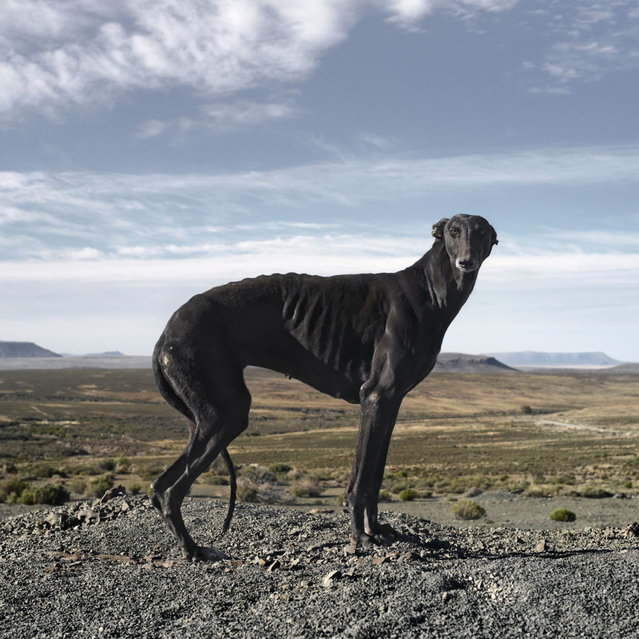
Africanis 18. Murraysburg, Western Cape, May 10, 2010. (Photo by Daniel Naudé)

“The Africanis is a landrace of South African dogs. It is believed to be of ancient origin, directly descended from hounds and pariah dogs of ancient Africa, introduced into the Nile Valley from the Levant. The Swahili name for the breed is umbwa wa ki-shenzi meaning common or mongrel or “traditional dog”. Africanis is also an umbrella name for all the aboriginal dogs in southern Africa”. – Wikipedia. Photo: Africanis 18. Murraysburg, Western Cape, May 10, 2010. (Photo by Daniel Naudé)
Details
19 May 2013 11:51:00


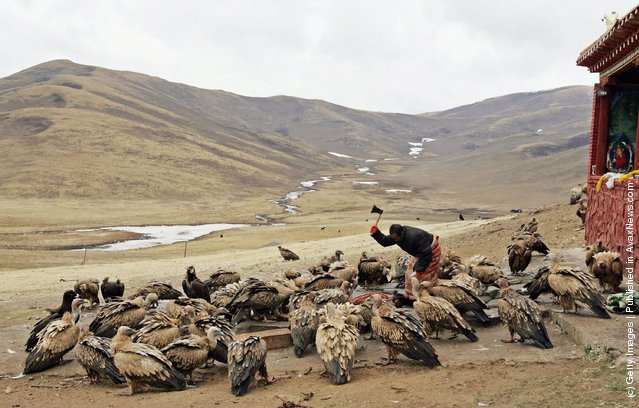
“Sky burial or ritual dissection was once a common funerary practice in Tibet wherein a human corpse is cut in specific locations and placed on a mountaintop, exposing it to the elements or the mahabhuta and animals – especially to birds of prey. The location of the sky burial preparation and place of execution are understood in the Vajrayana traditions as charnel grounds. In Tibet the practice is known as jhator, which literally means, «giving alms to the birds»”. – Wikipedia

Photo: A burial master chops bones of a body to feed vultures during a celestial burial ceremony on April 19, 2006 in Dari County of Guoluo Prefecture, Qinghai Province, northwest China. Celestial burial is a traditional funeral of Tibetan people, which began in the 7th century. (Photo by China Photos/Getty Images)
Details
18 Jun 2011 12:12:00
Hostesses pose for photos with a police officer on the motorized vehicle during the third plenary meeting of the 11th National Committee of the Chinese People's Political Consultative Conference (CPPCC) at The Great Hall Of The People

Hostesses pose for photos with a police officer on the motorized vehicle during the third plenary meeting of the 11th National Committee of the Chinese People's Political Consultative Conference (CPPCC) at The Great Hall Of The People on March 10, 2012 in Beijing, China. (Photo by Feng Li/Getty Images)
Details
11 Mar 2012 09:11:00