Loading...
Done
Restive woman driving. (Photo by Cultura Creative (RF)/Alamy Stock Photo )

Restive woman driving. (Photo by Cultura Creative (RF)/Alamy Stock Photo)
Details
31 May 2017 07:01:00
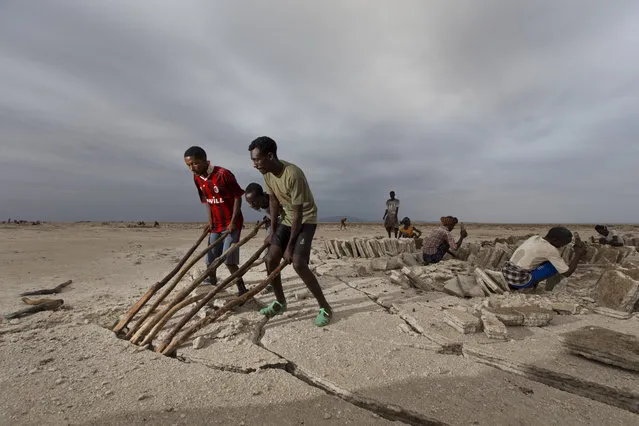
February 8, 2014 – Danakil Desert, Ethiopia: Workers mining salt at the quarry. (Photo by Ziv Koren/Polaris)

Inside the Afar Triangle in Ethiopia’s Danakil desert, camel caravans are used to carry salt. For centuries, the essential mineral has been mined by the Afar people, known for their ability to withstand extremes. The terrain is rugged, travelers are scarce and so are motor vehicles, where the average annual temperature is the highest in the world, and can rise to 122 degrees Fahrenheit, 50 degrees Celsius. (Photo by Ziv Koren/Polaris)

Details
30 Apr 2014 08:17:00
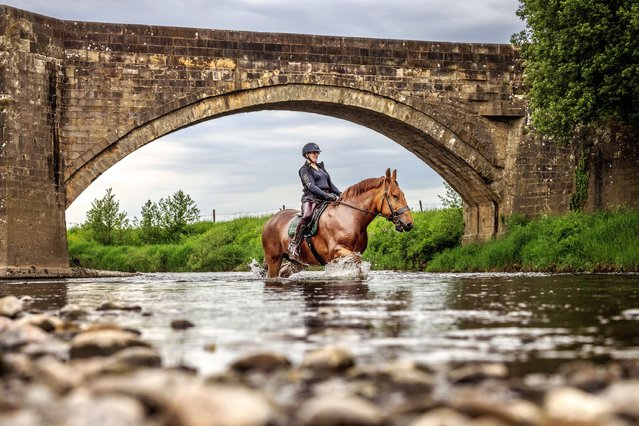
Broomfield Samson, a rare breed Suffolk punch, and his rider, Alison Carroll, cool off in the River Lune at Loyne Bridge near Gressingham in Lancashire, UK on May 21, 2024. (Photo by James Glossop/ The Times & Sunday Times)

Broomfield Samson, a rare breed Suffolk punch, and his rider, Alison Carroll, cool off in the River Lune at Loyne Bridge near Gressingham in Lancashire, UK on May 21, 2024. (Photo by James Glossop/ The Times & Sunday Times)
Details
25 Jun 2025 04:12:00
A picture made available on 13 May 2016 shows A Tiwa girl performing her traditional dance as they celebrated the Wanchuwa festival in Karbi Anglong District of Assam state, India, 11 May 2016. Wanchuwa is one of the most important festivals of the Tiwa tribal community living in the hills as it is related with agriculture which is the mainstay of their economy. Tiwas pray for a bountiful harvest during this festival and to protect their crops from pest and other natural calamities. (Photo by EPA/Stringer)

A picture made available on 13 May 2016 shows A Tiwa girl performing her traditional dance as they celebrated the Wanchuwa festival in Karbi Anglong District of Assam state, India, 11 May 2016. Wanchuwa is one of the most important festivals of the Tiwa tribal community living in the hills as it is related with agriculture which is the mainstay of their economy. Tiwas pray for a bountiful harvest during this festival and to protect their crops from pest and other natural calamities. Tiwa is a major tribe of Assam state who practice Jhum or shifting cultivation for their living in the hills. (Photo by EPA/Stringer)
Details
14 May 2016 11:45:00
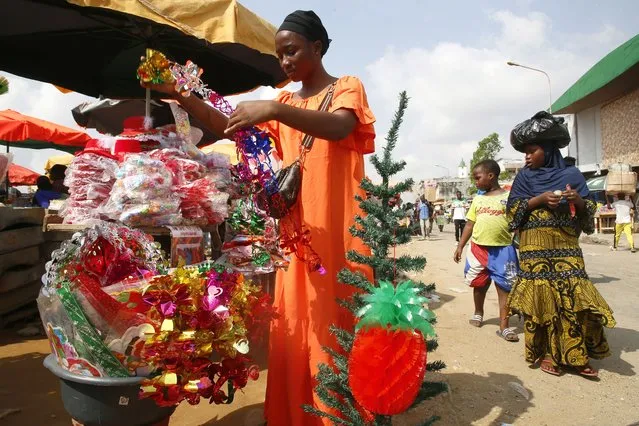
A female vendor sells Christmas and New Year paraphernalia from her stall at a roadside in Abidjan, Ivory Coast, 16 December 2022. A few days before the Christmas holidays and with the celebrations of New Year's Eve and New Year's Day in sight, the shopping for seasonal decoration in the West African city is at its peak. (Photo by Legnan Koula/EPA/EFE)

A female vendor sells Christmas and New Year paraphernalia from her stall at a roadside in Abidjan, Ivory Coast, 16 December 2022. A few days before the Christmas holidays and with the celebrations of New Year's Eve and New Year's Day in sight, the shopping for seasonal decoration in the West African city is at its peak. (Photo by Legnan Koula/EPA/EFE)
Details
27 Dec 2022 22:26:00
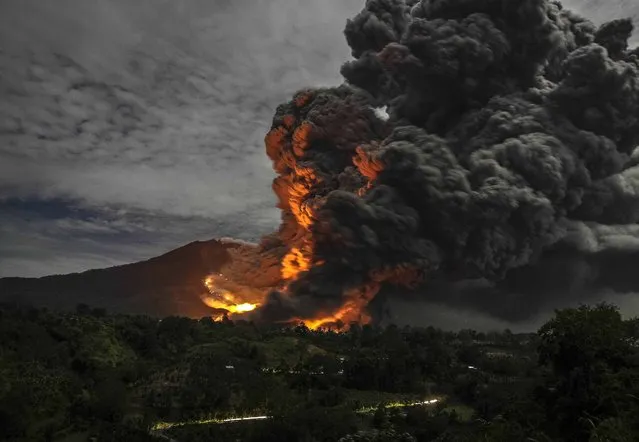
Mount Sinabung volcano erupts, as seen from Tiga Pancur village, Karo Regency in Indonesia's North Sumatra province October 8, 2014. (Photo by Y. T. Haryono/Reuters)

Mount Sinabung volcano erupts, as seen from Tiga Pancur village, Karo Regency in Indonesia's North Sumatra province October 8, 2014. (Photo by Y. T. Haryono/Reuters)
Details
11 Oct 2014 13:23:00
On August 31, 2012, a long filament of solar material that had been hovering in the sun's atmosphere, the corona, erupted out into space at 4:36 p.m. EDT. The coronal mass ejection, or CME, traveled at over 900 miles per second. The CME did not travel directly toward Earth, but did connect with Earth's magnetic environment, or magnetosphere, causing aurora to appear on the night of Monday, September 3. (Photo by NASA/GSFC/SDO)

On August 31, 2012, a long filament of solar material that had been hovering in the sun's atmosphere, the corona, erupted out into space at 4:36 p.m. EDT. The coronal mass ejection, or CME, traveled at over 900 miles per second. The CME did not travel directly toward Earth, but did connect with Earth's magnetic environment, or magnetosphere, causing aurora to appear on the night of Monday, September 3. (Photo by NASA/GSFC/SDO via The Atlantic)
Details
14 Sep 2012 09:01:00
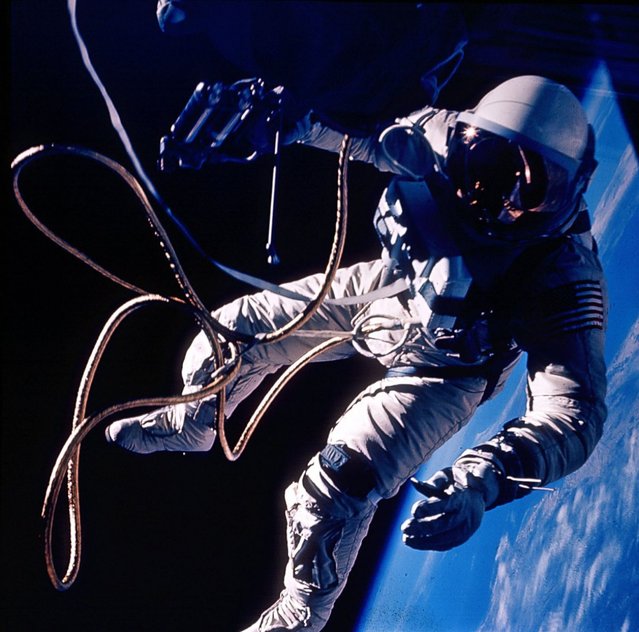
The First U.S. Spacewalk – Gemini 4 Ed White made the United States' first spacewalk on June 3, 1965 during the Gemini 4 mission. The extra-vehicular activity (EVA) started at 19:45 UT (3:45 p.m. EDT) on the third orbit when White opened his hatch and used the hand-held manuevering oxygen-jet gun to push himself out of the capsule. (Photo by NASA)

The First U.S. Spacewalk – Gemini 4 Ed White made the United States' first spacewalk on June 3, 1965 during the Gemini 4 mission. The extra-vehicular activity (EVA) started at 19:45 UT (3:45 p.m. EDT) on the third orbit when White opened his hatch and used the hand-held manuevering oxygen-jet gun to push himself out of the capsule. (Photo by NASA)
Details
11 Apr 2014 08:40:00