Loading...
Done
A young woman wearing no trousers hits the ski slopes at a ski resort in Xuzhou, in east China's Jiangsu province on January 13, 2015 in a promotional effort to equal “No Pants Subway Ride”, which was marked on January 11 this year. (Photo by AFP Photo)

A young woman wearing no trousers hits the ski slopes at a ski resort in Xuzhou, in east China's Jiangsu province on January 13, 2015 in a promotional effort to equal “No Pants Subway Ride”, which was marked on January 11 this year. The promotional “No Pants Subway Ride” stunt on January 11 was held as commuters in some 60 cities around the world braved public transportation in their undies, which has gone global since its first staging by US group Improv Everywhere in New York in 2002. (Photo by AFP Photo)
Details
17 Jan 2015 12:46:00
A pedestrian carries an umbrella as they stroll past an advertisment as a rainstorm moves through Sacramento, Calif., Wednesday, February 13, 2019. Rain is falling widely in Northern California and is expected to spread south. (Photo by Rich Pedroncelli/AP Photo)

A pedestrian carries an umbrella as they stroll past an advertisment as a rainstorm moves through Sacramento, Calif., Wednesday, February 13, 2019. Rain is falling widely in Northern California and is expected to spread south. (Photo by Rich Pedroncelli/AP Photo)
Details
20 Feb 2019 00:05:00
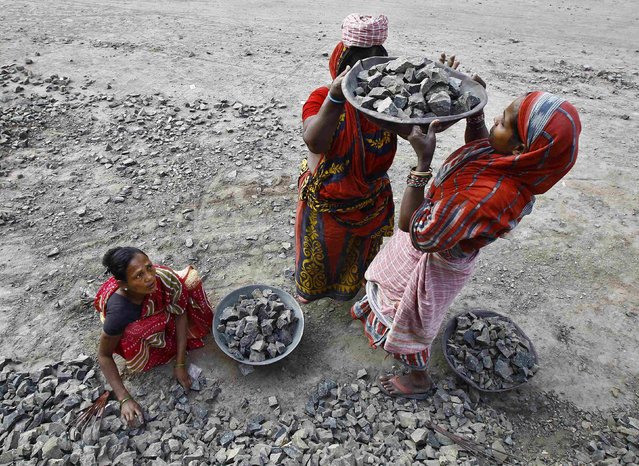
Women labourers work at the construction site of a road in Kolkata January 8, 2015. Across towns and cities in India, it is not uncommon to see women cleaning building sites, carrying bricks and or shoveling gravel - helping construct the infrastructure necessary for the country's economic and social development. (Photo by Rupak De Chowdhuri/Reuters)

Women labourers work at the construction site of a road in Kolkata January 8, 2015. Across towns and cities in India, it is not uncommon to see women cleaning building sites, carrying bricks and or shoveling gravel – helping construct the infrastructure necessary for the country's economic and social development. They help build roads, railway tracks, airports, and offices. They lay pipes for clean water supplies, cables for telecommunications, and dig the drains for sewage systems. But although women make up at least 20 percent of India's 40 million construction workers, they are less recognized than male workers with lower pay and often prone to safety hazards and sexual harassment. They are often unaware of their rights or scared to complain, say activists now trying to campaign for better treatment of women in the construction industry. (Photo by Rupak De Chowdhuri/Reuters)
Details
15 Jan 2015 13:47:00
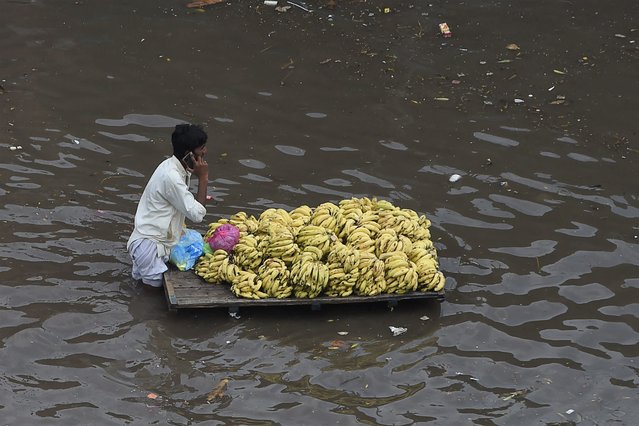
A fruit vendor pushes his cart through a flooded street after a heavy rainfall in Lahore on September 21, 2021. (Photo by Arif Ali/AFP Photo)

A fruit vendor pushes his cart through a flooded street after a heavy rainfall in Lahore on September 21, 2021. (Photo by Arif Ali/AFP Photo)
Details
30 Sep 2021 08:04:00
Piper Hoppe, 10, from Minnetonka, Minnesota, holds a sign at the doorway of River Bluff Dental clinic in protest against the killing of a famous lion in Zimbabwe, in Bloomington, Minnesota July 29, 2015. (Photo by Eric Miller/Reuters)

Piper Hoppe, 10, from Minnetonka, Minnesota, holds a sign at the doorway of River Bluff Dental clinic in protest against the killing of a famous lion in Zimbabwe, in Bloomington, Minnesota July 29, 2015. A Zimbabwean court on Wednesday charged a professional local hunter Theo Bronkhorst with failing to prevent an American from unlawfully killing “Cecil”, the southern African country's best-known lion. The American, Walter James Palmer, a Minnesota dentist who paid $50,000 to kill the lion, has left Zimbabwe. He says he did kill the animal but believed the hunt was legal and that the necessary permits had been issued. (Photo by Eric Miller/Reuters)
Details
30 Jul 2015 12:01:00
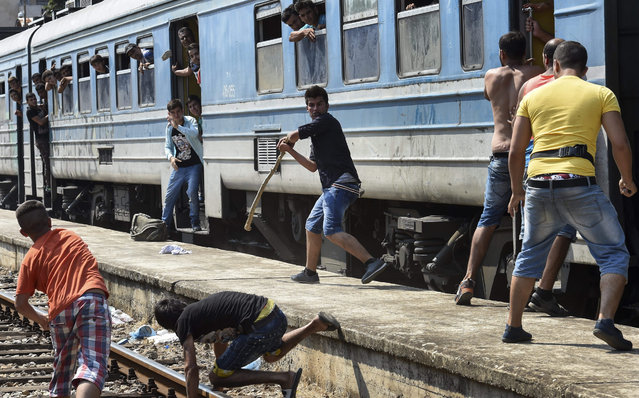
Migrants with a stick, stones and knife fight with each other after a brawl erupted over a place in an overcrowded train heading to the Serbian border at the train station in Gevgelija, The Former Yugoslav Republic of Macedonia, 14 August 2015. (Photo by Georgi Licovski/EPA)

Migrants with a stick, stones and knife fight with each other after a brawl erupted over a place in an overcrowded train heading to the Serbian border at the train station in Gevgelija, The Former Yugoslav Republic of Macedonia, 14 August 2015. The number of migrants passing through Macedonia increases day by day, local sources said. From the beginning of the year to mid-June 2015, nearly 160,000 migrants landed in the southern European countries, mainly Greece and Italy, on their way to wealthier countries in Western and Northern Europe, according to estimates by the International Organization for Migration (IOM). (Photo by Georgi Licovski/EPA)
Details
15 Aug 2015 11:10:00
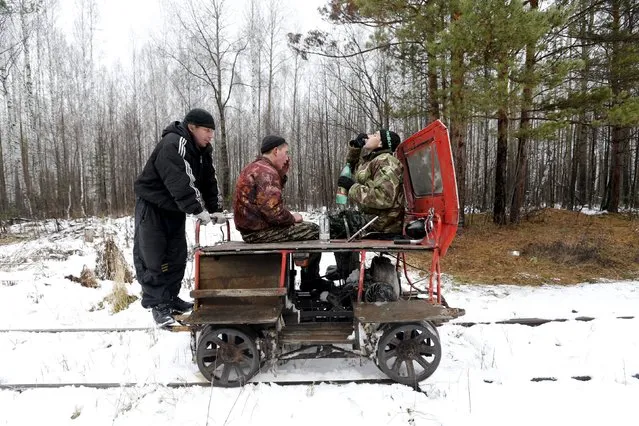
(L-R) A man nicknamed "Barcelona", Alexey Bolotov and Alexey Jakushin drink vodka as they travel by a pioneer motorised railcar on their way to Kalach, Sverdlovsk region, Russia October 18, 2015. The "pioneer," a light auxiliary rail vehicle, is a popular form of transport among people who live along the Alapayevsk railway. (Photo by Maxim Zmeyev/Reuters)

(L-R) A man nicknamed "Barcelona", Alexey Bolotov and Alexey Jakushin drink vodka as they travel by a pioneer motorised railcar on their way to Kalach, Sverdlovsk region, Russia October 18, 2015. The "pioneer," a light auxiliary rail vehicle, is a popular form of transport among people who live along the Alapayevsk railway. In a remote corner of the Urals region at the end of a narrow-gauge railway is Kalach, population about a dozen. Three decades ago 600 people called the village home, but the local forestry industry suffered as the former Soviet Union imploded and people moved away in search of work. In Kalach today there are no telephones, no mobile reception and only a few hours of electricity a day. (Photo by Maxim Zmeyev/Reuters)
Details
15 Nov 2015 08:06:00
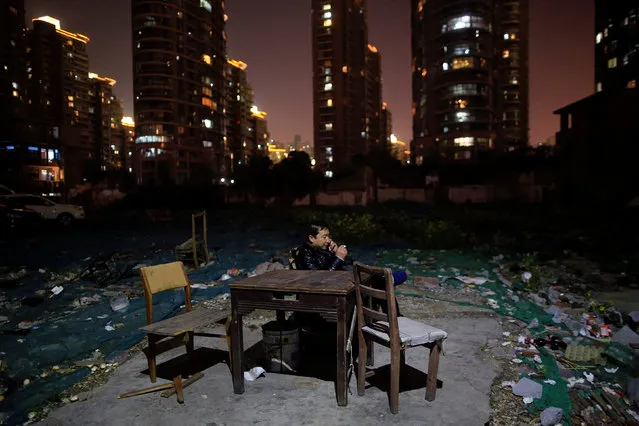
Li Guoqiang talks on his phone outside his house at Guangfuli neighbourhood, in Shanghai, China, April 1, 2016. Li, 38, is a deliveryman who rents a place at Guangfuli. (Photo by Aly Song/Reuters)

Li Guoqiang talks on his phone outside his house at Guangfuli neighbourhood, in Shanghai, China, April 1, 2016. Li, 38, is a deliveryman who rents a place at Guangfuli. In a corner of Shanghai, surrounded by a cement wall, lies one of the world's most valuable fields of debris and garbage. On paper, the Guangfuli neighbourhood is a real estate investor's dream: a plot in the middle of one of the world's most expensive and fast-rising property markets. But the reality is more like a developer's nightmare, thanks to hundreds of people living there who have refused to budge from their ramshackle homes for nearly 16 years as the local authority sought to clear the land for new construction. (Photo by Aly Song/Reuters)
Details
06 May 2016 13:54:00