Loading...
Done
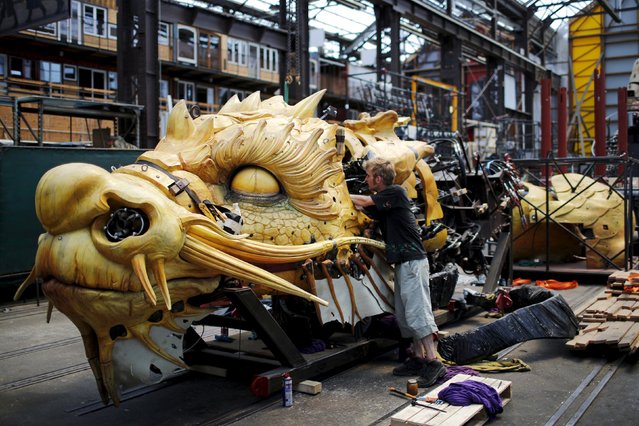
A man works on “Long Ma”, a creation by La Machine production company, during a media visit to “A Journey to Nantes” (Le Voyage a Nantes) art festival in Nantes, France, June 30, 2015. The art festival will run from July 3 to August 30. (Photo by Stephane Mahe/Reuters)

A man works on “Long Ma”, a creation by La Machine production company, during a media visit to “A Journey to Nantes” (Le Voyage a Nantes) art festival in Nantes, France, June 30, 2015. The art festival will run from July 3 to August 30. (Photo by Stephane Mahe/Reuters)
Details
02 Jul 2015 13:37:00
An unidentified runner gestures while being attended by medical services following the first running of the bulls of the San Fermin festival in Pamplona, northern Spain, July 7, 2015. (Photo by Eloy Alonso/Reuters)

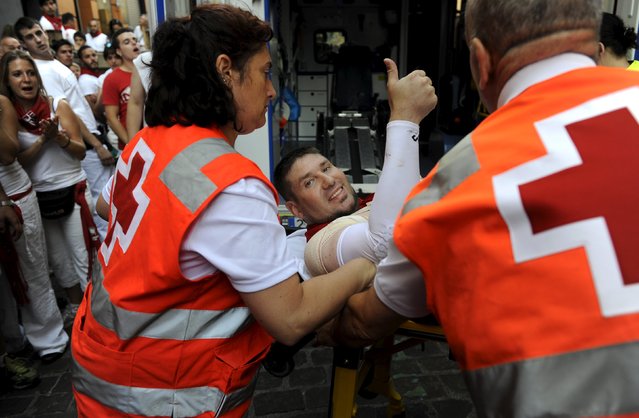
An unidentified runner gestures while being attended by medical services following the first running of the bulls of the San Fermin festival in Pamplona, northern Spain, July 7, 2015. Two runners were gored in the run that lasted 2 minutes and 23 seconds, according to local media. (Photo by Eloy Alonso/Reuters)
Details
08 Jul 2015 11:41:00
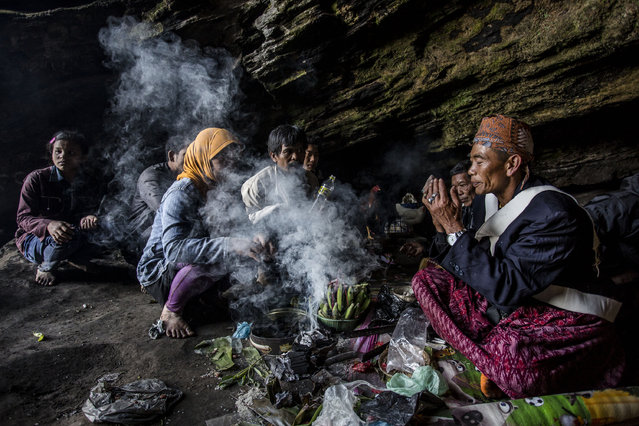
A Tenggerese shaman praying for worshippers at Widodaren cave during the Tenggerese Hindu Yadnya Kasada festival on July 31, 2015 in Probolinggo, East Java, Indonesia. The festival is the main festival of the Tenggerese people and lasts about a month. On the fourteenth day, the Tenggerese make the journey to Mount Bromo to make offerings of rice, fruits, vegetables, flowers and livestock to the mountain gods by throwing them into the volcano's caldera. (Photo by Ulet Ifansasti/Getty Images)

A Tenggerese shaman praying for worshippers at Widodaren cave during the Tenggerese Hindu Yadnya Kasada festival on July 31, 2015 in Probolinggo, East Java, Indonesia. The festival is the main festival of the Tenggerese people and lasts about a month. On the fourteenth day, the Tenggerese make the journey to Mount Bromo to make offerings of rice, fruits, vegetables, flowers and livestock to the mountain gods by throwing them into the volcano's caldera. The origin of the festival lies in the 15th century when a princess named Roro Anteng started the principality of Tengger with her husband Joko Seger, and the childless couple asked the mountain Gods for help in bearing children. The legend says the Gods granted them 24 children but on the provision that the 25th must be tossed into the volcano in sacrifice. The 25th child, Kesuma, was finally sacrificed in this way after initial refusal, and the tradition of throwing sacrifices into the caldera to appease the mountain Gods continues today. (Photo by Ulet Ifansasti/Getty Images)

Details
01 Aug 2015 12:07:00
A man covered in motor oil, poses for a picture next to a girl dress a traditional clothes during a festivities in honor of Santo Domingo de Guzman in Managua, Nicaragua, Saturday, August 1, 2015. (Photo by Esteban Felix/AP Photo)

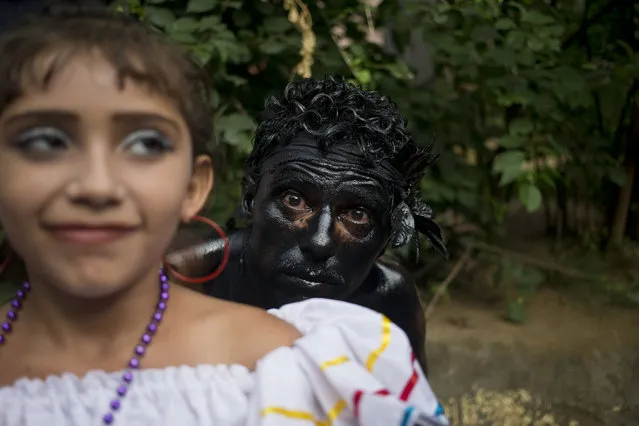
A man covered in motor oil, poses for a picture next to a girl dress a traditional clothes during a festivities in honor of Santo Domingo de Guzman in Managua, Nicaragua, Saturday, August 1, 2015. Some of the faithful coat their bodies in a black motor oil, red paint and wear traditional clothes as a promise for a prayer or miracle they believe was performed or answered by Managua's patron saint, Santo Domingo de Guzman. (Photo by Esteban Felix/AP Photo)
Details
02 Aug 2015 12:41:00
People look at revellers (L) waiting to take part in a LGBT (lesbian, gay, bisexual and transgender) pride parade to mark Gaijatra Festival, also known as the festival of cows, in Kathmandu, Nepal, August 30, 2015. (Photo by Navesh Chitrakar/Reuters)

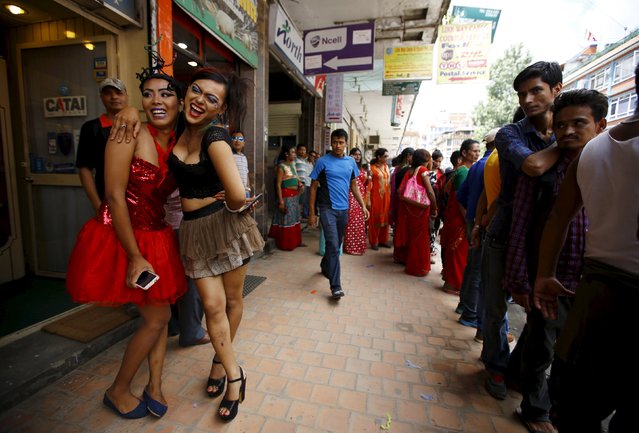
People look at revellers (L) waiting to take part in a LGBT (lesbian, gay, bisexual and transgender) pride parade to mark Gaijatra Festival, also known as the festival of cows, in Kathmandu, Nepal, August 30, 2015. Hundreds of lesbians, gays, bisexuals and transvestites paraded through Nepal's capital Sunday to demand that rights for sexual minorities be included in the country's new constitution that is being finalized. (Photo by Navesh Chitrakar/Reuters)
Details
31 Aug 2015 12:26:00


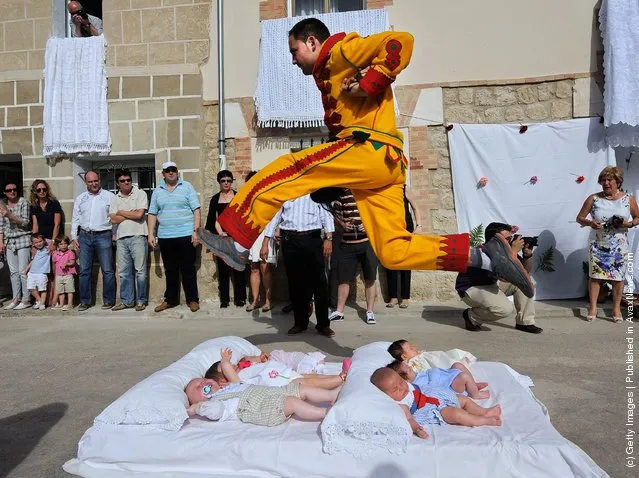
“Baby jumping (El Colacho) is a traditional Spanish practice dating back to 1620 that takes place annually to celebrate the Catholic feast of Corpus Christi in the village of Castrillo de Murcia near Burgos. During the act – known as El Salto del Colacho (the devil's jump) or simply El Colacho – men dressed as the Devil (known as the Colacho) jump over babies born during the previous twelve months of the year who lie on mattresses in the street. ... The festival has been rated as one of the most dangerous in the world”. – Wikipedia

Photo: A man representing the devil leaps over babies during the festival of El Colacho on June 26, 2011 in Castrillo de Murcia near Burgos, Spain. The festival, held on the first Sunday after Corpus Cristi, represents the devil taking away original sin from the newly born babies by leaping over them. (Photo by Denis Doyle/Getty Images)
Details
27 Jun 2011 09:20:00


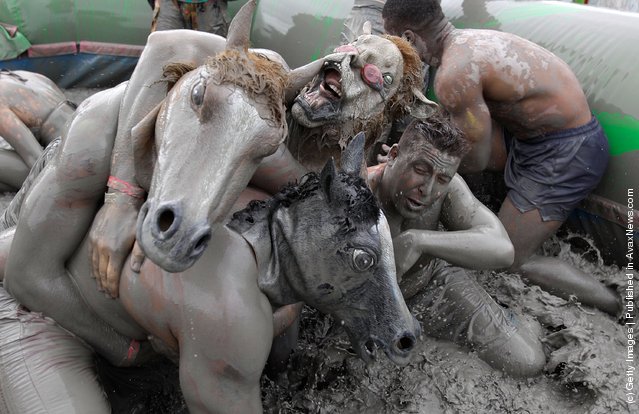
Participants enjoy mud during the 14th Annual Boryeong Mud Festival at Daecheon Beach on July 16, 2011 in Boryeong, South Korea. The mud, which is believed to have beneficial effects on the skin due to its mineral content, is sourced from mud flats near Boryeong and transported to the beach by truck. (Photo by Chung Sung-Jun/Getty Images)
Details
17 Jul 2011 11:20:00
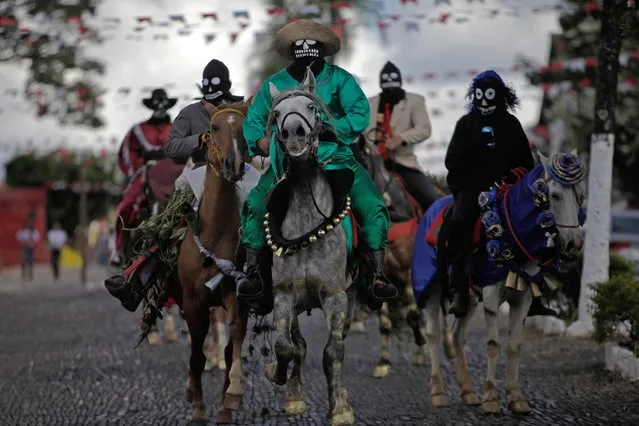
Masked men ride in a morning procession as part of the “Cavalhadas” festival in Pirenopolis, Brazil, Sunday, May 19, 2013. The popular festival is a tradition that was introduced in the 1800's by a Portuguese priest to mark the the ascension of Christ. The 3-day festival reenacts the Christian knights' medieval defeat of the Moors. (Photo by Eraldo Peres/AP Photo)

Masked men ride in a morning procession as part of the “Cavalhadas” festival in Pirenopolis, Brazil, Sunday, May 19, 2013. The popular festival is a tradition that was introduced in the 1800's by a Portuguese priest to mark the the ascension of Christ. The 3-day festival reenacts the Christian knights' medieval defeat of the Moors. (Photo by Eraldo Peres/AP Photo)
Details
22 May 2013 08:49:00