Loading...
Done
Chernobyl

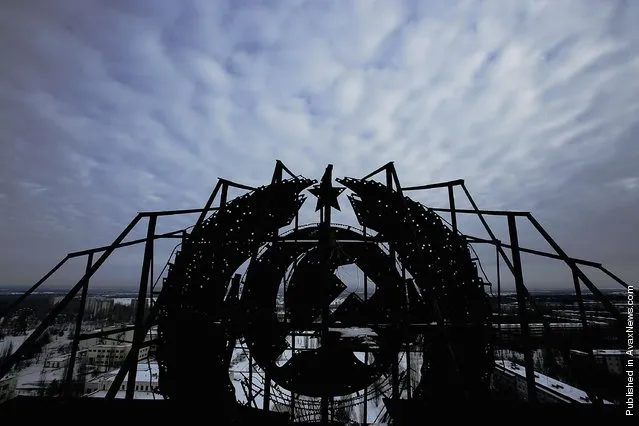
Scaffolding holding a remnant of the Soviet Union, the hammer and sickle, is seen on a rooftop of an abandoned building in the town of Pripyat on January 25, 2006 near Chernobyl, Ukraine. The town of Pripyat, deserted since the 1986 catastrophe, once housed 30,000 people, the majority of being workers from the Chernobyl Nuclear Power Plant. Days after the catastrophe the inhabitants were relocated to other locations in the Soviet Union. The town of Pripyat has remained uninhabited since. Prypyat and the surrounding area will not be safe for human habitation for several centuries. Scientists estimate that the most dangerous radioactive elements will take up to 900 years to decay sufficiently to render the area safe.
Details
14 Mar 2011 10:20:00


In this photo distributed by the Israeli Defense Forces (IDF) May 23, 2005, woman soldiers wear branches in their helmets as their infantry instructors' course learns about camouflage during the field craft week of their training May 19, 2005 at an army base near Beersheva in Israel's southern desert. It takes the IDF more than 2 months to teach these 18-year-old female recruits the basic arts of warfare before they assigned to pass on their newly-acquired skills to the army's male and female draftees. (Photo by Abir Sultan/IDF via Getty Images)
Details
18 Apr 2011 10:22:00
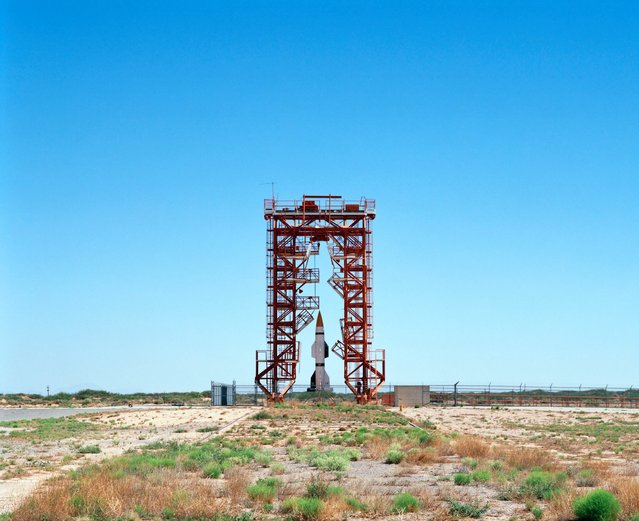
Launch Pad and Gantry with Hermes A-1 Rocket – V2 Launch Complex 33, White Sands missile range, New Mexico in 2006. (Photo by Roland Miller)

Roland Miller is on a mission to document the deserted sites of America’s space race. He has photographed launch pads, bunkhouses and research facilities across the country, some of which no longer exist or are closed to the public on secure military bases. His book, “Abandoned in Place”, is published by the University of New Mexico Press in March. Here: Launch Pad and Gantry with Hermes A-1 Rocket – V2 Launch Complex 33, White Sands missile range, New Mexico in 2006. (Photo by Roland Miller)
Details
25 Feb 2016 11:38:00
A female traffic police officer in the snow in February 2013, in Pyongyang, North Korea. (Photo by Andrew Macleod/Barcroft Media)

North Korea has closed its borders in fear of the spread of the Ebola virus. But at a time when the secretive state was still welcoming tourists, former aid worker Andrew Macleod made the journey to the repressive nation. Andrew's holiday snaps and camera footage provide a unique insight into the reclusive country, where he came across deserted motorways, metro stations plastered with propaganda and attractive border guards. Here: a female traffic police officer in the snow in February 2013, in Pyongyang, North Korea. (Photo by Andrew Macleod/Barcroft Media)
Details
06 Nov 2014 09:11:00
Despite the amazing sight, Netal said that seeing the pools came with a downside. “The smell was horrible, and it was difficult to breath”. (Photo by Neta Dekel/Caters News Agency)

These stunning images show the beauty and drama of Mother Nature at work. Captured deep in heart of the Danakil Desert in East Africa, the images show the acid pools near the Erta Ale volcano. Pools of brightly colored acid can be seen amid the dramatic blast of volcanic ash. The photos were taken by Neta Dekel, an Israeli photographer. He the acid pools were one of the most extraordinary sights he had ever seen. (Photo by Neta Dekel/Caters News Agency)
Details
27 Jun 2018 00:03:00
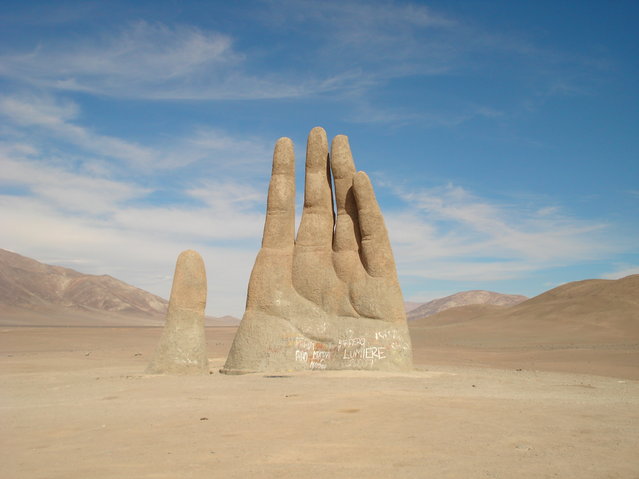
The Giant Hand of Atacama

The Mano de Desierto is a large-scale sculpture of a hand located in the Atacama Desert in Chile, 75 km to the south of the city of Antofagasta, on the Panamerican Highway. The nearest point of reference is the “Ciudad Empresarial La Negra” (La Negra Business City). The sculpture was constructed by the Chilean sculptor Mario Irarrázabal at an altitude of 1,100 meters above sea level. Irarrázabal used the human figure to express emotions like injustice, loneliness, sorrow and torture. Its exaggerated size is said to emphasize human vulnerability and helplessness. The work has a base of iron and cement, and stands 11 metres (36 ft) tall. Funded by Corporación Pro Antofagasta, a local booster organization, the sculpture was inaugurated on March 28, 1992.
Details
21 Dec 2013 10:18:00
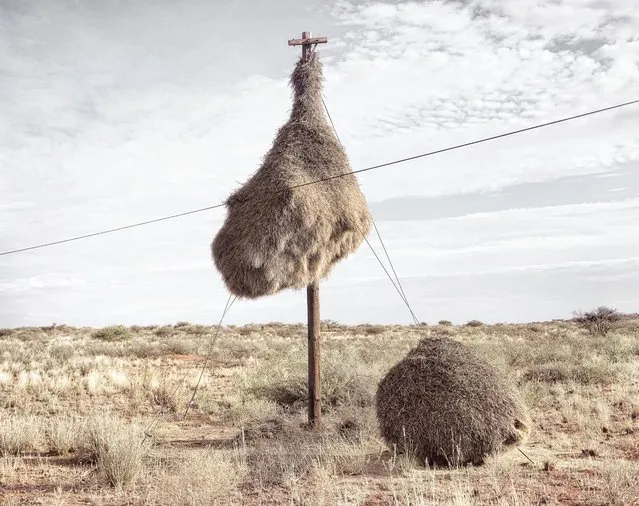
Assimilation By Dillon Marsh

Captured by South African photographer Dillon Marsh, these fantastic photographs depict the many designs employed by sociable weavers to build sturdy nests that are safe from intruders such as cobras and tree snakes. They are also nice cool during the day, and stay warm during cold desert nights. A University of Stellenbosch graduate, Marsh is currently interested in landscape photographer who seeks out anomalies that can be arranged in a photographic series. Assimilation depicts scores of intricate weaver’s nests atop utility poles in Southern Africa. Colonies of sociable weavers have been known to stay attached to one particular nest for up to 100 years, according to The San Diego Zoo.
Details
15 Feb 2014 14:47:00
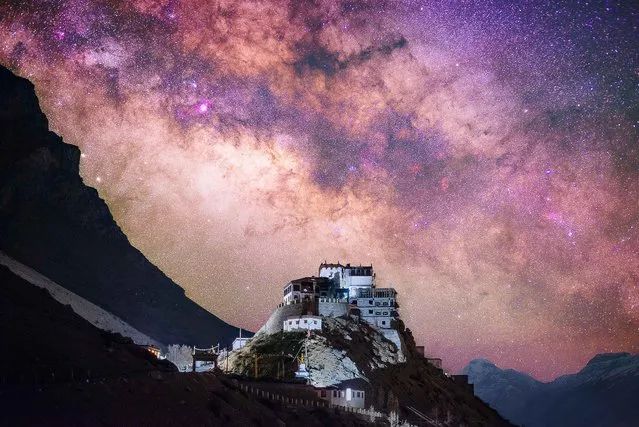
Key Monastery illuminated on a mountain in the Spiti Valley, Himachal Pradesh, northern India with an amazing nights sky illuminated beyond. (Photo by Grey Chow/Caters News Agency)

The Tibetan night sky was captured in these beautiful images showing the stunning buildings and statues in the Himalayan mountains. Grey Chow, 33, traveled for two hours to get to the Spiti Valley to capture the starry backdrop along the isolated, deserted roads. The senior project engineer was able to take amazingly clear images thanks to the limited amount of pollution at the 4,500-foot (1371m) altitude. (Photo by Grey Chow/Caters News Agency)
Details
06 Aug 2018 00:05:00