Loading...
Done
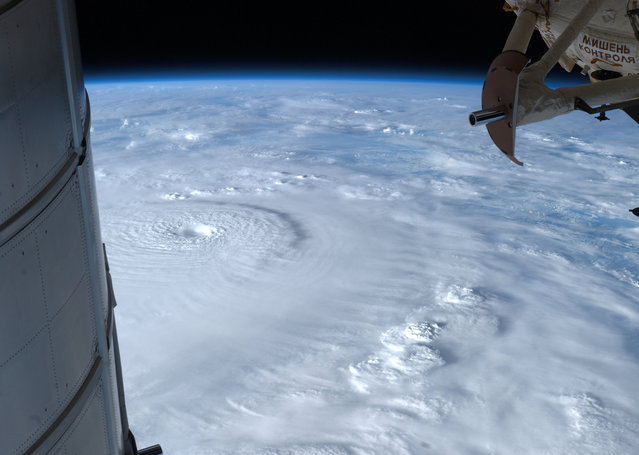
Typhoon Bopha moves toward the Philippines, observed from the ISS, on December 2, 2012. (Photo by AP Photo/NASA/The Atlantic)

Typhoon Bopha moves toward the Philippines, observed from the ISS, on December 2, 2012. (Photo by AP Photo/NASA via The Atlantic)
Details
02 Apr 2013 12:22:00
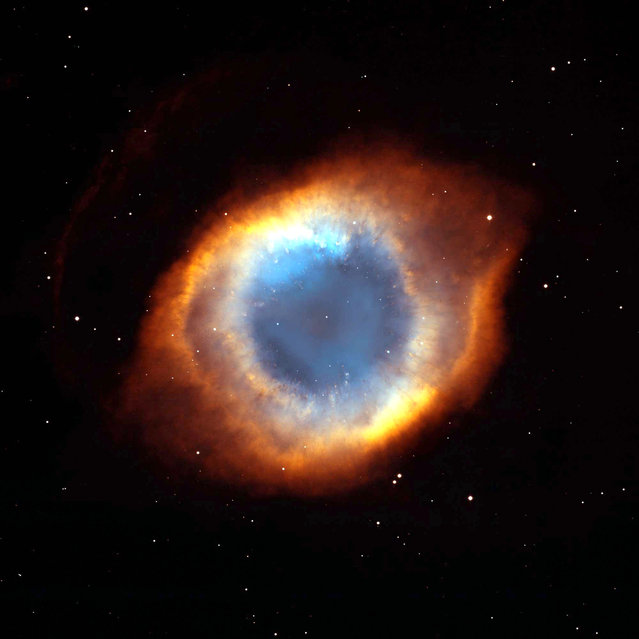
A coil-shaped Helix Nebula showing a fine web of filamentary “bicycle-spoke” features embedded in the colorful red and blue ring of gas. At 650 light-years away, the Helix is one of the nearest planetary nebulae to Earth. A planetary nebula is the glowing gas around a dying, Sun-like star. (Photo by Reuters/NASA)

A coil-shaped Helix Nebula showing a fine web of filamentary “bicycle-spoke” features embedded in the colorful red and blue ring of gas. At 650 light-years away, the Helix is one of the nearest planetary nebulae to Earth. A planetary nebula is the glowing gas around a dying, Sun-like star. (Photo by Reuters/NASA)
Details
22 Oct 2014 14:01:00
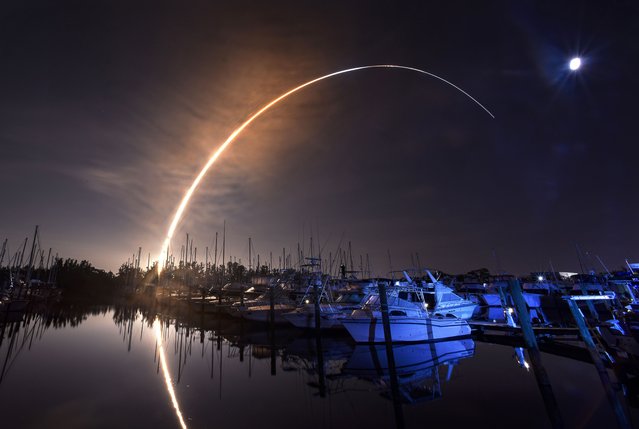
NASA's new moon rocket lifts off from the Kennedy Space Center in Cape Canaveral, Wednesday morning, November 16, 2022, as seen from Harbor town Marina on Merritt Island, Fla. The moon is visible in the sky. (Photo by Malcolm Denemark/Florida Today via AP Photo)

NASA's new moon rocket lifts off from the Kennedy Space Center in Cape Canaveral, Wednesday morning, November 16, 2022, as seen from Harbor town Marina on Merritt Island, Fla. The moon is visible in the sky. (Photo by Malcolm Denemark/Florida Today via AP Photo)
Details
23 Nov 2022 04:21:00
Tennis star Anna Kournikova of Russia recreates a legendary Marilyn Monroe pose

Tennis star Anna Kournikova of Russia recreates a legendary Marilyn Monroe pose during the filming of the adidas climacool commercial on location in Los Angeles. (Photo by CLIVE BRUNSKILL/Getty Images). 11 Mar. 2002
Details
24 Dec 2011 13:41:00
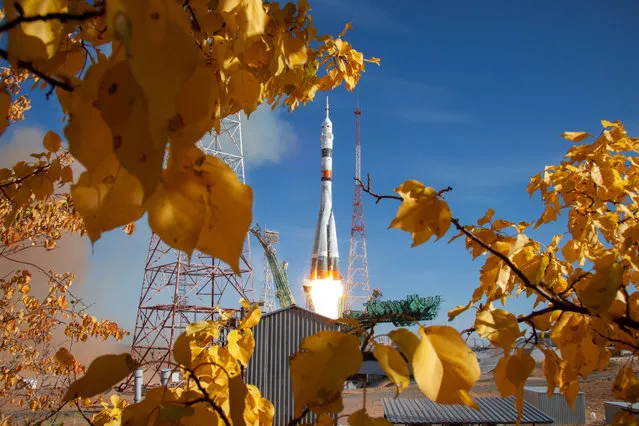
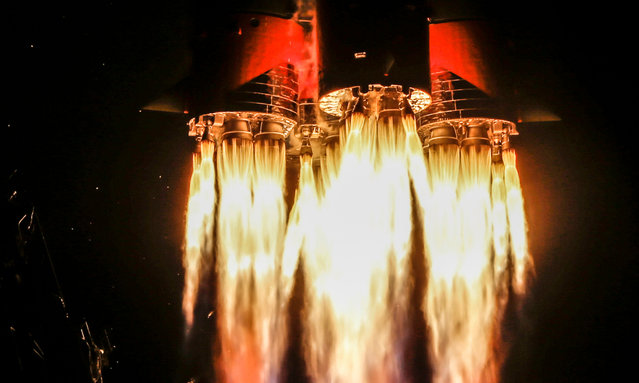
The Soyuz MS-17 spacecraft carrying the crew formed of Kathleen Rubins of NASA, Sergey Ryzhikov and Sergey Kud-Sverchkov of the Russian space agency Roscosmos blasts off to the International Space Station (ISS) from the launchpad at the Baikonur Cosmodrome, Kazakhstan on October 14, 2020. (Photo by Russian space agency Roscosmos/Handout via Reuters)

The Soyuz MS-17 spacecraft carrying the crew formed of Kathleen Rubins of NASA, Sergey Ryzhikov and Sergey Kud-Sverchkov of the Russian space agency Roscosmos blasts off to the International Space Station (ISS) from the launchpad at the Baikonur Cosmodrome, Kazakhstan on October 14, 2020. (Photo by Russian space agency Roscosmos/Handout via Reuters)
Details
12 Apr 2021 00:01:00
Soyuz MS-12 spacecraft with crew members of Expedition 59/60 Russian cosmonaut Alexey Ovchinin, NASA astronauts Christina Koch and Nick Hague lifts off from the launch pad at the Russian leased Baikonur cosmodrome, Kazakhstan, 15 March 2019. Hague, Koch, and Ovchinin will spend six-and-a-half months living and working aboard the International Space Station. (Photo by Sergei Ilnitsky/EPA/EFE)

Soyuz MS-12 spacecraft with crew members of Expedition 59/60 Russian cosmonaut Alexey Ovchinin, NASA astronauts Christina Koch and Nick Hague lifts off from the launch pad at the Russian leased Baikonur cosmodrome, Kazakhstan, 15 March 2019. Hague, Koch, and Ovchinin will spend six-and-a-half months living and working aboard the International Space Station. (Photo by Sergei Ilnitsky/EPA/EFE)
Details
11 Apr 2019 00:03:00
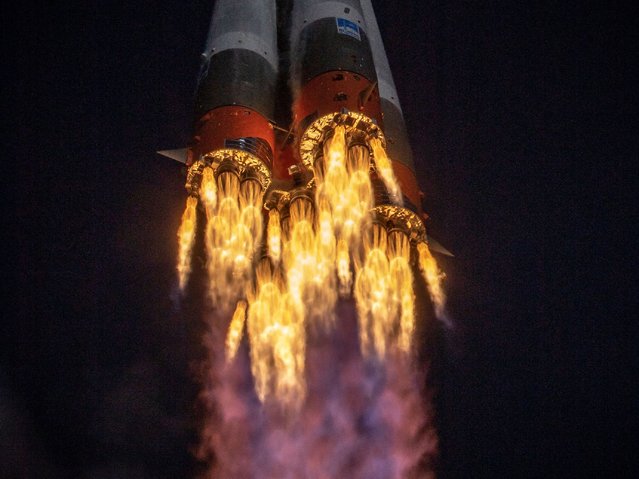
The Soyuz MS-17 spacecraft carrying the International Space Station (ISS) expedition 64 crew of NASA astronaut Kate Rubins and Russian cosmonauts Sergey Ryzhikov and Sergey Kud-Sverchkov blasts off to the ISS from the Russian-leased Baikonur cosmodrome in Kazakhstan on October 14, 2020. (Photo by Roscosmos/Handout via AFP Photo)

The Soyuz MS-17 spacecraft carrying the International Space Station (ISS) expedition 64 crew of NASA astronaut Kate Rubins and Russian cosmonauts Sergey Ryzhikov and Sergey Kud-Sverchkov blasts off to the ISS from the Russian-leased Baikonur cosmodrome in Kazakhstan on October 14, 2020. (Photo by Roscosmos/Handout via AFP Photo)
Details
16 Oct 2020 00:07:00
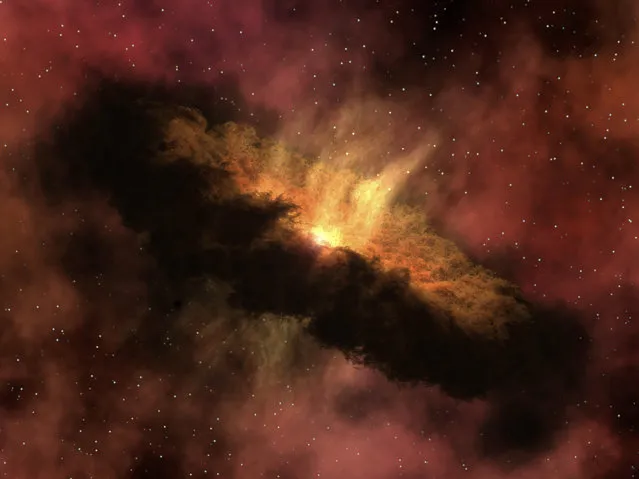
A fledgling solar system containing deep within it enough water vapor to fill all the oceans on Earth five times, located in our Milky Way galaxy about 1,000 light years from Earth in the constellation Perseus. (Photo by Reuters/NASA/JPL-Caltech)

A fledgling solar system containing deep within it enough water vapor to fill all the oceans on Earth five times, located in our Milky Way galaxy about 1,000 light years from Earth in the constellation Perseus. (Photo by Reuters/NASA/JPL-Caltech)
Details
28 Sep 2016 11:01:00