Loading...
Done
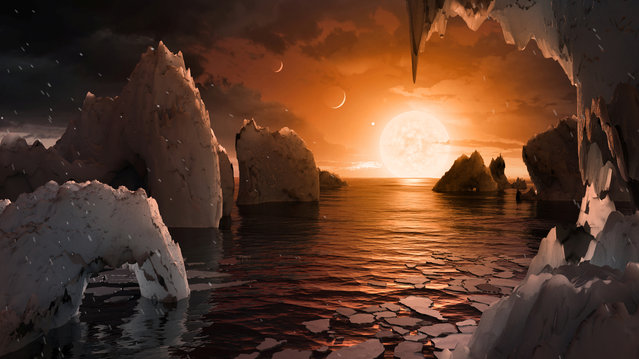
The possible surface of TRAPPIST-1f, one of seven newly discovered planets in the TRAPPIST-1 system that scientists using the Spitzer Space Telescope and ground based telescopes have discovered. (Photo by Reuters/NASA/JPL-Caltech)

The possible surface of TRAPPIST-1f, one of seven newly discovered planets in the TRAPPIST-1 system that scientists using the Spitzer Space Telescope and ground based telescopes have discovered. (Photo by Reuters/NASA/JPL-Caltech)
Details
07 Mar 2017 00:02:00
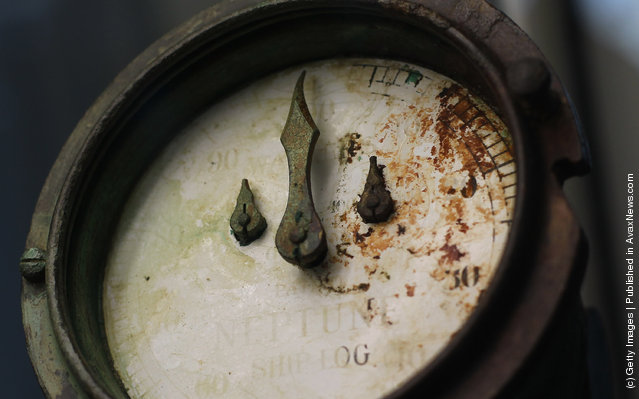
A logometer used to determine the Titanic's speed is seen among artifacts recovered from the RMS Titanic

A logometer used to determine the Titanic's speed is seen among artifacts recovered from the RMS Titanic wreck site at a press preview of a Titanic artifact auction at the Intrepid Sea, Air & Space Museum on January 5, 2012 in New York City. On April 11, 2012, the 100th anniversary of the maiden voyage of the Titanic, Guernsey's will auction the complete collection of more than 5,000 artifacts recovered from the Titanic wreck site. (Photo by Mario Tama/Getty Images)
Details
06 Jan 2012 13:28:00


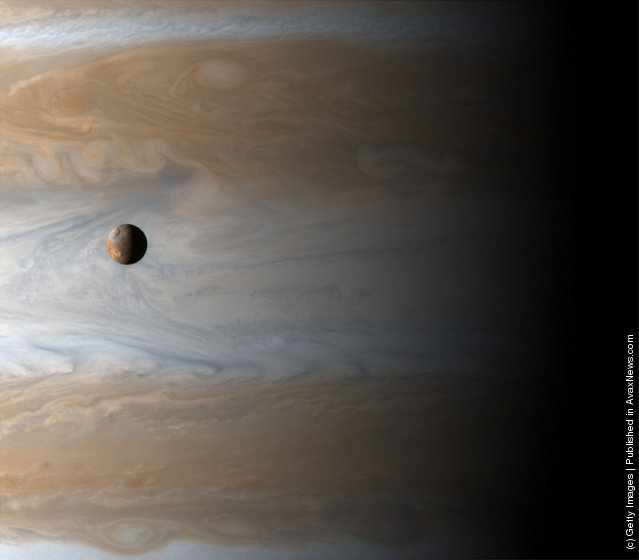
Gliding past the planet Jupiter, the Cassini spacecraft captures this awe inspiring view of active Io, Jupiter's third largest satellite, with the largest gas giant as a backdrop, offering a stunning demonstration of the ruling planet's relative size, April 20, 2001. The Cassini spacecraft itself was about 10 million kilometers from Jupiter when recording the image data. (Photo courtesy of NASA/Newsmakers)
Details
23 Mar 2011 10:32:00
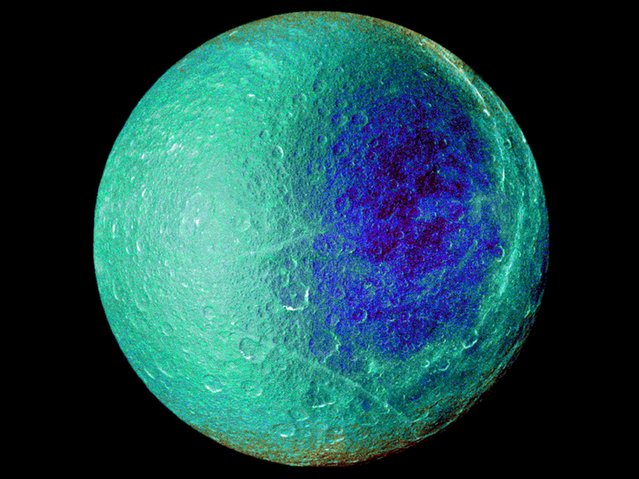
Hemispheric color differences on Saturn's moon Rhea are apparent in this false-color view from NASA's Cassini spacecraft in this March 2, 2010 file photo. (Photo by Reuters/NASA/JPL/SSI)

Hemispheric color differences on Saturn's moon Rhea are apparent in this false-color view from NASA's Cassini spacecraft in this March 2, 2010 file photo. (Photo by Reuters/NASA/JPL/SSI)
Details
16 Nov 2015 08:14:00
On August 31, 2012, a long filament of solar material that had been hovering in the sun's atmosphere, the corona, erupted out into space at 4:36 p.m. EDT. The coronal mass ejection, or CME, traveled at over 900 miles per second. The CME did not travel directly toward Earth, but did connect with Earth's magnetic environment, or magnetosphere, causing aurora to appear on the night of Monday, September 3. (Photo by NASA/GSFC/SDO)

On August 31, 2012, a long filament of solar material that had been hovering in the sun's atmosphere, the corona, erupted out into space at 4:36 p.m. EDT. The coronal mass ejection, or CME, traveled at over 900 miles per second. The CME did not travel directly toward Earth, but did connect with Earth's magnetic environment, or magnetosphere, causing aurora to appear on the night of Monday, September 3. (Photo by NASA/GSFC/SDO via The Atlantic)
Details
14 Sep 2012 09:01:00
Peruvian shamans holding a figure of a Nino Jesus (Child Jesus) and a snake perform a ritual at the Rimac river to fight the negative effects of the Nino weather phenomena over Nature, in Lima, October 1, 2015. (Photo by Mariana Bazo/Reuters)

Peruvian shamans holding a figure of a Nino Jesus (Child Jesus) and a snake perform a ritual at the Rimac river to fight the negative effects of the Nino weather phenomena over Nature, in Lima, October 1, 2015. (Photo by Mariana Bazo/Reuters)
Details
03 Oct 2015 08:07:00
Russia's synchronised swimming duet Aleksandr Maltsev (L) and Darina Valitova compete in the Mixed Duet Technical preliminary during the synchronised swimming competition at the 2015 FINA World Championships in Kazan on July 25, 2015. (Photo by Christophe Simon/AFP Photo)

Russia's synchronised swimming duet Aleksandr Maltsev (L) and Darina Valitova compete in the Mixed Duet Technical preliminary during the synchronised swimming competition at the 2015 FINA World Championships in Kazan on July 25, 2015. (Photo by Christophe Simon/AFP Photo)
Details
25 Jul 2015 13:06:00
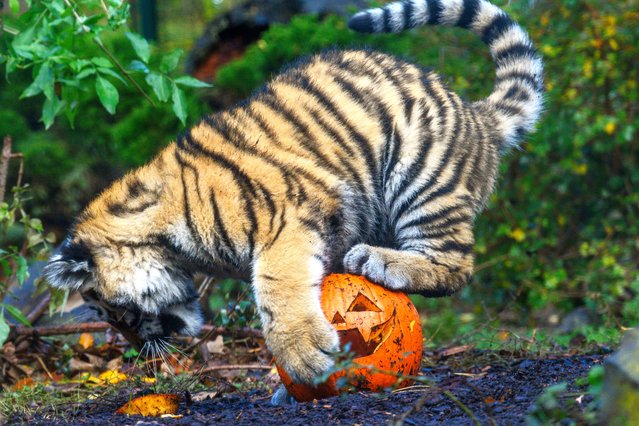
A young tiger tries to get at poultry parts hidden in a pumpkin at Magdeburg Zoo, Germany on October 30, 2025. The zoo is celebrating Halloween from October 31, 2025 to November 1, 2025. In addition to the puppet theater, children's carousel and children's train, visitors can carve their own pumpkins, which are then distributed to the zoo animals and serve as food. (Photo by Klaus-Dietmar Gabbert/Avalon)

A young tiger tries to get at poultry parts hidden in a pumpkin at Magdeburg Zoo, Germany on October 30, 2025. The zoo is celebrating Halloween from October 31, 2025 to November 1, 2025. In addition to the puppet theater, children's carousel and children's train, visitors can carve their own pumpkins, which are then distributed to the zoo animals and serve as food. (Photo by Klaus-Dietmar Gabbert/Avalon)
Details
02 Nov 2025 05:02:00